Automate your strategy with RankDots Content and Topic Research Tools
Stop wasting hours filtering raw data dumps. RankDots aggregates eight distinct sources to generate structured topic clusters and eliminate manual spreadsheet workflows.
You're staring at five different CSV exports, wasting hours deduplicating overlapping keyword lists and cleaning up gibberish queries instead of executing high-level strategy. Content and Topic Research Tools turn raw seed keywords into ready-to-build topic clusters.
RankDots automates the discovery, grouping, and prioritization of search terms. We got tired of watching teams waste hours sorting fragmented keyword lists by hand. The platform aggregates data from multiple sources to build structured topic clusters based on search intent and domain-relative competition.
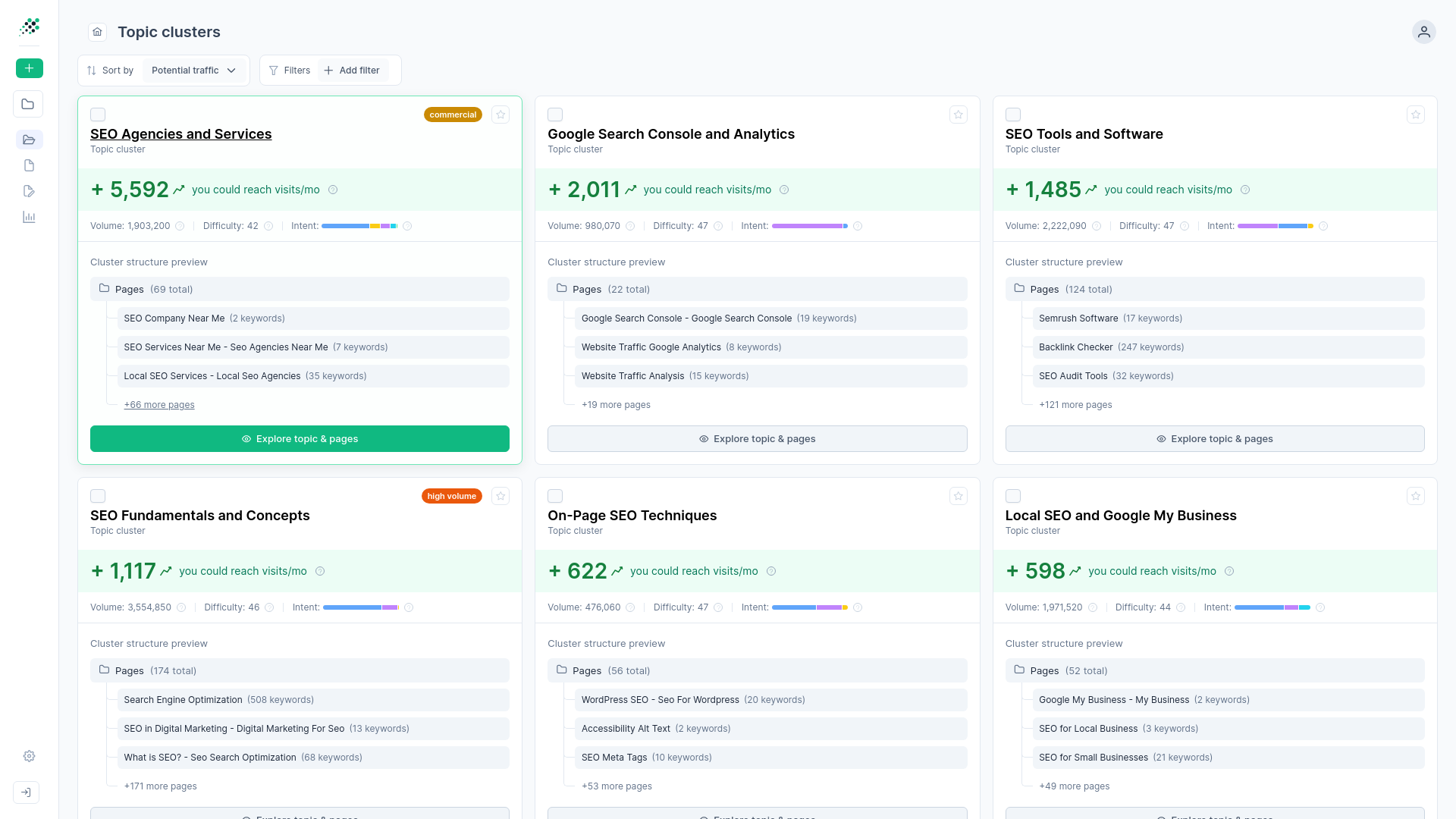
Real search intent clustering groups terms by actual Google SERP overlap.
Agencies waste hours pulling data from Ahrefs, Semrush, and Google Keyword Planner into spreadsheets. Combining data from a traditional keyword tool, a trend platform, and a question scraper by hand wastes hours. The platform handles the aggregation instantly.
The system processes multi-source data simultaneously to capture trending queries that isolated indexes miss.
When you rely exclusively on single-source database metrics, you miss profitable long-tail queries. RankDots queries eight distinct sources simultaneously per project—including Google Autocomplete, People Also Ask, and AI suggestions. You capture the exact semantic connections that single-source platforms ignore.
The platform automatically validates every keyword against 13 distinct linguistic rules to remove junk queries. Paste your seed keywords, and the system groups them by actual SERP overlap to provide an instant topic map organized into a parent/subtopic hierarchy.
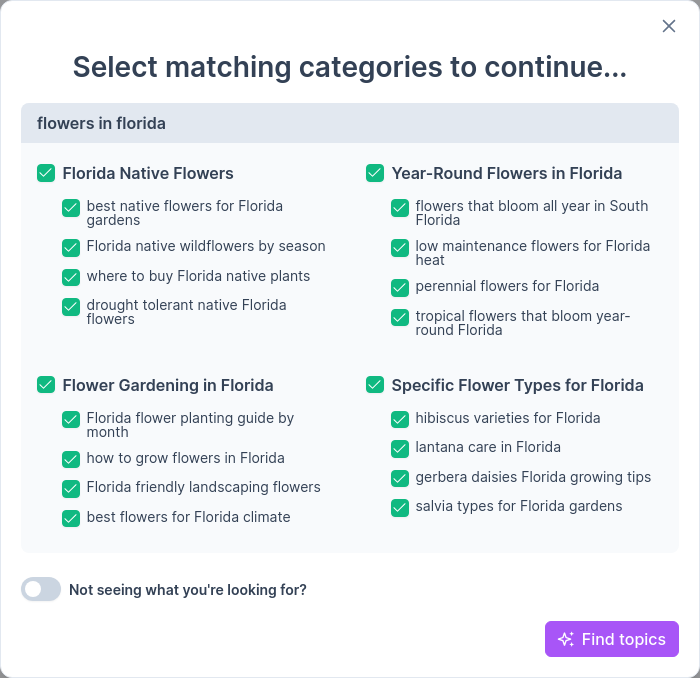
You move straight from raw research to building the actual pages. The platform maps topics automatically and evaluates true ranking difficulty.
How the Topic-First Workflow Operates
Input your seed topic
Enter a starting keyword into the Content and Topic Research Tools. RankDots aggregates data from eight distinct sources to build your topical map.
Filter the raw data
Watch the system automatically process your list through thirteen linguistic rules. This immediate validation removes irrelevant queries so you'll only evaluate viable search terms.
Review your structured clusters
Evaluate your new parent and subtopic hierarchy. Semantic grouping deduplicates overlapping terms and organizes your keywords into a ready-to-use content architecture.
Prioritize target topics
Sort your mapped clusters using five distinct strategic algorithms. You'll immediately allocate budget toward topics where your specific domain holds a competitive ranking advantage.
Multi-Source Intelligence Capabilities
10-Dimension Content Scoring
Standard optimization platforms issue a vague letter grade. RankDots evaluates drafts across ten distinct dimensions, including factual grounding and brand voice. You get precise editorial direction, not just a single arbitrary number.
Direct Search Pipelines
Stop relying on third-party database approximations for search volume. RankDots pulls metrics directly from Google Keyword Planner and live search results to ensure accurate search volumes.
Multi-Mode Exploration
Investigate your market through multiple lenses with RankDots' Content and Topic Research Tools. Switch between broad keyword expansion, targeted URL intersection analysis, and comprehensive domain mapping.
Structural Reverse-Engineering
Search volume can't dictate your page format. RankDots analyzes exactly what search engines currently reward to recommend specific page types and optimal content depth.
Evaluating domain-relative competition
You've got a structured topical map, but now you need to prioritize which specific articles your writers should tackle first. Generic Keyword Difficulty (KD) scores make prioritization risky. Traditional difficulty metrics lack predictive validity. Standard tools use static 100-point scales that prioritize backlink profiles and ignore your specific topical authority. We've watched teams burn too much budget on supposedly low-difficulty content that never reaches page one.
RankDots evaluates SERP competition relative to your specific site's domain authority and backlink profile. The platform analyzes the pages currently ranking to identify poor signals or thin content that you can realistically displace. You aren't just given a generic number. You see who you can beat.
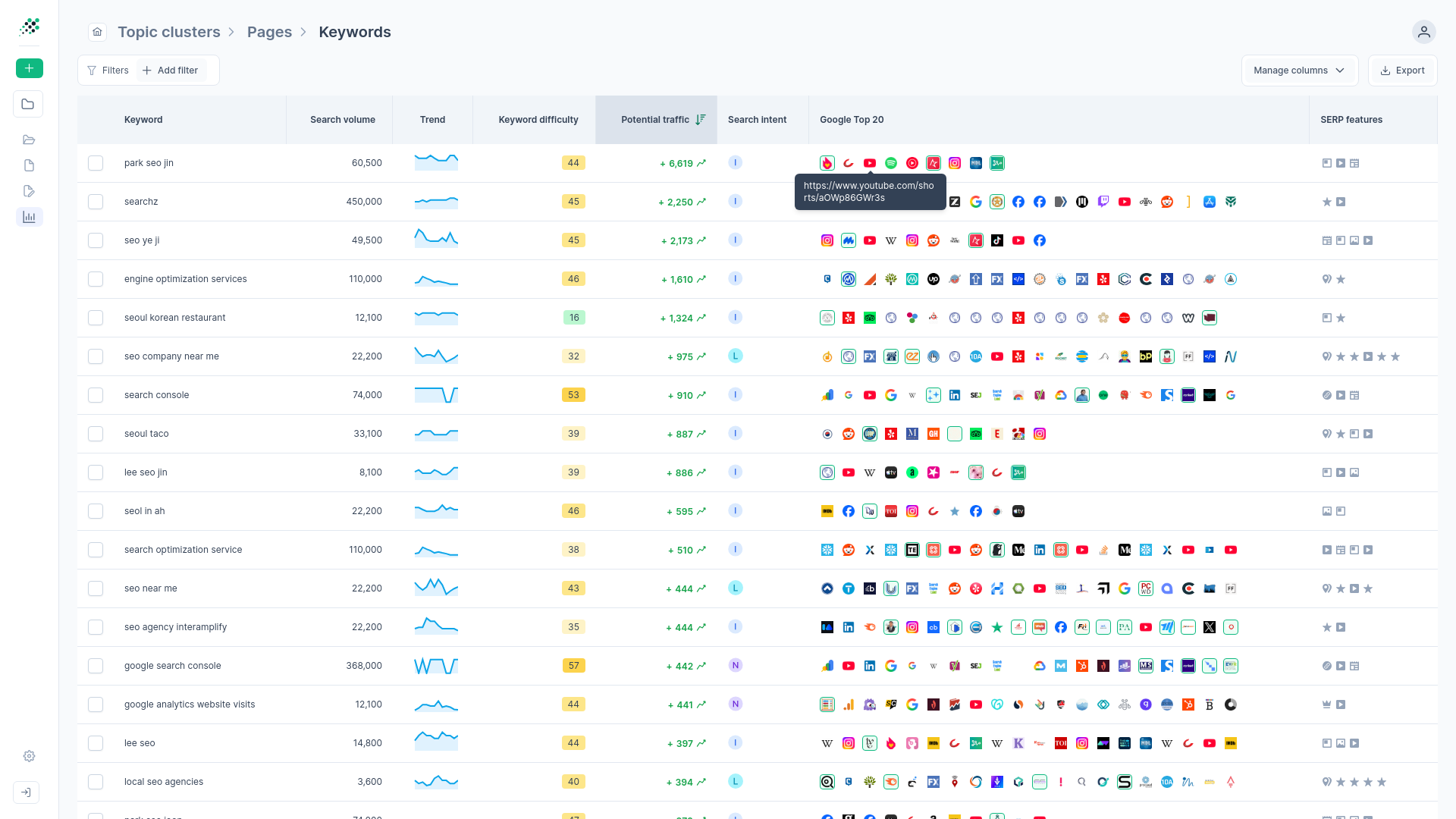
A site with deep, structured coverage of a topic experiences a significantly lower effective difficulty than the generic score implies. The system automatically ranks your topics using five different strategic algorithms, including traffic growth and commercial intent. You allocate resources instantly toward the exact clusters where your domain already has algorithmic momentum.
Frequently Asked Questions
How accurate and reliable are the topic suggestions provided?
How does the AI generate and gather information for topic suggestions?
How easy is it to use the tool for someone without SEO experience?
Is the topic research tool free to use?
Inside RankDots Content and Topic Research Tools
Parent and Subtopic Mapping
Domain-Relative SERP Analysis
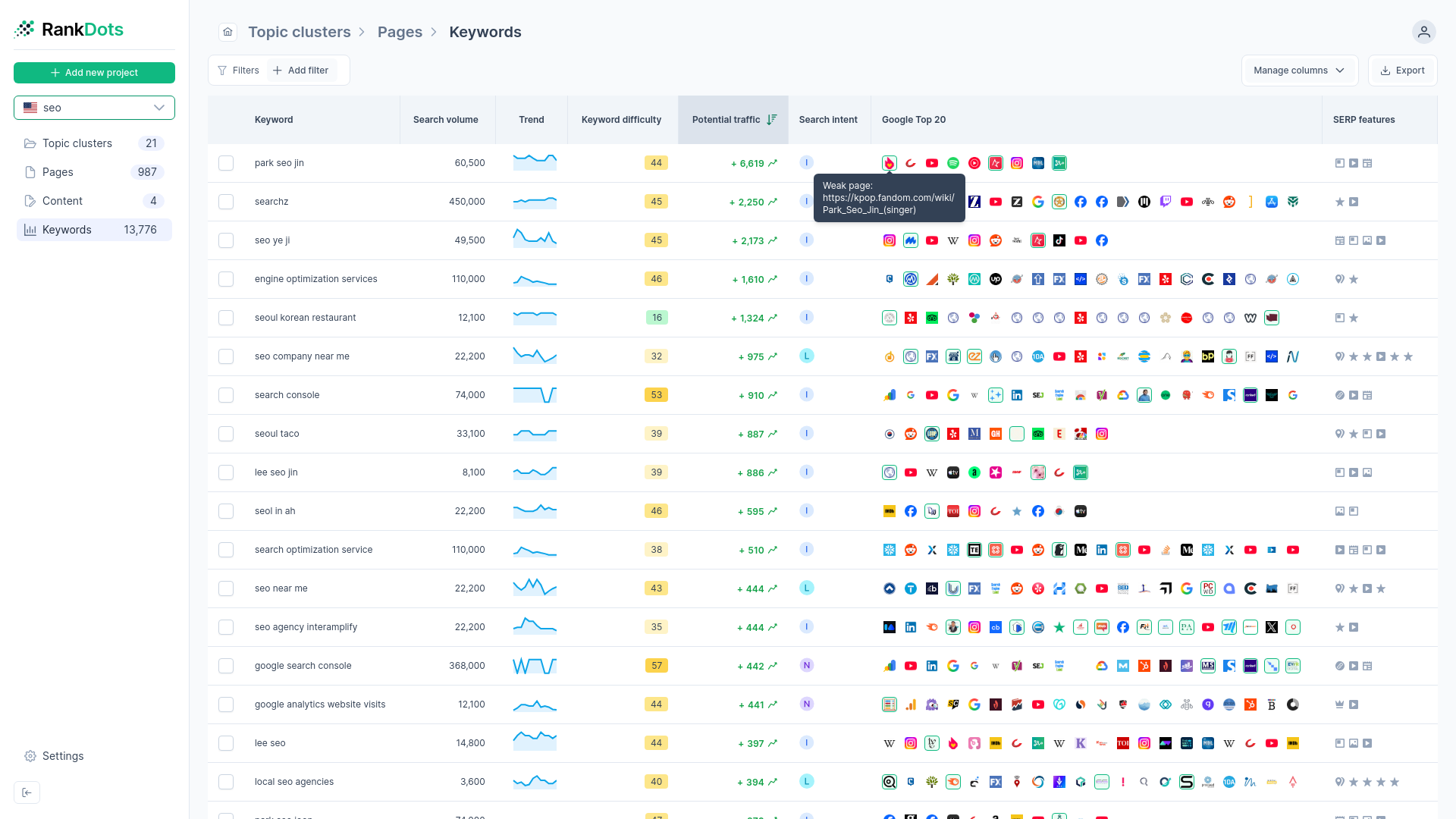
Multi-Mode Keyword Exploration
10-Dimension Content Scoring Editor
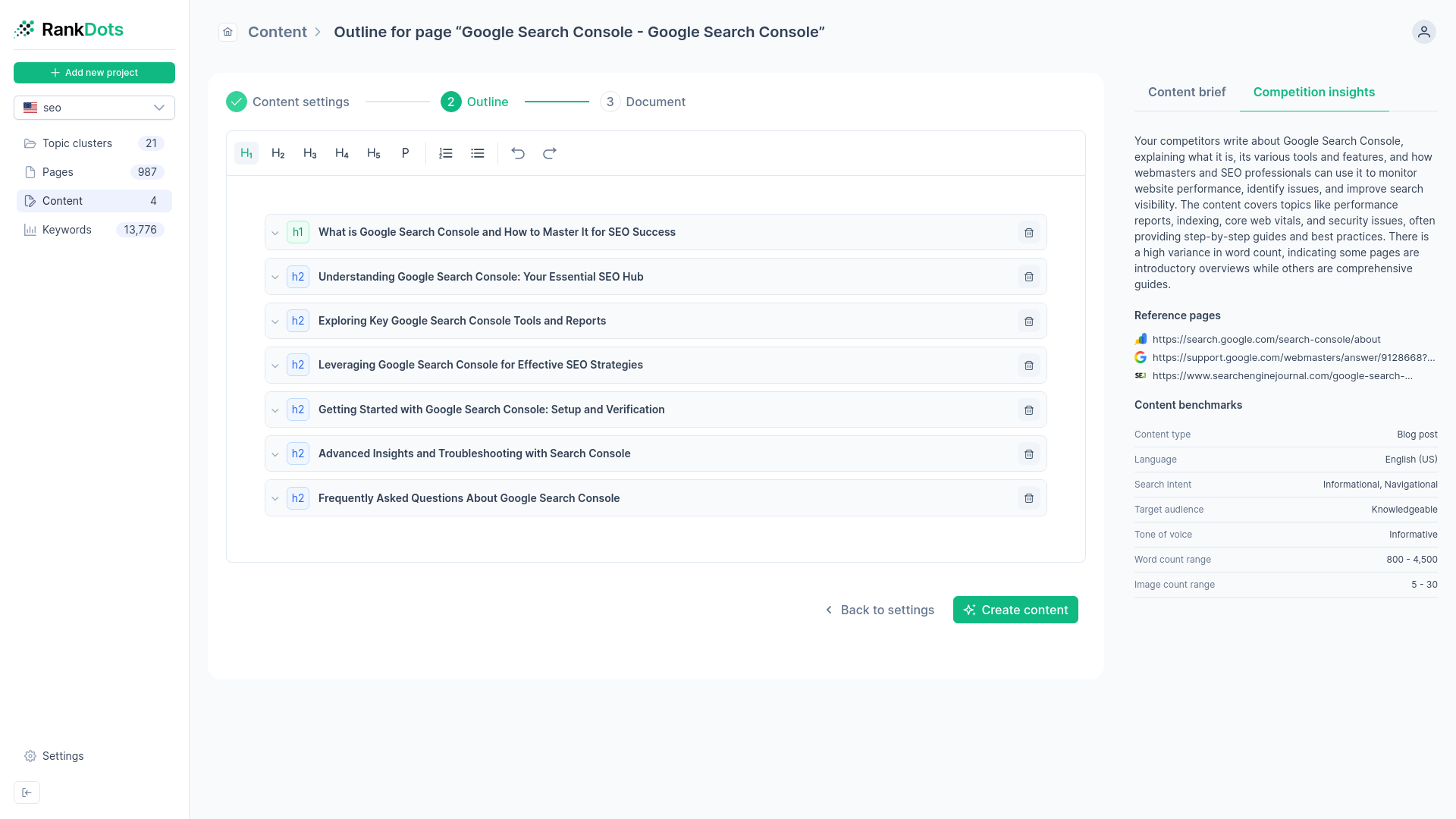
Automate your topic clustering and scale your SEO strategy
Turn fragmented data into a clear publication roadmap. Try RankDots Content and Topic Research Tools today so you can secure a competitive advantage before competitors even finish their first spreadsheet export.