Map your content strategy with our AI keyword generator
Move past flat spreadsheets. RankDots queries eight distinct data sources simultaneously, cleans the data automatically, and organizes your results into a ready-to-write topic hierarchy.
You already have a topic in mind, but downloading 5,000 duplicated keywords just creates manual filtering work. A keyword generator is an SEO tool that discovers related search queries by pulling data from sources like Google Autocomplete and Keyword Planner. It provides metrics like search volume and difficulty, but the real value lies in moving beyond raw data. We'll show you how to move from raw keyword discovery to a structured pillar-page architecture in minutes.
RankDots steps in to replace that tedious manual cleanup. We got tired of watching teams waste days sorting keywords by hand. RankDots applies AI Quality Validation to check every term against linguistic rules and instantly removes the junk. From there, the platform automatically groups the surviving terms by shared search intent. You get a ready-to-write topic map, not a flat list you still need to sort by hand.
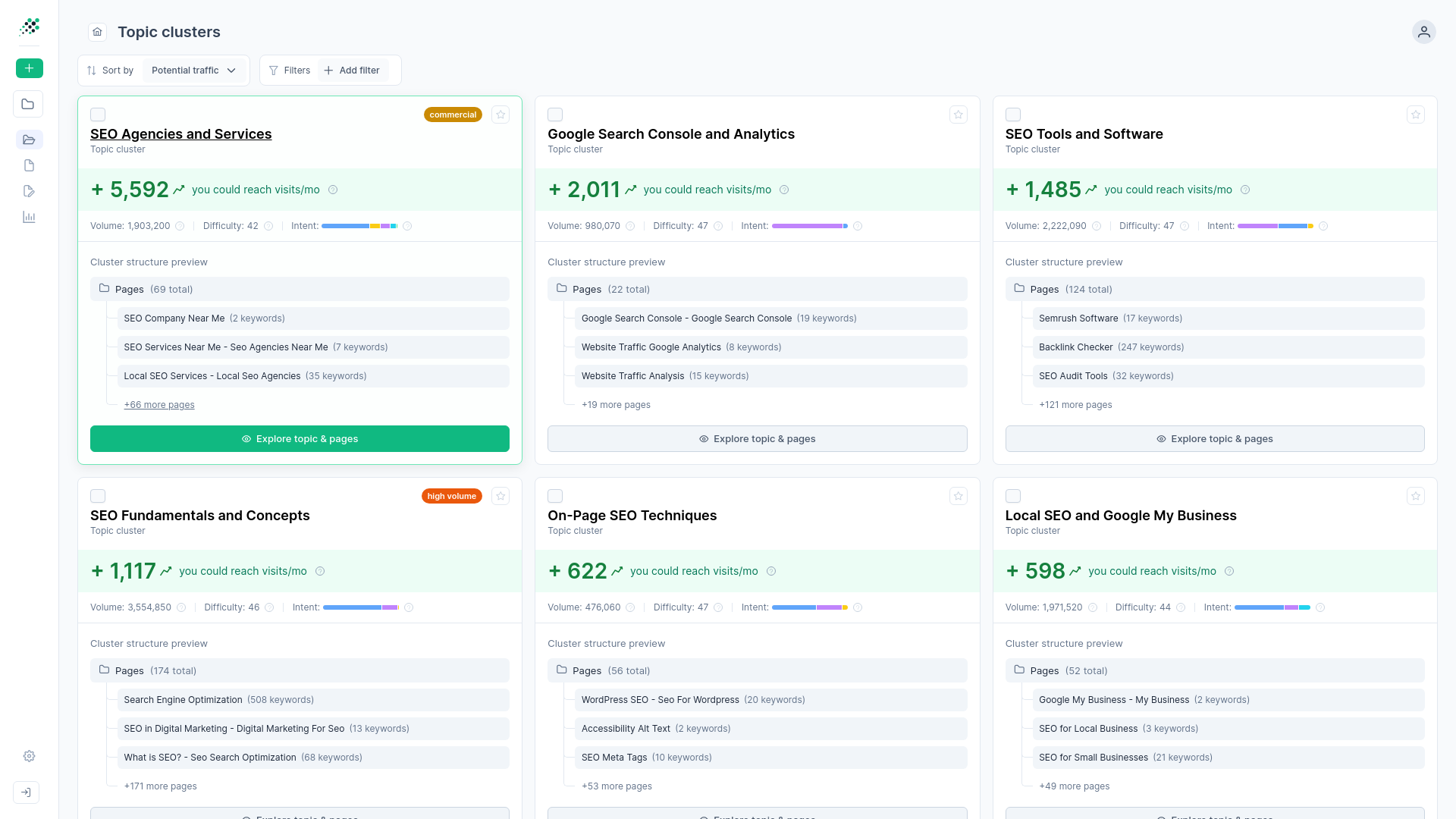
Proper long-tail keyword research normally requires manually mapping hundreds of low-volume terms to their parent pages. The platform executes this topic clustering automatically and assigns every specific variation to its best-fit cluster based on shared search intent.
RankDots capabilities: Multi-source discovery and validation
Consolidate your data
Pull metrics from Google Keyword Planner, Autocomplete, People Also Ask, and Search Console simultaneously. You stop missing edge-case queries your competitors ignore.
Target specific neighborhoods
Move past generic country or city-level data. Pinpoint exact latitude and longitude coordinates to capture local search demand accurately.
Map pillar structures
Stop staring at flat spreadsheets. Group your validated terms into a structured hierarchy that provides a ready-to-write cluster blueprint.
Score search intent
Evaluate queries across five distinct intent categories using percentage confidence scores. You ensure your upcoming page matches actual user expectations.
How to build topic clusters in minutes
Define your target scope
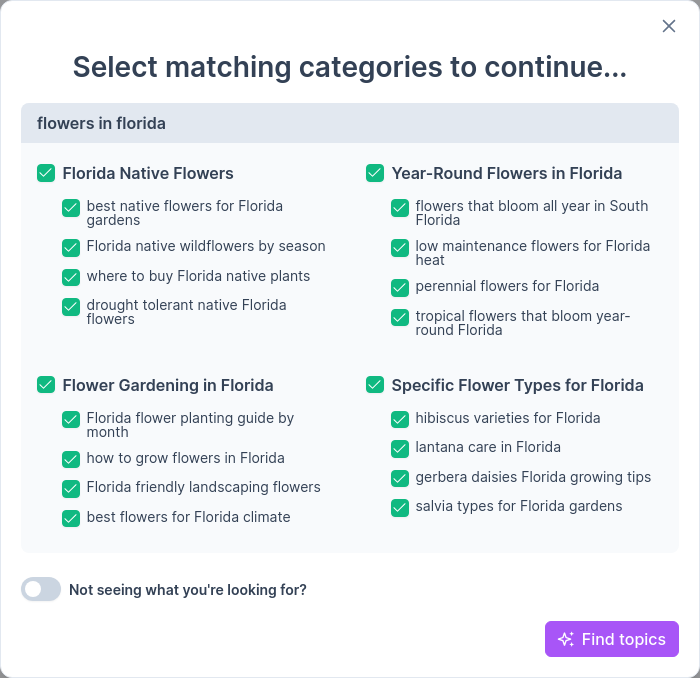
Enter a seed keyword or domain. You set the geographic parameters, and the platform generates an immediate preview of the topic categories.
Run the discovery engine
Trigger the keyword generator. The platform pulls raw data from eight distinct databases, deduplicates the lists, and drops irrelevant terms automatically.
Review the clustered hierarchy
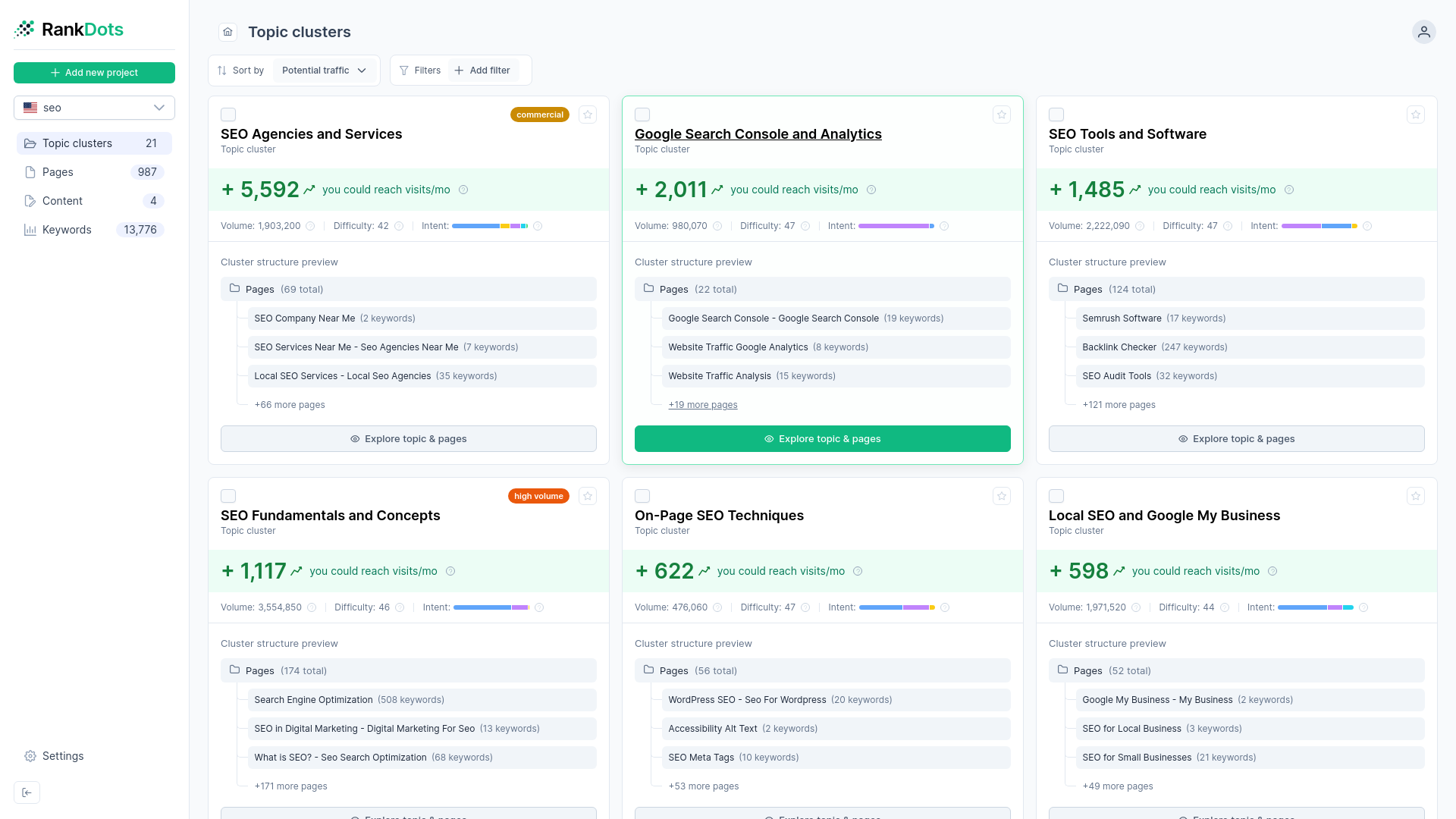
Inspect the organized results. Instead of a flat spreadsheet, you'll see a two-level structure mapping specific keywords to dedicated parent and subtopics.
Project traffic and execute
Select specific clusters based on concrete monthly traffic forecasts. You can map these approved structures directly into ready-to-write pillar pages.
See the AI keyword generator in action
Two-level topic hierarchy
Accurate volume distribution
Site-relative opportunity scoring
Concrete traffic forecasting
Why RankDots outperforms traditional SEO tools
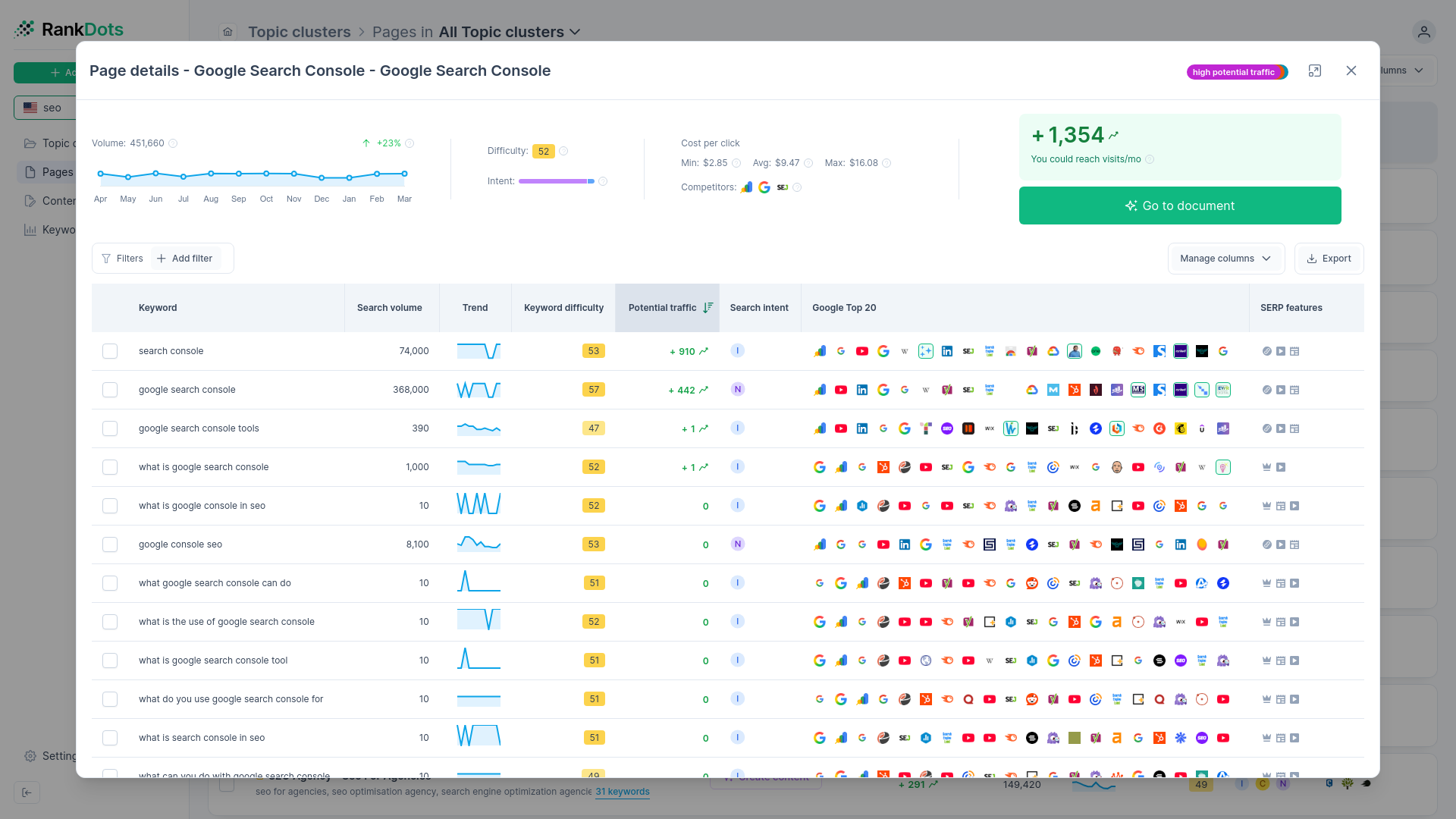
You rely on platforms like Google Keyword Planner to find blog topics, but you often notice multiple similar queries showing the exact same monthly search volume. Google Keyword Planner groups similar terms and applies identical volume fingerprints to all of them. You end up overestimating the traffic potential of a topic and pitching a flawed content plan.
Accurate search volume data prevents you from assigning the same aggregate traffic number to five distinct variations of the exact same query.
RankDots applies Search Volume Correction to detect these grouped metrics and accurately distribute the volume across similar keywords. You know exactly what a specific variation is actually worth.
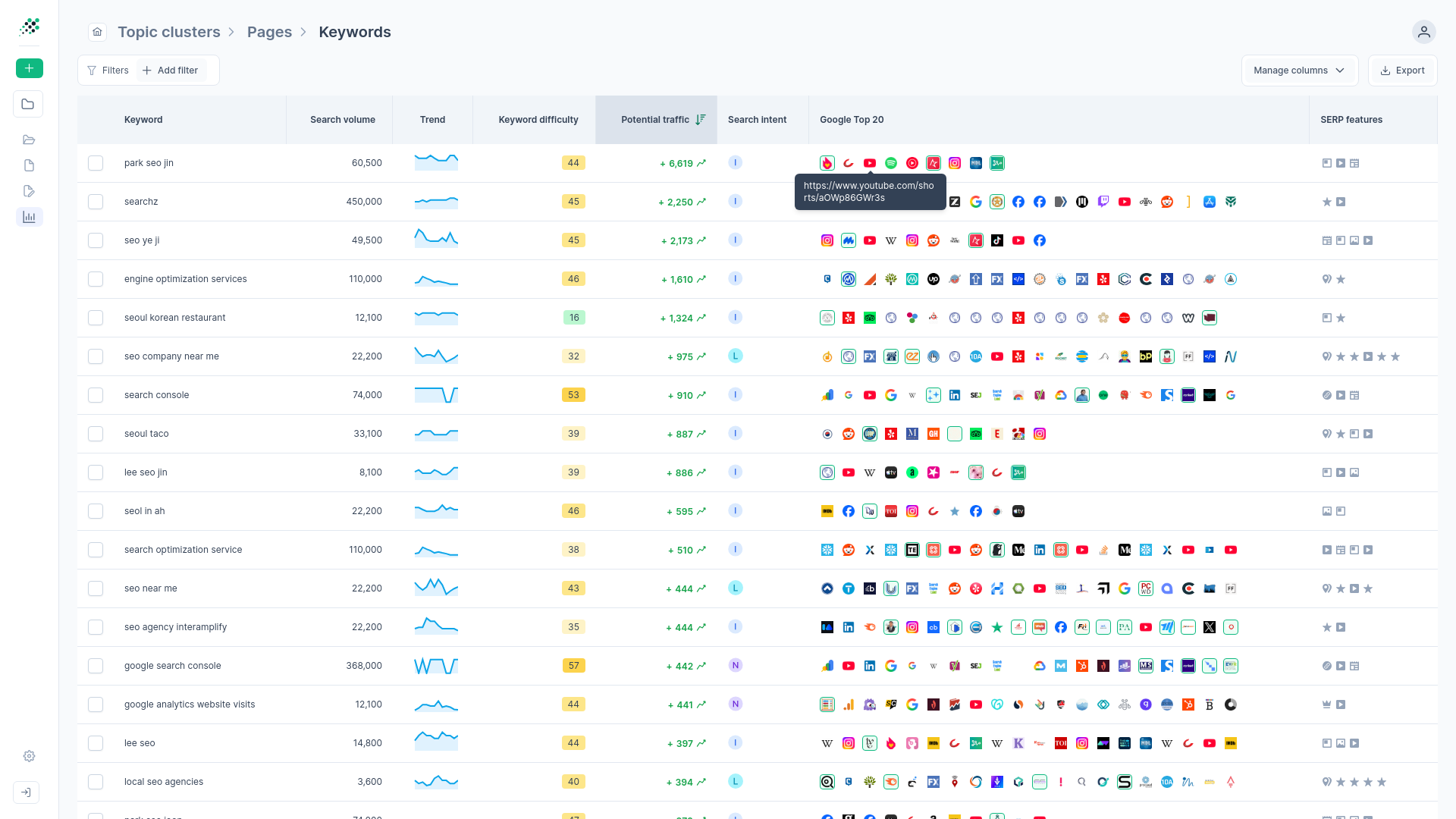
Single databases create massive blind spots. If you only pull from one source, you miss hyper-specific long-tail questions your audience asks elsewhere. RankDots queries 8 distinct data sources simultaneously. We saw too many teams miss profitable angles just because their primary tool didn't track them.
Multi-platform keyword research across these sources ensures you capture the exact phrasing your audience uses and eliminates the blind spots created by single-database platforms.
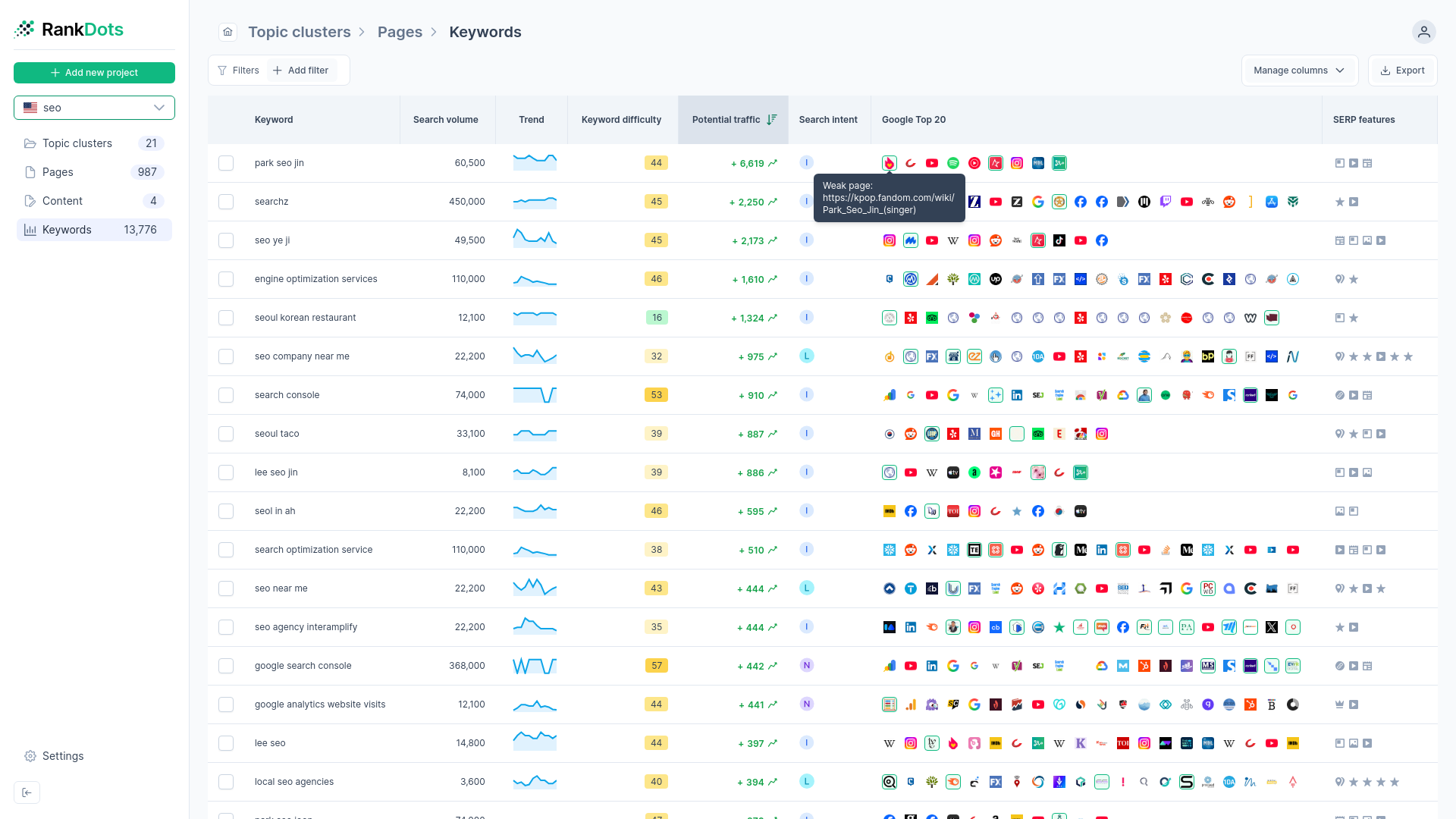
Look at how you measure competition. Generic difficulty metrics rarely tell the whole story. RankDots uses site-relative opportunity scoring to evaluate the SERP against your specific domain authority. It identifies specific weak positions you can displace.
Abstract search volume numbers rarely persuade an executive team. Stakeholders demand realistic, projected monthly traffic returns. RankDots converts those corrected opportunities into concrete traffic forecasting per page. You walk into the strategy meeting with data-backed ROI projections, not just a list of high-volume ideas.
Frequently asked questions
What is a keyword generator tool?
Where does the keyword search volume and CPC data come from?
How do I find long-tail and related keywords?
Can I export the keyword research results?
Build your profitable content architecture with our keyword generator.
You waste hours filtering spreadsheets by hand. RankDots organizes validated search data into a structured plan so you can launch your next campaign faster.