Discover related keywords directly from eight search sources
Stop limiting your strategy to a single database. RankDots queries Google Keyword Planner, Autocomplete, and six other channels simultaneously to capture the long-tail variations your competitors miss.
Keyword research shouldn't mean losing your entire morning to a massive spreadsheet, manually deleting irrelevant terms, and guessing which ones belong on the same page. You build comprehensive content by targeting related keywords. Group these terms correctly, and you satisfy search intent and establish topical authority without keyword stuffing.
Group terms by search intent so you stop building redundant pages that compete against each other.
Right now, you probably export raw lists from Google Keyword Planner and spend hours acting as a human data filter. Manual formatting moves at a sluggish pace of 5 to 10 terms per hour, which delays your content strategy. You need a way to skip the data entry and move straight to strategy.
A keyword discovery pipeline structures your CSV exports into usable campaigns. This article shows you how to shift from flat alphabetical lists to intent-based topic clusters.
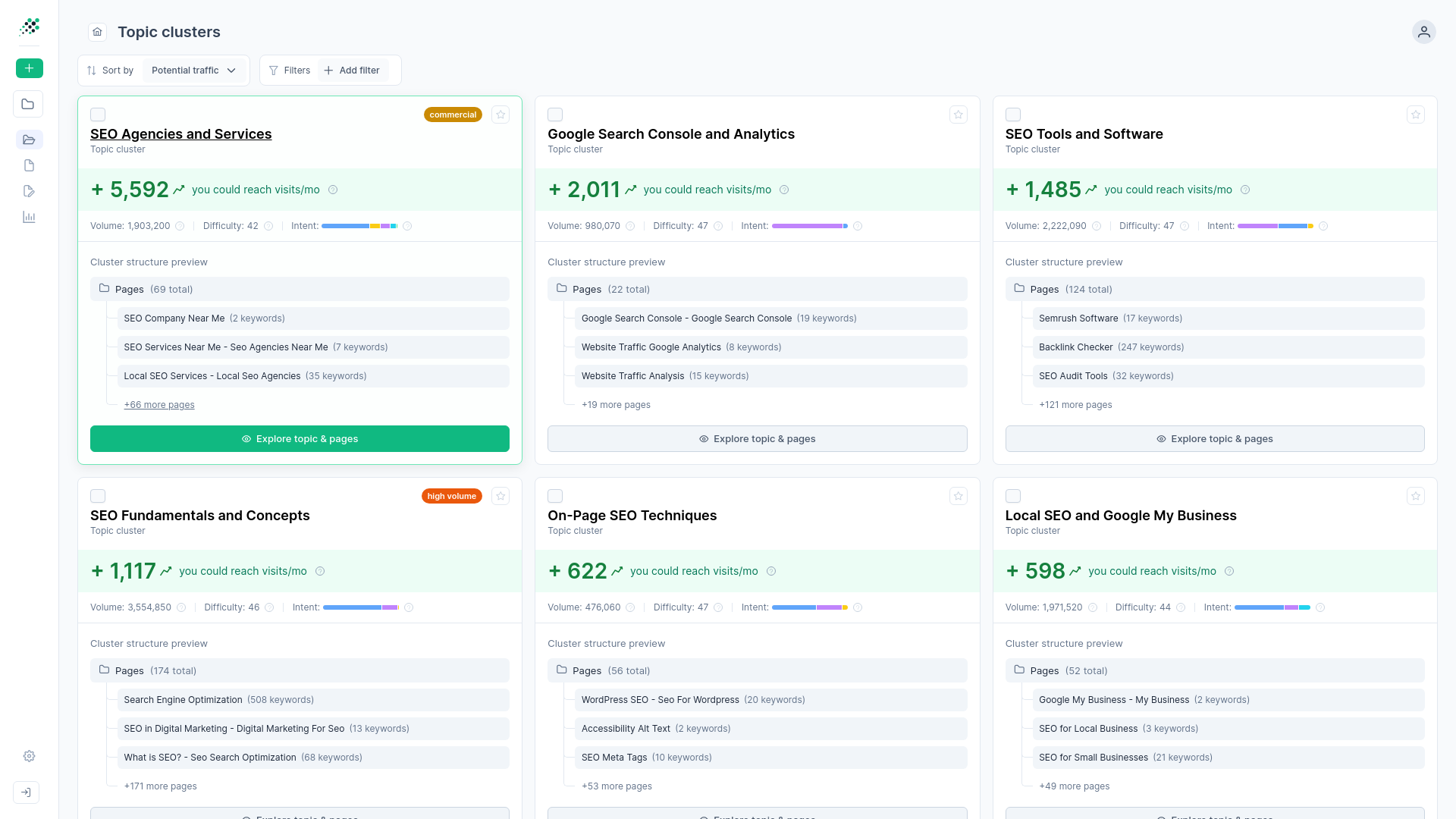
How RankDots discovers related keywords
Intelligent Pipeline Expansion
If your initial seed phrase doesn't return enough results, the system automatically runs secondary searches to find more related keywords.
Keyword Gap Identification
Find highly relevant search terms for your niche that remain missing from your current site architecture.
Three Research Modes
Start researching from a raw topic phrase, a single competitor URL, or an entire domain.
Five Strategic Lenses
Rank your newly built clusters by traffic growth potential, commercial value, search volume, difficulty, or search trend.
How to generate clustered keyword ideas
Enter your seed topic
Start with a broad phrase or a competitor URL. RankDots queries multiple search sources to gather initial data.
Let AI filter the noise
You skip the manual cleanup. The system applies 13 validation rules to automatically remove junk from your discovered related keywords.
Review intent-based clusters
Flat alphabetical lists waste your time. You receive grouped topics validated by real-time SERP overlap—meaning the system analyzes how many top-ranking pages share the same keywords.
Prioritize and assign content
Sort your newly formed clusters by traffic growth potential, then map the best opportunities directly to your site architecture to capture relevant traffic faster.
Why automated semantic clustering beats single-source data
A single database leaves gaps in your content plan. When you query just one standard tool, you miss the actual questions your audience types into search engines—especially considering 15% of daily queries are completely new. RankDots fixes this by simultaneously pulling data from eight distinct search ecosystem sources to capture the long-tail variations and trending questions that basic platforms ignore.
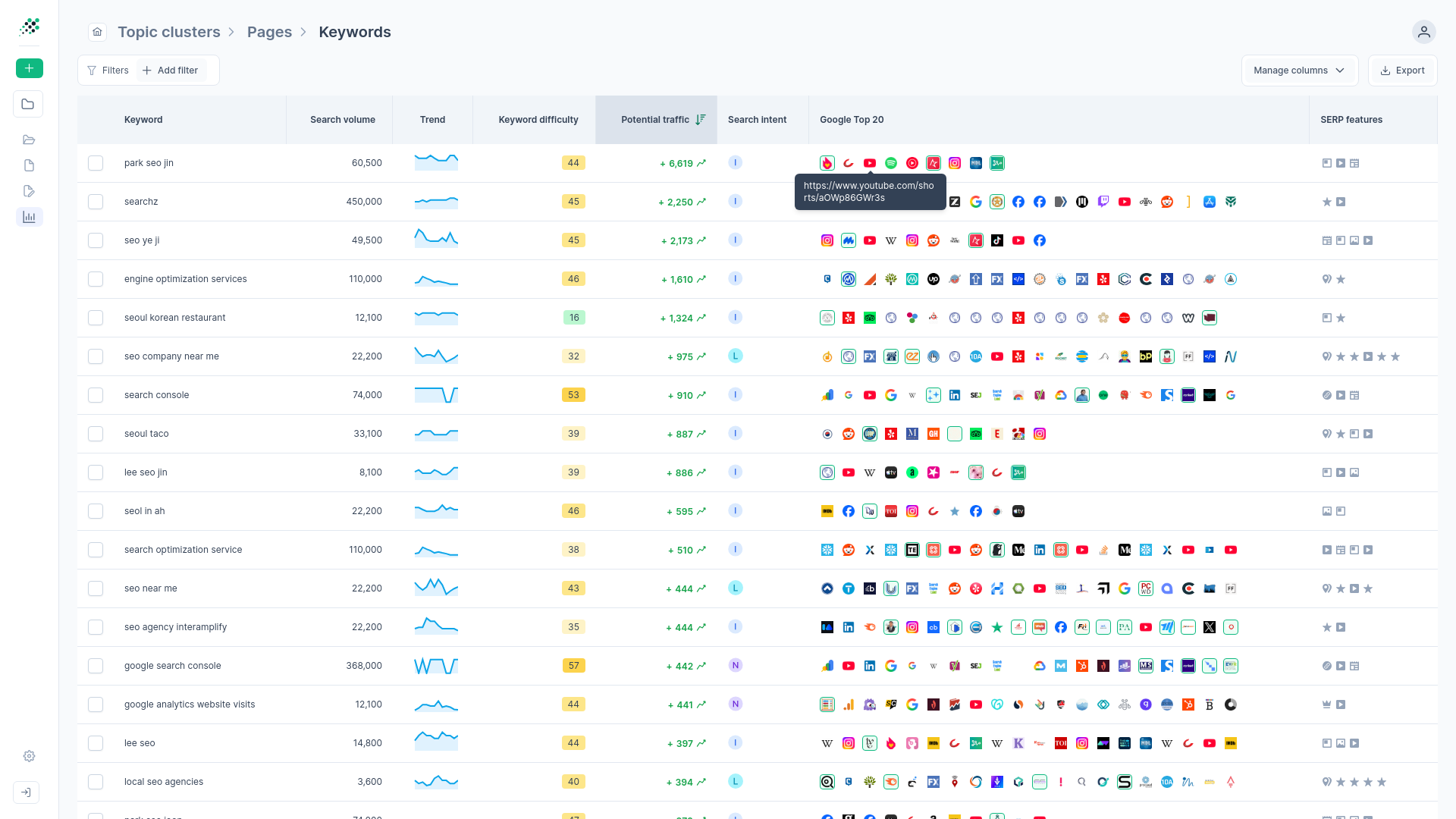
RankDots cleans up those expanded lists automatically. The platform evaluates every discovered term against 13 distinct linguistic rules to instantly discard the gibberish and junk data that usually skews your metrics.
Clean data still requires the right structure. An informational guide backfires when you realize the first page of search results is entirely filled with e-commerce product pages. We built the clustering engine around live SERP overlap because guessing based on shared words leads to intent mismatch.
Automated SERP overlap analysis categorizes those queries similarly to how search engines understand them. When RankDots groups terms, it uses URL Intersection Validation to check real Google results. If three to four identical URLs appear in the top 10 results for multiple queries, those terms share the same search intent and belong on a single page. You don't have to stare at two similar phrases and guess whether to write one comprehensive article or two separate pieces. You get a validated topic map ready for production.
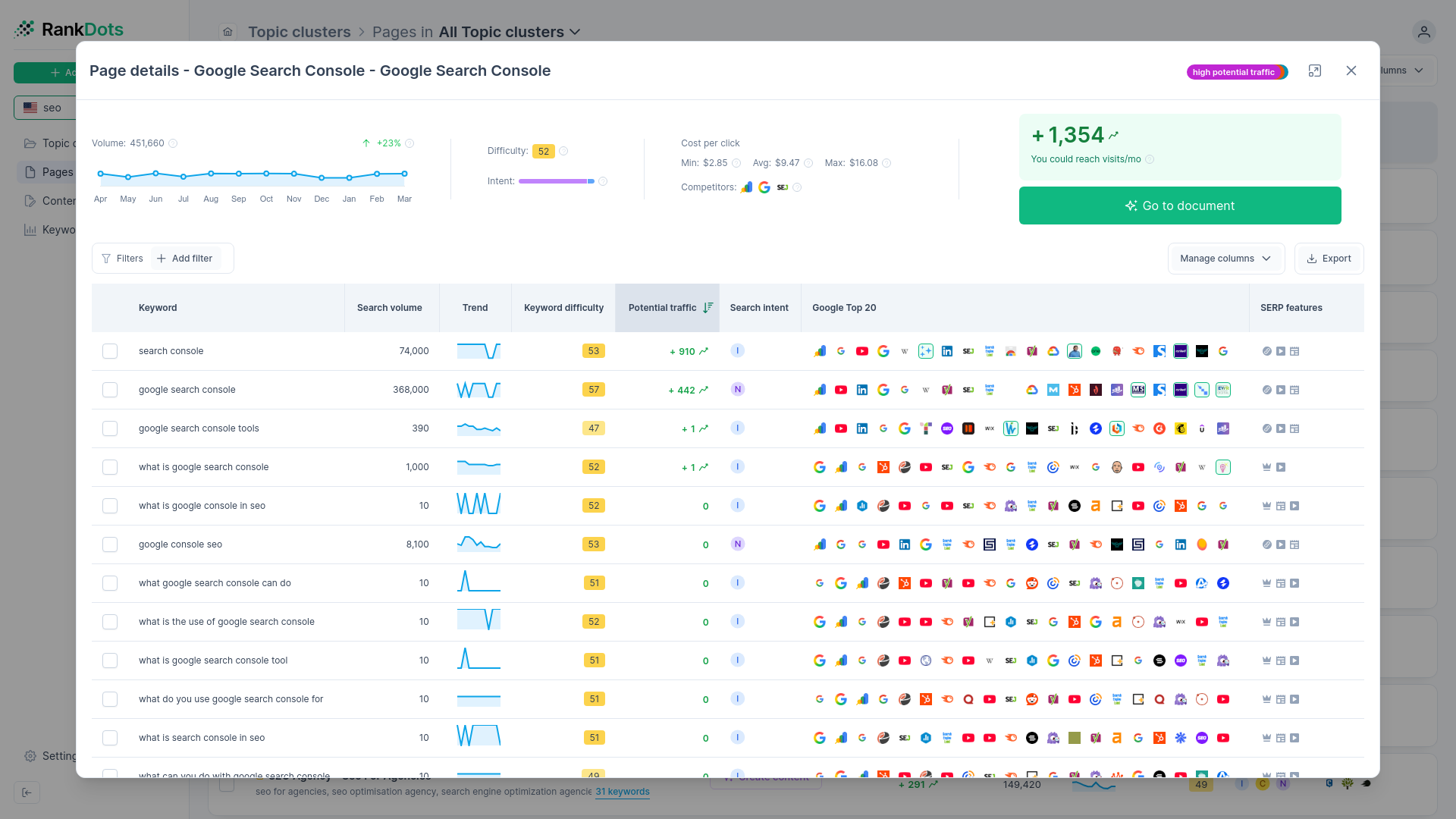
See why RankDots is #1




Frequently asked questions about related keywords
What are related keywords and how do they work?
Where do the keyword suggestions and related keywords come from?
What data and metrics does the tool show?
How does this tool compare to Google Keyword Planner?
Can I export my keyword research results?
Pick your plan
Stop filtering spreadsheets and start capturing more organic traffic.
Let RankDots bypass the manual data entry so you can build an intent-validated topic map in minutes. Discover high-value related keywords that actually drive business results, completely avoiding messy CSV exports.