Exploit Competitor Content Gaps With SEO Competitive Analysis Tools
Stop relying on generic keyword difficulty scores that ignore your domain authority. Find exact pages where rivals are weak and take their traffic using site-relative metrics.
You export a keyword list from a traditional tool, spot a low difficulty score, and spend weeks writing a guide—only to stall out on page two. The standard playbook suggests that picking low-competition keywords guarantees traffic, but that approach fails because generic metrics ignore your site's actual authority. Modern SEO competitive analysis tools let you reverse-engineer rival search strategies, uncover high-value keyword gaps, and analyze ranking factors. Teams often stall because Google Keyword Planner inflates search volume data by grouping similar phrases together. RankDots corrects these false search volumes and uses topic clustering to identify which competitor pages are vulnerable to new content.
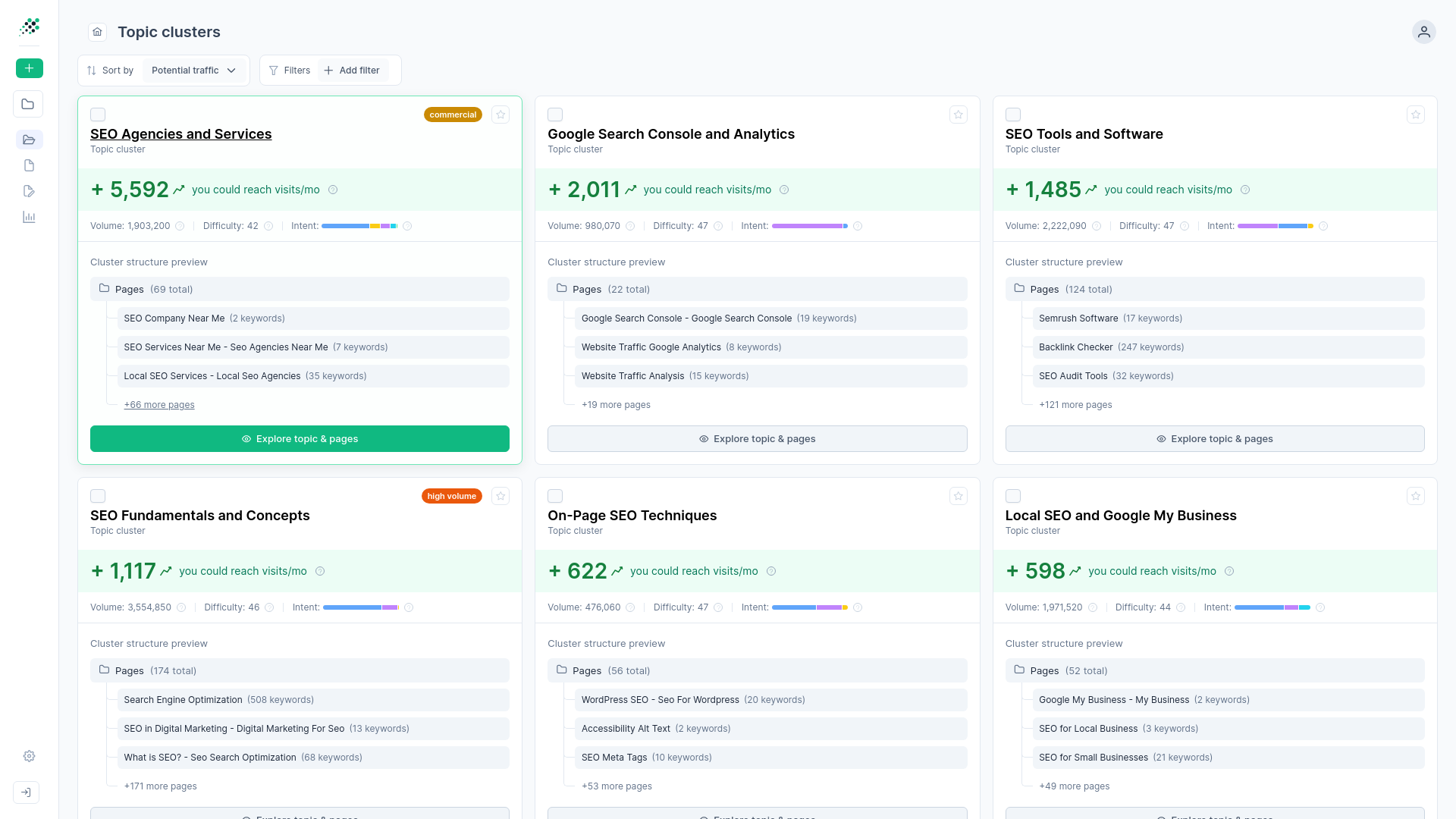
The platform applies an automated search volume correction algorithm that splits grouped phrases into realistic demand. SERP reverse-engineering shows you the exact page types and word counts required to rank, so you stop guessing what Google rewards.
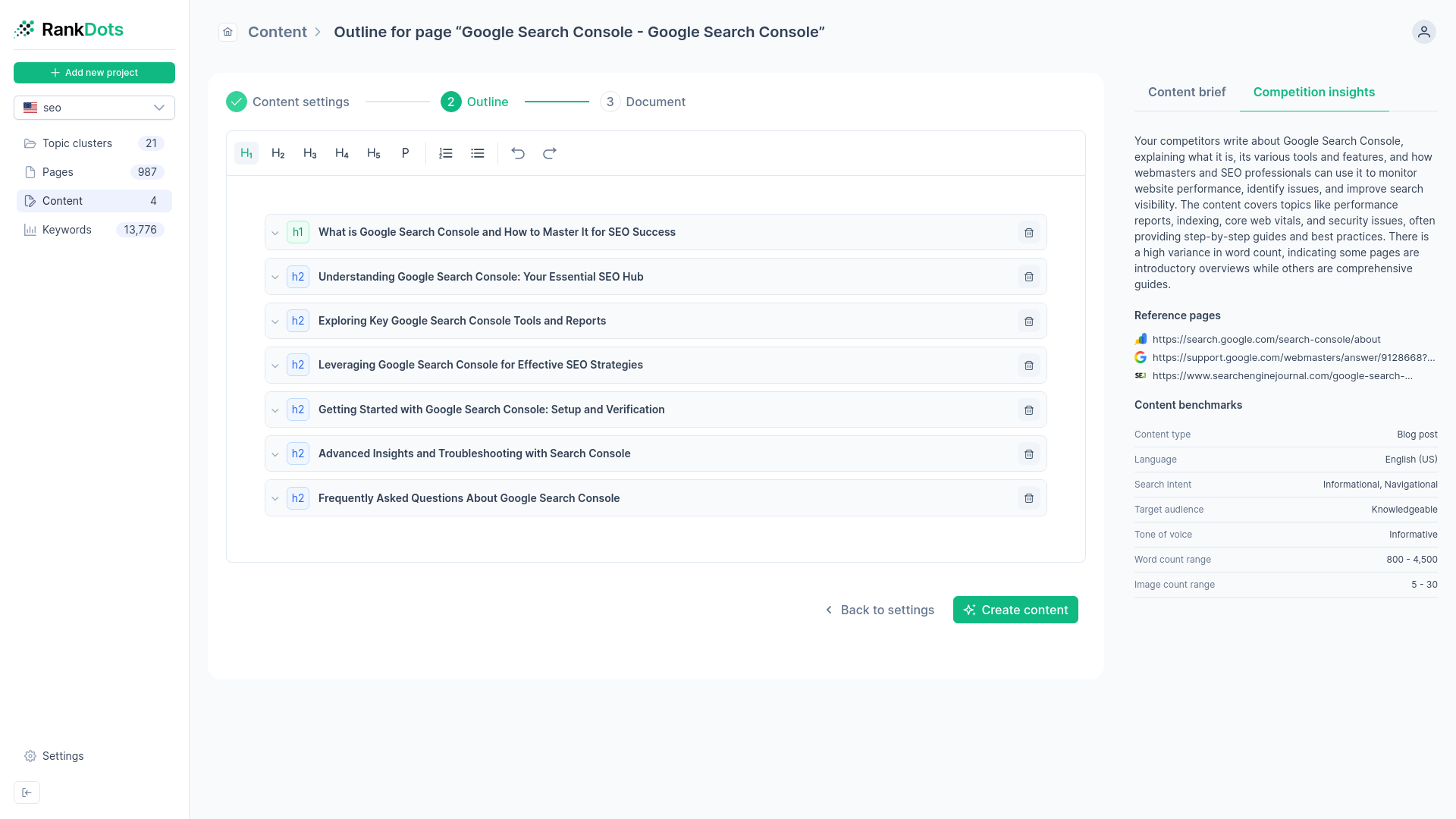
Using a topic-first architecture, the system organizes these insights to turn flat lists into ready-to-use pillar structures. This deeper level of keyword gap analysis reveals what subtopics your competitors miss.
Here is how site-relative metrics and AI-driven architecture expose hidden vulnerabilities so you can prioritize winnable search battles.
RankDots SEO Competitive Analysis Tools
SERP Cluster Validation
RankDots checks live search results to verify the same URLs rank for grouped keywords. If they don't, it separates them to prevent intent conflicts.
Accurate Search Volume
RankDots detects when Google Keyword Planner inflates metrics by grouping distinct phrases, and divides the volume accurately to show realistic demand.
Automated Keyword Filtering
RankDots evaluates every keyword against 13 strict linguistic rules and instantly removes gibberish and irrelevant fragments from your workflow.
Content Type Detection
The AI classifies rival pages by precise format. This reveals whether a topic requires a detailed comparison guide or a transactional product page.
Specific Content Benchmarks
Calculate the exact minimum word counts and multimedia ranges of top-ranking articles to find the proven structural baseline for your target topic.
Multi-Source Aggregation
Eliminate blind spots by querying eight distinct data streams simultaneously, including Autocomplete, People Also Ask, and Google Search Console.
How Topic-First Architecture Works
Select your research mode
Run RankDots' SEO competitive analysis tools on a competitor's URL or enter a seed keyword. RankDots gathers data across eight distinct sources.
Review automated topic clusters
Watch raw keywords transform into structured parent topics and subtopics. It'll instantly build your pillar-and-cluster framework without manual spreadsheet formatting.
Verify SERP overlap data
Check the URL Intersection Validation to confirm Google treats these clustered terms as related. You'll avoid targeting keywords with conflicting search intents.
Execute your content plan
Take your organized hierarchy of primary and supporting articles straight to production. You'll know exactly what topics require deep pillar pages versus specific blog posts.
Identify true SERP vulnerabilities
Generic keyword difficulty assumes all websites fight on a level playing field. They don't. Baseline domain authority correlates strongly with higher search rankings, so your specific site strength dictates your competition level.
When you analyze a competitor's traffic, you have to separate their iron-clad rankings from their vulnerable legacy pages. Most tools just dump a flat list of keywords with a static difficulty number. RankDots evaluates the live search results relative to your specific domain authority and backlink profile. It identifies weak spots—pages ranking on page one that lack strong external signals or deep content. You see where your competitors are exposed.
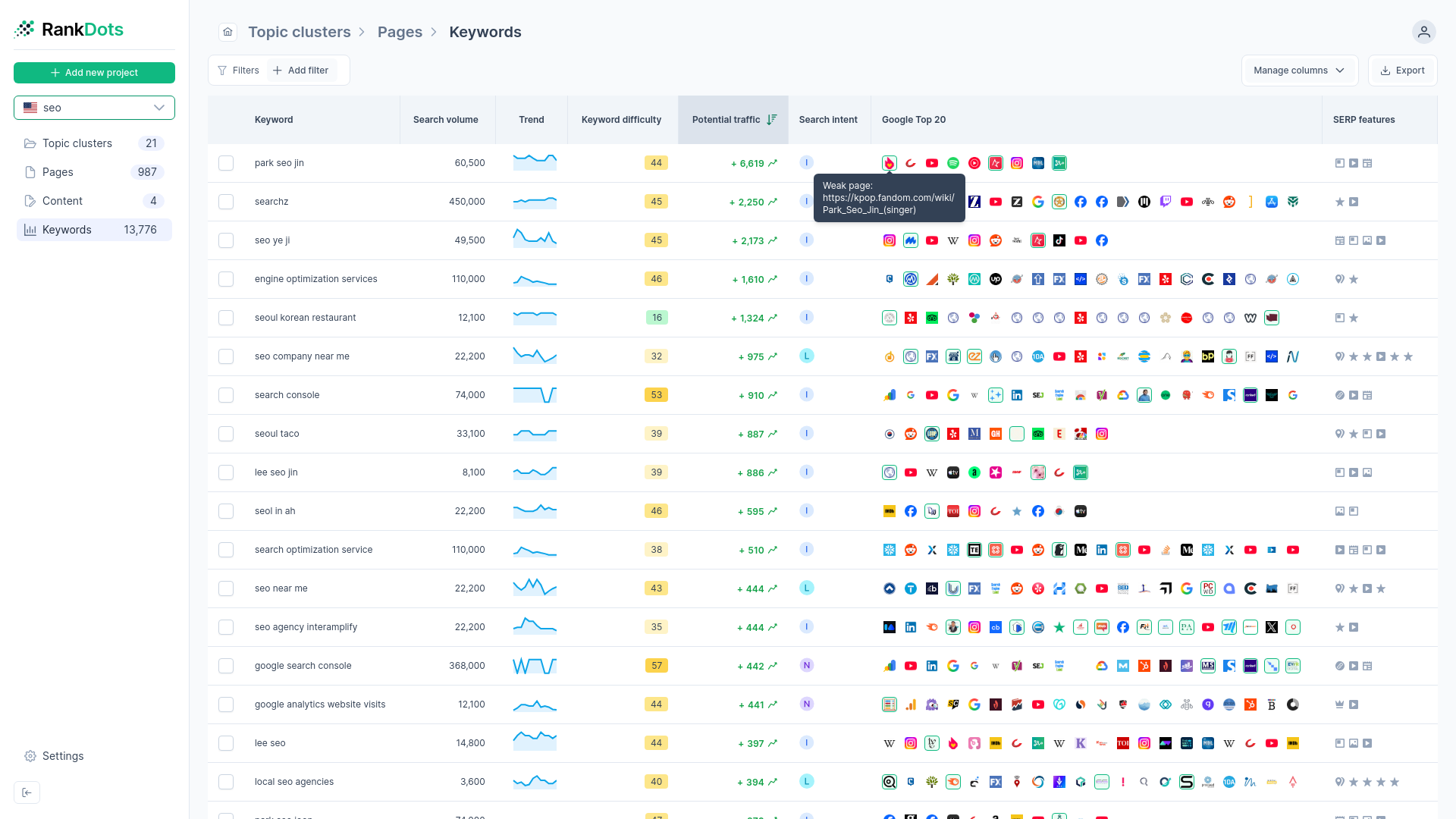
Automated tracking replaces manual audits. You monitor rival keyword clusters directly and strike the moment they drop the ball on content depth.
Site-relative difficulty changes how you plan content. You target highly winnable gaps, not raw search volume. You might find a rival driving heavy traffic to a thin, five-year-old article because nobody else has challenged it. RankDots flags that URL as a vulnerability for your specific domain. You write the better piece, exploit the gap, and claim the traffic.
Frequently Asked Questions
What is SEO competitor analysis and why does it matter?
What specific metrics and data do competitor analysis tools track?
How does site-relative difficulty differ from standard keyword difficulty?
Can you import existing keyword lists for automatic topic clustering?
How do these tools source their competitor data across different search engines?
Inside the RankDots Platform
Spot Vulnerable Competitor Search Pages
Map Automated Topic Content Hierarchies
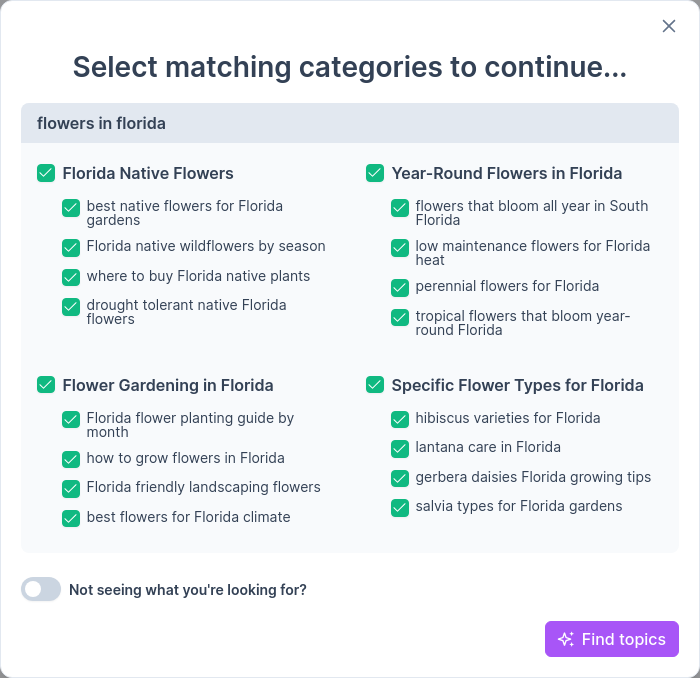
Review Corrected Search Demand Metrics
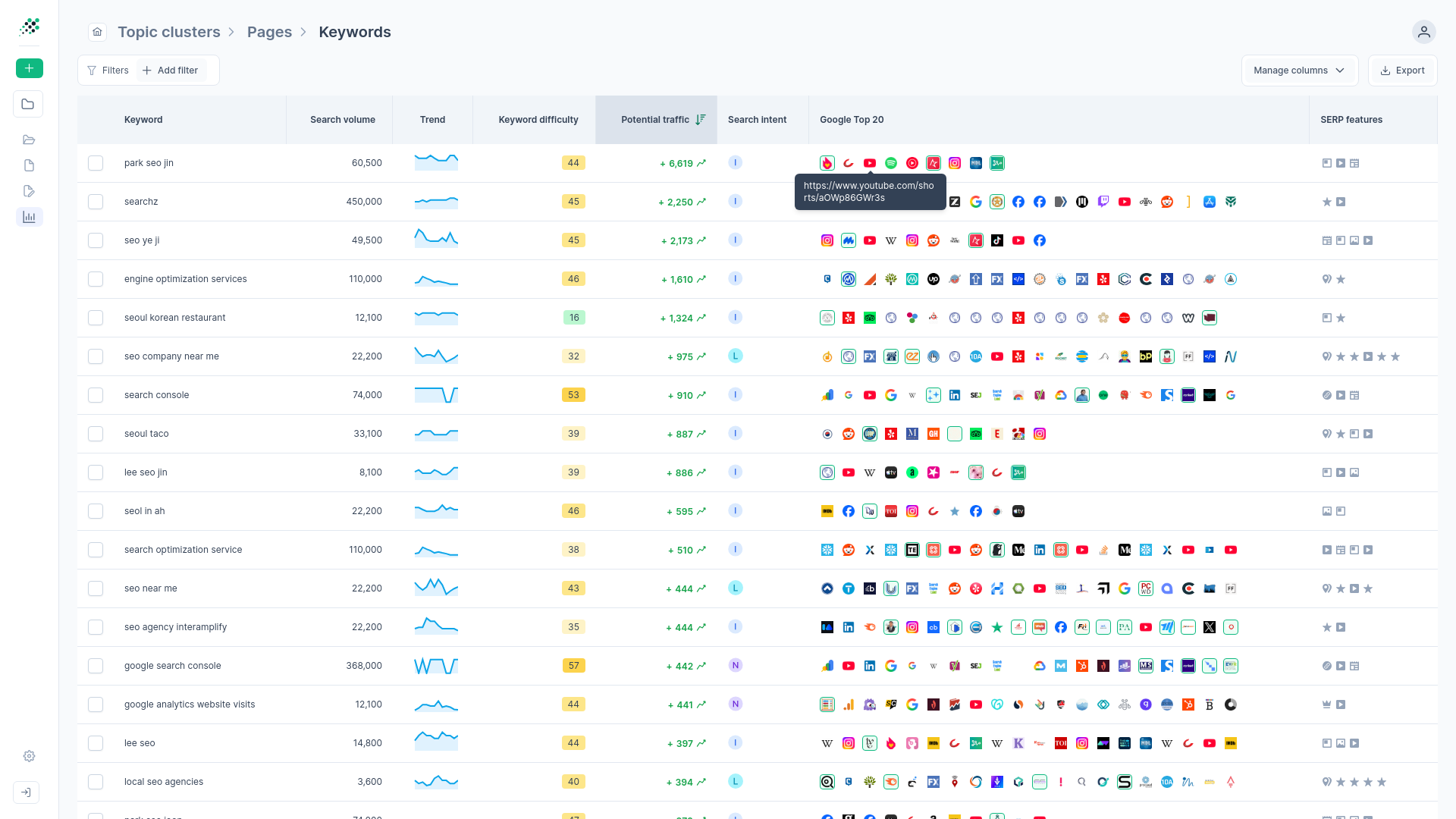
Analyze Required Competitor Content Formats
Find Vulnerable Rivals With SEO Competitive Analysis Tools
Stop wasting resources on keywords you can't outrank. RankDots evaluates live search results against your specific domain strength to show you exactly which pages are vulnerable. Prioritize your content pipeline based on actual win probabilities today.