Turn raw keywords into traffic with our free SEO Strategy Builder
Stop wasting hours categorizing keywords. RankDots groups terms by live Google search intent and forecasts your site-specific traffic ROI to build an executable content plan.
Most SEO campaigns stall before a single word is written, bogged down by the sheer friction of exporting keyword lists from fragmented tools into massive, unmanageable spreadsheets. The SEO Strategy Builder automates keyword research and competitive analysis to build a structured topical map from your seed terms.
The platform processes search intent dynamically so you start executing your strategy faster. The platform analyzes live search intent and site-relative metrics to identify the highest-value content opportunities for your specific domain. RankDots turns that raw search data into a structured content plan.
Grouping "running shoes" and "shoes for running" is easy, but missing semantic connections cannibalizes your rankings. Writers end up creating competing pages for synonymous terms because a flat spreadsheet can't map the intent.
RankDots shifts your workflow to a topic-first architecture. Paste your seed terms, and the platform handles the deduplication and grouping automatically.
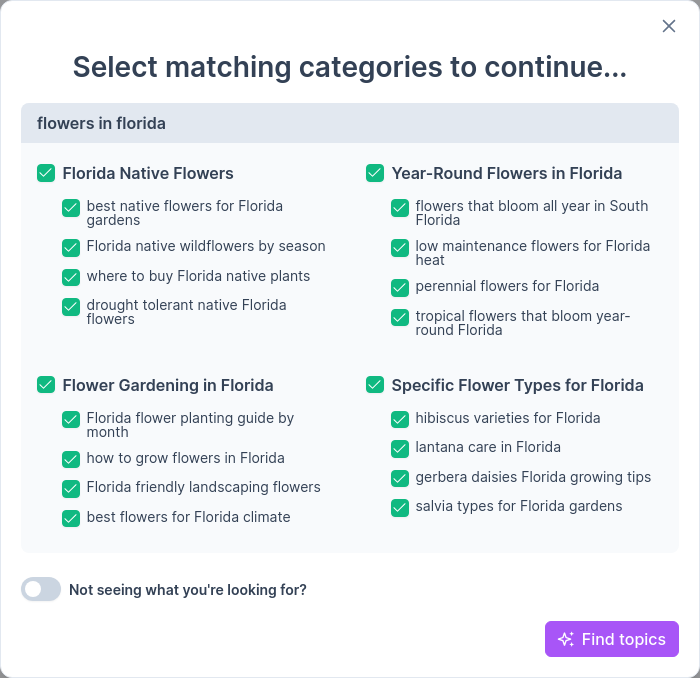
You don't need to export data to third-party sorters anymore. We got tired of watching teams waste days sorting keywords by hand, so the engine runs semantic grouping based on live Google SERP overlap, not superficial text matching. It recognizes that "affordable auto insurance" and "cheap car coverage" belong in the exact same cluster because the search intent is identical.
RankDots uses SERP-Based Keyword Clustering to ensure every article targets a distinct intent without cannibalizing your existing pages.
The software turns your flat list into a structured hierarchy automatically.
The topical authority builder categorizes raw terms into broad pillar themes and specific supporting angles. RankDots builds out parent topics for your pillar pages and assigns specific subtopics for supporting blog posts. You get an executable content plan that maps perfectly to modern site architecture. You save hours of administrative sorting.
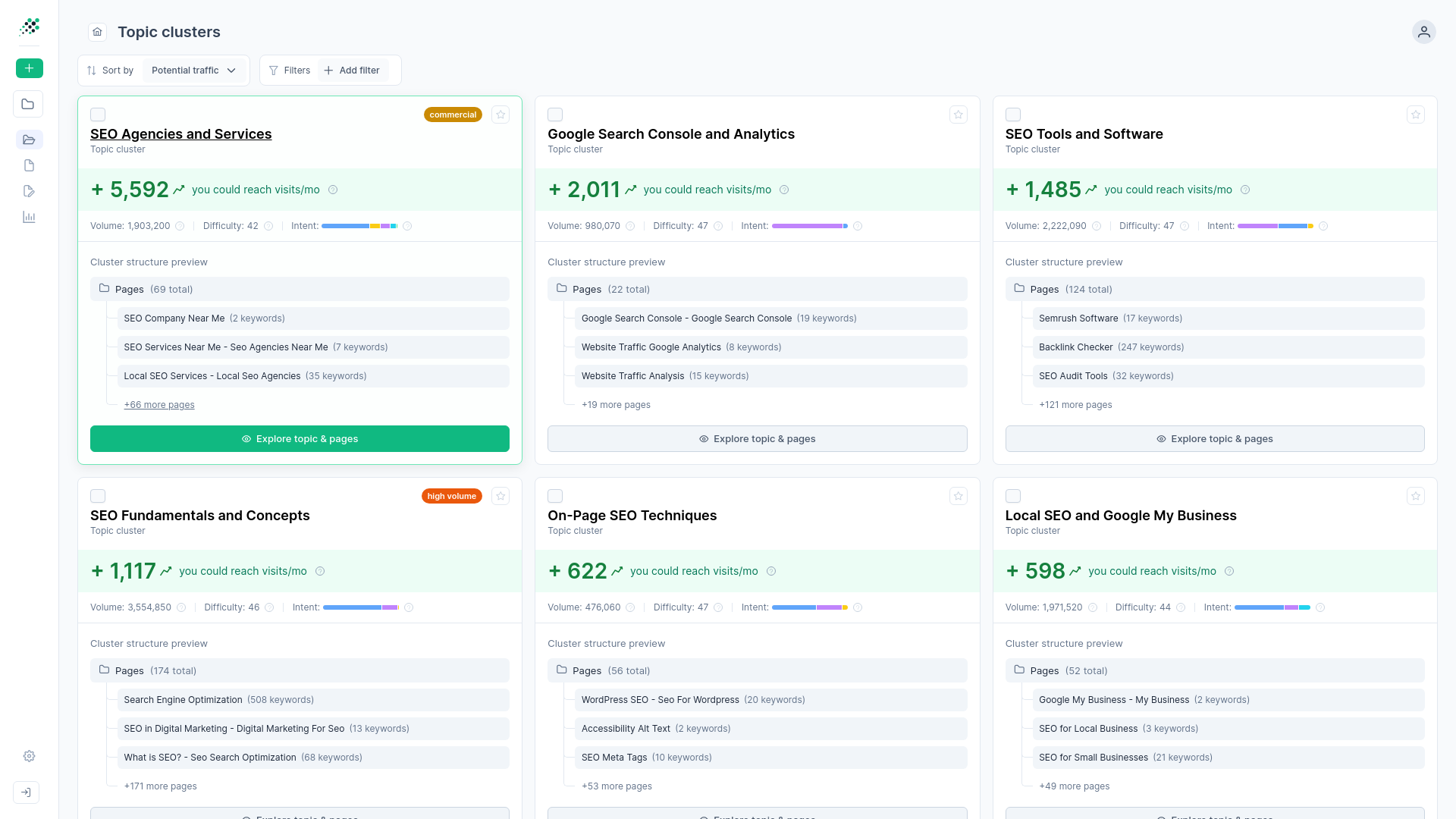
RankDots connects raw search metrics to your active publishing pipeline.
Core capabilities of the RankDots SEO Strategy Builder
End-to-End Execution
Stop bouncing between Ahrefs for research, spreadsheets for planning, and Surfer for optimization. RankDots takes you from raw seed term to published draft in one continuous workflow to eliminate tool-switching friction.
8-Source Keyword Discovery
RankDots queries eight distinct channels simultaneously to bypass the limitations of a single third-party index. You capture a wider variety of search intents and minimize data blind spots.
Automated Quality Filtering
Raw keyword lists require extensive manual cleanup to remove irrelevant fragments. RankDots automatically evaluates every term against 13 distinct linguistic rules so you only review viable targets.
Pre-Commitment Trend Analysis
View clear three-month sparklines and dominant search intent labels for every topic. You can quickly filter the backlog to ensure you prioritize growing search demand before assigning briefs.
Multi-Dimensional Scoring
Move past arbitrary single-letter grades. Your drafts receive specific evaluations across 10 distinct dimensions (including factual grounding and readability) to give you precise optimization directives.
Safe Content Iteration
RankDots automatically stores up to 10 historical versions of your drafts. Test new angles and edit aggressively. You can revert changes with one click.
How the SEO Strategy Builder works: From raw data to hierarchical topic clusters
Input your seed terms
Enter broad keywords or paste a competitor URL. RankDots queries eight distinct sources to build a comprehensive list of viable targets.
Generate the topic hierarchy
Initiate the clustering process to map live search intent. This process generates a structured hierarchy of parent topics and subtopics to replace flat spreadsheets.
Review concrete traffic forecasts
Connect Google Search Console to activate site-relative scoring. You'll see specific monthly traffic projections for every cluster based on your current ranking authority.
Transition to content execution
Select a validated topic cluster and push it directly into the draft pipeline. You'll move from initial research to writing without switching platforms.
Live SERP semantic clustering in action
Explore interactive maps for topic clusters
Visual trend sparklines and search intent labels
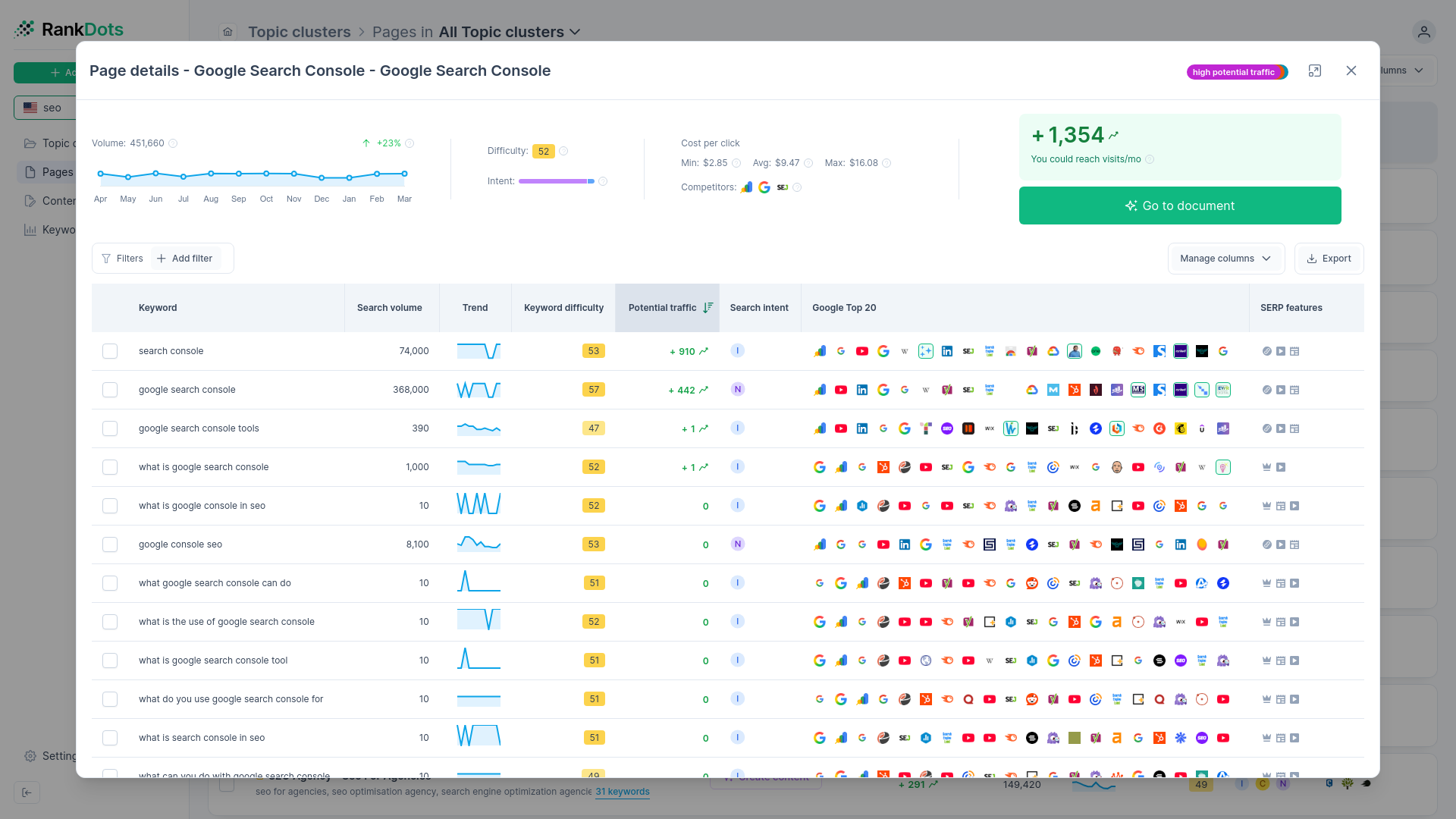
Identify site-relative ranking opportunities quickly
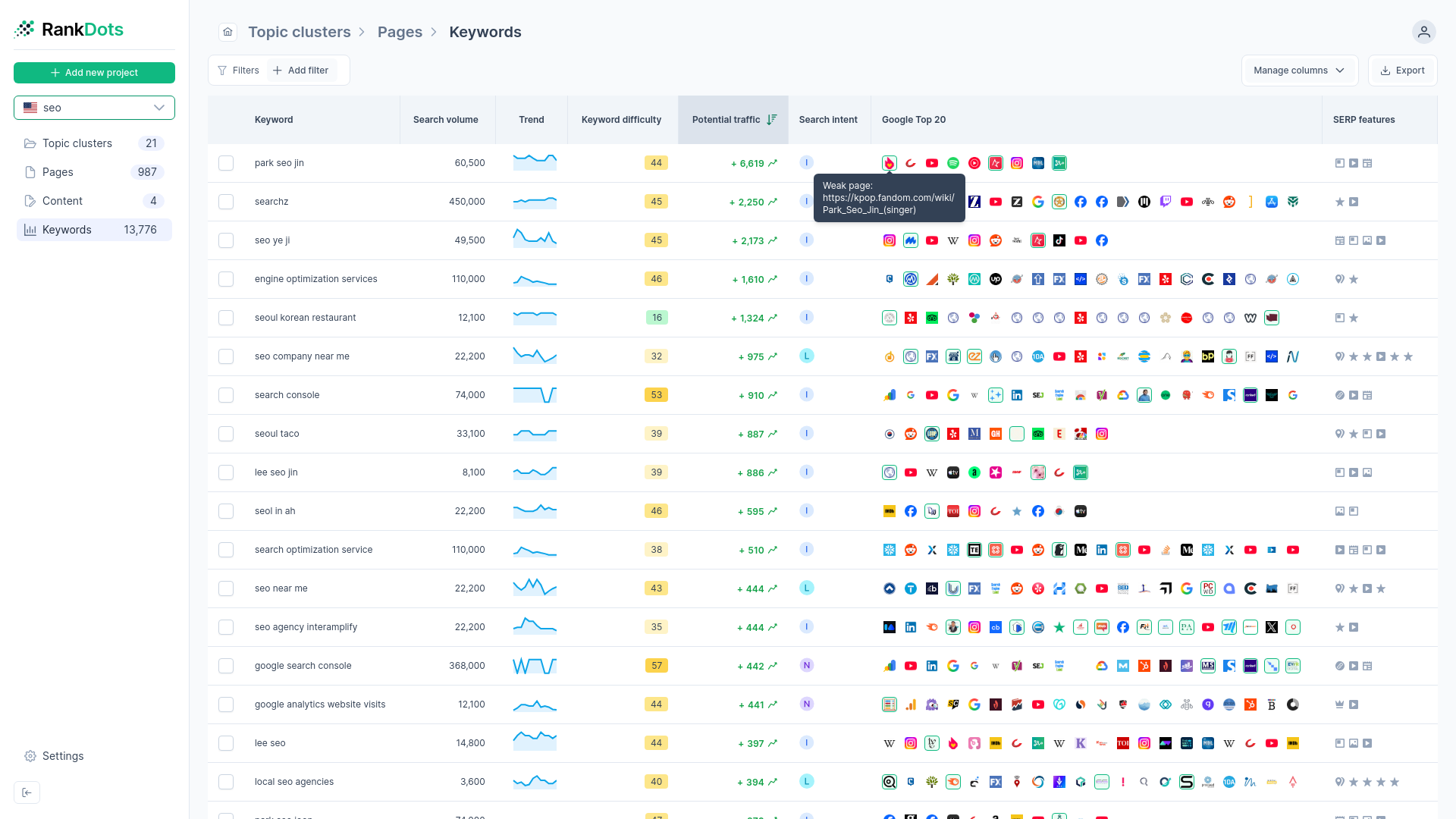
Review competitor structure and format breakdowns
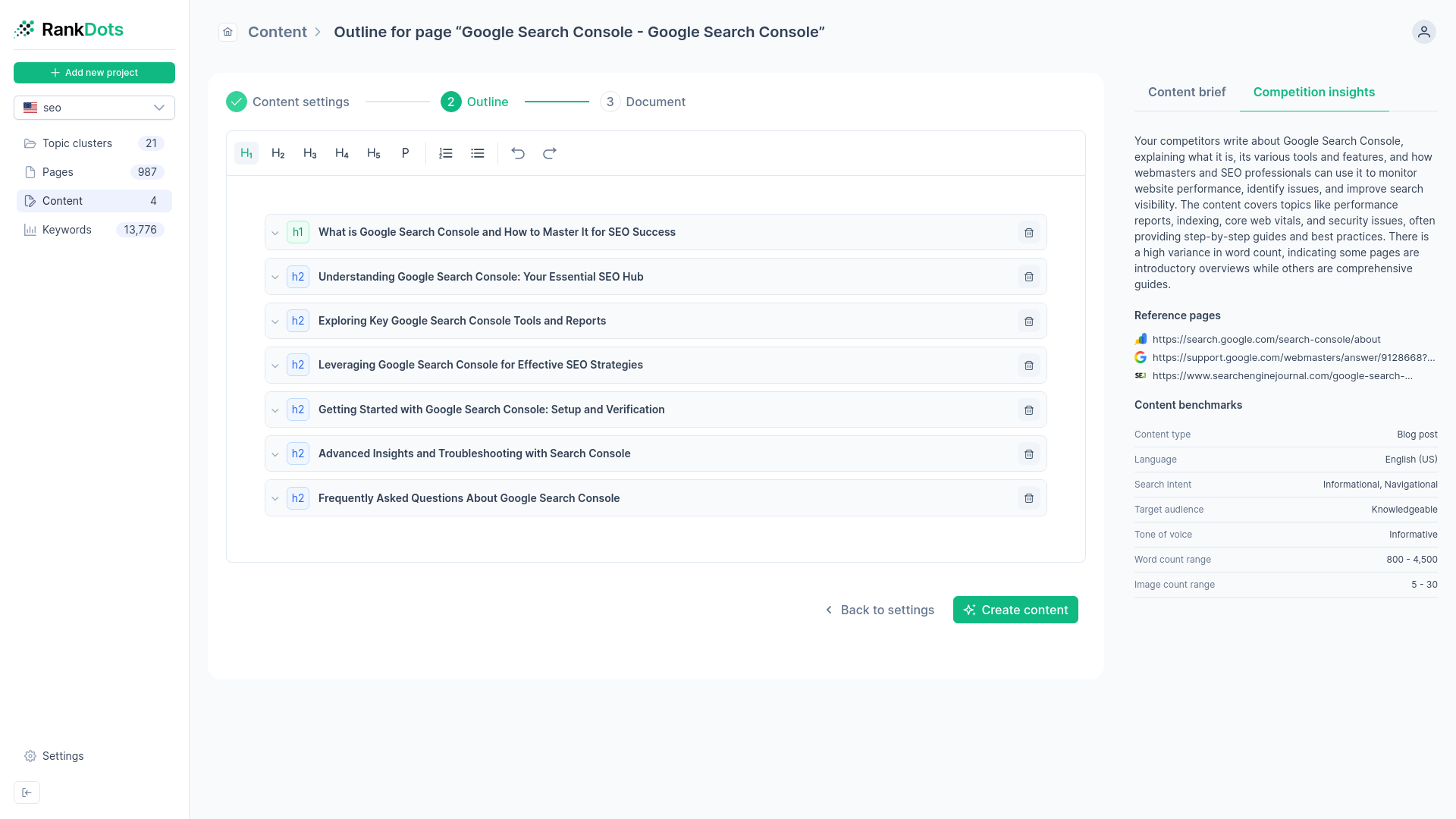
Forecast traffic ROI with Site-Relative Opportunity Scoring
The flaw in static keyword difficulty
Static difficulty metrics ignore your website's individual authority and thematic relevance. Global difficulty scores make it nearly impossible to provide concrete ROI forecasts.
Evaluating SERP competition against your domain
RankDots uses Site-Relative Opportunity Scoring to fix this visibility gap. We process your specific authority profile through a direct Google Search Console integration. The platform evaluates the current top-10 SERP results against your domain's actual strength to identify specific easy-to-rank spots. When you factor in your specific authority profile, ranking difficulty predictions reflect reality. You see which weaker domains you can realistically displace through content quality alone.
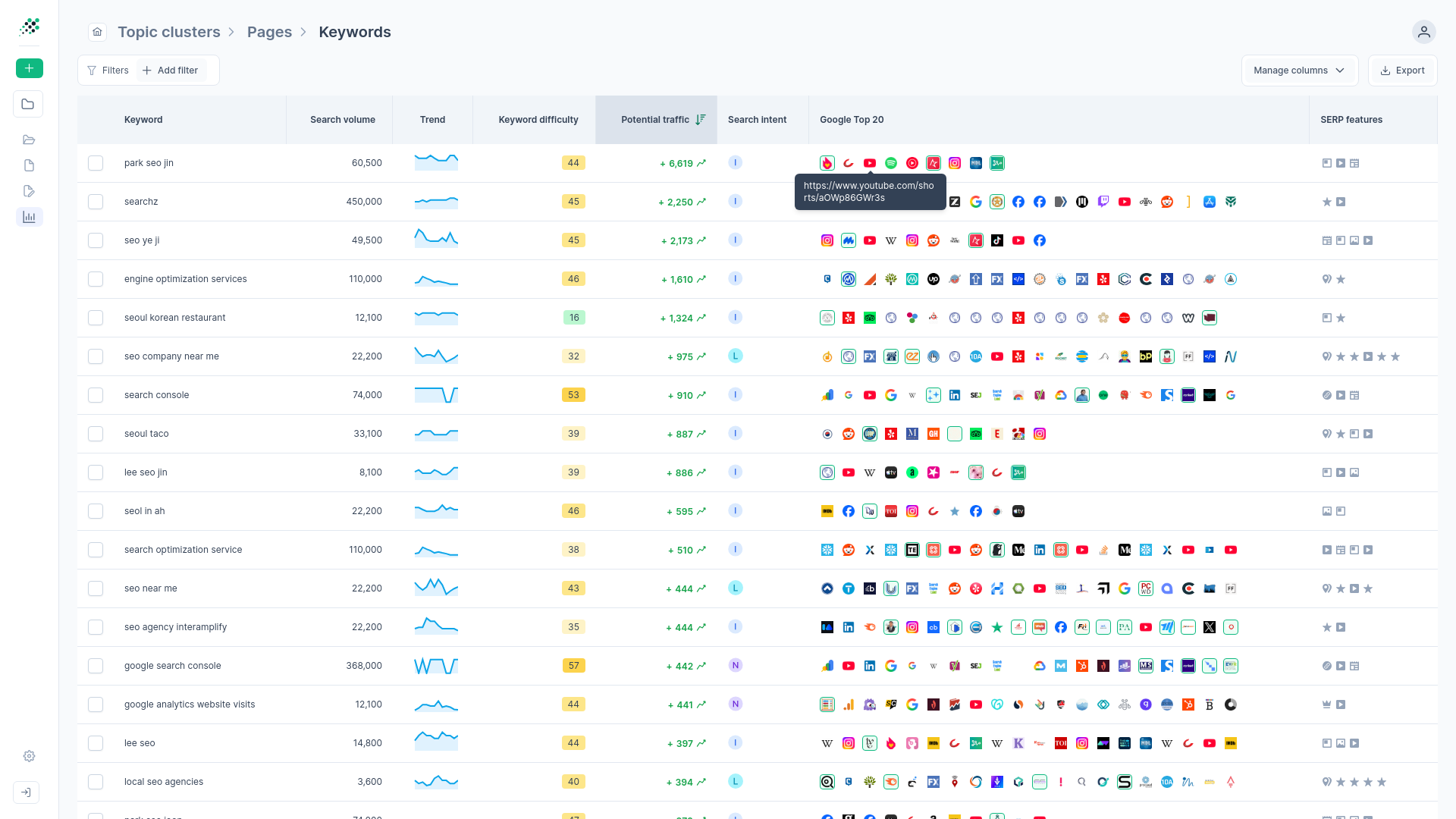
Translating abstract metrics into concrete forecasts
A strategy only matters if you can attach a business outcome to it. The platform translates abstract keyword opportunities into specific, projected monthly traffic numbers for every planned page. You show stakeholders the exact traffic growth potential based on your site's ability to rank. Concrete ROI forecasts for every cluster turn an abstract keyword map into a defendable business case.
See why RankDots is #1




Pick your plan
Frequently asked questions
What is an AI SEO strategy builder?
How is this tool different from generic SEO checklists or tools like Google Keyword Planner?
How long does it take to generate a complete SEO strategy?
Can I use this tool to analyze competitor keywords?
Does the tool support specific industries, niches, or local businesses?
Stop managing spreadsheets and start publishing profitable content clusters.
Your competitors are already publishing while you manage data exports. Centralize your workflow with the RankDots SEO Strategy Builder to move directly from initial research to polished drafts. Secure your market share before search demand shifts.