How to Find Content Ideas When You've Already Covered the Basics

When you've covered every obvious topic in your niche, a blank content calendar can stall production entirely. The new quarter approaches, and you're staring at that empty grid, pressured to constantly produce fresh concepts when every obvious topic seems covered. When figuring out how to find content ideas systematically, reverse-engineer search engine results to uncover proven demand. Group keywords into logical topic clusters, avoid standalone posts, source questions directly from your audience or sales team, and use specialized SEO tools to validate search volume and intent.
Ad-hoc brainstorming rarely maps to business goals. We've seen teams spend hours arguing over clever angles that ultimately drive zero traffic because nobody is actually searching for them. We'll walk through a structured framework and six specific tools to transition from scattered guesses to building a data-driven content calendar.
Quick Takeaways
- Find content ideas systematically by reverse-engineering search engine results pages to uncover proven demand and spot beatable weaknesses in competitor content.
- Group your discovered keywords into logical pillar-and-cluster architectures rather than writing isolated posts to maximize your site's overall organic traffic potential.
- Siphon high-converting concepts directly from your sales team by asking for the exact objections that stall deals and addressing the specific concerns of hidden decision-makers.
- Capitalize on emerging search behavior by prioritizing lower-volume queries with an upward trajectory over stagnant, high-volume keywords that peaked years ago.
- Transform your existing archives into fresh calendar volume by unbundling dense whitepapers into granular, intent-specific articles that target different stages of the buyer journey.
- Future-proof your strategy against AI-curated discovery by breaking dense paragraphs into clear Q&A formats that explicitly match natural language buyer queries.
Reverse-engineering search results for proven demand
An isolated brainstorming session usually produces content that looks good internally but fails to rank. When we shift from guessing to observing, the planning phase gets much easier. Keyword volume confirms people are searching, but the search engine results page reveals what they want to read.
Analyzing top-ranking pages for structure
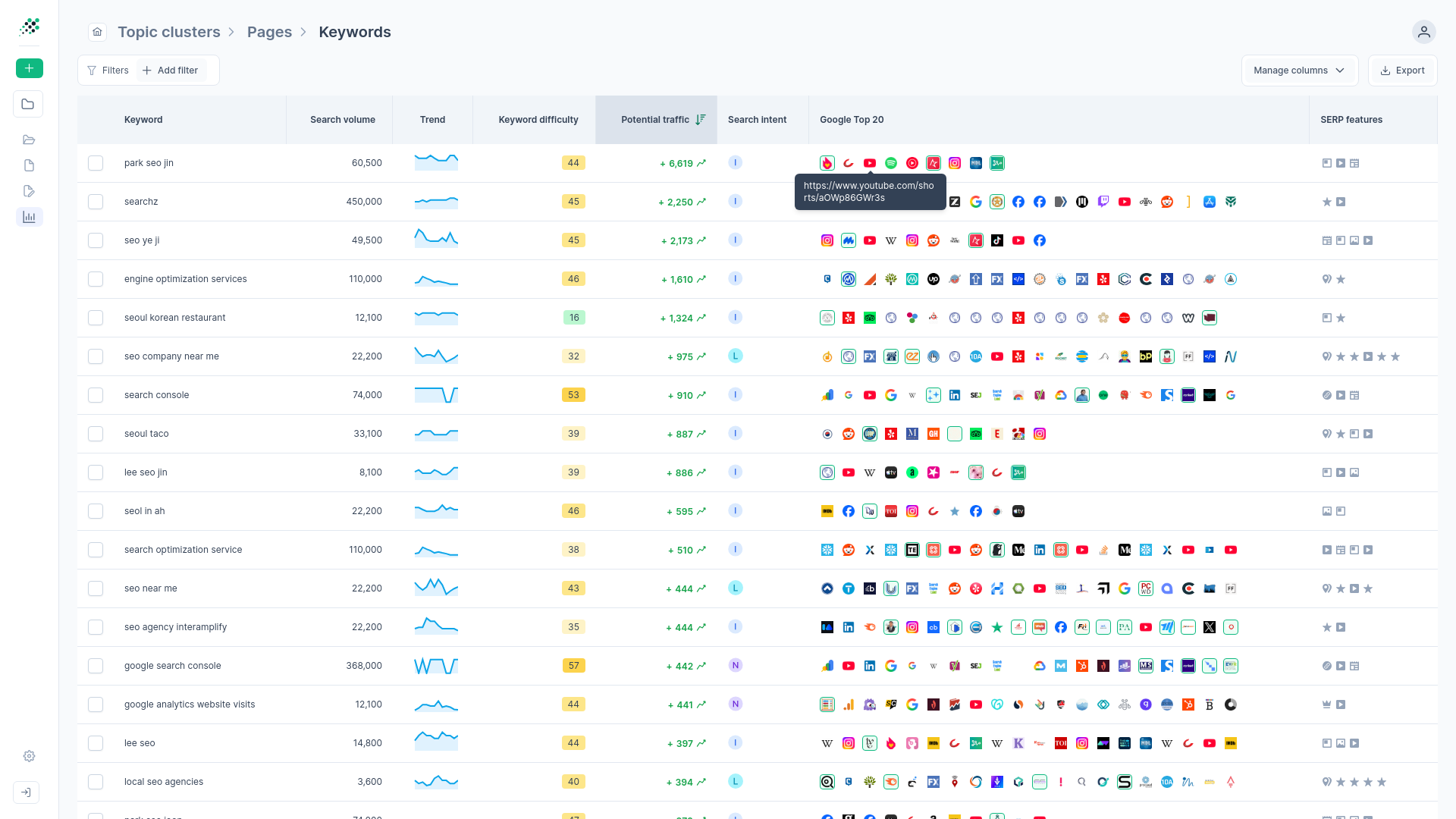
The RankDots platform reverse-engineers Google ranking patterns to identify exact opportunities. RankDots analyzes what the algorithm rewards for specific queries—page types, content structures, and topical depth—to identify structural gaps that raw search volume completely obscures. If the top ten results are all technical comparison matrices, your narrative blog post probably won't crack the first page.
Spotting weak spots where competitors slip
Once you have a large list of potential ideas, prioritizing them based on actual business impact requires you to ignore gut feelings. This is where you look for beatable current rankers. We use tools to highlight weak spots in the search results, surfacing specific queries where the pages currently holding top positions lack authority or relevance. These gaps transform an overwhelming backlog into a focused, data-backed roadmap you can confidently present to leadership.
Extracting gaps from competitor URLs
You can find entirely new angles by analyzing the URLs your competitors already rank for. Run a top competitor's domain through an analysis tool to see their keyword footprint. You can often find ideas faster by locating the missing intersections where competitors capture traffic for subtopics you haven't even mentioned.
Structuring ideas into topic clusters
A pillar-and-cluster strategy forces your content into logical silos, which eliminates the need to brainstorm random listicles. Websites employing a topic cluster strategy experience an average organic traffic boost of 43% compared to those publishing isolated articles. Traffic can jump as high as 134% within six months of moving to a pillar-and-cluster architecture.
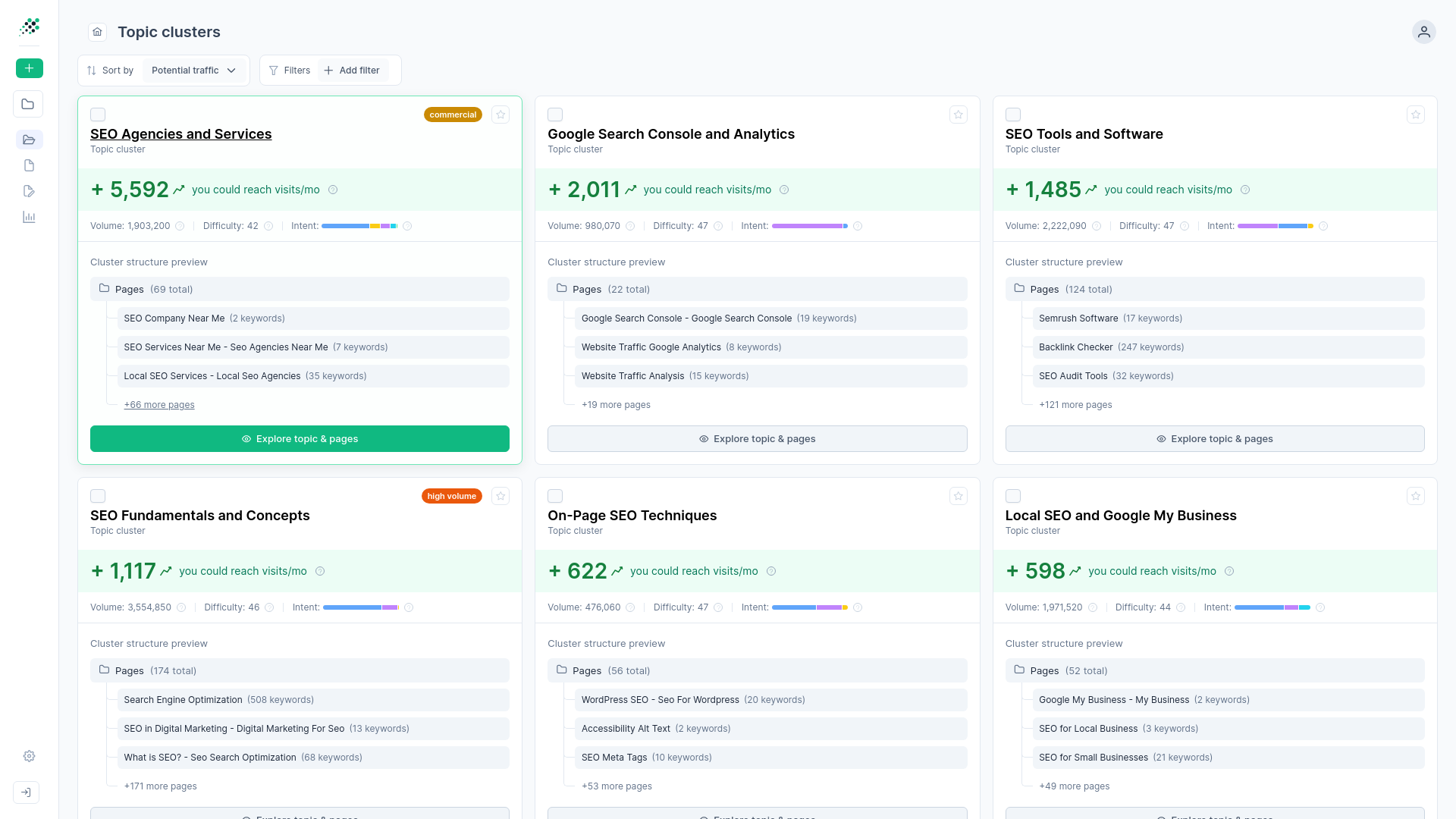
The expansion of a single seed concept into a pillar page and supporting subtopics traditionally requires hours of tedious spreadsheet work. Manually mapping out what queries belong in a specific cluster is time-consuming and error-prone. We rely on RankDots to handle this heavy lifting. RankDots automatically groups keywords into logical Topic Clusters and derives optimal page structures from the raw data.
The Topic Groups feature shows how these clusters function like chapters in a book. You can preview the specific pages inside each group to see exactly how many related keywords a proposed page covers before you assign it to a writer. An auto-repair blog, for instance, might instantly see distinct groups for brake repair or engine diagnostics, replacing an unorganized wall of text.
It helps to know your clusters align with search behavior before you start writing. The system runs a URL Intersection Validation check automatically. If the exact same URLs rank for multiple keywords within a cluster, RankDots validates that those keywords belong together. If the overlap is weak, it flags the cluster as too broad. This ensures your site architecture matches search patterns.
Stop writing isolated posts.
Sourcing ideas from audience questions
Your sales team hears the objections that your website completely ignores. When sales reps complain that the current marketing materials don't help them close deals, they're usually right. They need pieces that address the specific concerns of hidden decision-makers.
More than 40% of B2B deals stall because of misalignment within the buying group. Finding content ideas that speak directly to the financial director, the technical lead, or the procurement officer can unblock those stalled pipelines. Set up a monthly sync with your sales counterparts to gather the exact questions prospects ask during live demonstrations.
You can turn a single customer pain point into a comprehensive resource. If prospects consistently ask how your software integrates with their legacy infrastructure, build a guide around legacy system migration. A one-line FAQ on your pricing page won't cut it. Aligning your content calendar with specific stages of the buying group's internal evaluation process makes your output measurable in revenue, not just traffic. It answers real questions from real buyers.
Keyword research and SEO trends
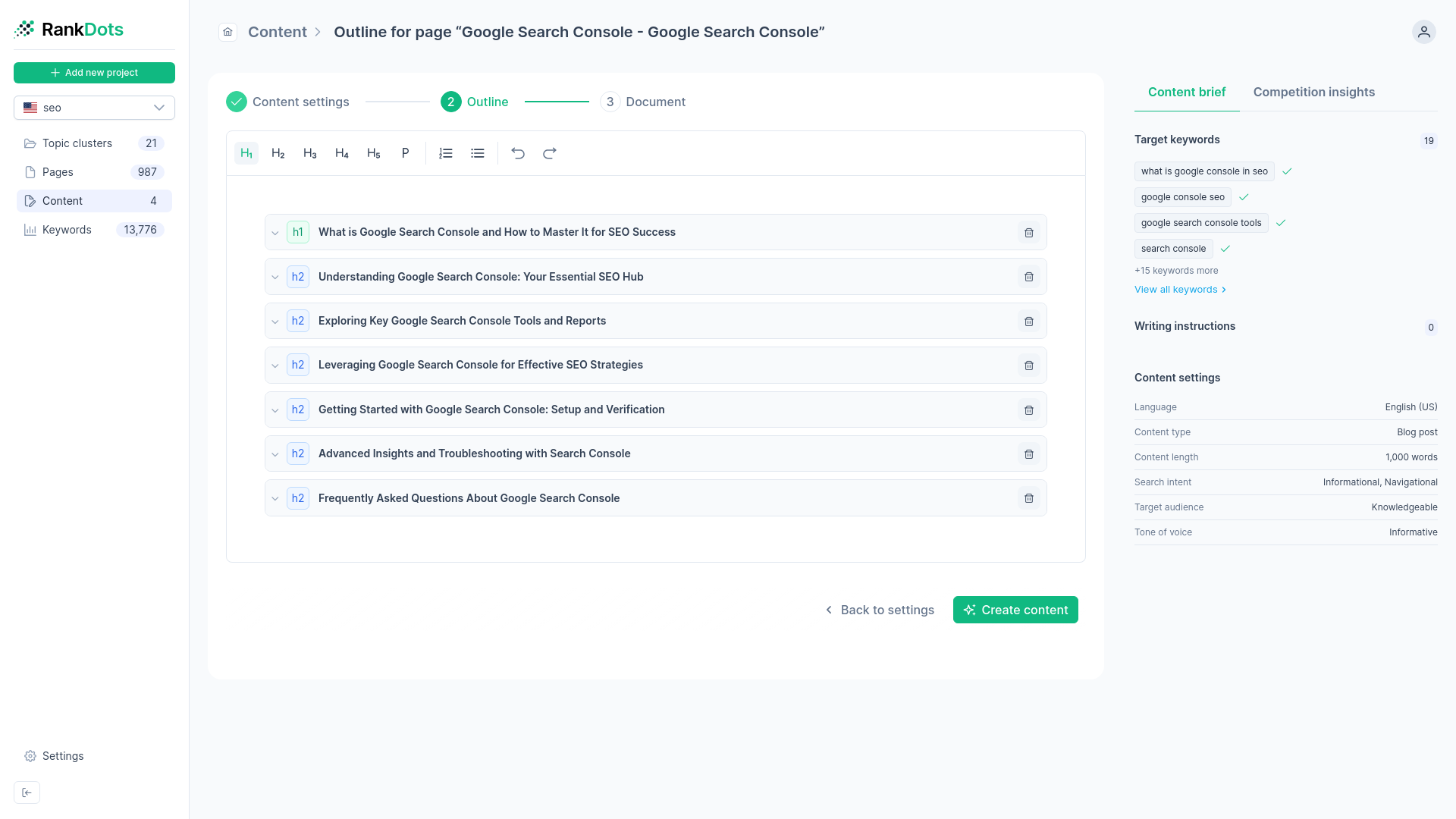
A strategy cobbled together using basic free tools often leaves you without concrete volume data, while enterprise SEO suites might exceed your current budget. You need a reliable way to balance trend tracking with hard metrics.
Filtering raw data by search intent
Approximately 51% to 53% of all queries are informational in intent. Navigational queries make up about 32% to 33%, commercial intent accounts for 14.5%, and purely transactional searches represent less than 1% of total volume. Specific intent labels filter your raw data so you match the right format to the user's immediate need. You don't want to serve a sales page to someone looking for a tutorial.
Using predictive suggestions
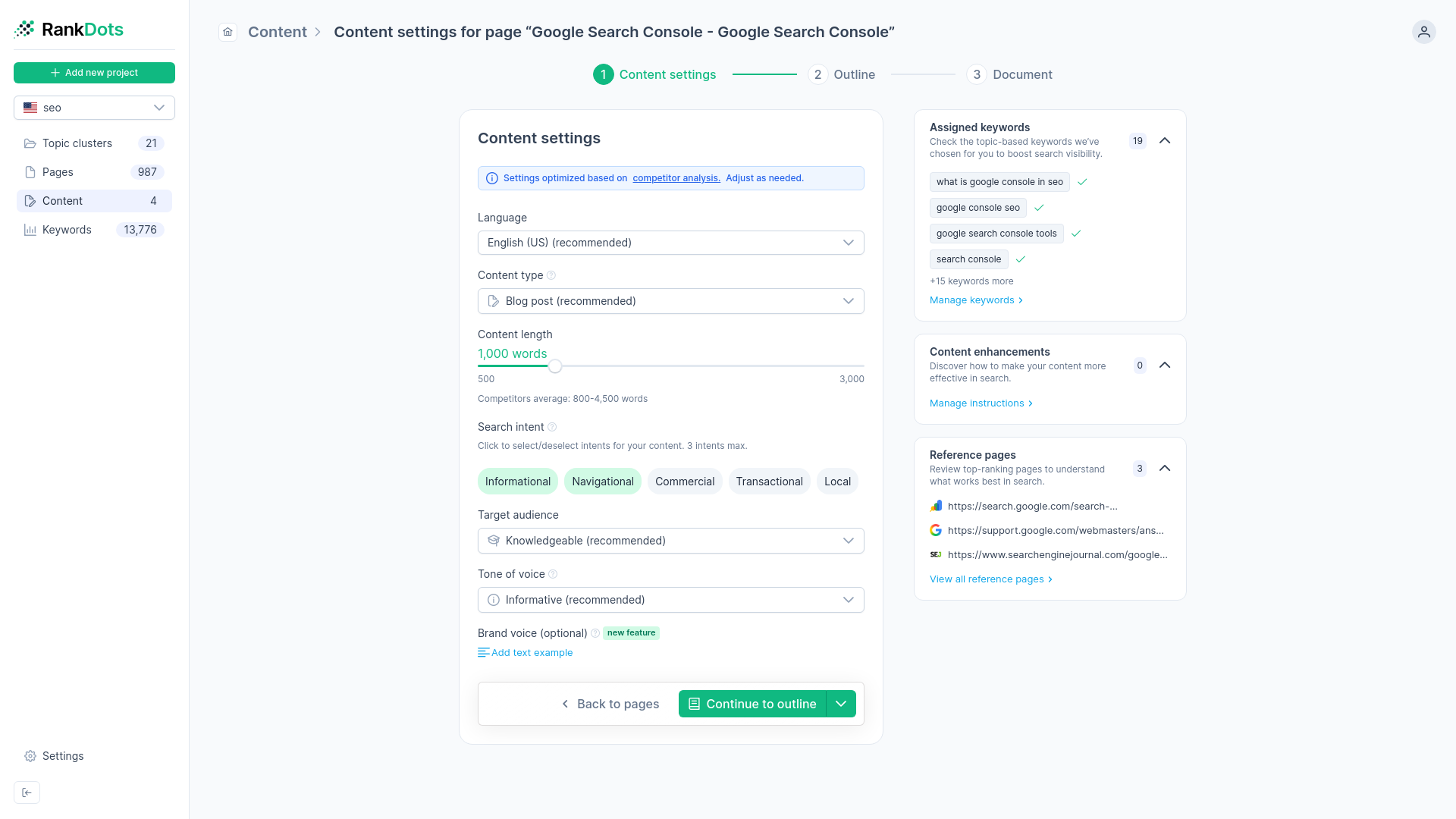
Analyze predictive search suggestions and autocomplete functions to track real-time behavior. Before a topic registers high historical volume, people start typing variations of it into the search bar. An early focus on these long-tail queries gives you a head start against larger competitors.
Balancing history against momentum
Historical volume tells you what happened yesterday. To catch emerging topics, compare those static metrics against a 12-month trajectory. A quick check in Google Trends helps determine if a topic is gaining momentum or steadily declining. We usually prefer targeting a lower-volume keyword with an upward trajectory over a high-volume query that peaked two years ago.
Content repurposing and reframing
If you're staring at a blank calendar, your best ideas might already exist in your own archives. Most teams sit on a goldmine of historical content that just needs a structural update. A refresh of existing blog posts with updated information, current statistics, and new images can boost organic traffic by an average of 106%. We'd lean toward auditing the top-performing posts from two years ago and identifying which sections can be expanded into their own standalone pieces.
A large, dense whitepaper is basically a pre-packaged topic cluster waiting to be unbundled. A 30-page PDF broken into granular, intent-specific blog posts gives you immediate calendar volume. You move past a single gate asking for an email address. Now, you have ten distinct pages capturing specific search queries across the buyer journey.
Search behavior is shifting. 89% of B2B buyers now use generative AI tools at every stage of the purchasing process, so new content ideas must be structured for AI-curated discovery. Traditional keyword lists alone leave you blind to conversational buyer journeys. The anxiety around falling behind industry trends and losing visibility is a common fear, but the fix is structural. When we reframe older content, we organize it around specific questions. Generative engines surface direct answers. To make your content accessible to these mechanisms, break dense paragraphs into clear Q&A formats and ensure your headings explicitly match the natural language queries buyers use in conversational interfaces.
Team brainstorming and collaboration
But what happens when cross-departmental planning meetings actually take place? You either get a room full of blank stares or a long list of highly technical ideas no one will ever search for. 57% of B2B marketers report that creating the right content is their most significant challenge, and trying to solve it in isolation only makes it harder. Cross-departmental workshops need strict guardrails to work.
In our analysis of failed planning sessions, the issue usually stems from vague directives. Don't ask what the company should write about. Ask the customer success team to list the top three reasons users churn. Ask the product team what feature takes the longest to explain. This targeted approach turns unstructured brainstorming into actionable concepts based on real user friction.
Structured brainstorming techniques ensure these cross-functional meetings actually produce a usable backlog rather than an unsearchable wish list.
Once you have a list of raw ideas, take them to your professional networks to gauge actual interest. A quick poll or an observation of active industry conversations on LinkedIn validates whether a topic resonates with real people before you commit resources to writing it. The platform highlights active topics via trending news and offers advanced search filters for industry content, though it restricts search usage on free accounts.
Idea validation is only the beginning. You still need a system for prioritizing the resulting backlog. We score ideas against two distinct metrics: business impact and traffic potential. A topic might have massive search volume, but if it maps to a low-margin product, it moves down the list. Conversely, a low-volume query that directly answers a frequent sales objection gets prioritized immediately. Tie every concept to a specific revenue goal or search demand metric, and the calendar practically builds itself.
BuzzSumo
When standard keyword metrics fail to capture what people care about right now, analyzing social momentum offers a different perspective. BuzzSumo evaluates content performance by heavily weighing social media engagement and historical trending data alongside standard search metrics.
The platform's Content Analyzer and Trending Feeds are excellent for spotting viral potential before it peaks. If you want to know what formats resonate in a specific industry, typing a seed topic into the analyzer reveals which articles earned the most shares over the past year. It also includes a Question Analyzer to surface queries people are actively asking across various forums.
However, the depth of data comes with a tradeoff. The interface involves a steep learning curve, and the sheer volume of filtering options can overwhelm a solo marketer looking for a quick list of blog titles. In our experience reviewing tool rollouts, teams often need dedicated training to pull meaningful insights from raw share counts. The tool also sits behind an expensive entry tier, with paid plans reportedly starting at $199 per month. It makes sense for larger organizations heavily invested in social distribution, but it might stretch the budget for operations focused strictly on organic search.
AnswerThePublic
Sometimes you just need to see how people phrase their problems. AnswerThePublic visualizes Google search autocomplete data into categorized mind maps of user questions and prepositions. It takes a single core concept and branches it out into the who, what, where, and why queries searchers use.
The visual Question Wheels and preposition mapping capabilities make it easy to scan for long-tail variations. Visual idea maps often spark connections that a flat spreadsheet obscures. The tool also pulls in multi-platform search data and lets you configure search alerts to monitor shifting query trends over time.
While the visual presentation is excellent for initial brainstorming, the practical application has limits. The platform produces a high volume of redundant data. You'll often find dozens of minor grammatical variations of the same query, which requires heavy manual filtering to extract the distinct search intents. The tool also imposes strict free tier limits. If you're doing bulk research, you'll hit the usage cap almost immediately. A free tier is available, but consistent daily use requires moving to the paid plans, which reportedly start at $11 per month. It's an initial spark for long-tail discovery, not a comprehensive planning suite.
Ahrefs
Teams that need to validate ideas against hard technical metrics require deep competitor intelligence. Ahrefs pairs a massive backlink database with a content discovery engine.
The Content Explorer database lets you search billions of web pages to find top-performing articles based on organic traffic, social shares, and referring domains. You can instantly see what topics your competitors rank for and identify the gaps in their strategy.
These missing intersections directly inform your overall content strategy and highlight where you can steal market share. The platform also includes a dedicated Keywords Explorer tool for metric analysis and a Technical Site Audit crawler to ensure your existing architecture supports new clusters.
The main barrier to entry is the pricing structure. The platform operates on credit-based usage consumption, meaning every time you open a report or apply a new filter, it deducts from your monthly allowance. We've seen teams drain their allowance in days simply by casually exploring ideas. There's also no free trial for paid tiers. Access reportedly starts at $29 per month for the Starter plan, but heavy users often need to upgrade quickly to accommodate their data needs. It remains a top-tier choice for deep technical analysis, provided you're prepared to manage the ongoing credit limitations.
Frase
The gap between ideation and execution closes only when you know if a topic can actually rank before you dedicate hours to drafting it. Frase unifies traditional SEO grading with Generative Engine Optimization features. It scores content in real-time against top-ranking pages to show exactly which semantic entities need covering to meet algorithm expectations. We've noticed this approach works exceptionally well when you already have a seed concept and need to validate its structural requirements.
However, as a pure ideation tool, it operates with clear boundaries. The platform relies on limited native keyword metrics, meaning you won't get the same deep search volume or historical trend data you would find in a dedicated research suite. It excels at optimizing the idea once discovered, but struggles to uncover hidden macro-trends from scratch.
There are also strict article optimization limits on base plans, which reportedly start at $49 per month. If you're building a large content calendar with dozens of interconnected pillar pages, you'll likely hit those ceilings quickly. We'd lean toward using it as an execution layer—validating and scoring ideas after you pull the initial topic clusters from a broader research tool.
MarketMuse
Generic keyword difficulty tells you how hard it is for the average site to rank. MarketMuse flips that model. It calculates a personalized difficulty score based on your specific domain's existing topical authority.
In our analysis of content planning workflows, this personalized metric fundamentally changes competitive content analysis. It predicts exactly how hard it will be for your specific website to rank for a new topic. If the software indicates you can win a category, the probability is high.
The trade-off for this level of predictive intelligence is accessibility. It carries a high cost of entry, with standard paid tiers reportedly starting at $149 per month after the free tier limits expire. We've also experienced occasional interface processing delays when crunching complex topic models, demanding a deliberate and patient workflow. For enterprise teams with deep budgets, the personalized scoring removes risk, but solo marketers might find the initial investment harder to justify for rapid brainstorming.
ChatGPT
Sometimes the fastest way to break out of idea fatigue is simply talking through it. ChatGPT generates conversational, interactive brainstorming responses tailored precisely to whatever text prompt you feed it.
The trick is building a tight framework. Don't ask for generic blog post ideas. Feed it your specific customer personas, your core value proposition, and three common sales objections. Then, ask it to generate ten distinct pain-point scenarios based on those inputs. We typically see the best results when treating the AI like a junior strategist, not a search engine.
You still have to verify what it produces. The models occasionally generate factual inaccuracies, and brainstorming outputs often look structurally sound but lack search demand. The live web browsing features reportedly available on the $20-per-month Plus plan bridge this gap, allowing the tool to pull recent SERP data. Even with live access, take the resulting concepts and run them through a dedicated SEO tool to confirm real-world search intent before committing to your calendar.
Frequently asked questions
How to find content ideas when you've already covered the basics?
What is content ideation in digital marketing?
What are the different stages of the content ideation process?
Why is content ideation important for business growth and audience engagement?
Conclusion: Building a sustainable content ideation engine
The ultimate goal isn't just generating a higher volume of ideas. It's building a system that ties every piece of content to proven demand and measurable business revenue. Systematic topic clustering shifts a scattered publication into a deliberate, authoritative resource.
Always validate your concepts against SERP data before drafting a single word. What you assume buyers want to read rarely matches what search engines actually reward. Tools like RankDots reverse-engineer search results and automatically group keywords into logical clusters. This removes the guesswork from site architecture and ensures every page serves a specific purpose in the buyer journey.
Start by auditing your current topical gaps. Look at the clusters where your competitors capture traffic that you currently ignore. Identify the weak spots in their top-ranking pages, validate the underlying search intent, and deploy a prioritized content calendar focused entirely on beatable opportunities.
Stop throwing ideas at the wall. Build an engine instead.
Turn scattered brainstorming into a data-backed content calendar.
You shouldn't rely on gut feelings to find content ideas. Map your next quarter with validated topic clusters that capture actual search demand. Prioritize beatable structural gaps over random listicles today.