Social media digital marketing for business: The step-by-step execution playbook
Most guides suggest you need a full content team and a presence on six different apps just to get started. The reality is far less exhausting. When managing social media digital marketing for business, your goal isn't to chase viral trends—it's to get your services in front of the people who sign the contracts. Many commercial cleaning business owners view these apps strictly as personal entertainment. They assume facility managers aren't scrolling feeds for office janitorial services. But the majority of the U.S. adult population actively uses social platforms — with YouTube and Facebook taking first and second place in popularity — and business decision-makers are among them. Instead of chasing vanity metrics everywhere, a successful strategy focuses on a few high-intent platforms to capture those specific buyers. This guide provides a step-by-step framework for setting up a profitable, time-efficient social presence without the burnout.
What is social media marketing?
The core mechanics of modern social
Start by stripping away the jargon. What does it mean to market on these platforms? It breaks down into inbound and outbound motions. Inbound social marketing draws people to your profile by answering their questions and solving their problems organically. Outbound pushes your message directly into their feeds, usually through paid placements.
Organic posting relies on the platform's natural feed algorithm to show your content to followers. Paid amplification involves buying reach so your message hits specific demographics outside your existing audience. Relying purely on organic posts is tough, but ignoring organic leaves paid traffic hitting a hollow, empty profile. You need both to function effectively.
Local focus over global scale
Why does location matter more than raw numbers? Many beginner marketers get distracted by the scale of the internet. While roughly 4.95 billion people are active social media users worldwide, a local commercial cleaner doesn't need global visibility — per Statista data. They need fifty facility managers in a ten-mile radius. Capturing a thousand likes from another continent offers zero commercial value.
Local engagement directly correlates with revenue. Social media is rapidly replacing traditional search engines for local business discovery, and data shows 73% of consumers use social networks to find local businesses. Getting visible to the right neighborhood matters far more than going viral.
The business benefits of building a social presence
Digital social proof
Your business profile is a modern storefront window. When potential clients hear your name, they rarely go straight to signing a contract. They look you up to verify you exist and actively operate. A blank or abandoned profile signals a defunct operation. We've seen business owners hesitate to invest time in these channels, assuming their B2B clients only care about traditional proposals and direct bids. Current data shows 48% of customers prefer using social media to learn about small businesses. A well-maintained page proves your lights are on, your staff is active, and your current clients are satisfied.
Moving from awareness to acquisition
Visibility alone doesn't pay payroll. A strategic social presence intentionally moves an audience from cold awareness into active customer acquisition. The top of the funnel introduces your brand to people who didn't know they needed your commercial cleaning services. The middle of the funnel builds authority by demonstrating your expertise — perhaps showing before-and-after office sanitization results. The bottom of the funnel offers a clear path to purchase, prompting them to request a quote. Every post should serve one of these specific stages rather than just making noise.
The trust generated by consistency
Random updates damage your credibility. Buyers look for reliability. If a vendor can't maintain a regular communication schedule online, clients unconsciously assume they might be equally chaotic in their service delivery. A consistent brand presentation across all channels, including a regular posting schedule, can increase revenue by up to 33%. That financial lift happens because predictability builds confidence. Consumer trust is heavily tied to this consistency—81% of shoppers require brand trust before they make a purchase. When you show up reliably on their feed, they trust you will show up reliably at their facility.
Creating a strategic social media plan
Establish a realistic time budget
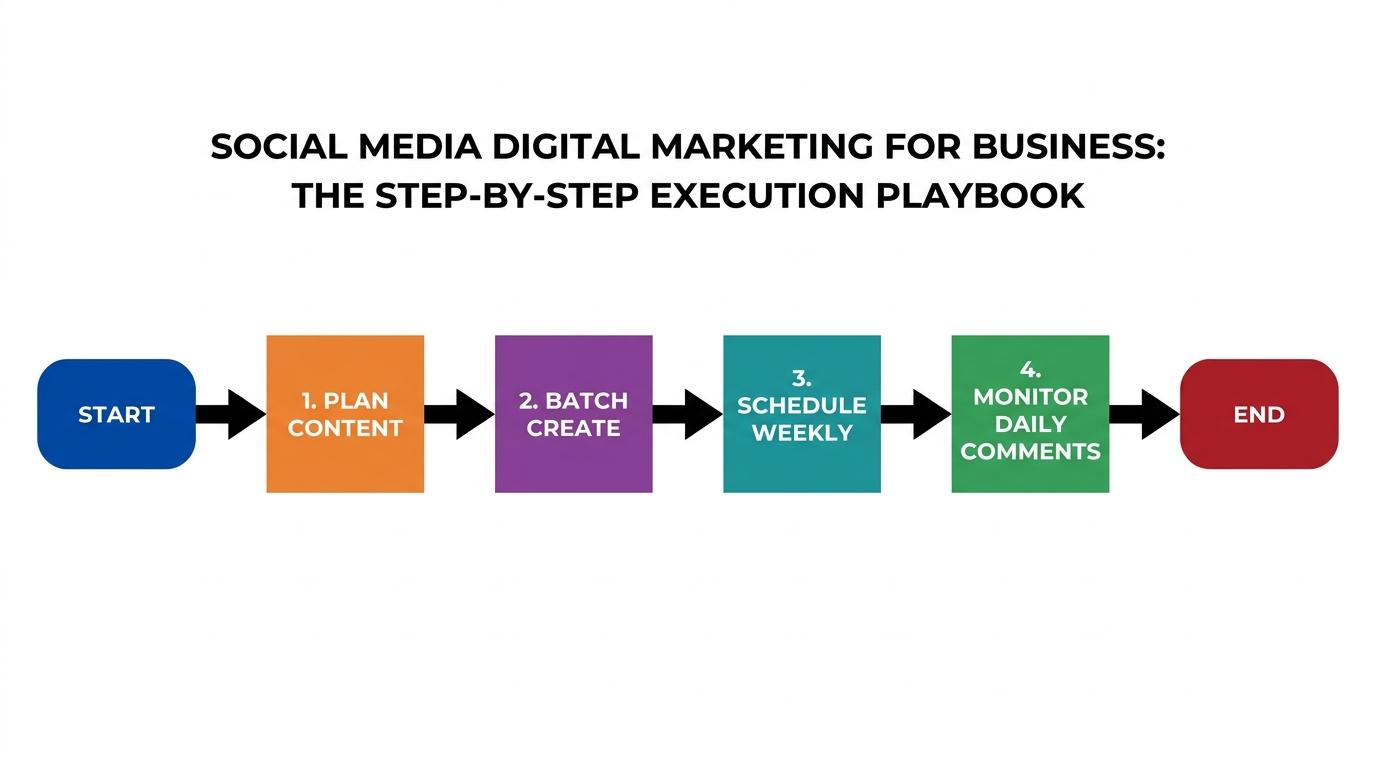
Most marketing guides tell you to start by building exhaustive, theoretical buyer personas. We recommend starting with your calendar instead. A brilliant strategy that requires twenty hours a week will fail if you only have three hours to spare. Small business owners dedicate roughly 6 hours per week to managing their social media marketing. Around 43% of small businesses spend at least that amount of time handling content creation, scheduling, and community engagement.
Consolidate the work so you aren't logging into multiple apps every day. Manually posting updates during lunch breaks often leads to burnout. A third-party scheduling tool lets you manage your approved platforms in one sitting per week. You block off a Tuesday afternoon, load your content into the queue, and escape the chaotic daily task of manual publishing. That single workflow shift restores professional control over marketing operations.
Define your audience by revenue potential
Forget mapping out your ideal customer's favorite hobbies or astrological sign. Define your audience by what they actually buy and the specific business problems they face. If you run a commercial cleaning operation, your target audience is facility managers, property developers, and office administrators. They don't care about viral dance trends. They care about OSHA compliance, reducing employee sick days, and predictable vendor communication.
When you align your content with those stark operational realities, your profile becomes a business asset rather than a distraction. Your messaging needs to speak directly to the person who holds the company credit card.
Set key performance indicators tied to cash flow
Success requires looking past superficial engagement. Even though 83% of marketing leaders use social publishing and advertising as a customer communication channel, many still fail to measure the financial return.
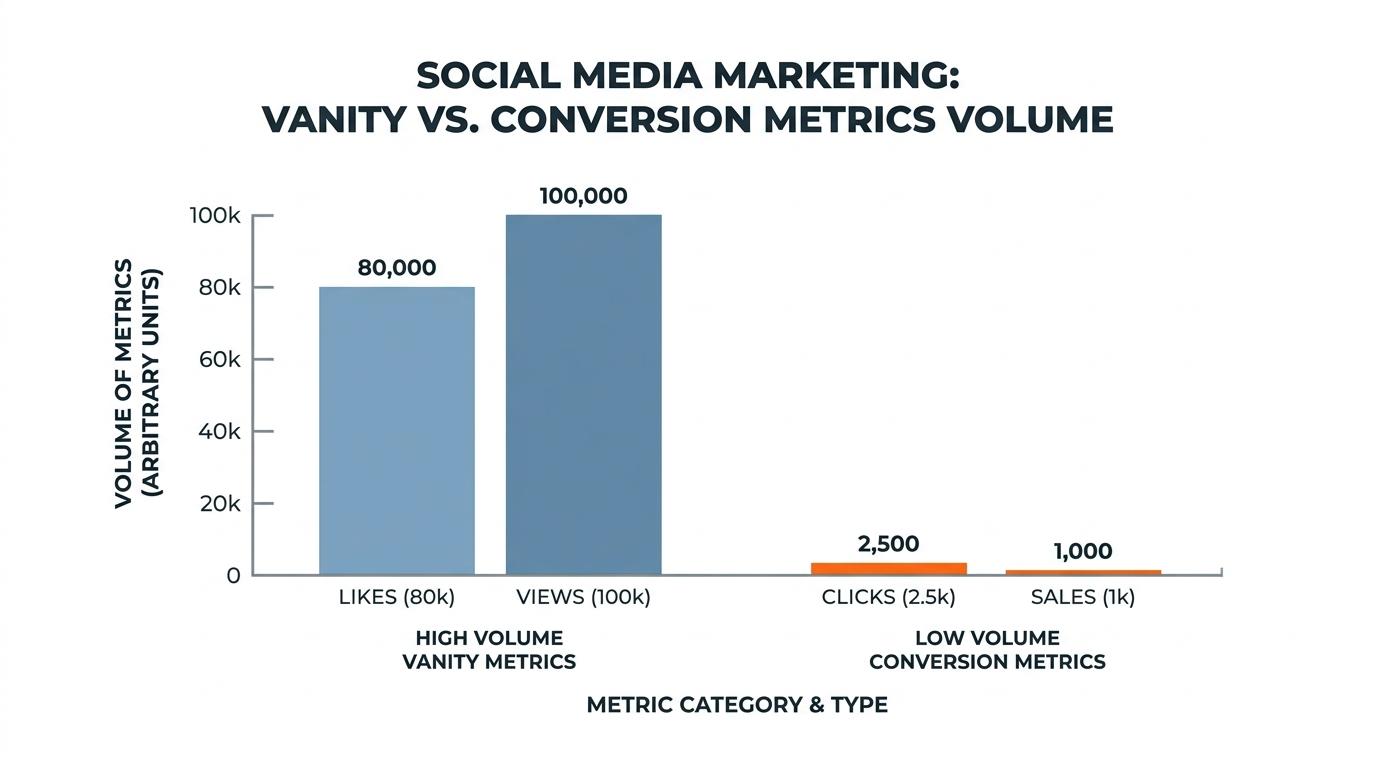
Don't track likes as your primary goal. Track pipeline velocity. Set performance indicators that map directly to revenue. A good KPI might be the number of inbound quote requests generated from your profile link each month. Another might be the click-through rate to your dedicated landing page. If your following grows by ten thousand people but your appointment calendar remains empty, the strategy is failing. Focus your measurement strictly on the actions that keep your business solvent.
Platform selection and overview
B2B versus B2C purchase intent
You don't need to be everywhere. The most damaging piece of marketing advice is the persistent myth that businesses must maintain active accounts on every available network. You should select platforms based strictly on where your specific customers display purchase intent.
Consider a beginner marketer trying to secure commercial cleaning contracts by posting short-form videos on TikTok. They might spend hours editing clips, only to see zero interest from facility managers. They exhaust their resources on a high-production, consumer-focused platform instead of targeting professional networks for B2B lead generation. TikTok requires continuous native video production to feed its aggressive algorithm, making it a heavy lift for a small team selling janitorial services.
Conversely, professional networks hold serious commercial value. LinkedIn drives 80 percent of B2B marketing leads from social media, generating the highest visitor-to-lead conversion rate of any network at 2.74 percent. If you sell to other businesses, that is where your effort belongs.
The reality of dead organic reach
Many business owners diligently post updates to their Facebook business page every day, only to realize their posts are reaching just a handful of people. Without a paid advertising budget, you're essentially reaching almost no one.
Organic reach for Facebook business pages has dropped to near-zero levels. In 2024, the average organic reach rate for a page post hit just 1.37%, and larger pages frequently see less than 1% visibility without paid promotion. X (Twitter) presents similar algorithmic hurdles, demanding extremely high frequency just to maintain baseline visibility. If you choose these legacy platforms, we recommend pairing your organic strategy with a dedicated ad budget to force distribution.
Selecting your primary channels
Choose one primary platform to master before expanding anywhere else. If you sell consumer goods like apparel or home decor, visual platforms with shopping integrations make the most sense. If you sell professional services, lean entirely into networking platforms.
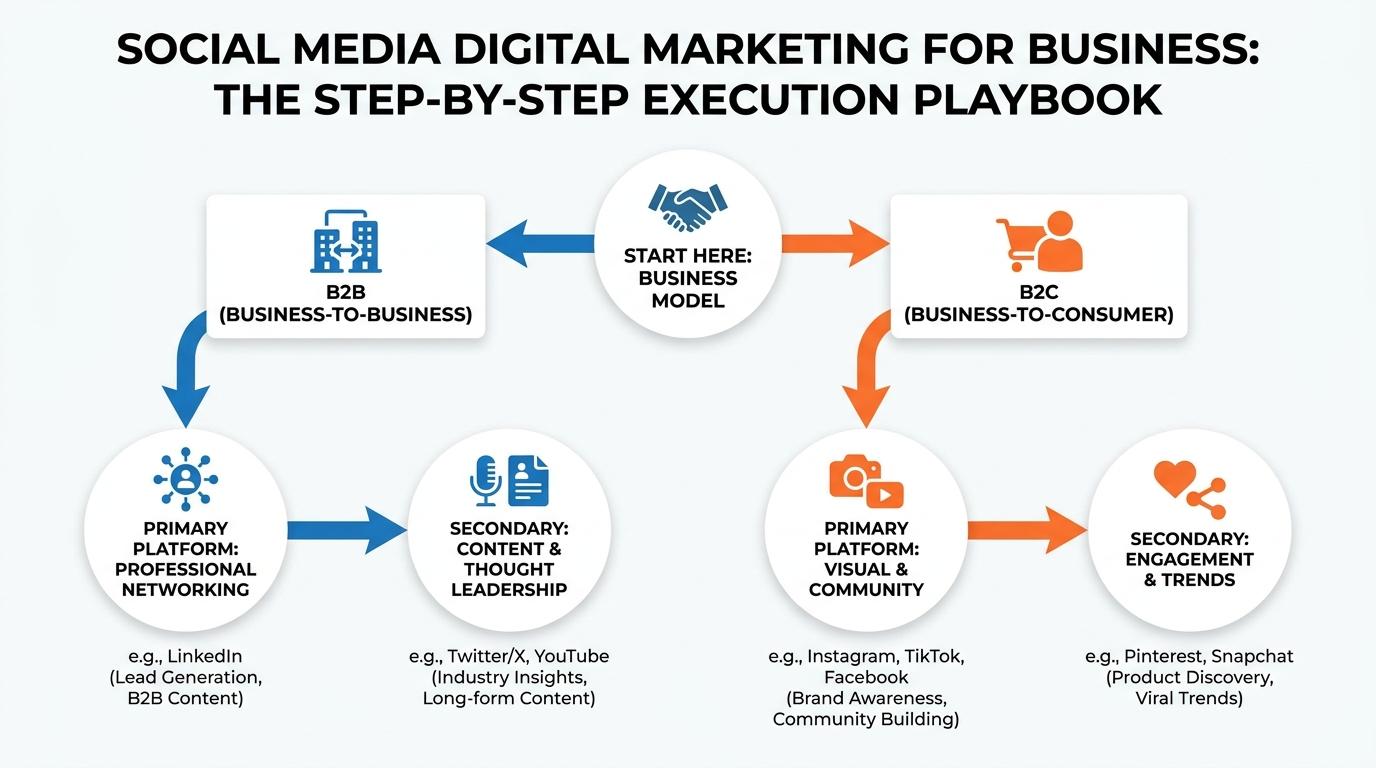
Evaluate your internal resources honestly. If you have no capacity to shoot video, cross TikTok off the list immediately. Pick the single channel where your audience naturally congregates to solve problems, learn the nuances of that specific feed, and establish a firm foothold there before you ever consider opening a second account.
Compare social media tools
| Platform | Starting Price | Core Feature | Main Limitation |
|---|---|---|---|
| Sprout Social | $249 per user/month | Centralized Smart Inbox | Strict per-user pricing |
| Hootsuite | $99 per month | Bulk schedules 350 posts | Base plan restricts custom analytics |
| Zoho Social | $15 per month | Automatic CRM integration | Base plan lacks multi-user support |
| Sendible | $29 per month | Custom agency reporting dashboards | Entry plan restricts collaboration |
Content creation best practices
Balancing the content mix
Nobody logs on to read endless sales pitches. If every post demands a purchase, your audience will aggressively tune you out. Offer genuine utility to earn their attention. Half of all consumers are expected to reduce or completely abandon their social media usage by 2025 due to a perceived decline in platform quality and toxic user bases.
We suggest dividing your calendar into a 3-2-1 mix. Publish three educational posts that solve specific industry problems. Share two cultural posts that highlight your team or company values. Finally, publish one direct promotional post that asks for the sale. This ratio builds enough goodwill that your promotional efforts land with an engaged, receptive audience.
Navigating platform link limitations
Networks make it notoriously difficult to drive traffic off their platform and onto your website. Many networks actively penalize posts that contain external URLs because they want users to stay inside their app. Instagram strictly enforces this by offering no clickable links in standard post captions.
You have to get creative with link-in-bio tools and native shopping features. A retail shop owner might post beautiful product photos but struggle to bridge the gap between a nice image and a transaction, leaving potential sales on the table. Shoppable posts and Instagram Shop remove the friction from that customer journey. Users can tap a tag and buy directly without hunting for a link in a separate menu.
Implement a batch-creation workflow
Daily content production destroys focus. The most efficient teams use a batch-creation process to handle their entire month's workload in a few focused sessions.
First, outline your core topics for the next thirty days. Second, sit down with your phone or camera and record all necessary visual assets in a single two-hour block. Third, write the accompanying captions and organize your hashtags. Finally, load the finished assets into your scheduling software. You avoid the mental fatigue of being creative on demand by separating the ideation, production, and distribution phases.
Measuring success with metrics and analytics
Vanity metrics versus actual conversions
To manage social media digital marketing for business, draw a hard line between superficial attention and financial impact. Vanity metrics — like raw follower counts, broad post impressions, and simple likes — stroke the ego but rarely deposit cash in the bank. Conversion metrics dictate business survival.
We frequently see beginner marketers successfully boost a few posts, only to realize they have no idea if the money spent resulted in new newsletter signups or store visits. They end up paralyzed by the fear of blindly throwing cash at the platforms. We suggest shifting your focus entirely toward hard conversion data: pipeline velocity, form submissions, and direct sales. If an advertisement generates five hundred likes but zero qualified leads, it failed.
Tracking direct attribution
To prove return on investment, you have to track which post prompted a specific user action. Proper attribution models eliminate the guesswork from your marketing spend.
Ad click-through rates generally hover between 1% and 1.5%. Facebook's median traffic campaign click-through rates sit at 1.51%, though that varies heavily by industry. To capture and measure that traffic accurately, append UTM parameters to every link you share. These short text codes tell your website analytics exactly where a visitor originated. Also, use native conversion tools where possible. LinkedIn Lead Gen Forms keep the user natively inside the app while securely passing their verified contact information directly into your CRM database.
Centralizing your analytics data
Manual performance review across five different mobile apps is inefficient. The native interfaces are designed to keep you scrolling, not to provide deep business intelligence.
Connect your active accounts to a centralized analytics dashboard. These platforms aggregate your performance into a single view, allowing you to compare campaign efficiency side-by-side. For video content, use the detailed backend metrics available on mature platforms. YouTube provides audience retention graphs and click-through rate analytics that clearly highlight exactly when viewers lose interest and abandon a video.
Stop guessing what works. Let the concrete data dictate where you spend your time next month, and ruthlessly cut any content format that fails to deliver results. That is the whole strategy.
Frequently asked questions
What is social media marketing and why is it important for small businesses?
Which social media platforms are most effective for business use?
How do you create an effective social media marketing strategy?
What types of content should a business post on social media?
How can a business track and measure social media marketing success?
Pick topics that rank. Write content Google & LLMs love.
Research, outlining, and optimization in one place, in two clicks. Built for writers who care about speed and quality.