Turn Data Into Drafts With Our Keyword-Driven Content Editor
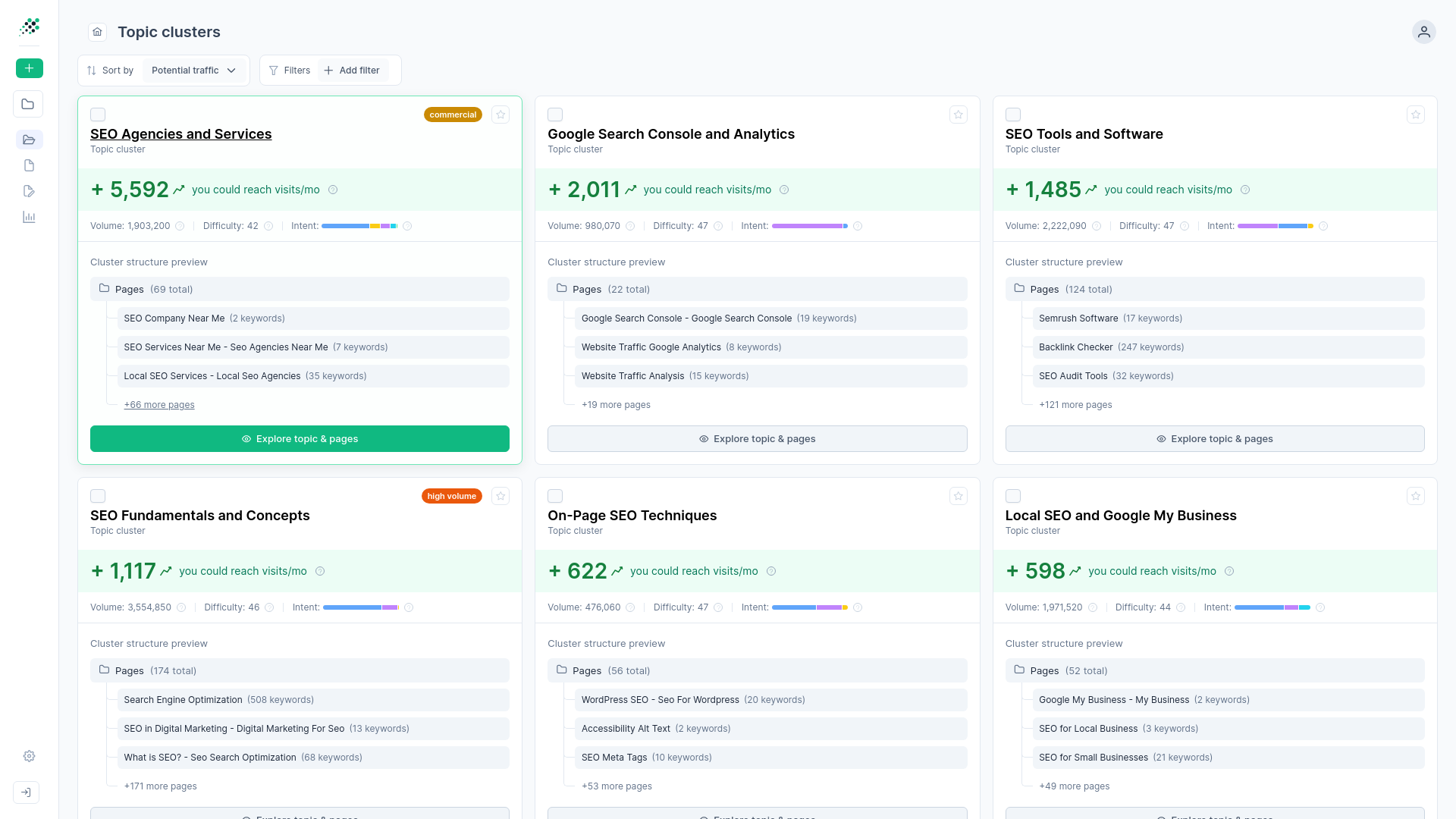
Stop manually grouping search queries in spreadsheets. RankDots organizes your data into hierarchical topic clusters and automatically generates fully structured, search-ready drafts within a single platform.
It's tough to scale a content operation when your team spends more time manually grouping keywords in spreadsheets than actually writing. You need a complete Keyword-Driven Content Editor for transforming raw keyword data into publication-ready drafts without leaving the platform. RankDots bridges SEO and content creation so you stay in one interface. It automates keyword research, clusters search queries into topics, and provides real-time AI scoring.
We got tired of watching teams waste days matching queries to individual blog post structures by hand. A flat keyword list inevitably leads to overlapping pages. You recover lost organic traffic when you eliminate this keyword cannibalization. RankDots prevents the overlap entirely. It organizes data into parent topics and subtopics automatically.
Standalone AI writers generate generic output because they lack search context. RankDots connects discovery directly to your draft. That connection gives the AI the exact semantic relevance required to rank.
Automated topic clustering keeps your workflow moving. You advance straight from keyword discovery to a fully structured draft without opening another spreadsheet.
Inside The Keyword-Driven Content Editor
Configure Your Strategy and Content Format
Analyze Competitors and Build Content Outlines
Edit Text Blocks With Live Previews

Validate Drafts Across Ten Quality Dimensions
Automate Content Production Workflows
Advanced Intent Scoring
Evaluate queries across five distinct intent types, moving past the standard four-category model. You capture precise audience needs, including dedicated local search metrics.
Automated Data Filtering
Stop scrubbing spreadsheets manually. RankDots applies multiple linguistic validation rules to instantly remove irrelevant terms and URL fragments before clustering.
Competitor SERP Profiling
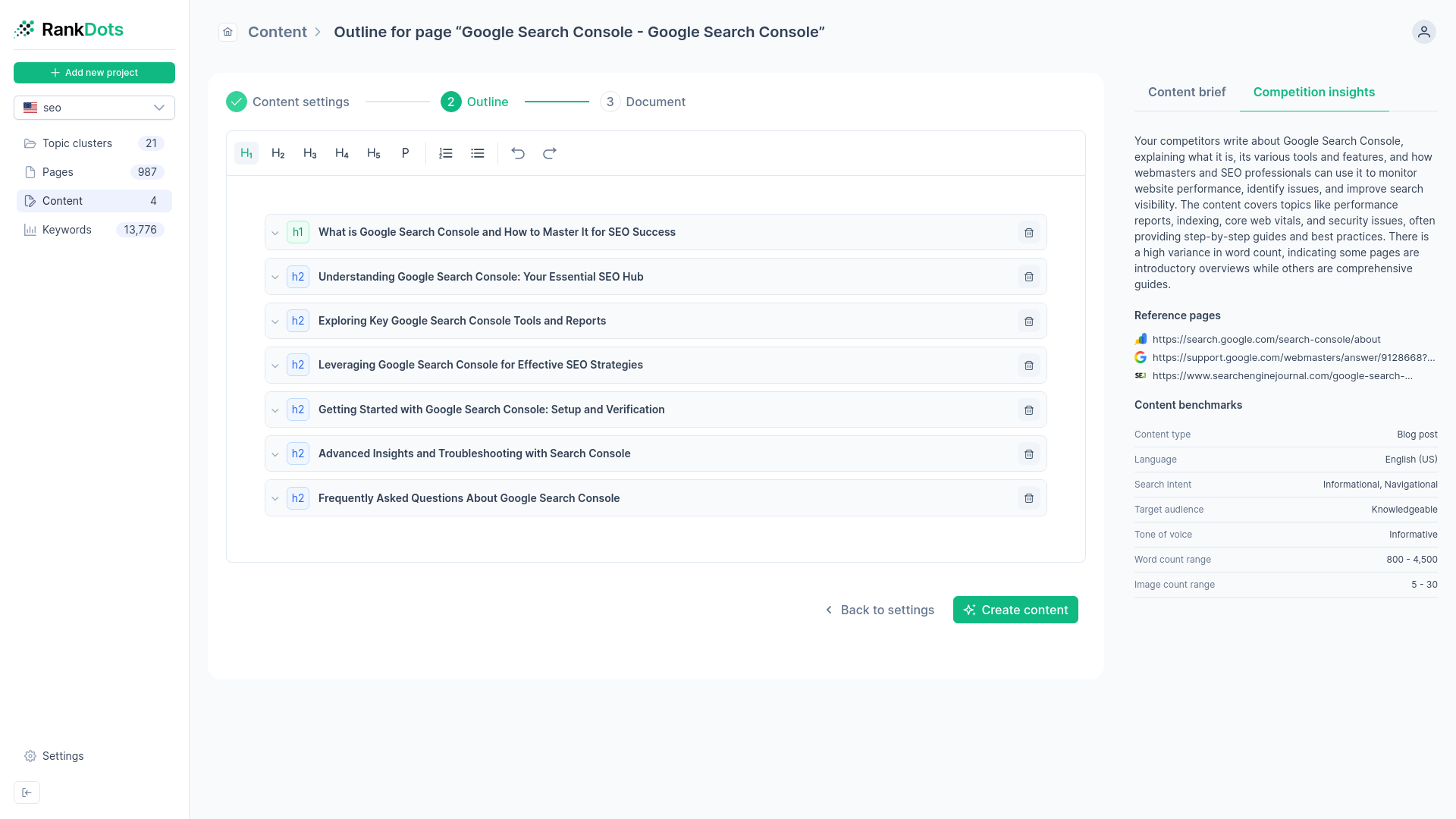
Extract structural requirements directly from the top search results. Analyze competitor word counts and media usage to benchmark your upcoming draft accurately.
Draft Version Control
Experiment safely while editing. The Keyword-Driven Content Editor maintains a strict version history, saving up to ten iterations of your document as you work.
First-Party Performance Data
Connect your Google Search Console property directly. Import actual impression, click, and click-through rate data into your workspace to prioritize high-value content updates.
Site-Relative SERP Gaps
Target realistic ranking opportunities. The algorithm ignores generic difficulty scores and identifies vulnerable pages you can actually displace based on your current domain authority.
How the Content Pipeline Works
Configure Your Target Parameters
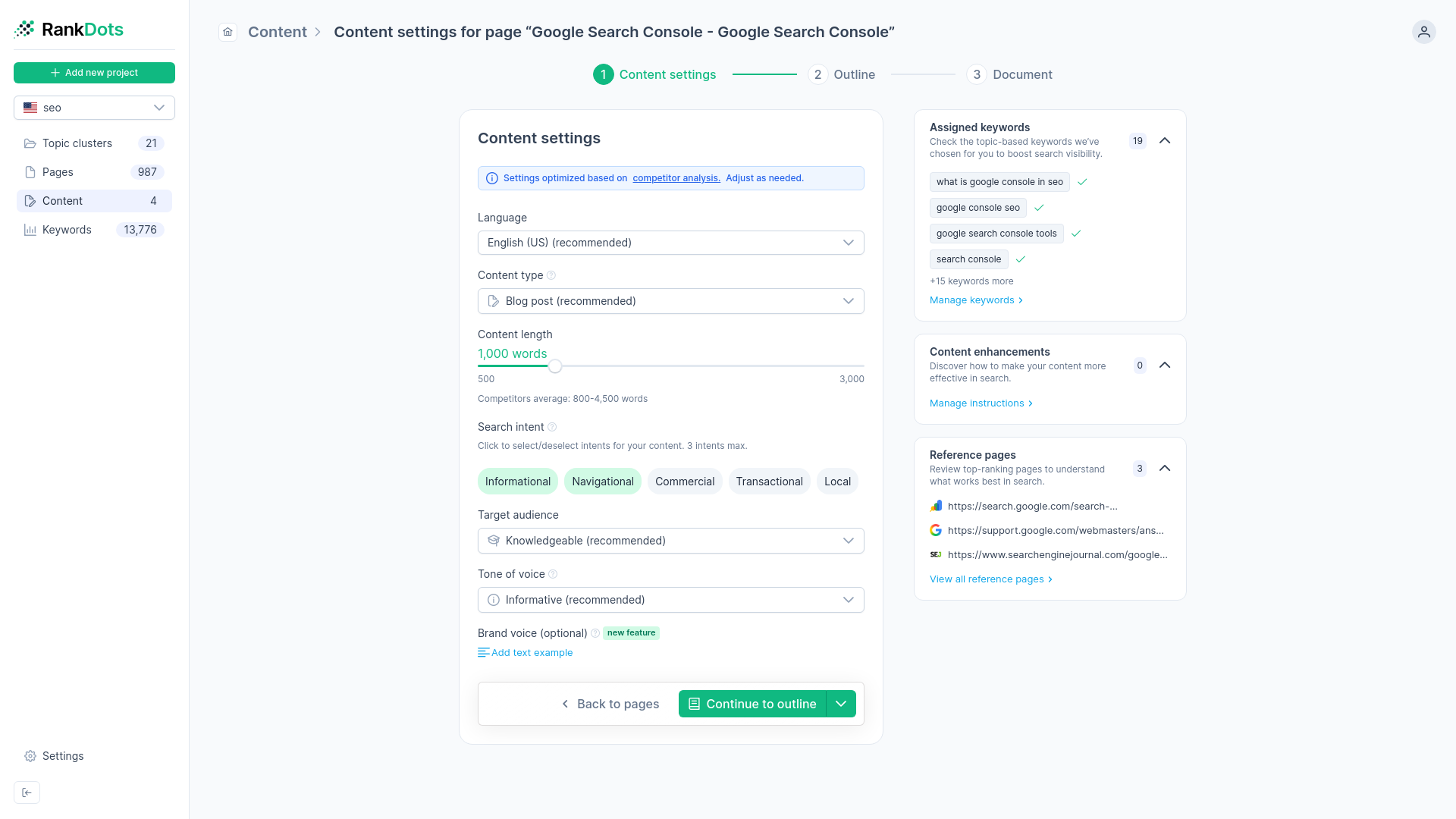
Start your Keyword-Driven Content Editor workflow by defining audience, tone, and search intent. The system uses these settings to align the draft with your strategic goals.
Review the Auto-Generated Outline
RankDots builds a structural framework based on competitor SERP analysis. You'll edit these headings before generation or export the brief directly for your human writers.
Generate the Initial Draft
Transform your approved outline into a complete document. The AI generates the entire draft to help you hit the exact word count required to compete.
Refine with Quality Validation
Edit specific text blocks independently using the ten-dimensional scoring matrix. You'll track improvements in real time and safely revert changes through the built-in version history.
Replacing isolated toolchains with unified SEO intelligence
Fixing blind spots and inflated forecasts
Google Keyword Planner frequently overestimates true search volume because it groups keywords with similar meanings and rounds volumes into generic buckets. You build a strategy around what looks like high traffic potential, only to see a fraction of the actual visits.
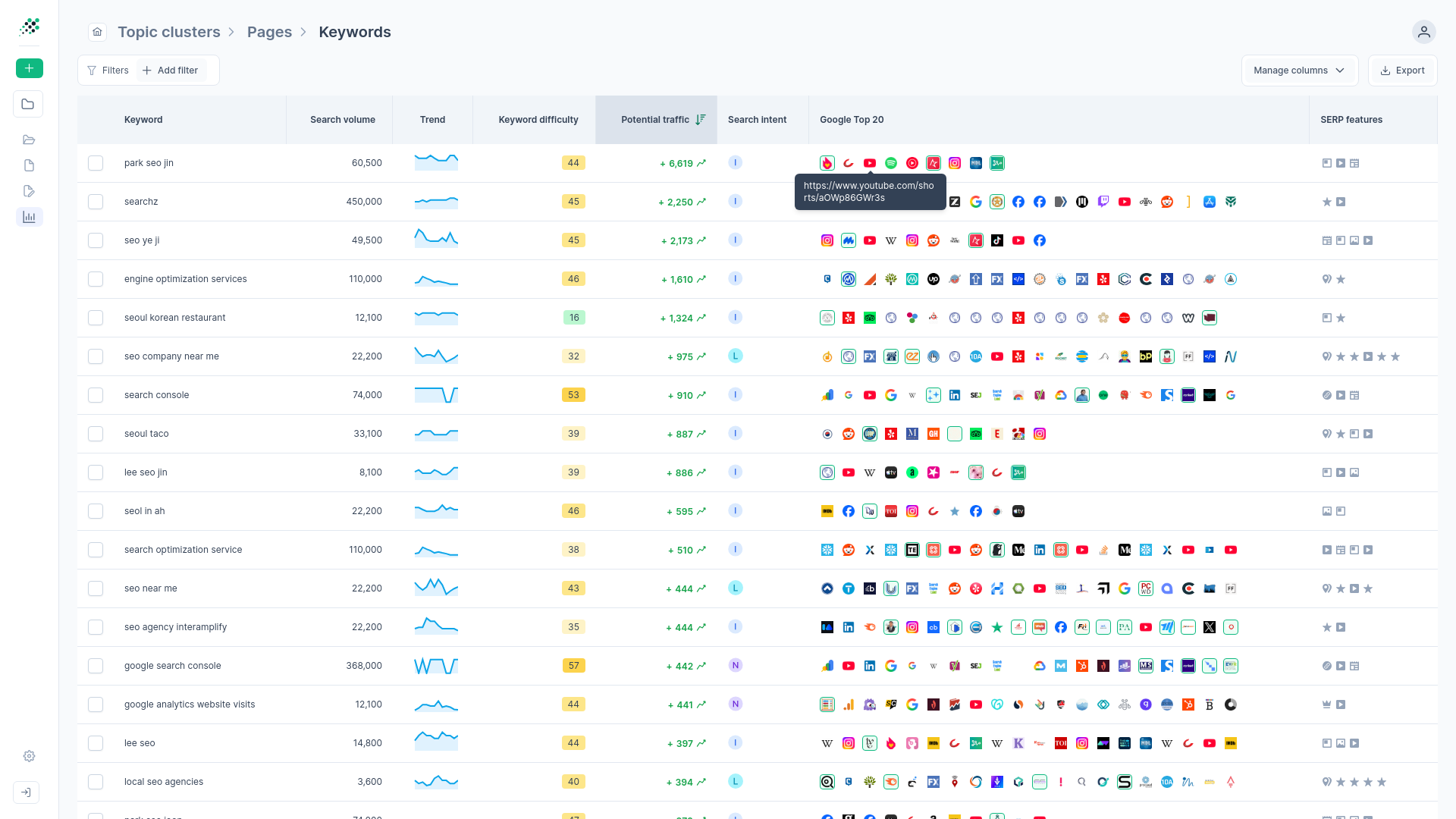
RankDots detects these grouping flaws by matching metric fingerprints—identical search volume, trend patterns, and paid competition. It accurately distributes the volume across similar keywords so you forecast realistic numbers. The platform simultaneously queries eight real-time channels like Google Autocomplete and Google Search Console. It never relies on a single database. You uncover exact-match and semantic terms that basic tools completely miss.
Mapping semantic completeness and search intent
Most platforms force keywords into four basic intent buckets. RankDots classifies search intent across five categories, including local intent. It provides percentage confidence scores across all five to reveal mixed-intent keywords.
This granular search intent mapping prevents you from targeting the wrong angle. You build content that matches the exact outcome your audience expects, rather than forcing a single label onto a complex query.
RankDots maps your draft's semantic completeness against the top-ranking pages. It identifies mixed intent signals early so you know exactly which subtopics to cover to meet user expectations.
RankDots reverse-engineers the SERP to show the exact page structures Google currently rewards. You review required word counts, media usage, and subtopics before you start writing.
Multi-dimensional quality validation
Legacy optimization tools like Surfer SEO and Clearscope output a single quality grade that leaves you guessing what needs fixing.
RankDots scores your final content across 10 specific dimensions, including factual grounding, readability, brand voice, and keyword coverage. You get precise feedback on exactly where the text needs adjustments. The platform evaluates semantic relevance deeply. It moves beyond basic term frequency to ensure your draft hits the exact structural depth required to compete.
See why RankDots is #1




Pick your plan
Frequently Asked Questions
How can keyword-driven content creation boost SEO and engagement?
What are semantically related keywords and how are they used in content?
How does RankDots correct search volume flaws?
Can I import my own keyword lists into the editor?
How does the platform handle mixed search intent keywords?
Start Your Free Trial to Build Ranking Content Faster
Stop losing hours to manual spreadsheet sorting. RankDots provides the exact structural framework your team needs to bypass the tedious research phase completely. Try our Keyword-Driven Content Editor today and move straight to publishing high-performing pages.