Build Deeply Researched Briefs With RankDots' SEO Content Outline Tool
Stop guessing what Google rewards. RankDots transforms raw keyword clusters into deeply nested blueprints. It maps out exact talking points, competitor insights, and semantic terms before you write.
If you're spending hours manually opening competitor tabs and copying headings into a spreadsheet, you've already bottlenecked your content pipeline. Manually developing a comprehensive content brief typically requires one to four hours of work, even when starting with a template. You waste hours trying to reverse-engineer search intent for a single pillar page instead of focusing on overall strategy. We got tired of watching teams lose days to that manual grind. An SEO Content Outline Tool automates the creation of structural blueprints for articles by analyzing live SERP data and competitor metrics.
RankDots skips manual scraping and pulls from 8 distinct data sources to map out logical headings, keywords, and topics. It automates the structural outlining phase in approximately 30 seconds. You skip the flat keyword lists that leave structural gaps and miss intent nuances, moving straight to a deeply researched, logical sequence.
RankDots generates outlines using AI, removing the need for manual SERP scraping. With its Automated Structural Planning capability, you lock in your narrative arc, headers, and precise talking points before drafting a single paragraph.
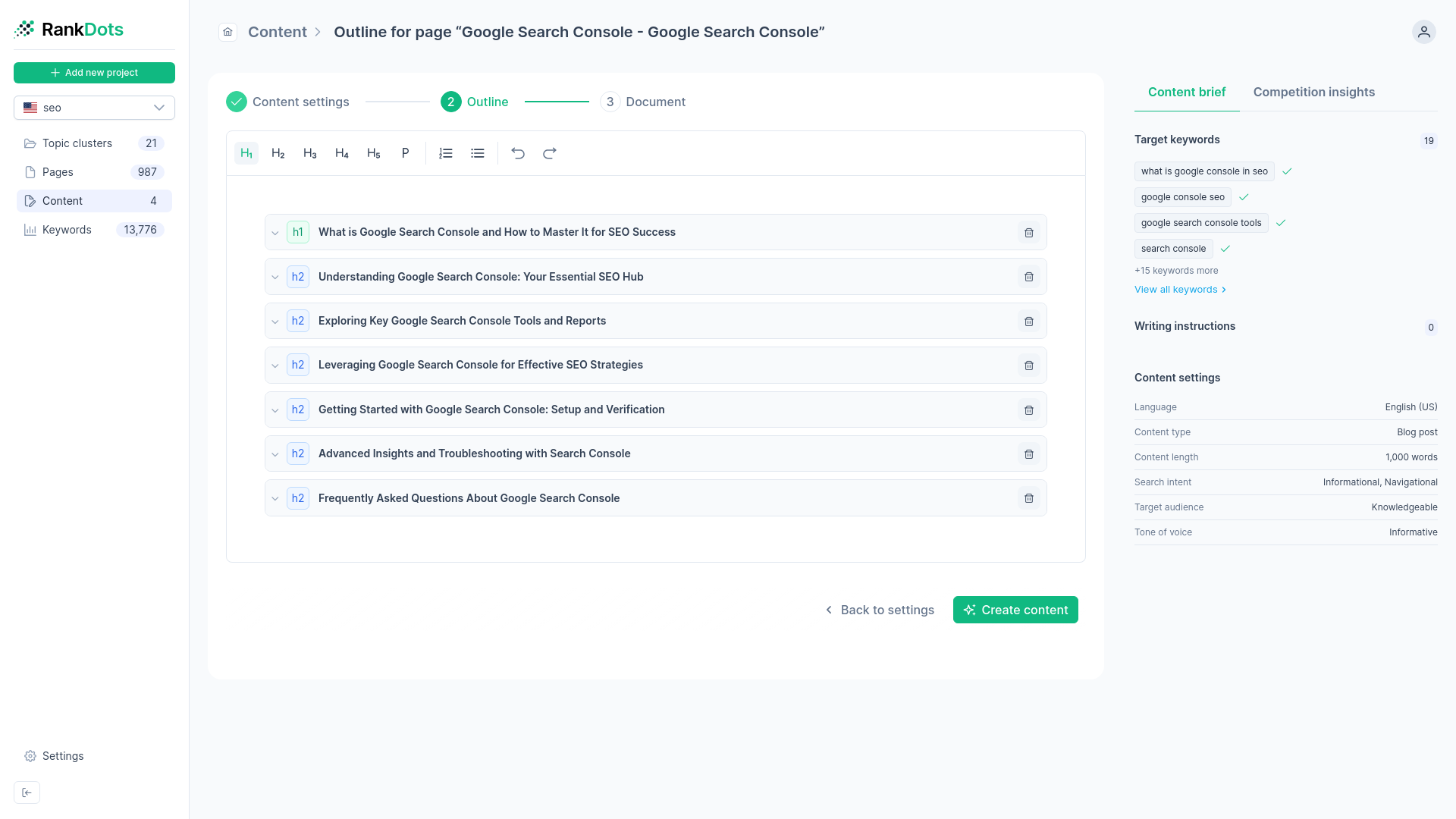
Multi-source data extraction scales your content output while preventing keyword cannibalization.
RankDots SEO Content Outline Tool Features
Live Competition Insights
View exactly what top-ranking pages cover right alongside your brief. Check competitor word counts, media usage, and targeted keywords without opening a single new tab.
Dynamic Keyword Checklist
A persistent sidebar tracks your strategic parameters and required terms. Watch keywords automatically check off as you weave them into the structural plan.
Complete Editorial Control
You maintain final authority over the document structure. Adjust heading hierarchies or delete irrelevant sections before content generation begins.
Precise Search Intent
Standard tools force queries into four basic buckets. RankDots adds Local search intent and calculates percentage confidence scores for terms with mixed user expectations.
Automatic Quality Filtering
Raw keyword lists often contain URL fragments or gibberish. The system evaluates every term against thirteen distinct linguistic rules to remove irrelevant junk instantly.
How the outline generator works
Define your content parameters
Import target keywords and configure your audience, tone, and format. You'll dictate the exact creative boundaries before the AI starts writing.
Review the generated blueprint
The SEO Content Outline Tool builds a structured hierarchy in 30 seconds. You manually adjust headings and talking points until the flow is perfect.
Draft the complete article
Approve the outline to generate your draft. The AI strictly follows your customized structural plan, so the final text matches your exact strategy.
How data-backed outlining prevents content cannibalization
A logical topic cluster strategy establishes deeper domain relevance than publishing isolated pieces of content. But getting there requires serious structural discipline.
The danger of flat keyword lists and metric fingerprints
You export an extensive list of targets from Google Keyword Planner, only to realize months later you built five different pages competing for the exact same underlying intent. Standard tools group similar search queries and report identical total search volumes for each of them. When you build briefs based on these flawed metrics, you overestimate potential traffic and actively cannibalize your own site architecture. We've seen this exact reporting flaw lead teams to waste resources building redundant pages for overlapping intents. RankDots detects these matching metric fingerprints—identical search volume, trend patterns, and paid competition—and accurately distributes the volume across the group. You see exactly what a query is worth before assigning it to a page.
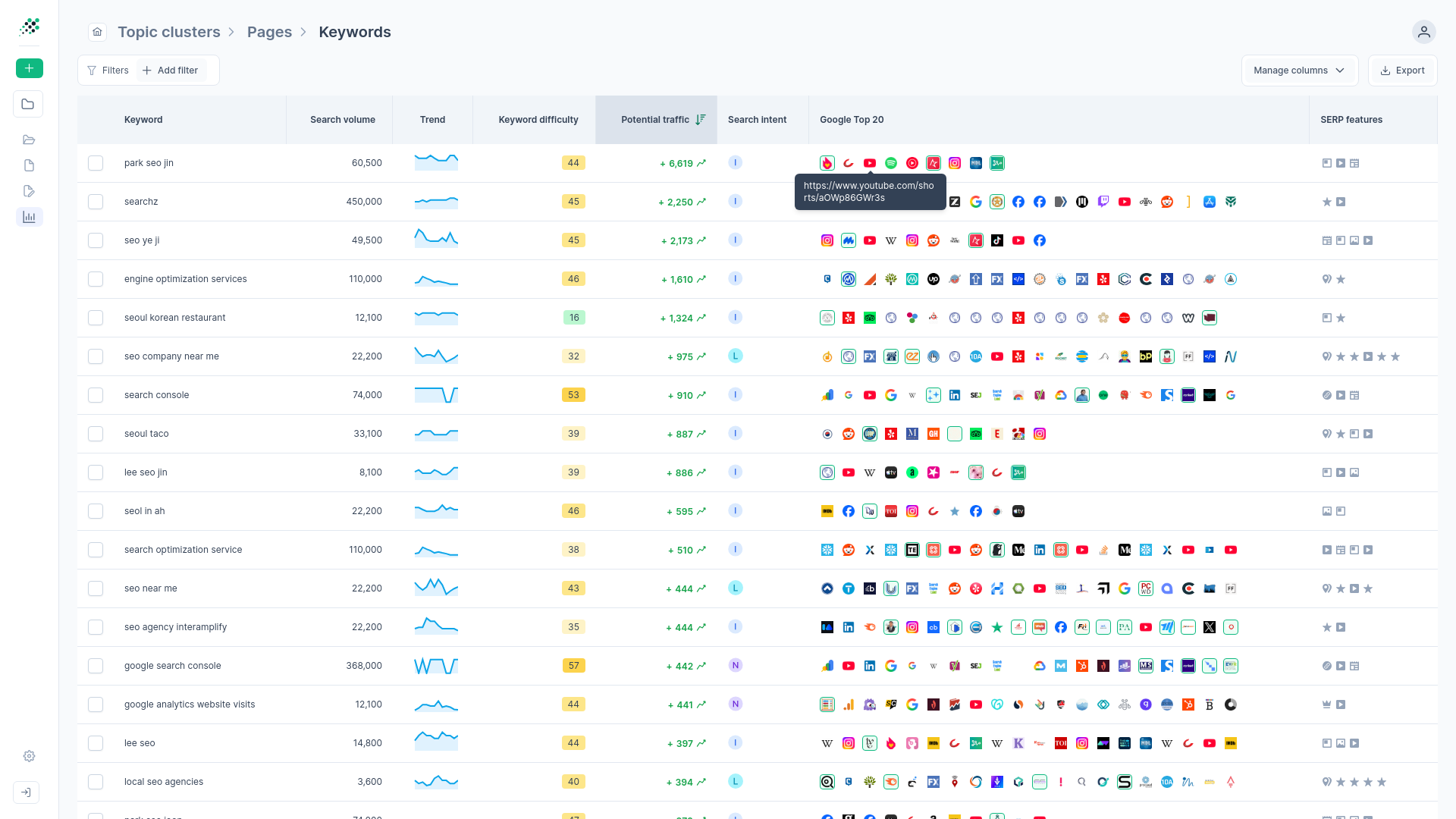
This precise calculation relies on Search Volume Correction to redistribute inflated numbers accurately. You prioritize your content pipeline based on actual opportunity, which stops you from building multiple pages for a single overlapping intent.
Hierarchical topic clustering for logical site architecture
Dumping related keywords into a bucket isn't a content plan. RankDots uses AI to build a two-level hierarchy of parent topics and subtopics. This two-level structure translates directly into a natural pillar-cluster site architecture. Instead of mapping a flat list of keywords to random blog posts, you get a nested blueprint that defines exactly which broad themes are category pages and which specific angles become supporting articles. Every page targets a distinct intent.
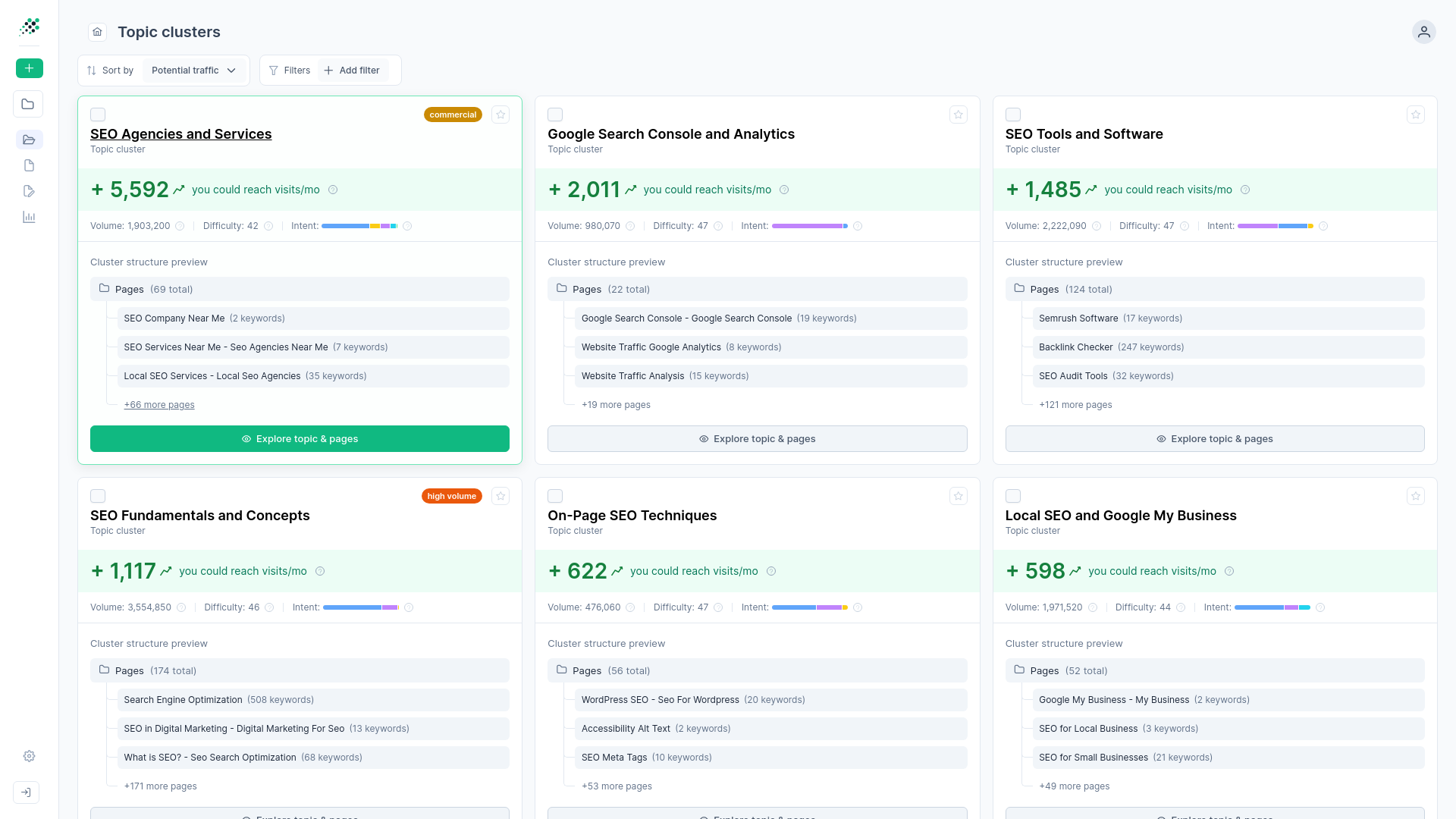
A strict hierarchical architecture provides a clear roadmap that search engines easily crawl and understand. Your internal linking strategy essentially writes itself when you define parent pillar pages and supporting child articles from day one.
Distributing semantic terms without keyword stuffing
True topical authority demands deep semantic coverage. Manually tracking hundreds of secondary terms across a brief is nearly impossible. We watched content teams lose hours trying to manage that sheer volume of data in spreadsheets. RankDots ingests large keyword clusters and directly maps up to 200 semantic terms into your article plan. It explicitly assigns specific definitions, subtopics, and tool recommendations to the exact H2 or H3 where they belong logically. You get comprehensive coverage distributed naturally across the document, ensuring maximum search visibility without forcing exact-match phrases where they don't fit. The blueprint dictates the narrative flow long before any text is generated.
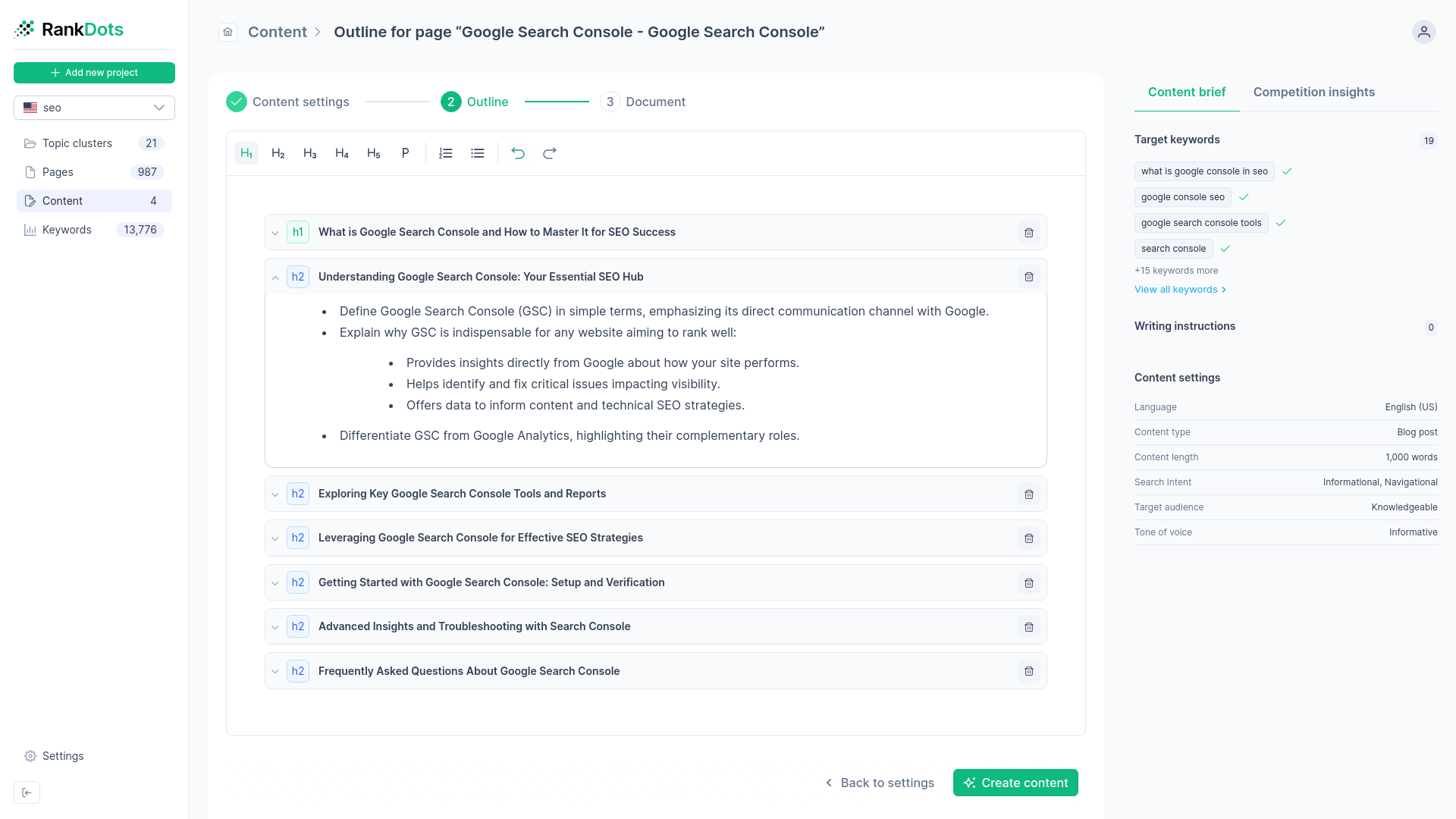
Frequently asked questions
What is an SEO content outline?
How does an AI content outline generator improve SEO and beat writer's block?
What elements should a comprehensive blog post outline include?
Does the outline generator work if you don't have a title or keyword yet?
How do you prevent keyword cannibalization during the outlining phase?
Pick your plan
Generate your first data-backed SEO content outline with RankDots.
Stop fighting disorganized spreadsheets and disjointed tabs. Our SEO Content Outline Tool gives you precise semantic coverage across your narrative flow before any drafting begins. Map out your next high-ranking cluster right now.