Uncover site-relative SEO weak spots with Easy-to-Rank Pages Detection
Stop relying on generic difficulty scores that mislead smaller sites. RankDots evaluates search results against your specific domain authority so you only target keywords you can actually win.
You target a keyword with a low difficulty score, only to find the actual search results monopolized by legacy brands. Relying purely on generic difficulty metrics from tools like Ahrefs or Semrush often misleads smaller sites into fighting unwinnable battles. Run Easy-to-Rank Pages Detection to find vulnerable search engine results by comparing competitor strength directly to your specific domain authority.
You find a target that looks great on paper. Then you check the live SERP and see Wikipedia, Forbes, and Amazon blocking the top spots. We got tired of watching teams grind through repetitive, manual domain rating checks during keyword research just to spot a viable opening. It burns hours and ruins momentum.
Locating genuine low-competition keywords requires more precision than a blanket score. You need to verify if the current ranking pages actually have the authority to defend their positions.
Blanketed keyword difficulty treats every website as equals. They aren't. RankDots fixes this through Site-Relative Difficulty Assessment, which explicitly computes the difference between your site and the top 10 results. It recognizes that a keyword deemed "easy" for an established enterprise brand requires a completely different strategy than one targeted by a smaller blog.
Drop generic keyword difficulty scores entirely. You'll stop fighting impossible battles against legacy brands and start targeting specific gaps your site can win.
Advanced Easy-to-Rank Pages Detection
Isolate winnable search positions
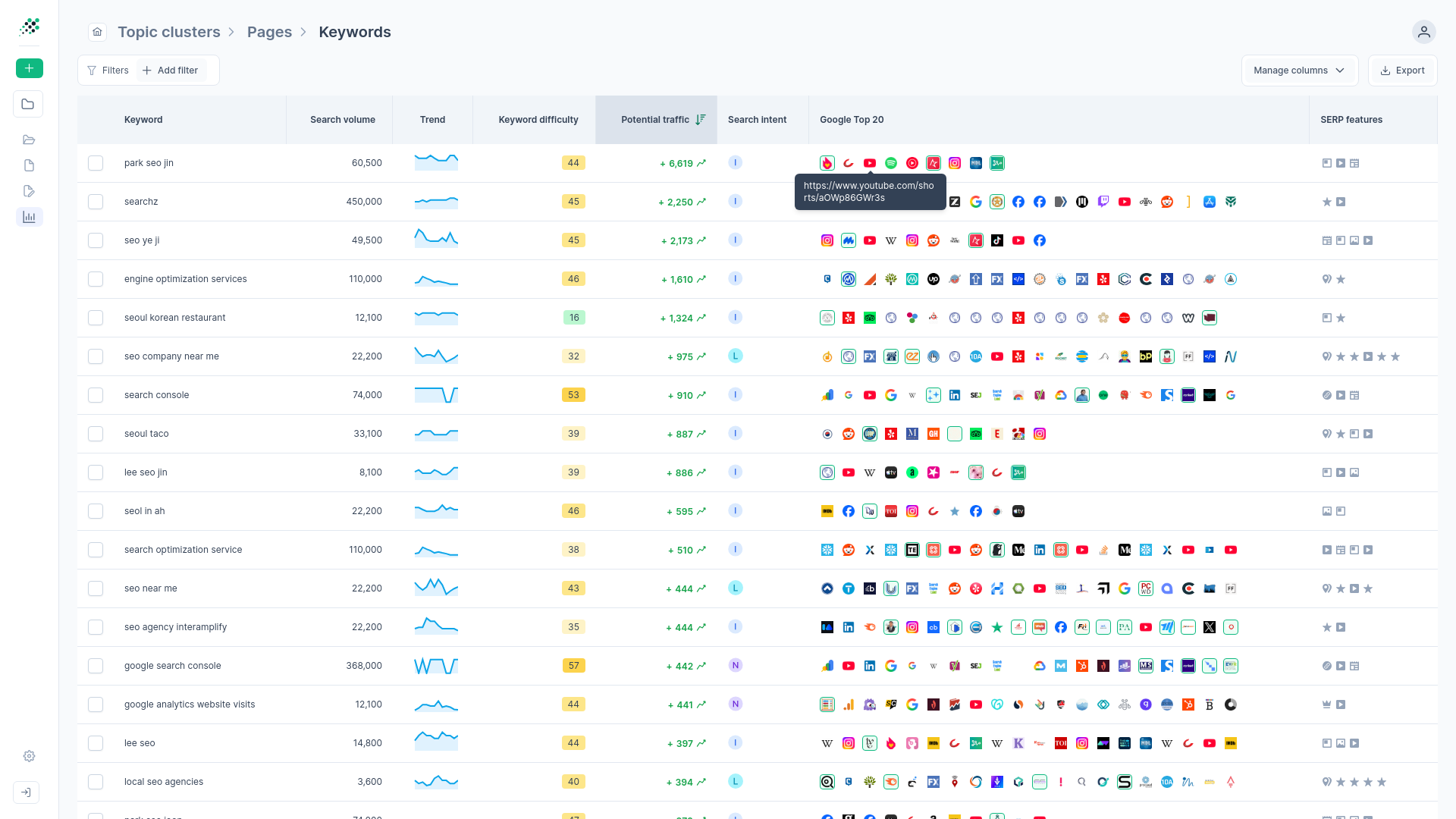
RankDots tallies exactly how many top-ten spots belong to sites with lower authority than yours. You know immediately if a keyword is worth your time.
Spot small niche competitors
Visual favicon indicators in the dashboard let you quickly distinguish between unbeatable mega-brands and small niche sites occupying the first page.
Project achievable traffic gains
Stop guessing your return on investment. View the estimated monthly organic traffic you'll realistically gain by capturing these specific low-competition positions.
How to automate weak spot discovery
Enter your seed keywords
Type your target topic. The automatic pipeline queries eight distinct sources and clusters the results, so you don't have to do any manual spreadsheet deduplication.
Filter for weak spots
Apply the Easy-to-Rank Pages Detection filter. You'll immediately isolate targets where ranking competitors have lower domain authority than your specific site.
Prioritize traffic wins
Sort your keyword clusters by easy traffic wins. This generates a realistic, data-backed editorial calendar focused strictly on achievable search volume.
Generate the content draft
Click to create content. RankDots pushes your prioritized weak spot keywords directly into the AI wizard to produce a fact-verified draft.
Visualize Easy-to-Rank Pages Detection
Identify vulnerable SERP positions instantly
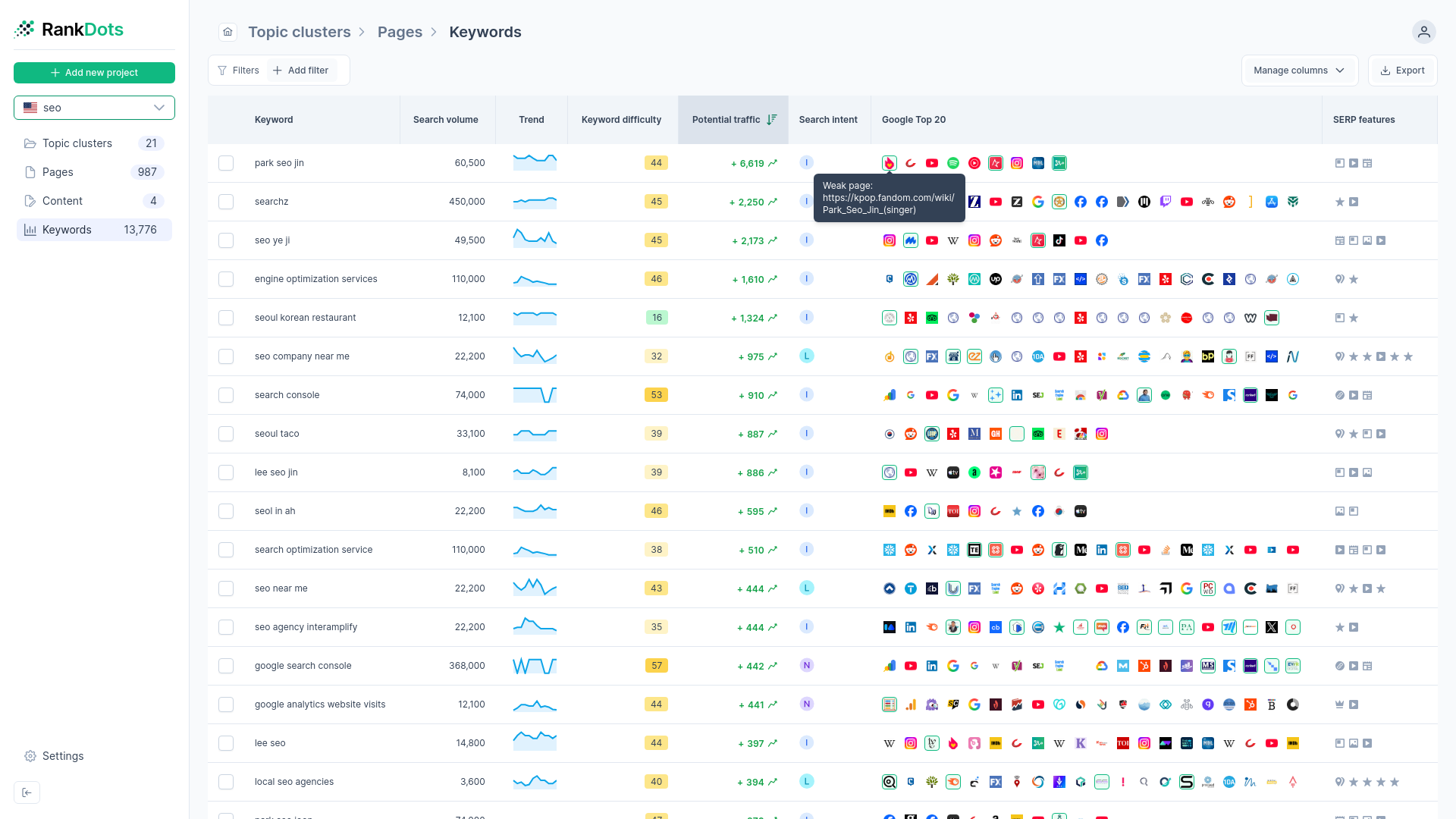
Spot niche competitors at a glance
Prioritize realistic traffic gains
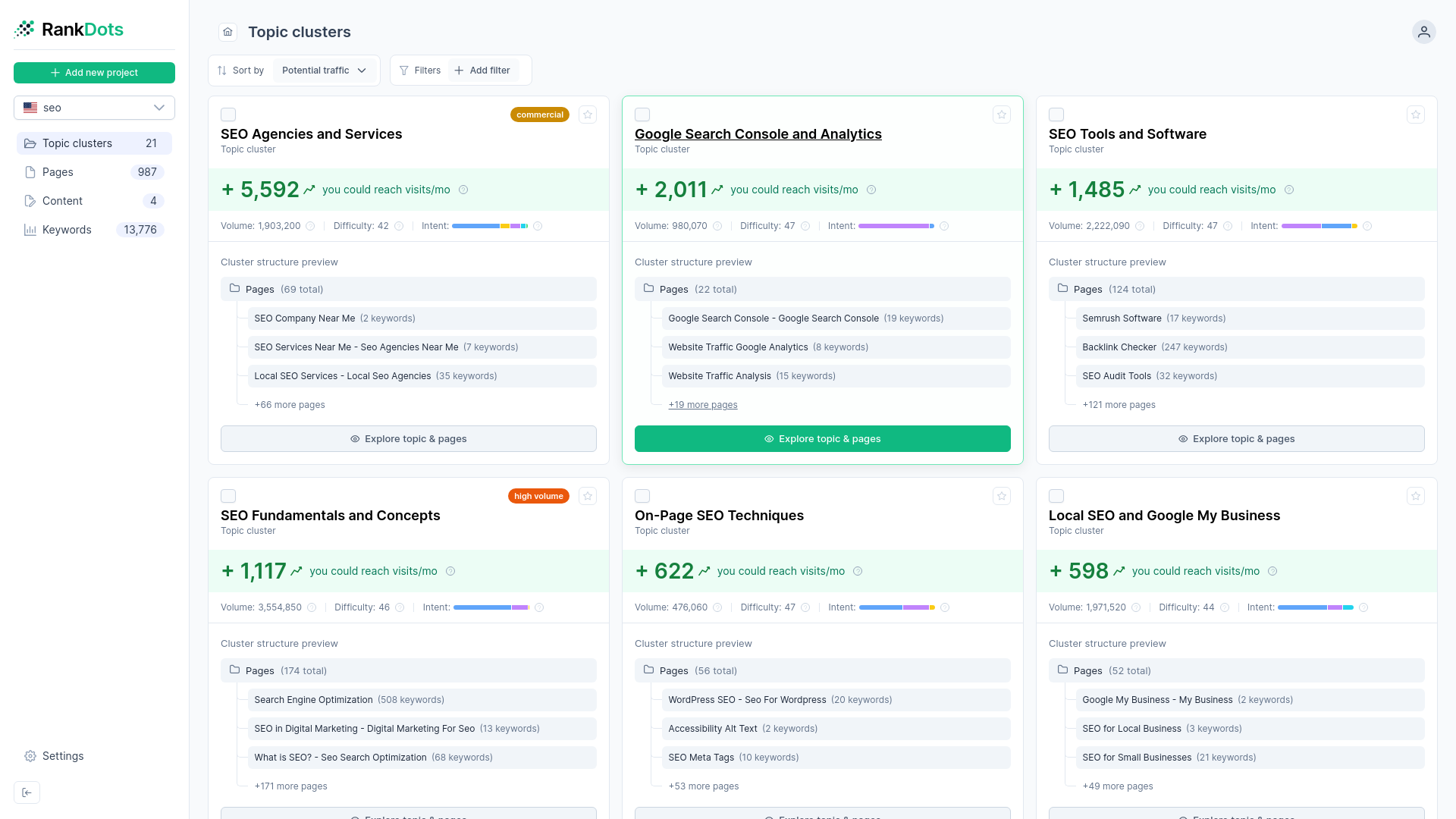
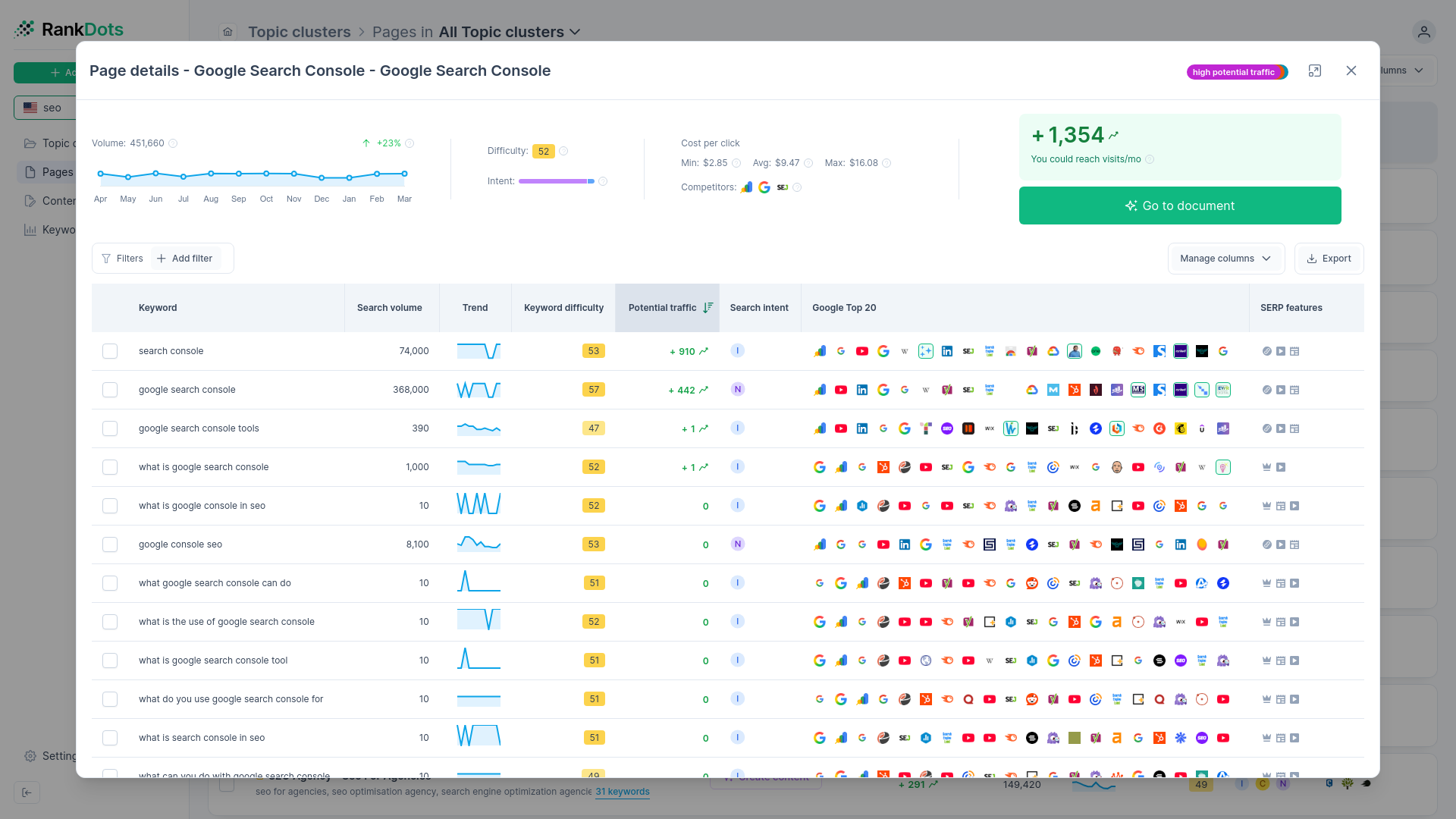
Push existing pages into the top ten
The mechanics of site-relative difficulty and SERP reverse-engineering
You must look past raw search volume to find a true gap in the search results. Measure the structural weaknesses of the pages currently ranking.
Identify this SERP vulnerability to pinpoint where weaker pages hold a top-ten spot. That structural gap gives you a clear path to unseat them.
Identifying genuine vulnerabilities in the top 10
User-generated content frequently signals a vulnerable ranking spot. Forums and discussion threads show up in 77% of search results, and specific platform threads rank in the top 10 for 37% of all Google queries. These are prime targets.
RankDots quantifies this opportunity through Easy-to-Rank Spots. For each keyword, the platform counts how many of the current top-10 results come from sites weaker than yours. If that number is greater than zero, you have a weak spot where you can potentially outrank competitors with great content alone. The tool uses SERP Reverse-Engineering to analyze exactly what search engines reward for specific queries. It evaluates page types, structures, and topical depth to find gaps that generic metrics ignore.
Validating niches and isolating real traffic potential
Before you buy a domain or launch a new site category, you need to know if the sub-niche is viable. Enter a broad keyword into the platform. If the SERP is filled with major brands and zero weak spots, you pivot. If you see abundant weak spots and small competitor favicons in the top 10, you have a green light.
Once you have hundreds of clustered keywords, deciding what to write first often causes data paralysis. Total search volume means nothing if you can't rank for the term. RankDots isolates your actual traffic potential. It calculates the monthly search volume exclusively across the "winnable" keywords in your cluster. Your Automatic Pipeline instantly generates a prioritized to-do list based on these achievable traffic wins.
Pushing page-two content into the spotlight
There's a steep drop-off in organic traffic between the first and second page of results. The second page receives less than 1% of click-throughs. That traffic cliff makes content stuck in position 11 essentially invisible.
You don't always need net-new content to grow traffic. Connect your console data to highlight the easy-to-rank spots for these near-miss queries. You see exactly where a simple content refresh or optimization could push an existing page past a vulnerable competitor and into a top-10 slot.
See why RankDots is #1




Frequently asked questions
What makes a web page easy or hard to rank on search engines?
Are free tools like Google Search Console enough for rank tracking?
How do you optimize internal pages to capture weak spots?
Which AI search elements impact page visibility?
How is site-relative difficulty different from standard KD?
Build a prioritized backlog of easy-to-rank pages today.
Stop guessing which topics to write next. RankDots turns raw keyword data into a prioritized content backlog based strictly on achievable traffic wins. Target actual SERP vulnerabilities so you don't waste time trying to outrank enterprise domains.