Use RankDots to Find Competitor Content Gaps without manual spreadsheets
Stop losing 10 hours a week to manual deduplication. The automated pipeline cross-references competitor rankings against your existing coverage to reveal realistic targets you can actually win.
- Query eight distinct data sources simultaneously.
- Group keywords automatically using hierarchical topic clustering.
- Target realistic weak spots with site-relative opportunity scoring.
Most websites lose search traffic because they aren't targeting the right keywords, while competitors publish content you don't have and Google rewards them. To find competitor content gaps efficiently, cross-reference your competitors' ranking keywords against your own domain's coverage. An automated platform queries multiple databases, clusters related topics, and identifies realistic SERP weak spots based on your specific site authority. The platform maps keyword discovery directly to your available resources.
You know the drill. You spend hours exporting keyword lists from Ahrefs or Semrush, dumping them into Excel, and trying to merge them. Marketers typically lose 8 to 10 hours every week manually deduplicating data. This manual work limits production.
Manual data merging also creates blind spots. A single clickstream database misses the long-tail queries your buyers search for. We got tired of watching teams build strategies on incomplete data. RankDots runs Multi-Source Discovery by querying eight distinct databases simultaneously. You get a complete, deduplicated map pulling from Google Keyword Planner, Autocomplete, Related Searches, and your own Search Console without writing a single VLOOKUP formula.
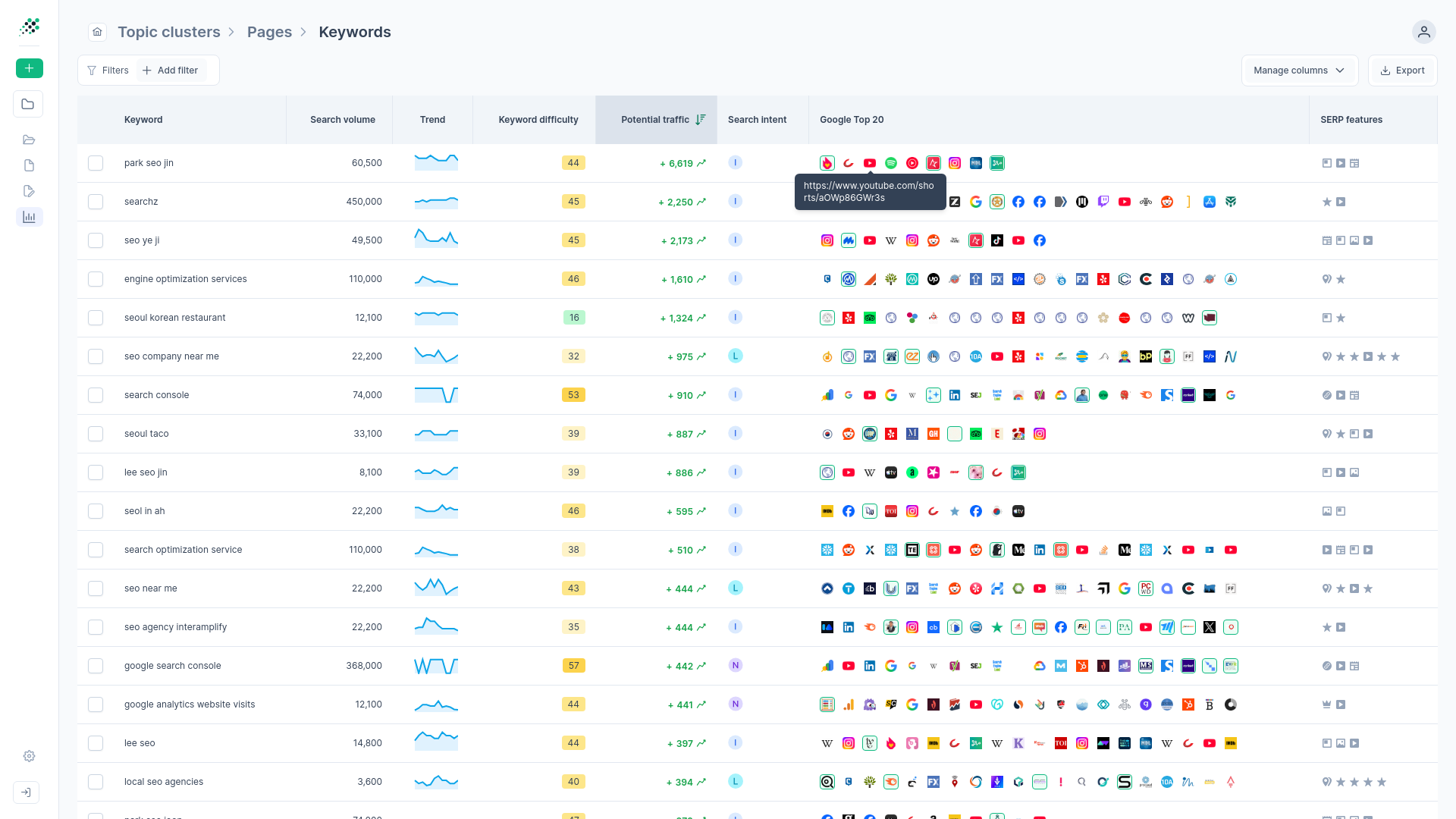
This guide shows you how to automate keyword discovery and map content opportunities in minutes. You'll learn how to build a ready-to-use site architecture directly from live search data.
How it works: Seed keywords and site-relative gaps
Input your competitor domains
Enter your top rivals into the system. RankDots instantly maps their complete keyword footprint using eight distinct data sources.
Find Competitor Content Gaps
Connect your Search Console account. The automated pipeline cross-references your current ranking data against the gathered competitor data to isolate your exact missing targets.
Review your new architecture
Stop sorting rows in Excel. You'll receive a fully structured taxonomy that organizes your new keyword targets into logical pillar pages and supporting posts.
Target realistic weak spots
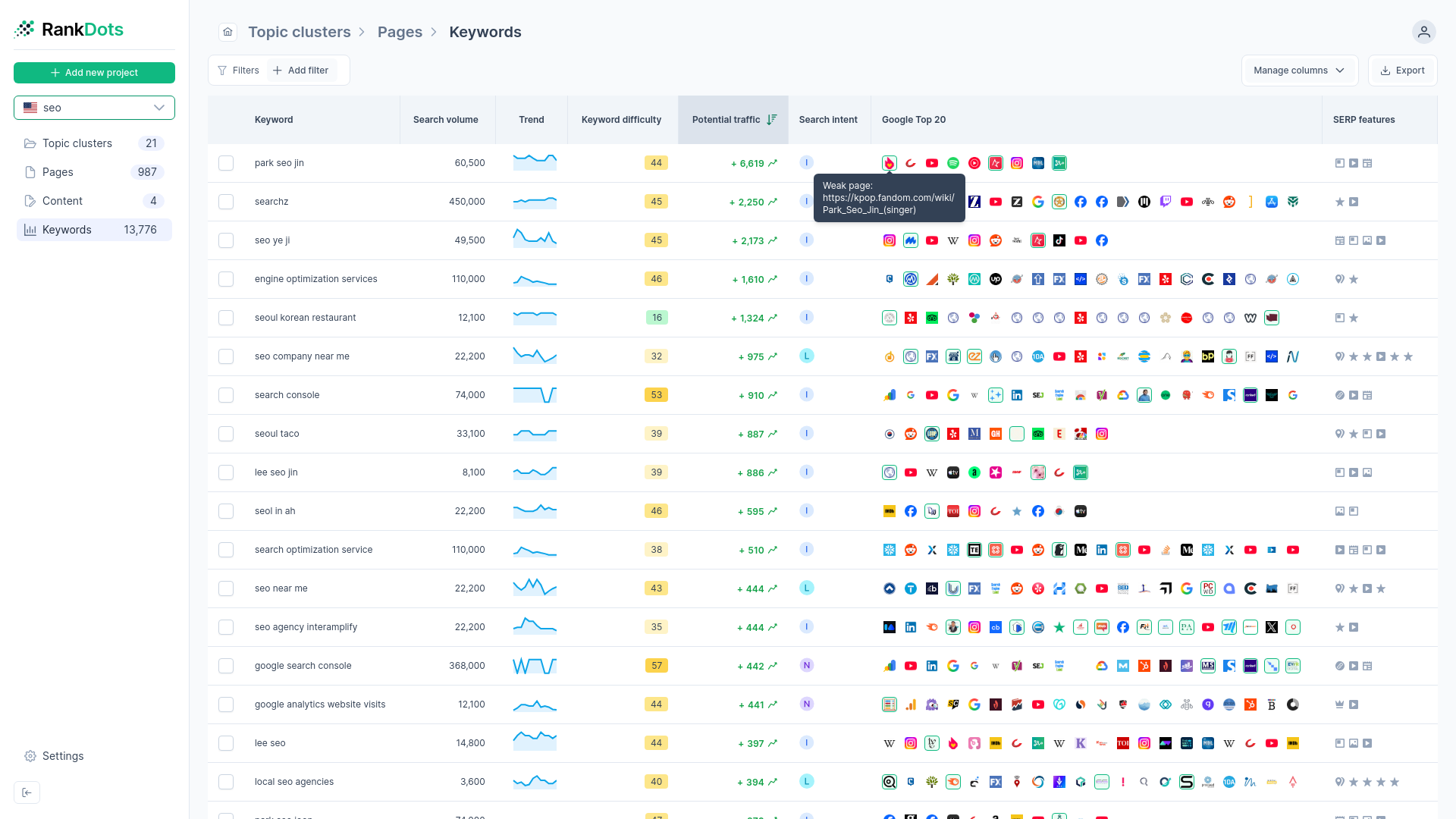
Filter the resulting clusters using site-relative opportunity scores. You see exactly which competitor pages lack the domain authority to defend their current rankings.
Automate competitive content strategy
Flag Near-Miss Queries
Pinpoint keywords where your domain is stuck on page two. RankDots builds a specific fix-it list to push existing pages into top spots.
Fix Grouped Search Volumes
Google Keyword Planner often lumps identical traffic numbers onto similar queries. RankDots calculates true individual volumes so you don't overestimate topic potential.
Stop Content Cannibalization
Detect when multiple pages from your own site compete for the exact same query. Consolidate your efforts into a single authoritative asset.
Filter by Business Goal
Sort your new opportunities using five distinct ranking algorithms. Pivot instantly between quick traffic wins and high-intent commercial targets.
Map Required Content Formats
Search volume doesn't reveal format requirements. Analyze live search results to understand the exact page structures and topical depth Google currently rewards.
Clean Data Automatically
Stop manually removing gibberish from your exports. RankDots runs every query through strict linguistic rules to delete unreadable fragments before you see them.
Visualizing your content gaps
Map complete search data across multiple sources
Visualize your architecture with two-level topic clusters
Target realistic weak spots using site-specific scores
Prioritize content targets using clear intent categories
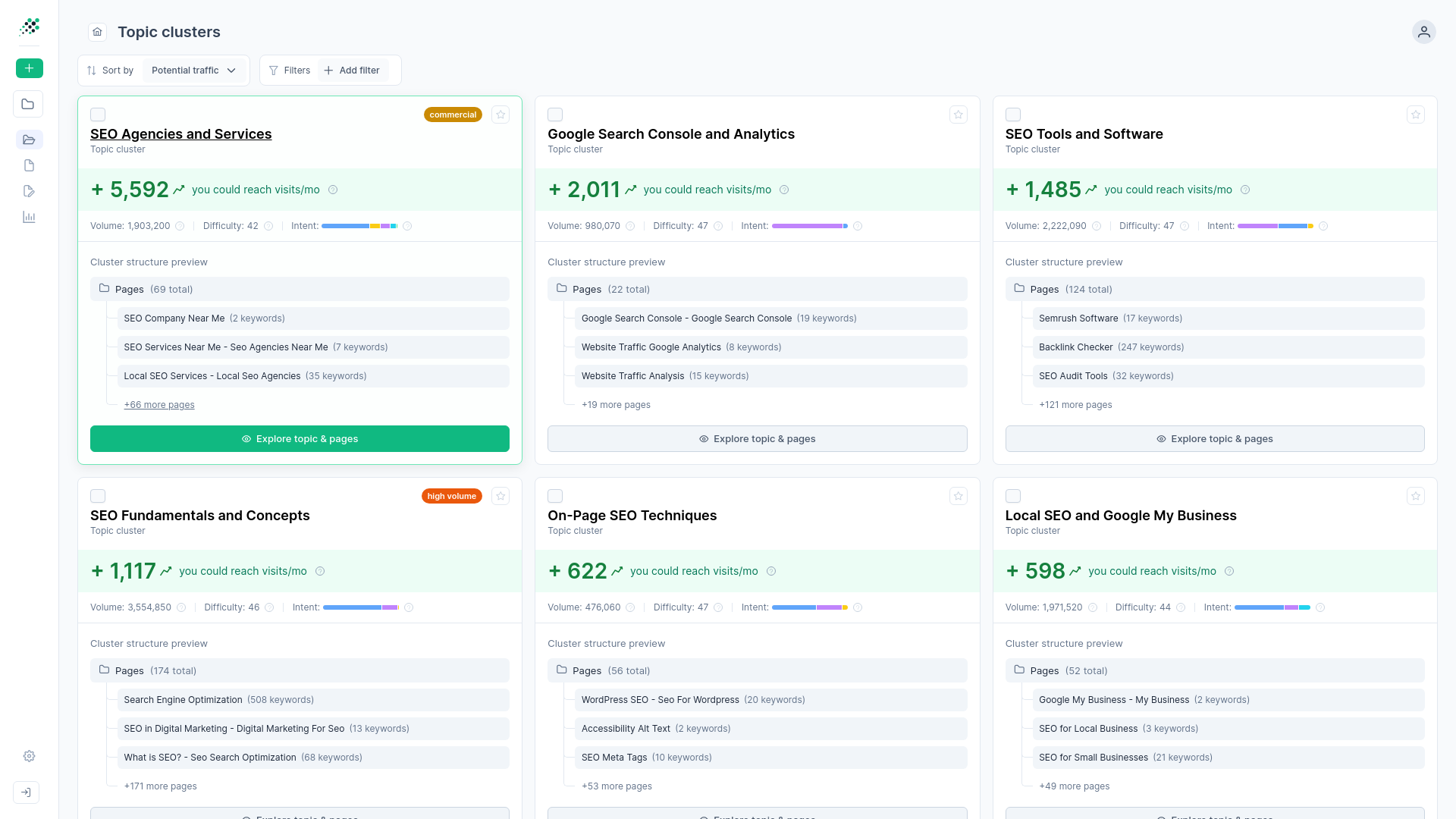
Site-relative opportunity scoring and hierarchical topic clustering
After finding a high-volume gap, you write comprehensive content—only to watch it stall out on page three. Generic keyword difficulty scores make strategic bets notoriously risky. Those standard metrics correlate so poorly with actual ranking outcomes that they are barely 8% to 12% more accurate than randomly flipping a coin. They treat every site equally, ignoring your topical authority.
RankDots takes a different approach. Site-Relative Opportunity Scoring evaluates SERP competition against your specific domain authority and backlink profile. It identifies weak spots in the search results, like a low-authority forum thread or a thin article, that you can realistically outrank. You stop chasing impossible gaps and start targeting the ones you can win.
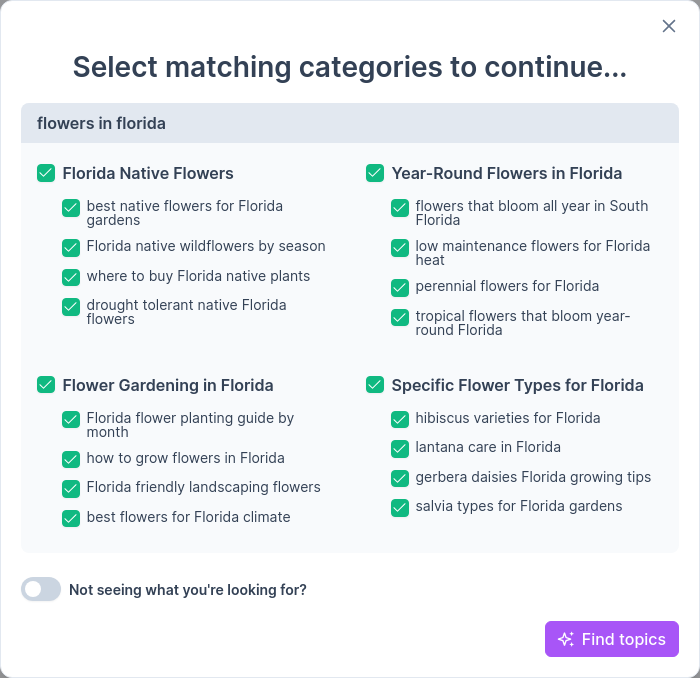
Shared words and semantic meaning fall short if Google doesn't see the keywords as related. A bad cluster wastes the time and budget you commit to a pillar page. To solve this, the platform runs URL Intersection Validation. It checks live Google search results to see if the same URLs rank for multiple keywords in a cluster. If the live SERP overlap isn't there, the algorithm splits the cluster. Search patterns validate your content structure, not just an AI guess.
Finally, the platform categorizes every cluster across five distinct intent types, including a dedicated local category. You see exactly which gaps align with the top of the funnel and which ones target ready-to-buy commercial intent.
Frequently asked questions
What exactly is a content or keyword gap analysis?
Why is performing a content gap analysis important for SEO?
How often should marketing teams perform a competitor gap analysis?
What is the difference between topic gaps and entity gaps?
Can RankDots identify if my own pages are cannibalizing each other?
Find Competitor Content Gaps you can actually win.
Stop wasting hours managing CSV exports. RankDots turns fragmented competitor data into a structured roadmap of realistic ranking targets. Map your missing topics today.