Map Entity-Based Site Architecture Using the AI Topical Authority Builder
Stop manually deduplicating CSVs. RankDots evaluates live Google SERP overlap to map your seed terms into a strict hierarchy, saving hours of spreadsheet sorting.
Google Search Console contains the raw signal of what your audience searches for, but giant spreadsheets can't reveal search intent or prevent cannibalization. A Topical Authority Builder automates the transition from raw keyword data into structured site architectures. You stop losing hours exporting CSVs, deduplicating variations by hand, and guessing hierarchies without live SERP data.
It groups related phrases by shared intent and actual ranking overlap. This grouping shifts your strategy from chasing isolated queries to building comprehensive entity-based coverage.
RankDots transforms flat keyword lists into a scalable, high-ranking hub-and-spoke architecture.
Topical Authority Builder: Visualizing your site architecture
Spot Gaps With Visual Site Architecture Maps
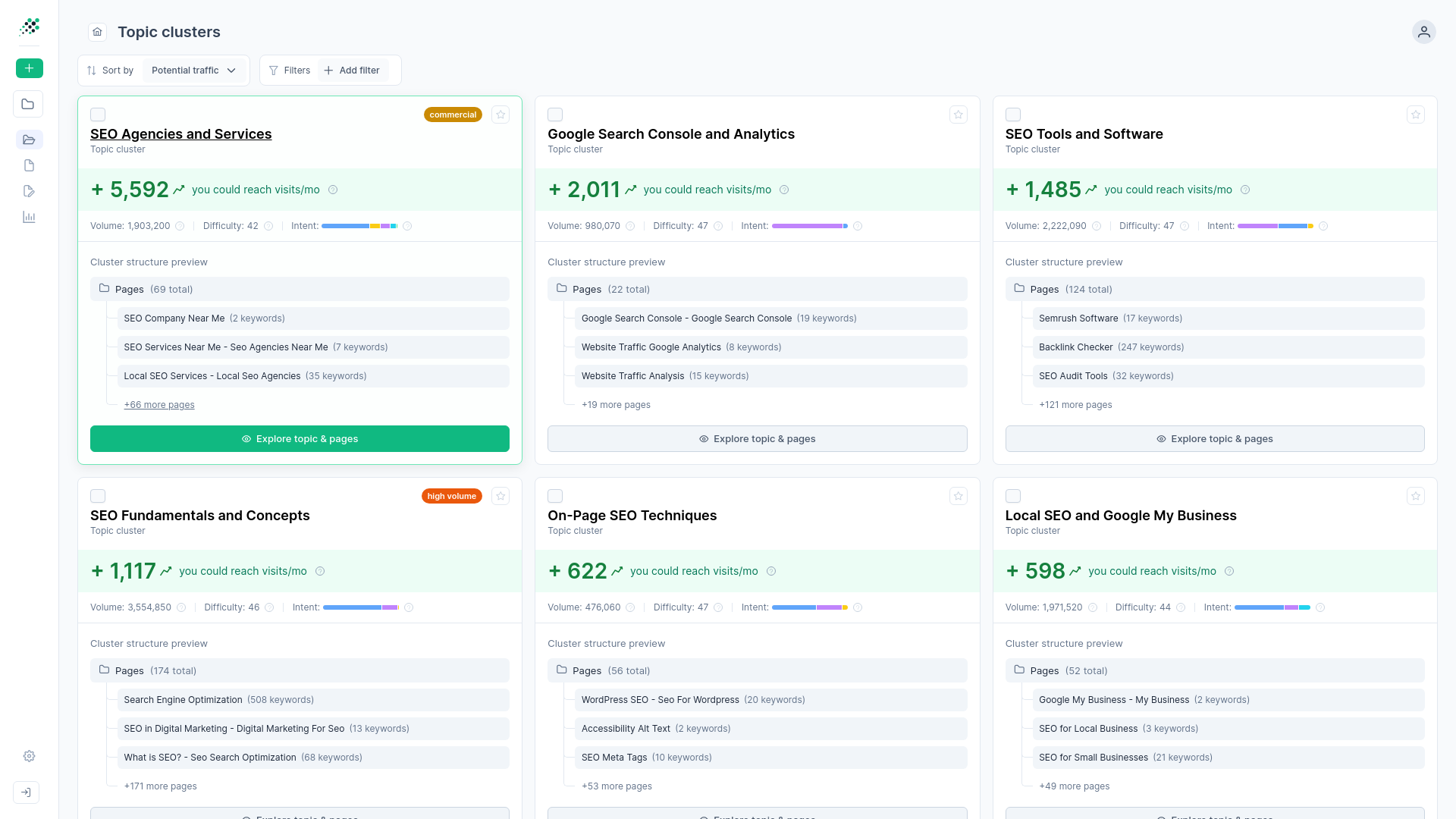
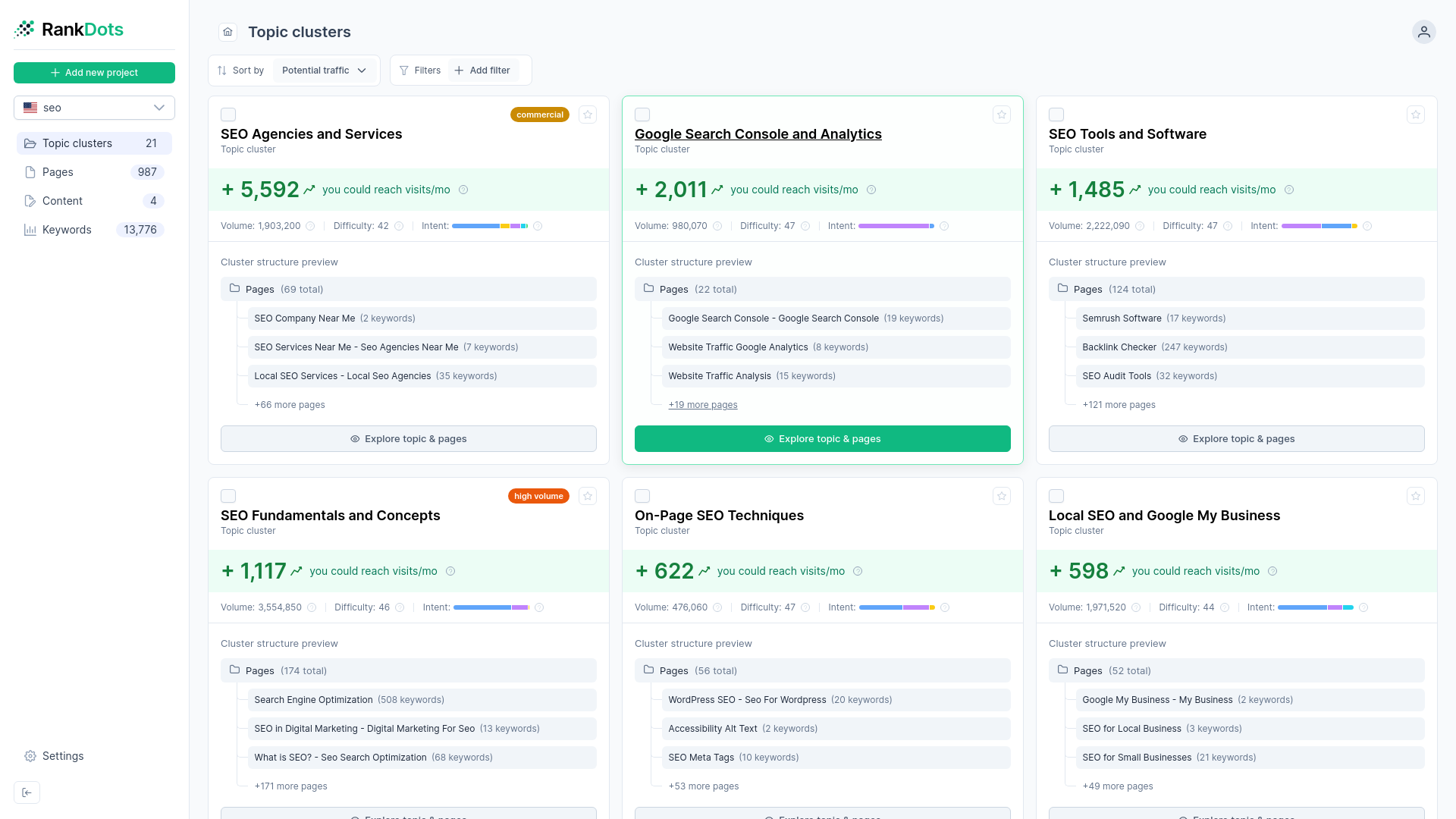
Preview Cluster Structures and Traffic Estimates
Execute Strategy With a Prioritized Publishing Roadmap
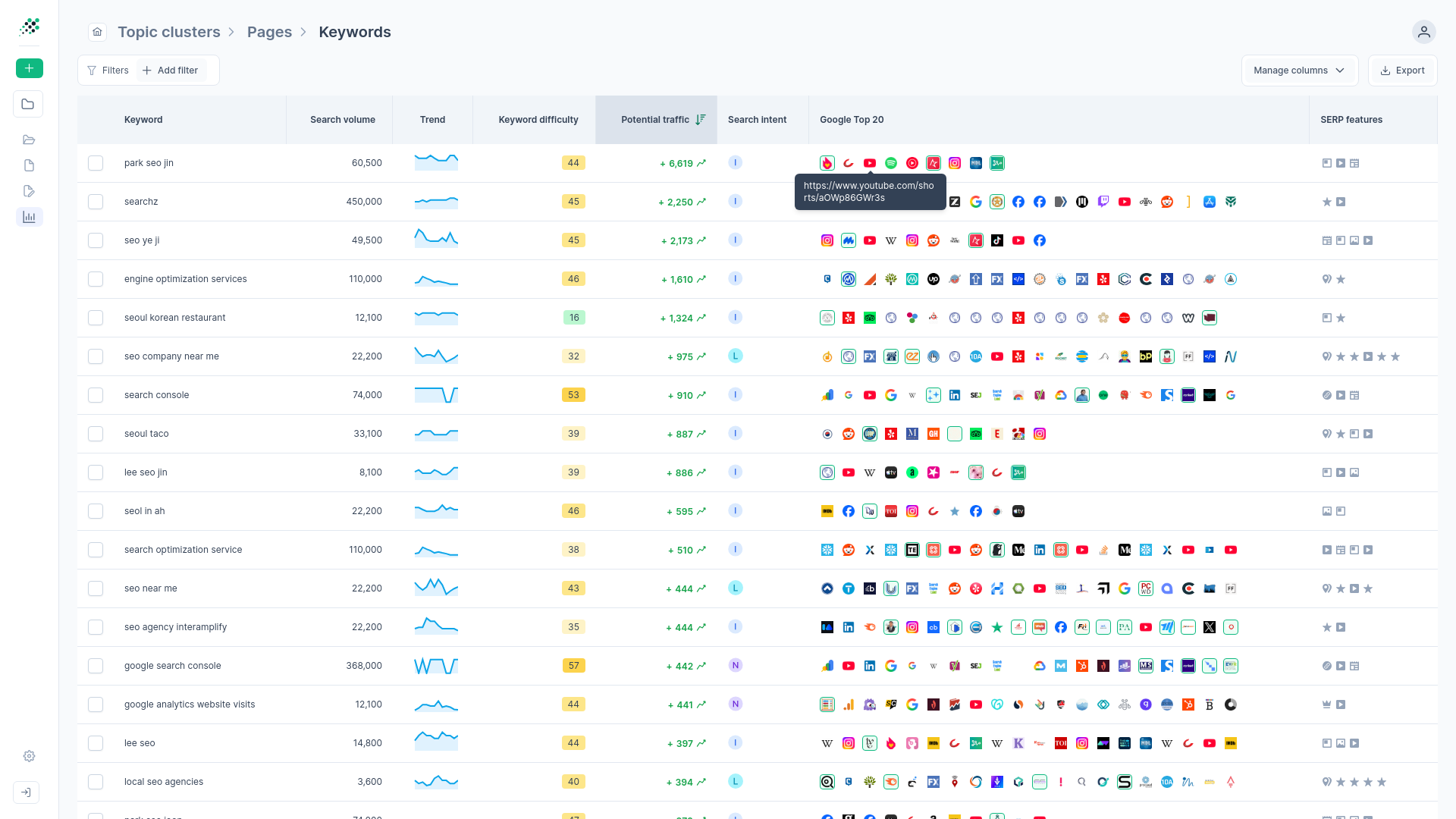
Verify Intent With Live SERP Intersection Data
Topical Authority Builder Core Features
Site-Relative Opportunity Scoring
Generic difficulty metrics mislead. RankDots evaluates SERP competition against your specific domain authority to pinpoint realistic ranking targets.
8-Source Discovery Pipeline
Don't rely solely on clickstream approximations. RankDots pulls from eight direct data sources simultaneously so you capture every long-tail variation.
Fact-Verified Knowledge Bases
Prevent AI hallucinations. It cross-references every generated claim against live web sources and your product documentation to maintain strict E-E-A-T compliance.
Workflow for building authority clusters
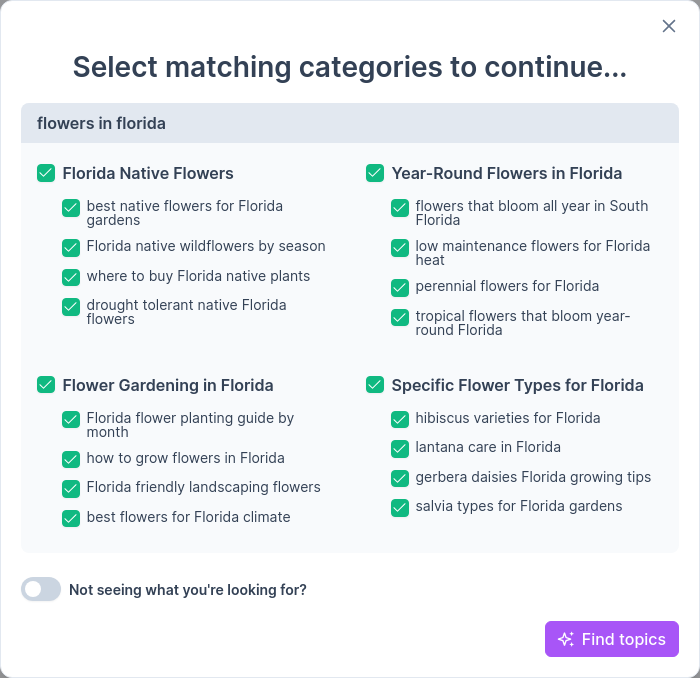
Input your target seed
Enter a seed keyword or domain. The Topical Authority Builder automatically pulls variations from eight sources. This eliminates manual CSV exports.
Validate SERP URL intersections
The system groups related terms, then checks live Google search results. It splits or merges clusters based on actual ranking overlap to prevent cannibalization.
Review the hierarchical map
You receive a strict two-level taxonomy that details your parent pillar pages and supporting blog posts. This mapping aligns your content directly with search intent.
Follow the publishing roadmap
Execute your strategy using a prioritized sequence. Each topic card includes plain-language traffic estimates so you know exactly which cluster to write first.
Content architecture: Pillars and clusters
Moving past the flat spreadsheet
Most content teams start with a basic list of target phrases. That format almost guarantees keyword cannibalization. An isolated keyword strategy forces your own pages to compete against each other in the search results. RankDots replaces manual spreadsheet sorting with Hierarchical Topic Clustering. Instead of generic semantic grouping, the platform evaluates live Google SERP overlap to build a strict two-level taxonomy.
Precise URL intersection analysis guarantees you group keywords only when Google already rewards the same URLs for those queries. You see parent topics and supporting subtopics mapped out automatically. You don't have to stare at thousands of rows trying to guess if two similar keywords require separate pages.
Mapping the optimal page structure
The cluster output directly shapes your website architecture. Parent topics are comprehensive pillar pages—the broad, authoritative hubs anchoring your niche. The subtopics become supporting blog posts targeting specific, long-tail variations. This functional mapping stops writers from wondering which page should target which phrase. RankDots assigns every keyword to its best-fit cluster based on shared intent. If Google rewards long-form guides for a specific query, RankDots flags it as a pillar. Your content calendar aligns perfectly with the way search engines actually index entities.
Executing the hub-and-spoke model
Taxonomies require strict connections to function. Interconnected structures consistently outrank disjointed blogs. The hub-and-spoke model cascades authority from those supporting posts up to the central pillar. A correct internal linking strategy drives visibility without requiring proportional backlink growth. This structure establishes your site as a comprehensive resource much faster than publishing isolated articles. The platform maps the required supporting links for every cluster so every new post pushes link equity toward your most valuable commercial hubs.
See why RankDots is #1




Pick your plan
Frequently asked questions
How many cluster articles do I need to build authority?
Can a small site build topical authority?
Does topical authority help my entire website rank better?
What happens when I input a seed topic into the builder?
Build your complete topic map and establish topical authority.
Enter your seed keyword into the RankDots Topical Authority Builder to generate an instant structural overview. Stop wrestling with disjointed spreadsheets and let the platform organize your entire content plan automatically.