Build Your Topic-First Architecture With The RankDots Keyword Strategy Builder
Stop sorting massive spreadsheets by hand. Drop your seed term below, and we'll group thousands of queries into a hierarchical, traffic-ready topic cluster in minutes.
You just exported 10,000 keywords from your primary SEO tool, and now you face the next eight hours staring at a spreadsheet. An automated keyword strategy builder replaces this tedious manual sorting by clustering raw search data into hierarchical topic maps.
The platform uses AI Topic Clustering to organize these raw lists. Traditional lexical sorting fails at basic nuance. Older tools group by shared words, so they don't understand that "affordable auto insurance" and "cheap car coverage" satisfy the same search intent.
RankDots builds your site architecture by aggregating data from multiple live sources, evaluating that actual intent, and prioritizing content opportunities based on site-specific ranking authority. The platform filters, deduplicates, and maps the terms instantly.
You get an accurate topic map automatically. Automated semantic clustering and multi-source discovery transform that messy raw export into a ready-to-publish content plan.
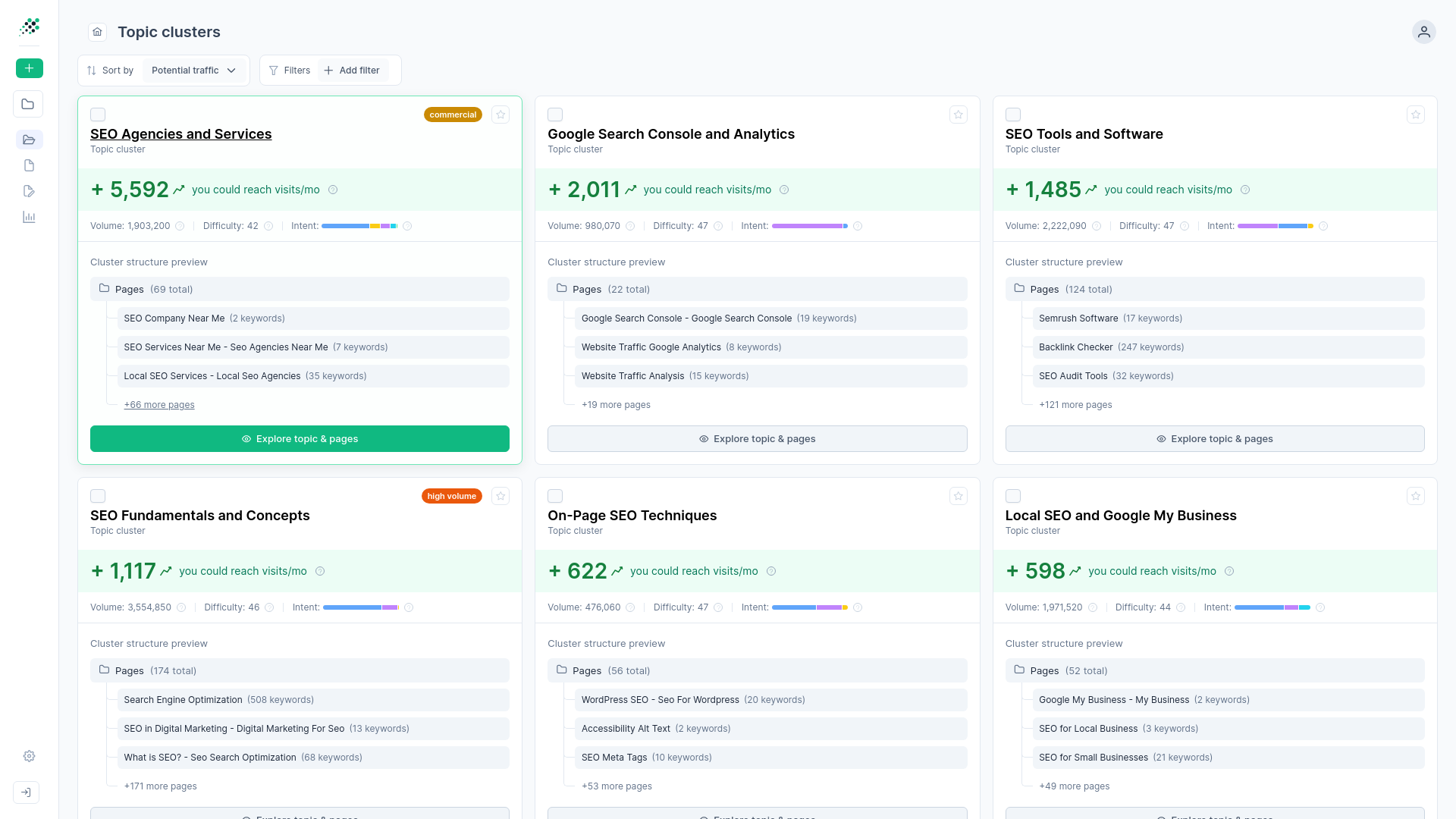
Build Your Topic-First Architecture
Multi-Source Keyword Discovery
Pull search volume and intent from 8 distinct channels simultaneously to build one master list.
Automated Quality Validation
Scrub gibberish, URL fragments, and irrelevant terms instantly using 13 specific linguistic rules before human review.
Hierarchical Topic Clustering
Map disparate queries directly to parent themes and supporting subtopics to establish a clear site taxonomy.
Site-Relative Opportunity Scoring
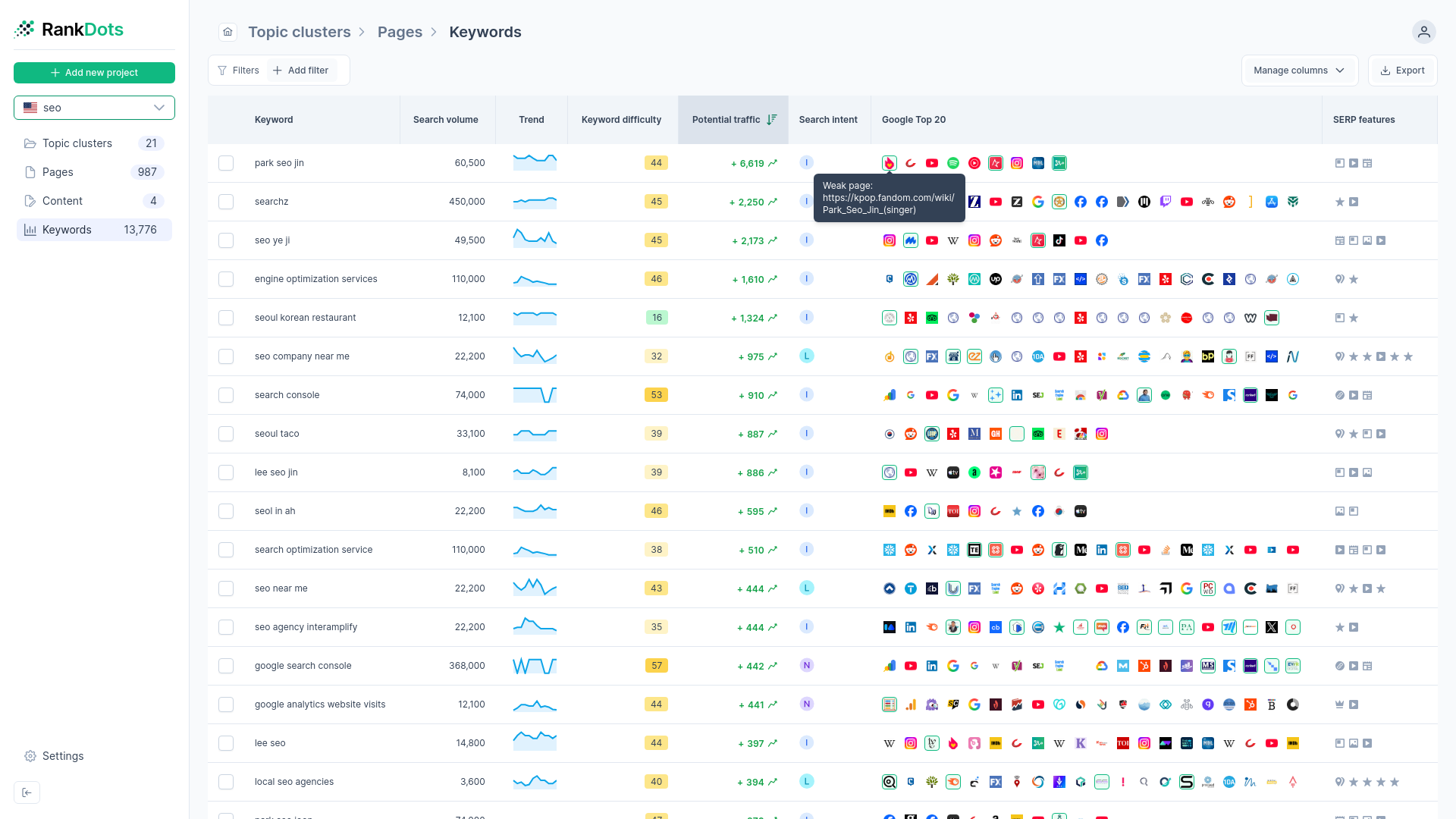
Evaluate live SERP competitors against your domain's exact backlink profile to identify specific, easy-to-rank gaps.
Automate Your Keyword Strategy Builder
Enter Your Target Seed
Type a core term or domain into the search bar. The engine immediately aggregates related queries from eight distinct data sources.
Review Cleaned Metric Data
Watch the platform scrub irrelevant terms using 13+ linguistic rules. You'll get a refined list enriched with 20+ specific performance metrics.
Cluster by Semantic Intent
The algorithms automatically map the clean data by actual search intent. You'll bypass the tedious manual spreadsheet work entirely.
Export Your Site Architecture
Grab your completed topic-first architecture. You'll receive a structured plan defining main pillar pages and supporting subtopics ready for production.
See Your Site-Relative Opportunities
Map Your Content Plan With Topic Architecture
Spot Vulnerable Competitors With Custom Scoring
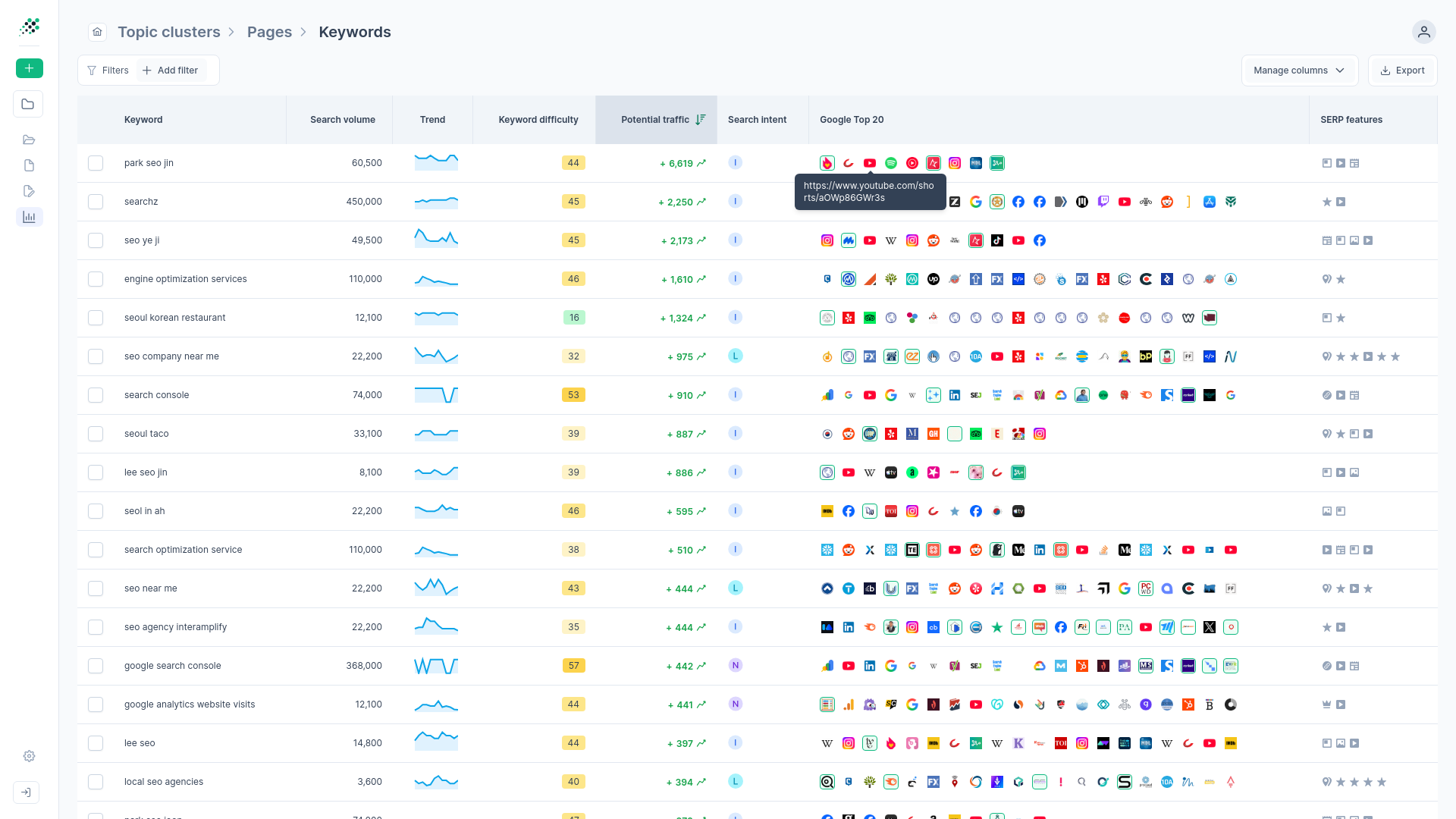
Forecast ROI With Integrated Traffic Projections
How semantic clustering changes content planning
Moving past shared words
Lexical text matching groups terms by shared words, scattering related intents across your list. You paste a 10,000-term list into RankDots, and the platform groups them by actual semantic intent instead. It builds a hierarchical structure where parent topics become main pillar pages and subtopics become supporting articles. This topic-first architecture builds a cohesive content network, not just isolated keyword targets. If you need to map out a complete blog section for a new product line, you get a structurally sound topical taxonomy automatically.
Fixing data blind spots
If you rely on a single third-party index to expand market share, you miss long-tail, user-generated questions from autocomplete and related searches. We consistently see high variance in keyword search volume data across different indices. Even the most accurate third-party SEO tool matches exact Google Search Console volumes only 33% of the time. To eliminate these blind spots, RankDots queries eight distinct sources simultaneously—including Google Keyword Planner, Autocomplete, People Also Ask, and Google Search Console. You pull a comprehensive view of what users actually search and capture the valuable intent gaps that single-index platforms miss entirely.
Scoring opportunities by reality
A generic keyword difficulty metric doesn't reflect your actual ability to rank.
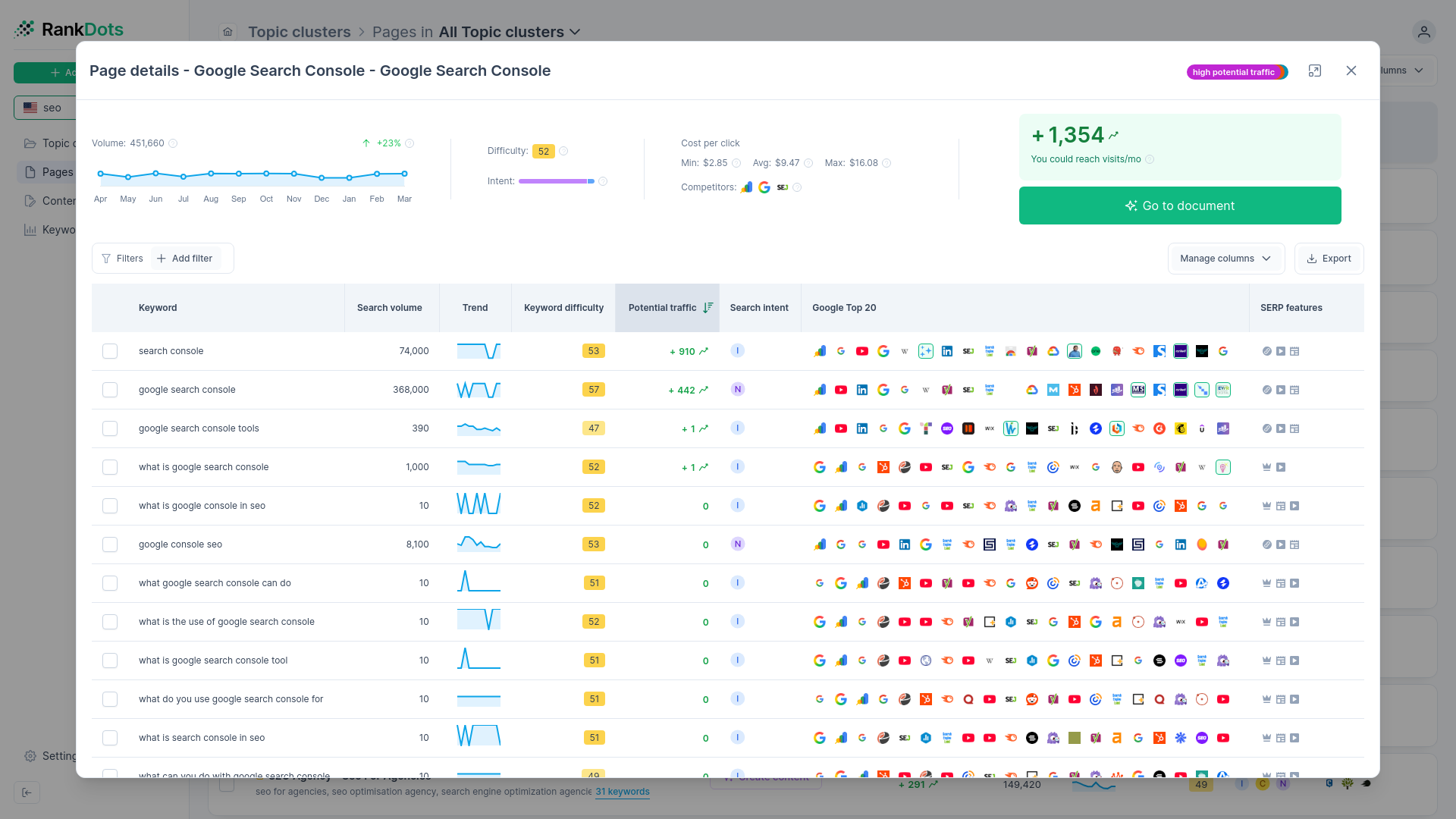
You need Site-Relative Opportunity Scoring to evaluate ranking potential. Site-relative scoring evaluates your exact domain strength against current SERP leaders. RankDots skips the blanket scores and reverse-engineers live SERP ranking patterns to identify specific gaps. It analyzes page types, content structures, and topical depth to surface easy-to-rank spots relative to your specific domain authority. From there, the platform automatically prioritizes these clusters using five recommendation algorithms: Traffic Growth, Commercial Potential, Search Volume, Difficulty, and Search Trend. You see the ROI. Presenting concrete traffic forecasts to stakeholders becomes a matter of exporting the prioritized list, not guessing based on abstract volume numbers.
Pick your plan
See why RankDots is #1




Frequently Asked Questions
What makes a good keyword strategy?
How does the keyword strategy builder handle intent clustering?
When should you upgrade from a free keyword research tool?
Can I use the keyword generator to analyze competitor domains?
Turn Raw Keyword Lists Into A Ready-Made Content Plan
Drop your seed term into the RankDots Keyword Strategy Builder and skip the manual spreadsheet sorting. Generate a fully prioritized, site-relative pillar and cluster hierarchy in minutes. Automate the grouping process so you can publish faster.