Architect Intent-Backed Topical Maps With the RankDots Site Structure Builder
Ditch arbitrary UX diagrams for live SERP reverse-engineering. Automatically group your keywords by actual search intent to build a resilient, pillar-and-cluster architecture that drives organic traffic.
A visually pleasing sitemap diagram means nothing if the resulting architecture cannibalizes your own keywords in search results. You can spend days in a whiteboarding tool mapping the perfect hierarchy, but without a dedicated Site Structure Builder, you won't know how it actually drives organic traffic.
A standard visual sitemap generator helps map the user interface, but it ignores the search algorithms. You need a Site Structure Builder that protects your traffic before you publish. Instead of relying on subjective visual box-drawing, RankDots groups pages by search intent to create a resilient pillar-and-cluster architecture. RankDots automates intent-backed site architectures to drive organic visibility and bridge the gap from keyword research to content execution.
Flat keyword mapping on spreadsheets leads to disconnected content. When you group topics based on text similarity, you end up with blind spots. Roughly 96.55% of all indexed content receives zero organic traffic from search engines each month, often because those pages were built without understanding what search algorithms reward.
An intent-backed SEO architecture prevents this traffic loss by aligning your content plan with proven ranking patterns.
With RankDots, you transition from manual visual diagramming to automated, intent-backed topical mapping. It queries eight distinct data sources simultaneously to build comprehensive topic maps.
Here's how to transition from keyword-first spreadsheets to a topic-first architecture. You'll see how automated mapping prevents keyword cannibalization and accelerates your content execution.
Site Structure Builder Capabilities
Semantic Intent Clustering
Group queries by underlying meaning instead of exact phrasing so you capture total search intent without creating competing pages.
Multi-Source Aggregation
Query eight distinct data sources simultaneously to expose the structural blind spots left by traditional single-index research tools.
Site-Relative Scoring
Evaluate SERP competitiveness against your specific domain authority to identify structural entry points where your site can realistically rank.
Automated Taxonomy Generation
Format your validated keyword clusters into a clean, ready-to-deploy hierarchy of parent pillar pages and supporting subtopics.
Build an intent-driven site structure
Input seed terms or URLs
Enter a broad niche keyword or existing domain. The platform automatically aggregates search data across eight distinct sources, so you don't need manual CSV uploads.
Filter topics by search intent
Isolate commercial product clusters from informational blog topics. This focuses your site architecture on specific user goals, meaning you won't have to sift through mixed search data.
Generate a two-level taxonomy
RankDots organizes your validated clusters into a clean structural hierarchy. You'll receive a mapped framework of parent pillar pages and supporting subtopics ready for immediate content generation.
Visualizing live SERP data
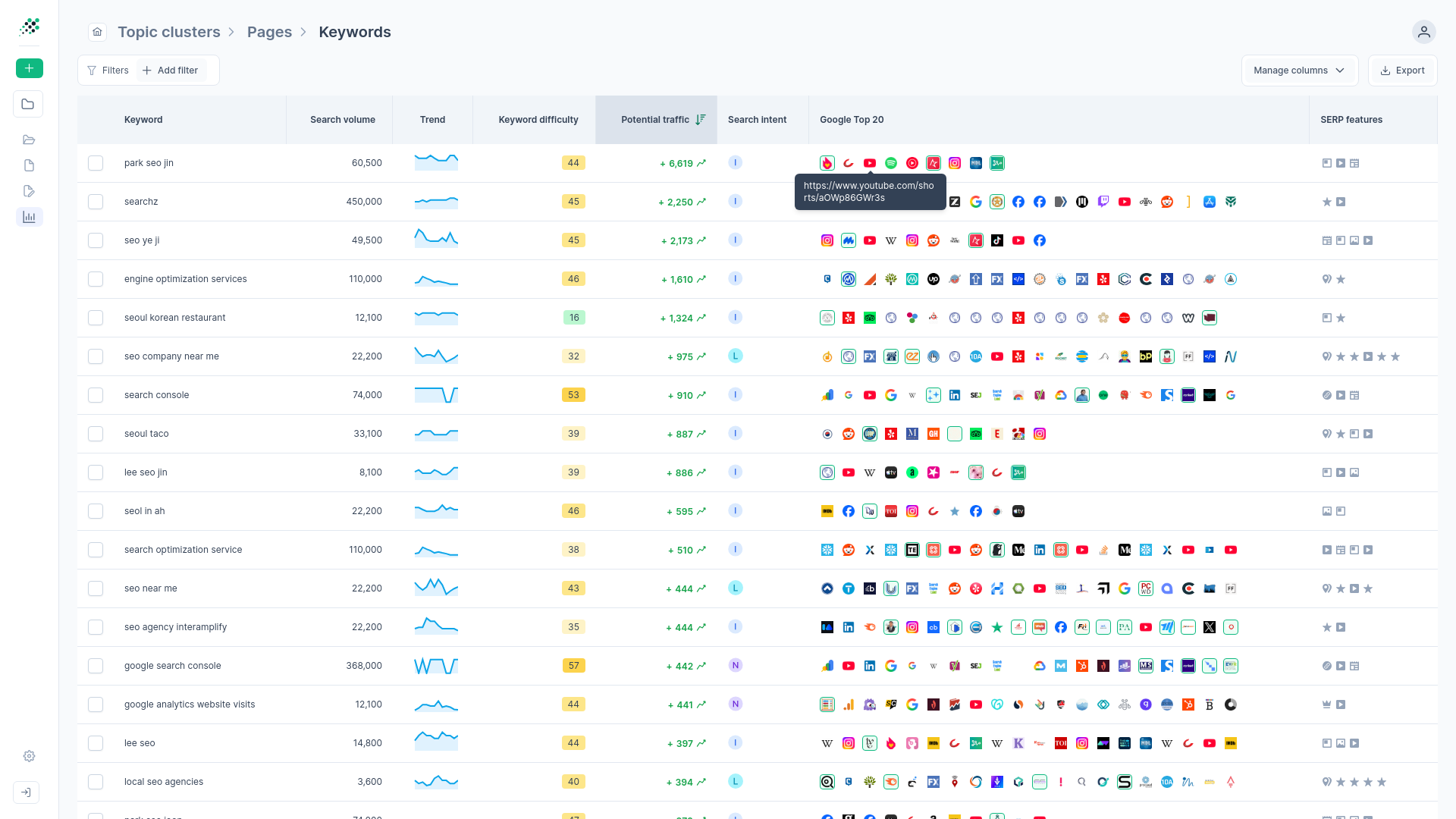
Validate structures with URL intersection
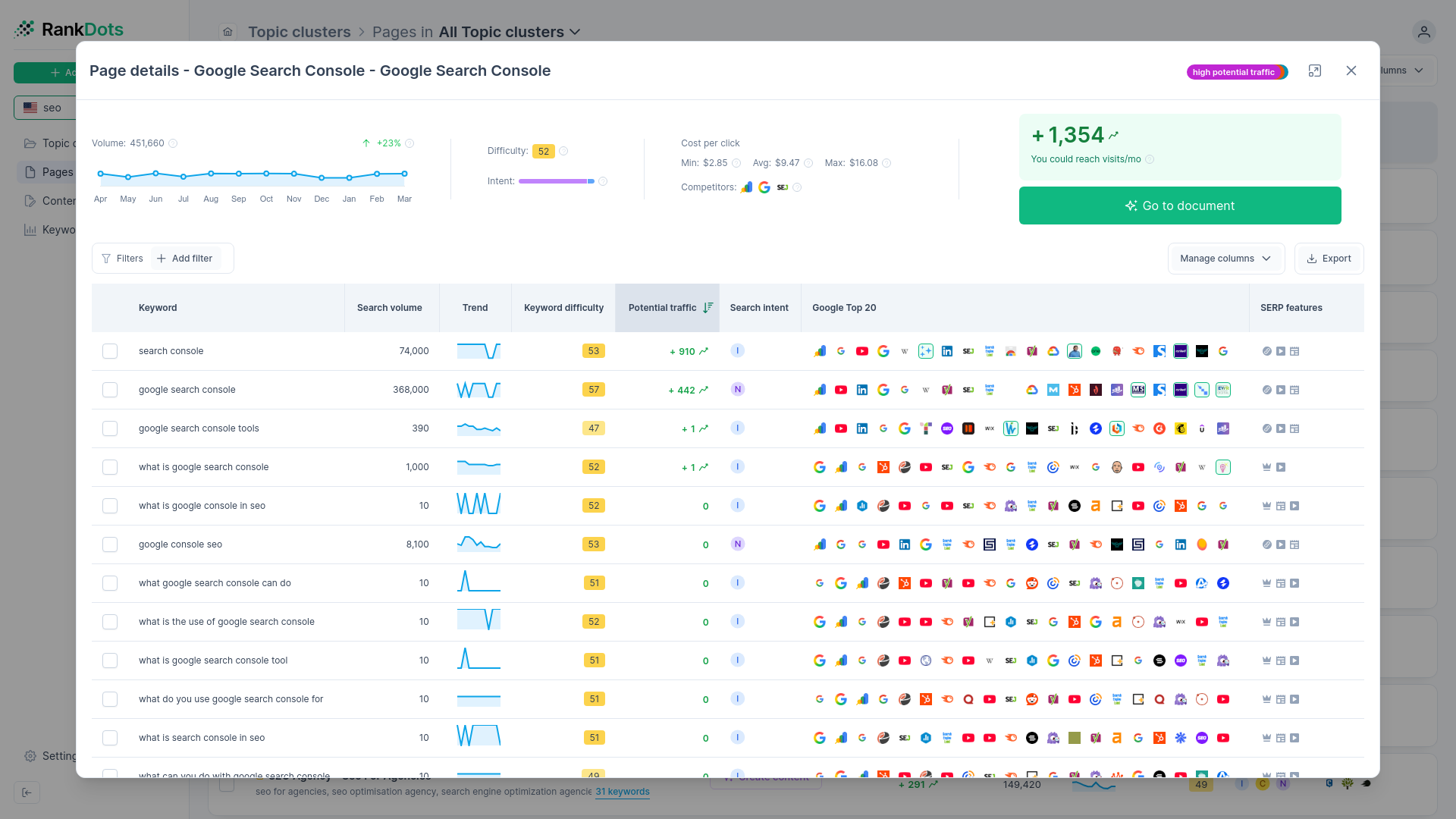
Forecast concrete traffic potential
Preventing keyword cannibalization at the structural level
Map keywords by shared text strings, and your organic traffic drops. It happens every time. Two expensive pieces of content end up competing against each other in the SERPs. Often, five or more pages end up fighting for the exact same term. Resolving this content overlap consolidates your ranking power instead of splitting it.
RankDots prevents this at the foundational level through active cluster validation. If you're unsure whether two subtopics should be combined into one long-form guide or split into multiple URLs, RankDots removes the guesswork. We process live Google SERPs through URL intersection analysis to validate cluster integrity before a single piece of content gets written. If the same competitor URLs rank for multiple keywords in a cluster, RankDots keeps them together. If they don't, it separates them into distinct structural topics.
Once your topical map is validated, the workflow transitions immediately into execution. You skip the tedious export process. RankDots moves you directly from an approved architecture map into its built-in AI SEO Content Writer. It generates comprehensive outlines for your newly planned hierarchy, so every draft matches the cluster's original intent.
Frequently asked questions
What is the difference between a visual sitemap and a topical site architecture?
How does the tool automatically prevent keyword cannibalization?
Does RankDots analyze live Google SERP data to validate clusters?
Can I build architectures for massive, enterprise-level domains?
Does the platform forecast organic traffic for planned structures?
Build a resilient site architecture that naturally drives organic traffic.
Launch the RankDots Site Structure Builder to stop drawing subjective design boxes and start mapping by actual search intent. Enter a seed topic to instantly deploy a validated hierarchy that eliminates internal competition.