Target weak SERP spots with our competitor keyword analysis tool
Stop manually merging spreadsheet data. RankDots evaluates live search results against your specific domain strength to target legacy competitor pages you can quickly displace.
Manual CSV exports waste time and deplete your monthly report limits before you even start looking at competitor data. A competitor keyword analysis tool bypasses this manual grind by pinpointing exactly where rival sites are vulnerable to displacement. Flat data exports from platforms like Ahrefs or Semrush ignore your specific domain authority, but evaluating SERP competition against your specific metrics reveals vulnerable legacy rankings you can realistically displace.
RankDots automatically groups keyword opportunities by search intent. RankDots delivers a structured content roadmap in minutes, eliminating the need to sort keyword rows manually. We got tired of watching teams waste their standard workweek collecting data instead of doing strategic analysis. You pull a list, attempt to merge it with another, and suddenly realize identical metric fingerprints across grouped keywords are artificially inflating your traffic projections.
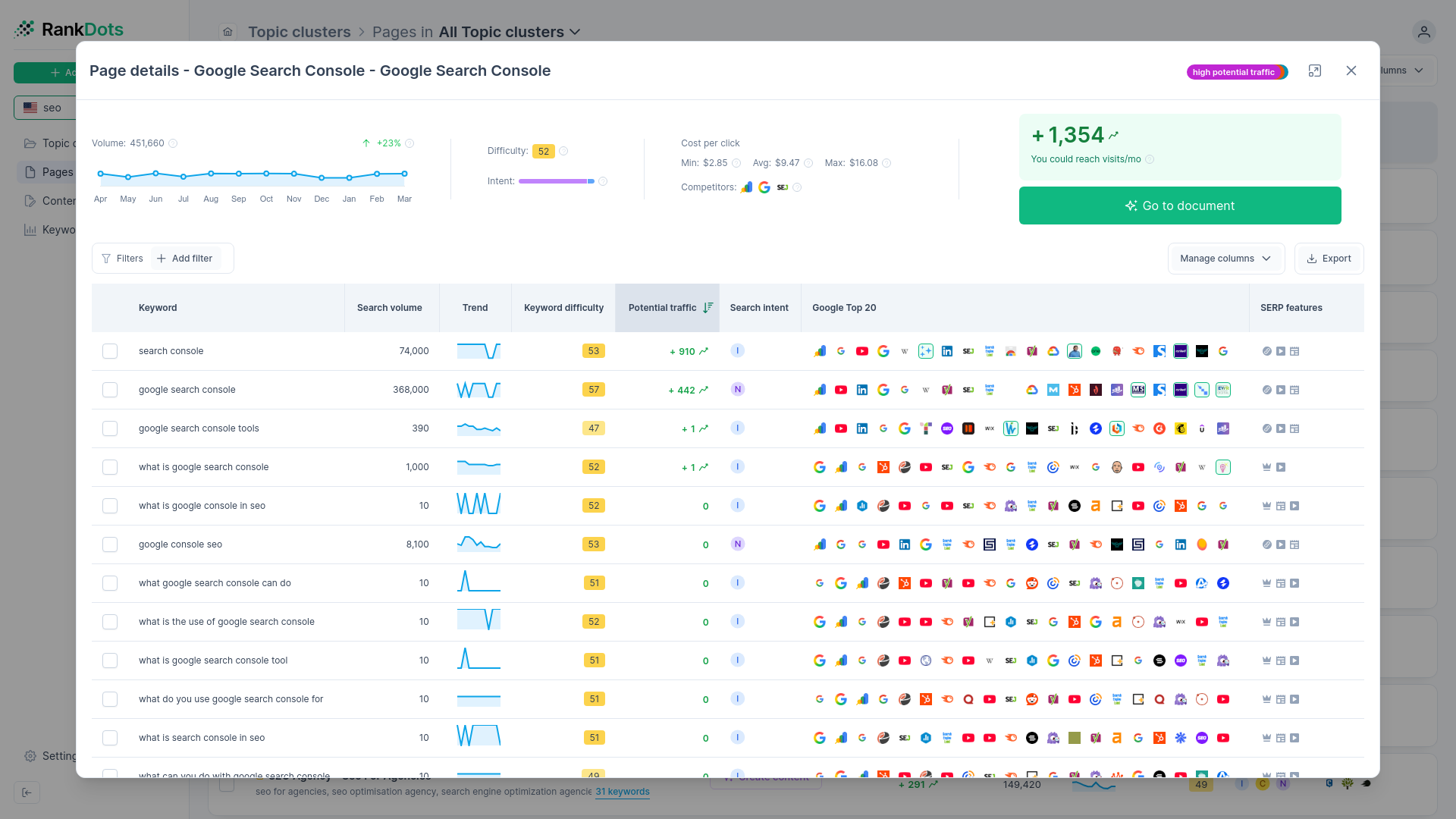
Here's a complete strategic framework for automating your gap analysis and translating raw competitor search data into a structured, executable content architecture.
Validated data for competitor displacement
Search Volume Correction
Identical metric fingerprints—where multiple keywords share the exact same search volume and difficulty metrics—artificially inflate traffic projections. RankDots detects these clusters and accurately distributes exact volumes to prevent overestimated forecasts.
5-Category Intent Scoring
Stop guessing what searchers actually want. We track a dedicated Local category alongside standard intents, assigning percentage confidence scores to reveal mixed-intent queries precisely.
Automated Quality Validation
Our competitor keyword analysis tool filters raw data against strict linguistic rules. It automatically removes gibberish so your gap analysis relies entirely on actionable targets.
Reverse-engineer competitors in three steps
Enter your competitor domain
Drop a rival URL into our competitor keyword analysis tool. RankDots maps their entire ranking footprint and evaluates those positions against your specific domain metrics.
Review the clustered topic architecture
RankDots organizes raw query data into a topic-first architecture. You see clear parent categories and specific subtopics.
Generate your gap displacement blueprint
Select the vulnerable legacy rankings identified by RankDots. RankDots generates a targeted content structure detailing the exact formats needed to win.
Target site-relative weak spots for faster ranking
Generic metrics often trick you into chasing the wrong targets. You target a competitor's keyword labeled with a low generic difficulty score, publish your page, and it fails to rank anywhere near page one. Generic difficulty numbers ignore your specific domain strength. You end up wasting budget on entrenched competitors with insurmountable domain authority.
The danger of generic keyword difficulty
Many traditional tools calculate difficulty based on aggregate data. RankDots takes a different approach with Site-Relative Opportunity Scoring. RankDots evaluates SERP competition directly against your specific domain and page authority metrics. You see exactly which competitor pages are genuinely strong and which ones rely on legacy authority.
We process live Google SERPs to find the vulnerabilities in your niche. The Easy-to-Rank Spots feature pinpoints specific keywords where the competitor's ranking pages are beatable based on your exact backlink profile. You get a definitive list of displaceable targets, not a vague gap analysis.
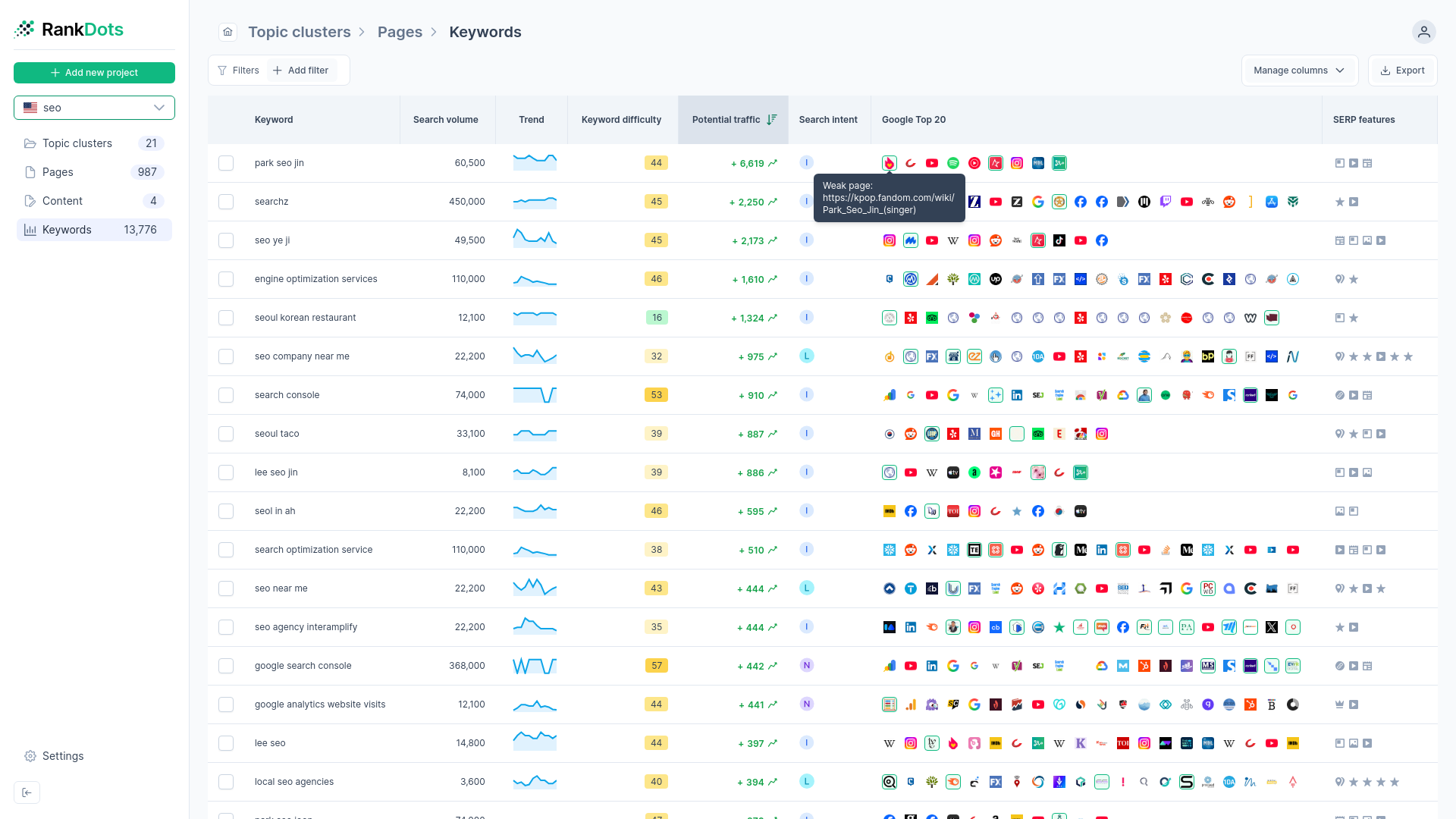
Isolating vulnerable legacy rankings
A dominant site might hold page one for a secondary topic despite having zero page-level backlinks. These legacy pages rank simply because no one has challenged them recently with better structural depth. You must analyze the backlink profile of the specific ranking URL to identify them, not just the parent domain.
When you isolate these weak spots, you can build a highly targeted displacement strategy. You pick off their secondary topics where page-level authority is surprisingly thin, avoiding head-on attacks against a dominant competitor's core pillars. Target these weak flanks to accelerate traffic acquisition without running expensive link-building campaigns.
Mapping topic gaps to executable architectures
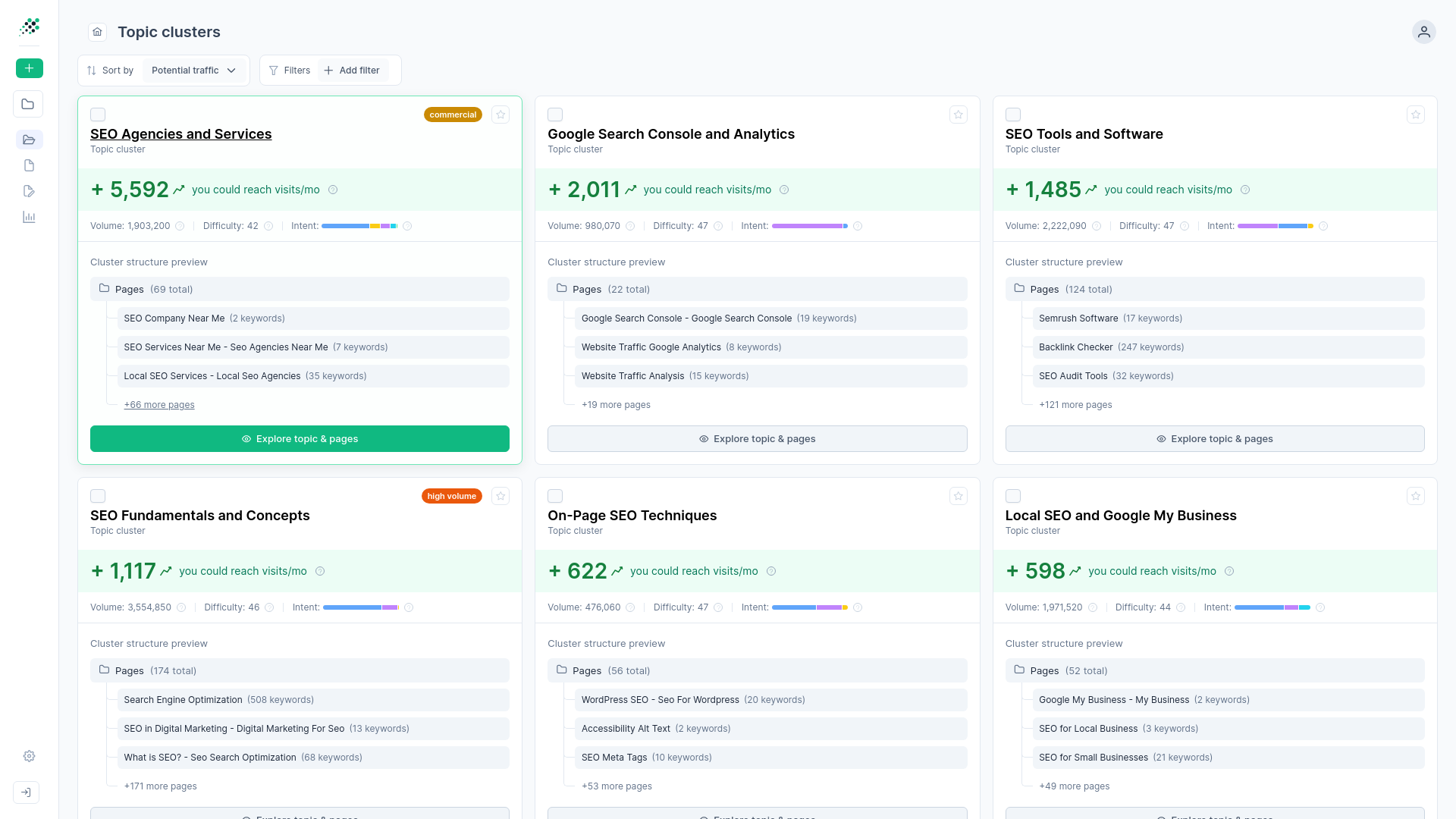
Isolated keyword targets rarely dismantle a competitor's topical authority. You have to group these vulnerabilities into cohesive structures. Websites using topical clusters earn more keyword rankings per page than those that don't, and they drive significantly more organic traffic overall.
Manual topic clustering requires days of spreadsheet sorting. RankDots runs the entire keyword gap analysis automatically. You move straight from competitor keyword research into building those high-traffic parent and subtopic pages.
RankDots translates raw competitor vulnerabilities directly into this required architecture. When you present a final content blueprint to stakeholders, you aren't just showing a list of search volumes. You show the specific competitor pages you'll displace, the exact content structures needed to beat them, and concrete traffic forecasts derived from real-time SERP data. You show stakeholders how this keyword architecture drives new organic traffic.
See why RankDots is #1




Frequently asked questions
What is competitor keyword analysis?
Why is competitor keyword research important for SEO?
How do I do a competitor keyword analysis?
How often should I perform competitor keyword analysis?
How do free competitor keyword tools compare to paid ones?
Dismantle competitor topical authority and capture their traffic
Don't guess where your rivals are weak. Run their domain through our competitor keyword analysis tool to map their entire ranking footprint and pinpoint the exact queries you can overtake today.