Run A Keyword Difficulty Analysis That Exposes Weak Search Competitors
Abandon misleading universal scores. RankDots evaluates the exact search engine results page (SERP) against your specific domain authority (DA) so you can quickly identify the competitors you can displace.
Generic difficulty scores often leave your content stuck on page three of the search results. Here's a strategic framework for identifying the exact competitors you can realistically displace. Keyword Difficulty Analysis examines the specific weaknesses of currently ranking pages relative to your own domain's authority.
The core flaw with traditional metrics is that they assume every website starts from the exact same baseline. Tools like Ahrefs calculate difficulty on a static 100-point scale, while Semrush pulls from a multi-factor formula evaluating over ten parameters. But a score of "45" means something entirely different to a ten-year-old industry giant than it does to a six-month-old startup blog. Universal scores average out the competition. They hide the specific reasons why a page currently ranks.
Historically, difficulty tools relied heavily on backlink profiles. Data suggests that most keyword difficulty tools rely too heavily on backlinks, which are reportedly diminishing in importance. A high-volume keyword might look mathematically impossible based on link counts alone, but the pages actually ranking might have thin content or poor site architecture. A generic algorithm prioritizing links over relevance hides winnable topics.
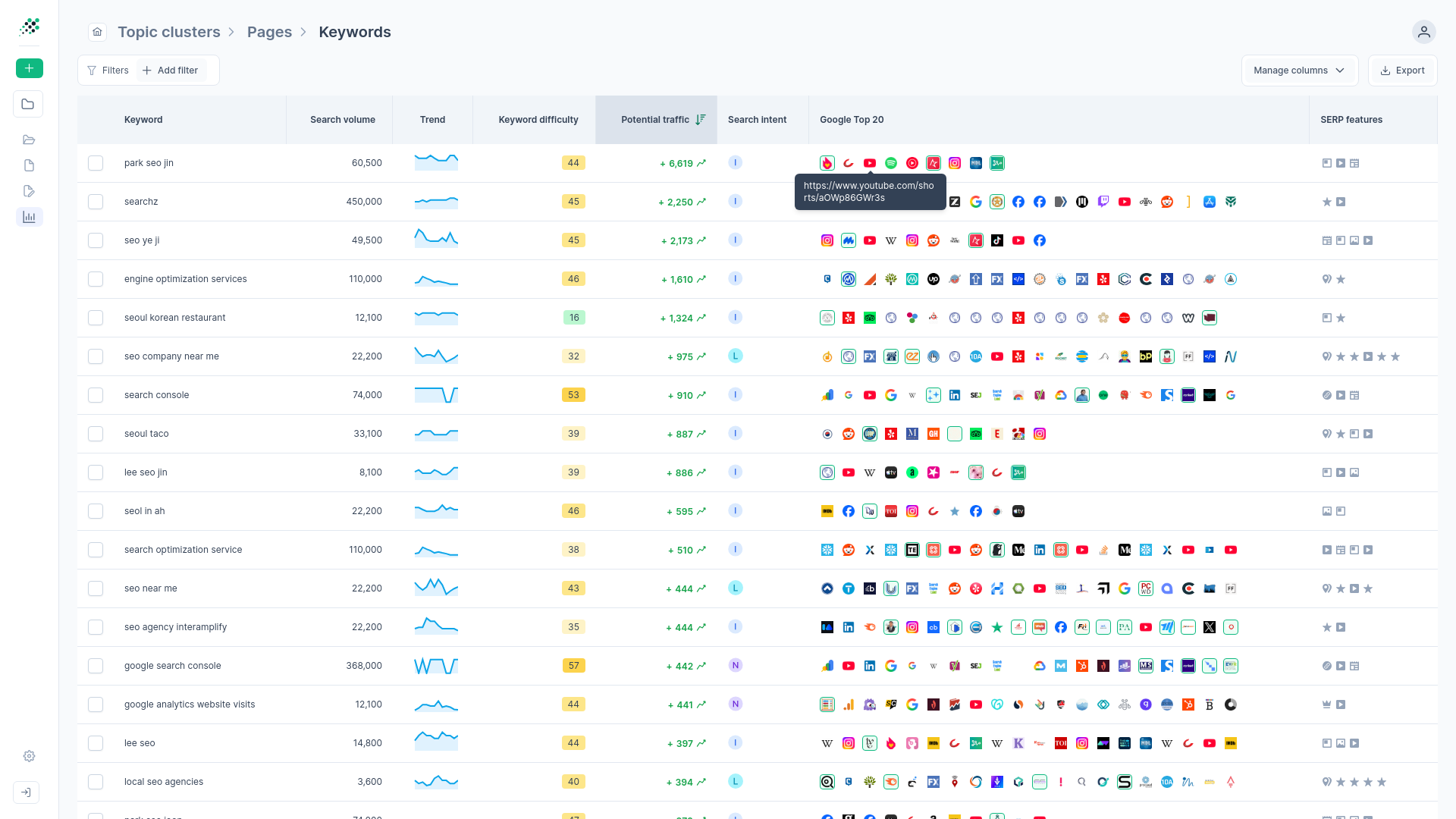
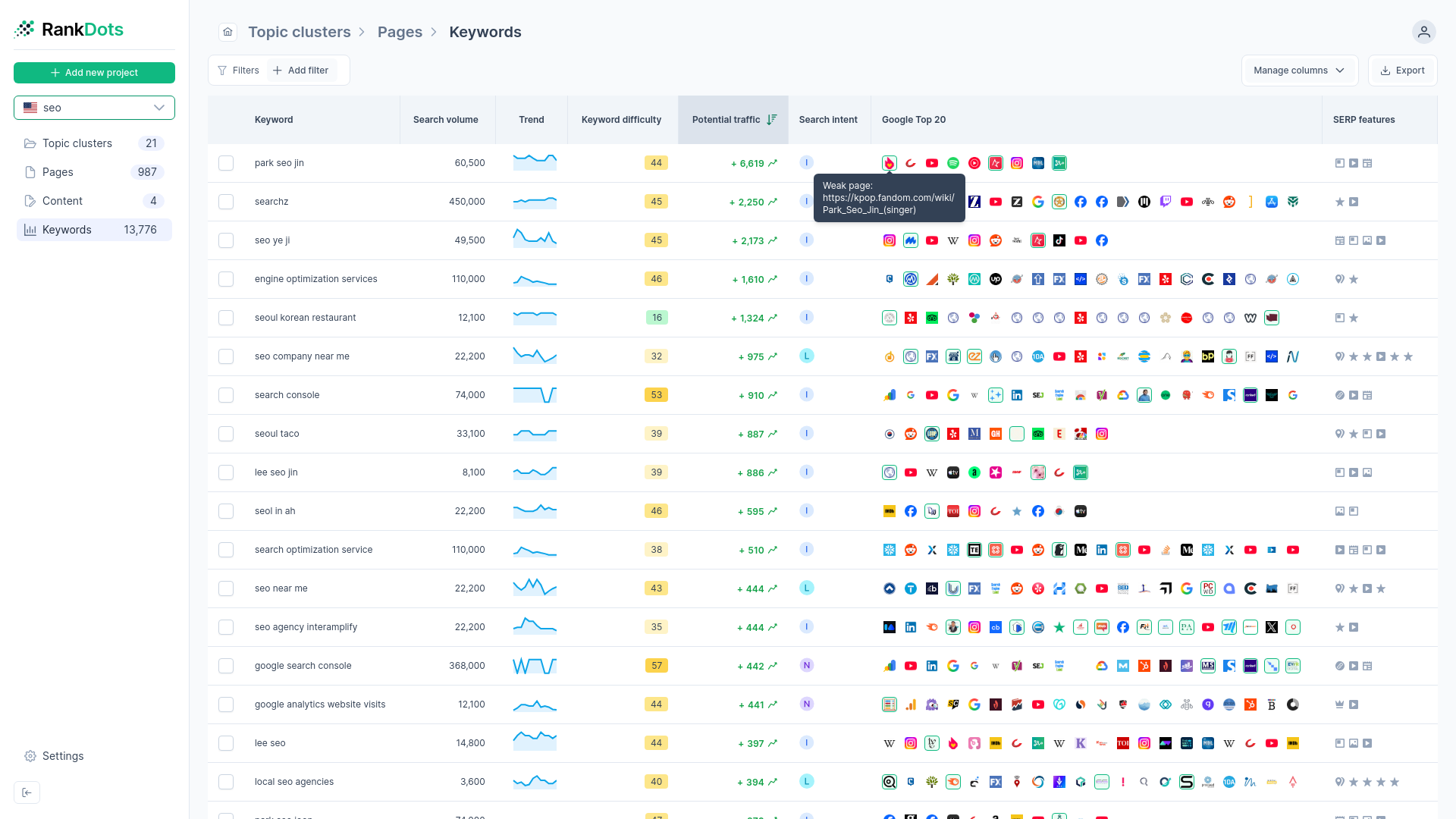
RankDots drops this static baseline entirely. The Keyword Difficulty Score calculates dynamically based on the actual URLs currently holding Google's top results. It evaluates the specific strength of those ranking pages and the competitive density of the SERP. You evaluate the competition against your specific starting line.
Actual SERP competition changes your entire research workflow. You target the exact pages you can realistically beat.
Target Keywords You Can Actually Win
Concrete Traffic Forecasting
RankDots connects directly to Google Search Console to calculate the specific traffic bump you'll gain by moving up the search results. Stop guessing and build data-backed growth projections.
Content Portfolio Balancing
Build a sustainable editorial calendar by mixing short-term achievable targets with long-term premium investments. You'll maintain steady traffic momentum while gradually establishing domain authority.
Multi-Algorithm Sorting
Five distinct algorithms evaluate your keyword lists for metrics like Commercial intent and Search Trend. You'll automatically align your content research with your immediate business goals.
Automated Quick Wins
With tailored opportunity scoring, you'll easily isolate topics with low competition and moderate volume for your specific domain. Assign these achievable targets to your team to capture rapid search visibility.
How to find easy-to-rank opportunities
Enter your seed keyword
Type your core topic into RankDots to instantly map the current search engine results page.
Isolate weak ranking positions
Filter the analyzed keyword list using the Easy-to-Rank Spots metric to find competitors with low authority.
Target specific vulnerable URLs
Select a single thin or outdated page in the top ten to act as your displacement target.
Build content for displacement
Write a focused article designed specifically to outperform that one weak competitor and capture its traffic.
Calculating site-relative opportunity
The alternative to a universal number is looking at the search engine results page as it exists today. RankDots introduces Site-Relative Opportunity Scoring to evaluate the current top 10 search results directly against your specific domain authority and backlink profile. It highlights "Easy-to-Rank Spots". These are the specific, weak positions within a current SERP—competitors with low domain authority, few backlinks, thin content, or weak relevance signals that you could realistically push down.
Target displacement instead. You don't need to beat the number one result to win traffic. If the page sitting at position #7 is outdated or poorly structured, that's your target. You build content specifically to displace that one vulnerable URL.
A weak spot only matters if the payoff justifies the effort. Once you isolate an achievable keyword, the platform translates abstract search volume into a concrete traffic forecast. It filters the data through the Easy-to-Rank Search Volume metric, showing you how much traffic is available—for example, projecting that displacing position #7 for a 10,000-volume keyword yields 400 realistic monthly visits. You get specific, projected monthly traffic numbers per page. You walk into your next stakeholder meeting with a clear ROI forecast.
Frequently asked questions
What is a good keyword difficulty score to target?
What factors determine or affect keyword difficulty?
Does high domain authority guarantee ranking for difficult keywords?
What is the difference between organic keyword difficulty and paid keyword competition?
How do RankDots Easy-to-Rank Spots work?
Turn Your Keyword Difficulty Analysis Into Achievable Traffic Goals
Stop wasting your content budget on unwinnable search battles. Let RankDots evaluate the results against your specific domain so you can focus on achievable displacement targets. Start writing articles that actually secure organic visibility.