RankDots

Turn messy spreadsheets into topical maps with our Keyword Discovery Tool

Stop sorting rows manually. RankDots analyzes live Google overlap to group terms automatically and delivers a ready-to-execute site architecture in minutes.

You export extensive lists from Google Keyword Planner and spend hours sorting them by hand in a spreadsheet. That outdated workflow wastes hours and creates keyword cannibalization. A modern Keyword Discovery Tool groups keywords by actual search intent rather than simple volume metrics. You uncover hidden topic opportunities and build structured content architectures automatically. We built a complete methodology for automating your keyword research and transforming unstructured search volume data into a cohesive, intent-matched site architecture.

You pull an unfiltered CSV from a standard keyword research tool, stare at thousands of unstructured rows, and attempt to group them by text similarity. It consumes hours. Worse, standard tools aggregate demand data from broader match searches, so your volume estimates are frequently overstated. Shared words don't reflect how Google understands intent. When you publish two separate articles targeting terms with similar text but identical search intent, you trigger keyword cannibalization. Those overlapping pages suppress your search engine rankings because they compete against each other.

RankDots replaces that manual workflow with a topic-first approach. We built a platform that groups your keywords automatically based on true SERP overlap rather than basic text similarity.

Before and after comparison showing a messy spreadsheet with manually color-coded keyword rows on the left, transforming into a clean visual tree of RankDots semantic topic clusters on the right

This guide breaks down how RankDots automates your keyword research and transforms unstructured data into a cohesive site architecture.

The foundation of that architecture relies on replacing static metrics with live performance data.

Map your semantic site architecture

layers

Semantic Topic Clusters

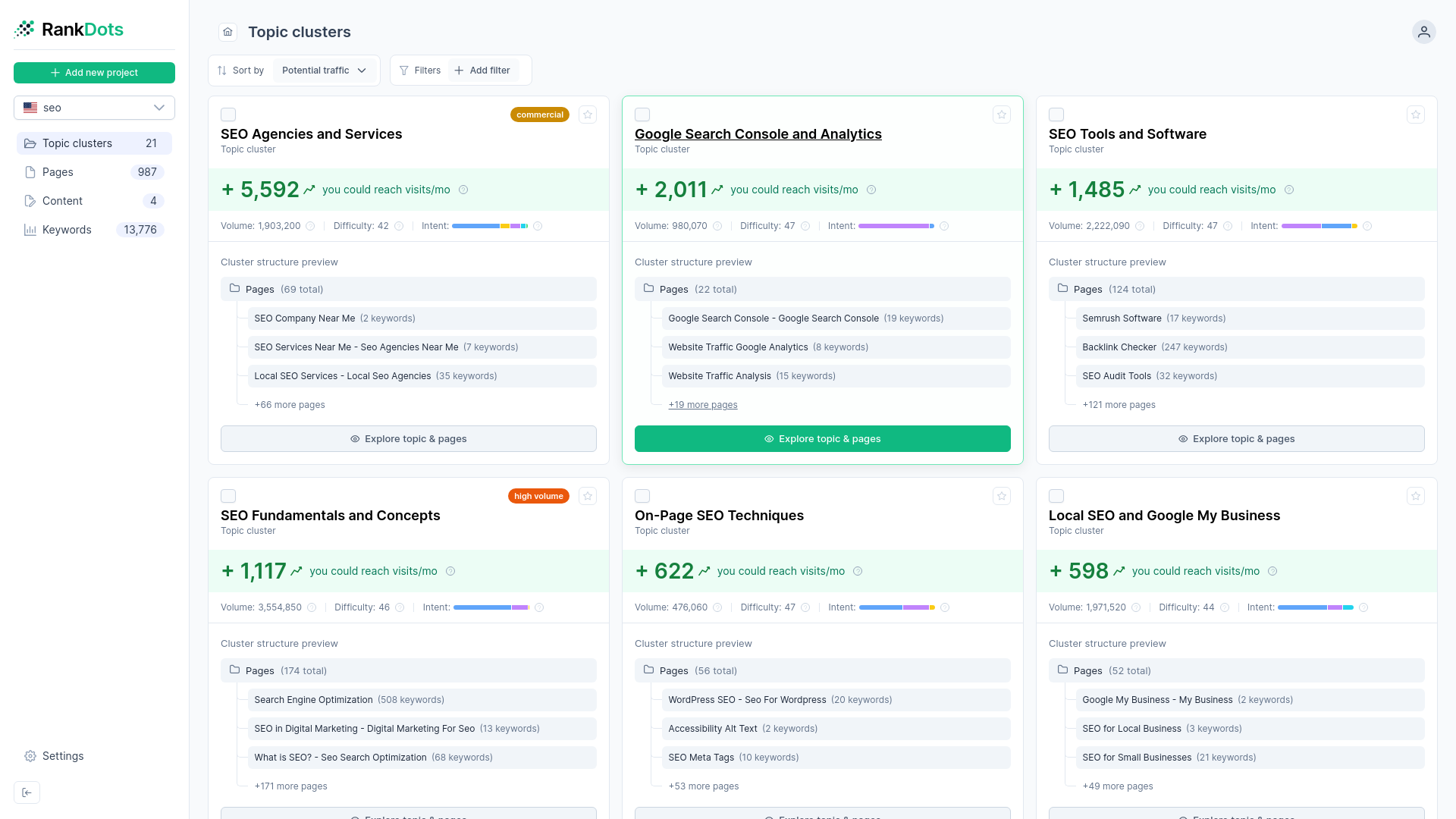
RankDots organizes your Keyword Discovery Tool research by actual intent overlap. You secure a structured content roadmap that reflects how search engines process relationships.

layout

Pillar-and-Cluster Mapping

Every generated grouping corresponds to a specific page format. You know exactly which terms belong on the main hub versus the supporting articles.

database

High-Volume Data Processing

Upload datasets containing over 5,000 queries without hesitation. You don't have to chop large exports into smaller batches or fight with lagging spreadsheet applications.

target

Precision Subtopic Selection

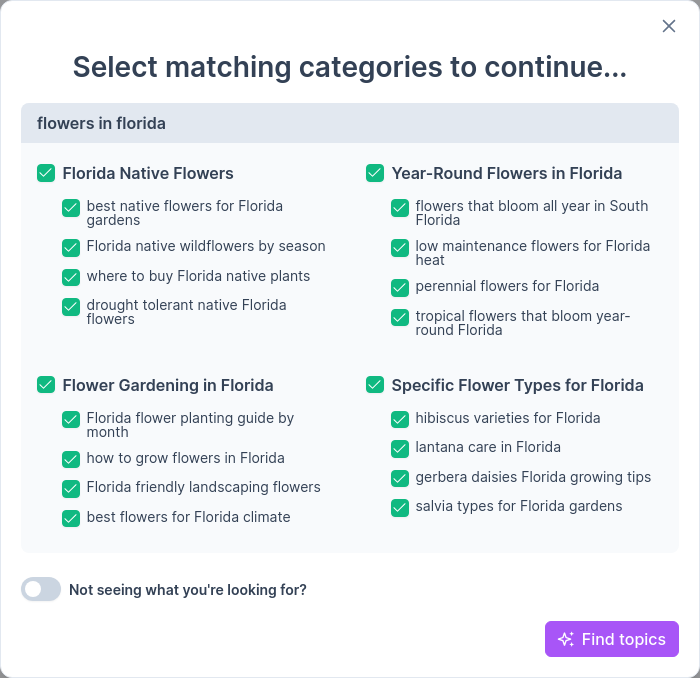
Broad seed phrases often carry multiple meanings. The system prompts you to isolate specific angles so your focused site architecture targets your exact niche.

Watch your keyword lists transform into structured maps

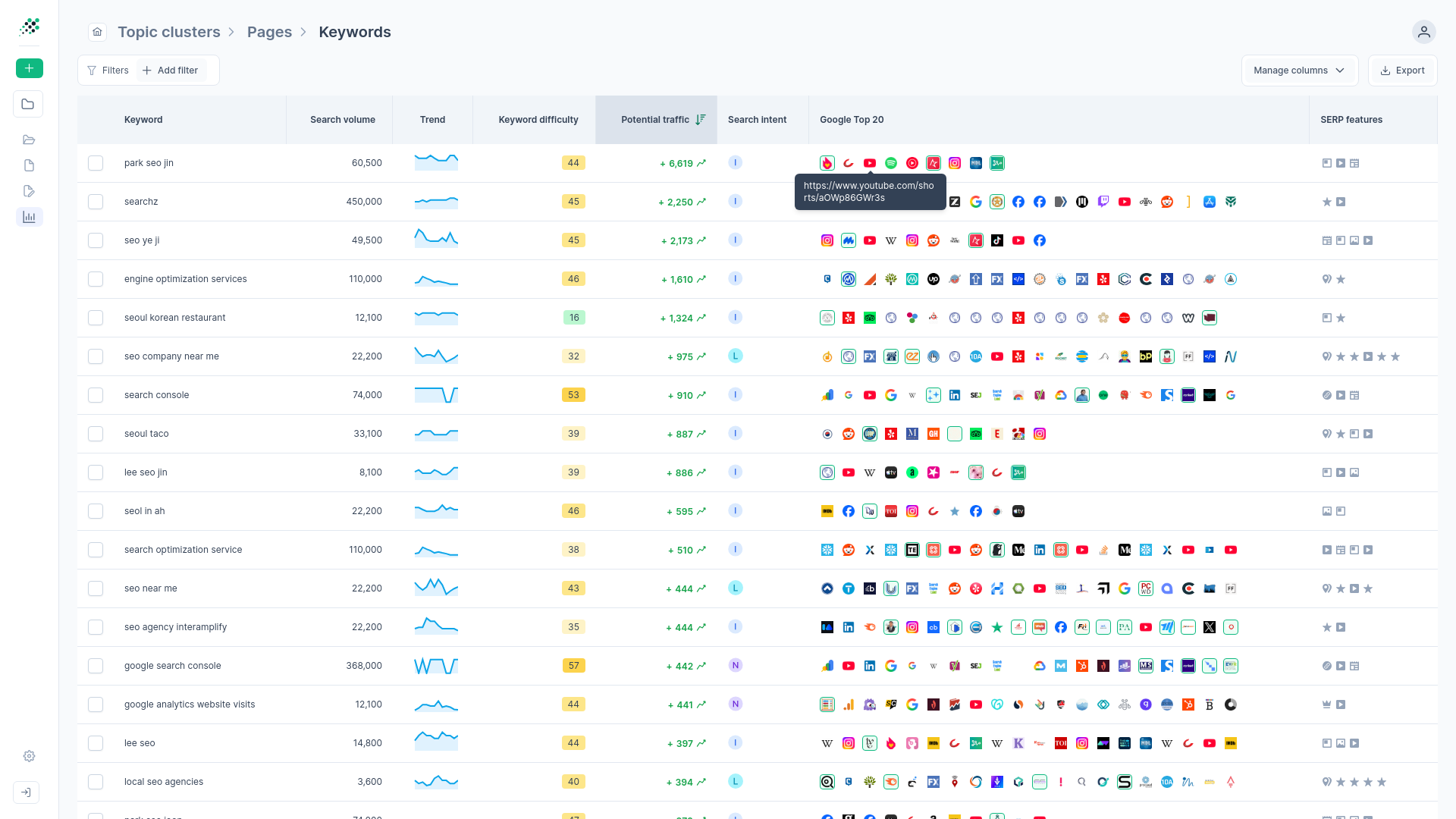
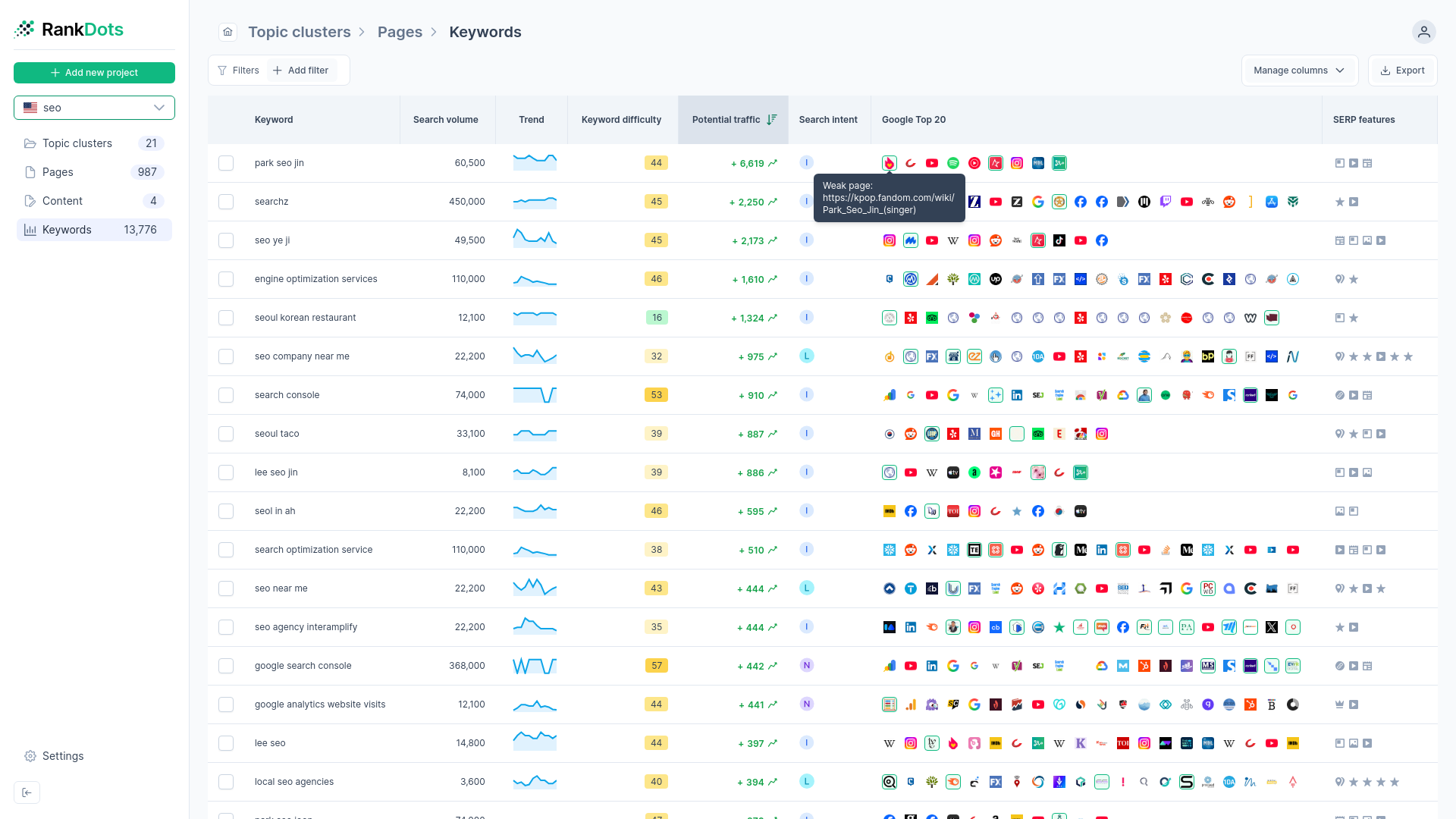
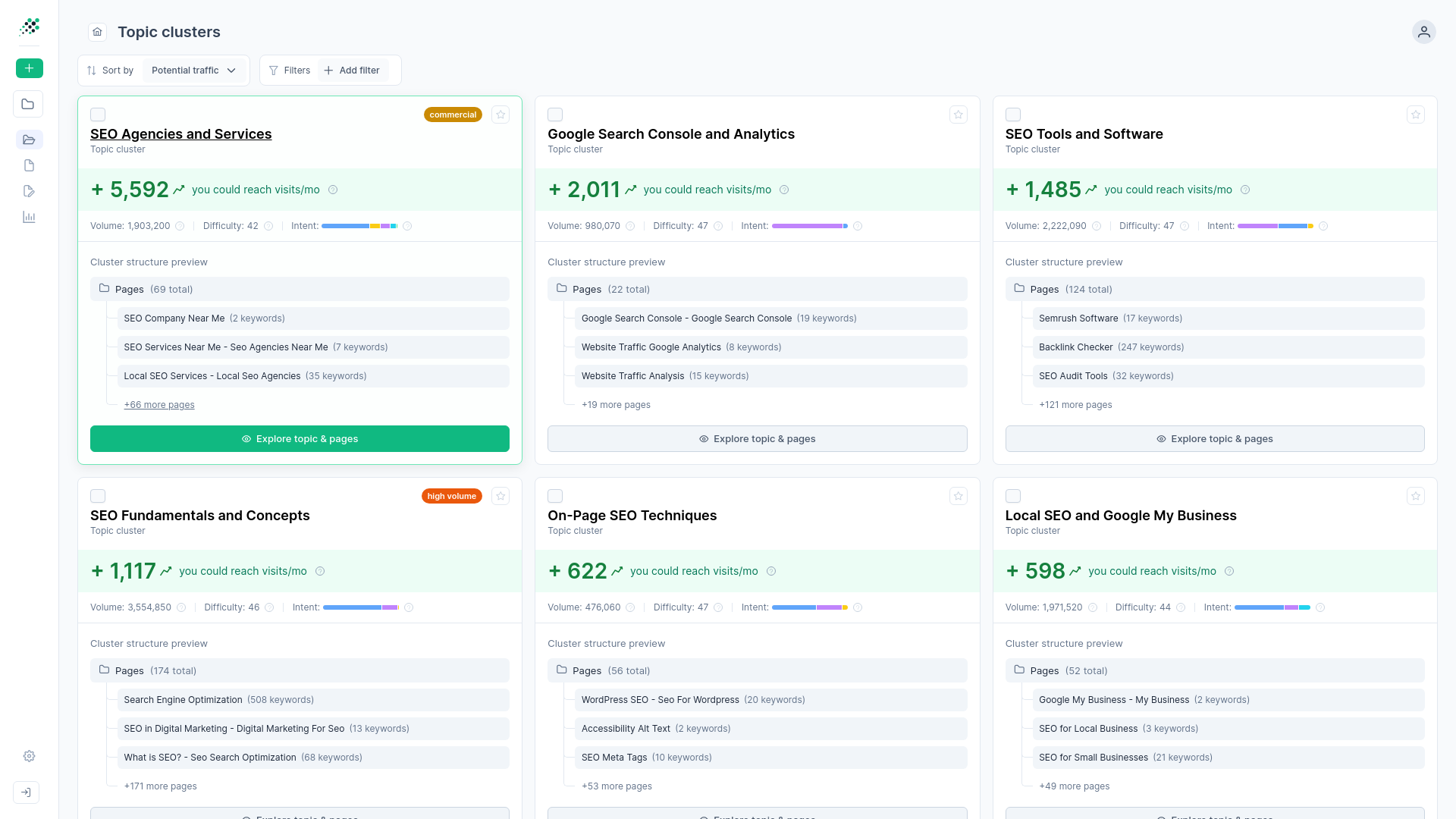
Drop your raw export into the Keyword Discovery Tool and watch the interface organize thousands of rows into clean, distinct branches. You'll immediately spot search volume, exact overlap percentages, and specific intent breakdowns mapped visually on each node. This interactive layout delivers a ready-to-publish content hierarchy.
Build your map
RankDots interface organizing raw keyword rows into visually distinct, intent-based topic branches

How the Keyword Discovery Tool builds your architecture

upload

Input your seed topics

Enter a broad phrase or upload an existing CSV. RankDots immediately retrieves live search results to gather current ranking data for your analysis.

target

Clarify your target niche

When prompted, select specific subtopics. Broad terms carry multiple meanings, so you'll isolate the exact search angles that align with your business goals.

workflow

Trigger the clustering algorithm

Let the engine analyze SERP overlap. The algorithm automatically groups queries and builds a ready-to-assign content hierarchy without manual spreadsheet sorting.

map

Execute your pillar strategy

Once the system maps your clusters, connect your first-party metrics. You'll start writing immediately with a clear plan targeting your highest-value gaps.

Live SERP reverse-engineering for true intent matching

Traditional tools often rely on static databases that update infrequently. When you enter a seed topic into RankDots, our AI keyword research tool instantly pings Google's APIs and scrapes live search results. Outdated databases limit your ability to understand current ranking patterns. We designed our platform to process real-time signals.

Agglomerative clustering based on live overlap

A shared-word approach creates structural errors. Just because two phrases share a word doesn't mean users want the same page format. RankDots uses an agglomerative clustering algorithm that analyzes live search results to group keywords.

The algorithm reverse-engineers what Google rewards. It checks the overlapping URLs in the top 10 search results for every query. If Google ranks the same pages for "best running shoes" and "top sneakers for runners," RankDots groups them into one intent-matched topic cluster. You avoid building redundant pages.

Interactive UI mockup of the RankDots clustering interface showing a central seed topic branching into distinct sub-clusters with search volume and SERP overlap percentages visible on each node

Verifiable percentage-based intent scoring

Many standard tools assign a single binary label to a keyword, like "Informational" or "Commercial." That forces you into rigid formatting decisions. If the search results for a high-volume seed topic show a mix of guides and product pages, a binary label fails to capture that nuance. You risk investing budget into a page format that Google won't reward.

RankDots replaces binary labels with verifiable intent scoring. The algorithm calculates percentage distributions for search intent based on the live ranking pages.

Stacked bar chart showing verifiable search intent percentage breakdowns, illustrating a keyword distributed as 55 percent Informational, 30 percent Commercial, and 15 percent Navigational

You see when a query has mixed intent and requires a blended content format. Your strategy adapts to reality, not a hardcoded database tag.

Unifying keyword discovery with Google Search Console

Separate third-party volume metrics and first-party performance data fragment your workflow. You waste time exporting spreadsheets just to run VLOOKUPs against your own website's metrics.

We built a direct integration with Google Search Console via OAuth. RankDots pulls your exact impressions, clicks, positions, and click-through rates directly into the clustering interface. You see where your site already ranks next to new cluster opportunities. Your next content brief starts with the highest-value gap, backed by live SERP data and your own verified performance metrics.

See why RankDots is #1

Ryan K
“I don’t have time to dig through keywords all day. RankDots showed me what to write about, and it actually worked. Simple as that.”
Ryan K.,
Founder of Hollow Creek Supply
Melissa J
I’m not an SEO expert, but RankDots made it easy to find the right topics and publish fast. It’s like having an in-house SEO team—without the overhead.
Melissa J.,
Founder of Oak & Bloom Interiors
David M
“As an agency, we’ve tried dozens of tools — RankDots is the first that gets keyword clustering and AI content generation right.”
Danielle M.,
Founder of an SEO Agency
Tanya R
“It’s like having an SEO strategist built into our workflow. The topic clusters are spot-on, and the content drafts give us a huge head start.”
Tanya R.,
Content Marketing Manager

Pick your plan

Plans for individuals, teams, and agencies. Cancel anytime.
Monthly Annually Save 40%
Starter
$
49
/mo
Order now
Features
3 projects per month
8,000 keywords per project
10 AI articles per month
Smart keyword discovery (AI + search data)
Intelligent topic clustering
Potential growth analysis
Topic-level content creation
Best offer
Business
$
99
/mo
Order now
Features
8 projects per month
12,000 keywords per project
20 AI articles per month
Smart keyword discovery (AI + search data)
Intelligent topic clustering
Potential growth analysis
Topic-level content creation
Keyword export
Agency
$
169
/mo
Order now
Features
15 projects per month
20,000 keywords per project
40 AI articles per month
Smart keyword discovery (AI + search data)
Intelligent topic clustering
Potential growth analysis
Topic-level content creation
Keyword export
Enterprise
$
299
/mo
Order now
Features
20 projects per month
35,000 keywords per project
60 AI articles per month
Smart keyword discovery (AI + search data)
Intelligent topic clustering
Potential growth analysis
Topic-level content creation
Keyword export
Starter
$
29
/mo
Order now
Features
3 projects per month
8,000 keywords per project
10 AI articles per month
Smart keyword discovery (AI + search data)
Intelligent topic clustering
Potential growth analysis
Topic-level content creation
Best offer
Business
$
58
/mo
Order now
Features
8 projects per month
12,000 keywords per project
20 AI articles per month
Smart keyword discovery (AI + search data)
Intelligent topic clustering
Potential growth analysis
Topic-level content creation
Keyword export
Agency
$
99
/mo
Order now
Features
15 projects per month
20,000 keywords per project
40 AI articles per month
Smart keyword discovery (AI + search data)
Intelligent topic clustering
Potential growth analysis
Topic-level content creation
Keyword export
Enterprise
$
169
/mo
Order now
Features
20 projects per month
35,000 keywords per project
60 AI articles per month
Smart keyword discovery (AI + search data)
Intelligent topic clustering
Potential growth analysis
Topic-level content creation
Keyword export

Frequently asked questions

What is the keyword discovery tool and how does it work?

The RankDots Keyword Discovery Tool identifies and groups search terms based on actual intent. It moves beyond basic volume metrics to reveal true search demand. Our platform automates the research phase by pinging Google's APIs to scrape live search results for your seed topics. RankDots then groups these queries into logical, intent-matched clusters, providing a structured site architecture without requiring you to sort rows manually.

Which platforms and search engines are supported for keyword research?

RankDots integrates directly with Google Search Console via OAuth to overlay your website's actual performance data alongside new opportunities. For broad discovery, the system pulls search volume and CPC metrics from Google Ads Keyword Planner while gathering autocomplete suggestions directly from Google. You also receive ranking data from Yahoo Search, Bing Search, and social networks to build a comprehensive view of your target market.

How does RankDots clustering differ from traditional NLP text-matching?

Traditional NLP tools group queries simply because they share similar words, which often misaligns with how users actually search. RankDots skips text similarity entirely. It uses an agglomerative clustering algorithm that analyzes live Google search results to determine true intent overlap. The platform checks the overlapping URLs in the top 10 results to ensure you only build separate pages when Google actually demands distinct content formats.

Can I export my keyword research results to a spreadsheet?

You can export your fully clustered datasets as a CSV file when you don't want to keep your analysis exclusively in the browser. While the platform's visual interface natively builds an actionable content roadmap, we support flexible data management workflows. You upload lists from multiple sources or enter them manually, process datasets containing over 5,000 queries, and export the organized clusters whenever necessary.

What makes this tool a good alternative to Google Keyword Planner?

Google Keyword Planner frequently overestimates search volumes because it aggregates demand data from broader match searches and fails to isolate exact queries. The standard planner focuses heavily on paid search metrics and requires active ad spend for precise volume numbers. RankDots corrects this by analyzing real-time organic ranking structures. You get a topic-first map built on verified intent percentages that ignores generalized paid demand.

Stop guessing search intent and map your content strategy

Abandon the endless manual categorization. Enter your seed phrase into the RankDots Keyword Discovery Tool to group terms by true SERP overlap. You walk away with a structured topical map that targets confirmed ranking gaps.