Bypass Grouped Metrics With RankDots' Long Tail Keyword Finder
Pull ungrouped search data from eight distinct sources simultaneously. Automatically filter out junk variations and group your best keyword opportunities into accurate, cannibalization-free topic clusters.
You export a massive list of keyword ideas, only to realize that without a dedicated long tail keyword finder, platforms like Google Keyword Planner group all the high-intent variations under a single broad search volume.
Standard databases repeatedly produce these flattened exports when you enter basic seed keywords. We got tired of watching teams burn hours manually deduplicating these flat lists just to guess at actual demand. A long-tail keyword finder discovers the highly specific, low-competition search queries hidden behind those grouped metrics. Unlike traditional platforms that merge similar phrases together, advanced finders extract un-grouped search data across multiple sources to help you target hidden demand and build accurate topic clusters. RankDots breaks you out of flat keyword lists, corrects grouped search volumes, and maps them instantly into a logical content architecture.
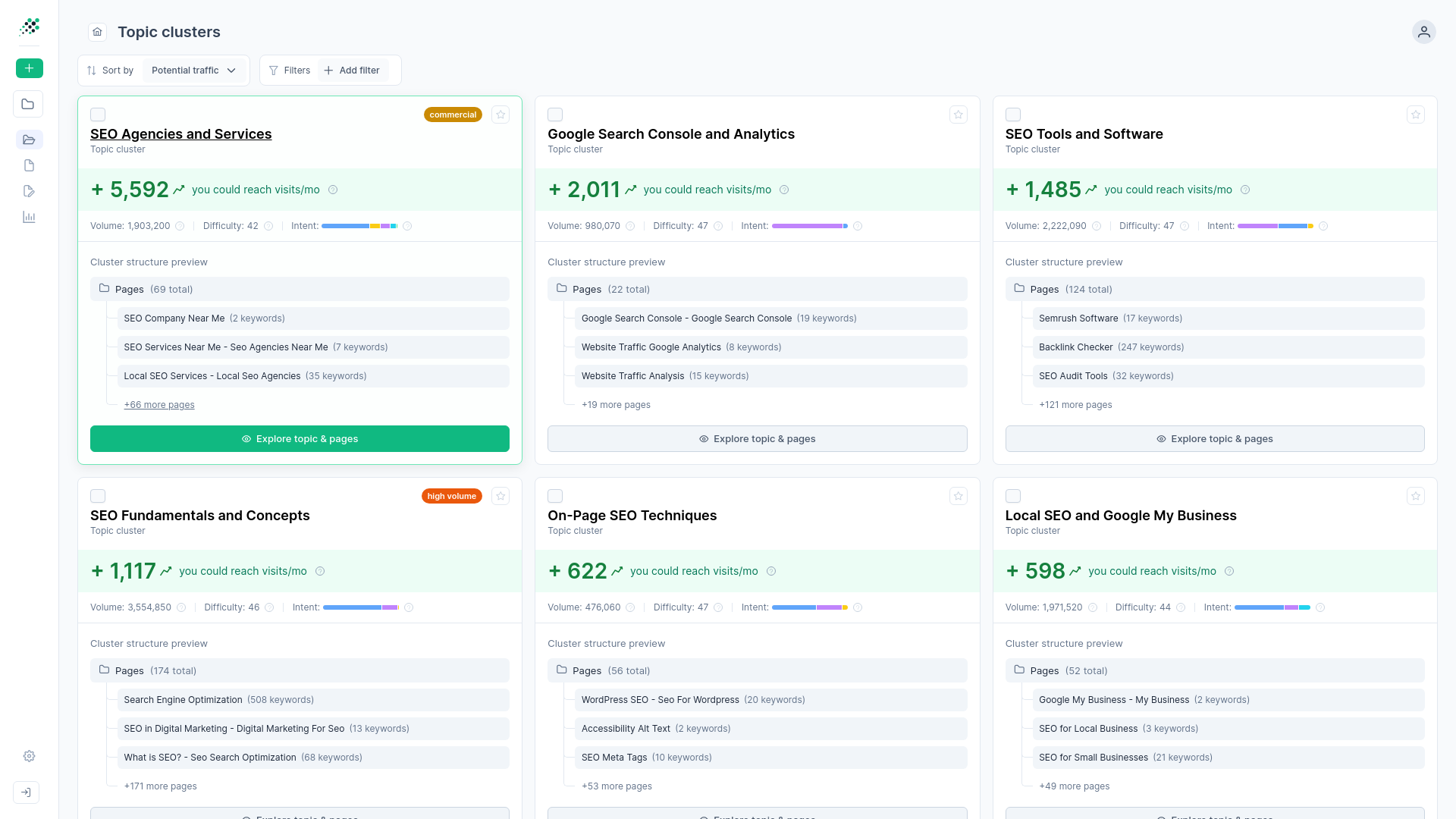
How to extract and cluster keywords
Enter a seed topic
Type a broad keyword, paste a competitor URL, or input a domain. RankDots instantly maps the initial search demand and generates core content categories.
Extract ungrouped search data
The platform queries eight distinct sources simultaneously. It pulls raw data and automatically filters out gibberish to preserve legitimate edge cases.
Review topic clusters
Sorting flat lists wastes time. You review a mapped topic-first site architecture. The system groups your long-tail queries into hierarchical clusters using live search intent.
Prioritize content opportunities
Sort your organized clusters using five recommendation algorithms. Isolate the specific subtopics that offer the highest potential traffic gain, then send them to production.
Beyond the flat list: Fixing grouped search volumes
Correcting identical metric fingerprints
RankDots detects these identical metric fingerprints so you don't overestimate potential traffic based on inflated figures. It distributes the search volume accurately across the individual long-tail variations. You see the demand for each specific query and prioritize the variation that matches your business goal.
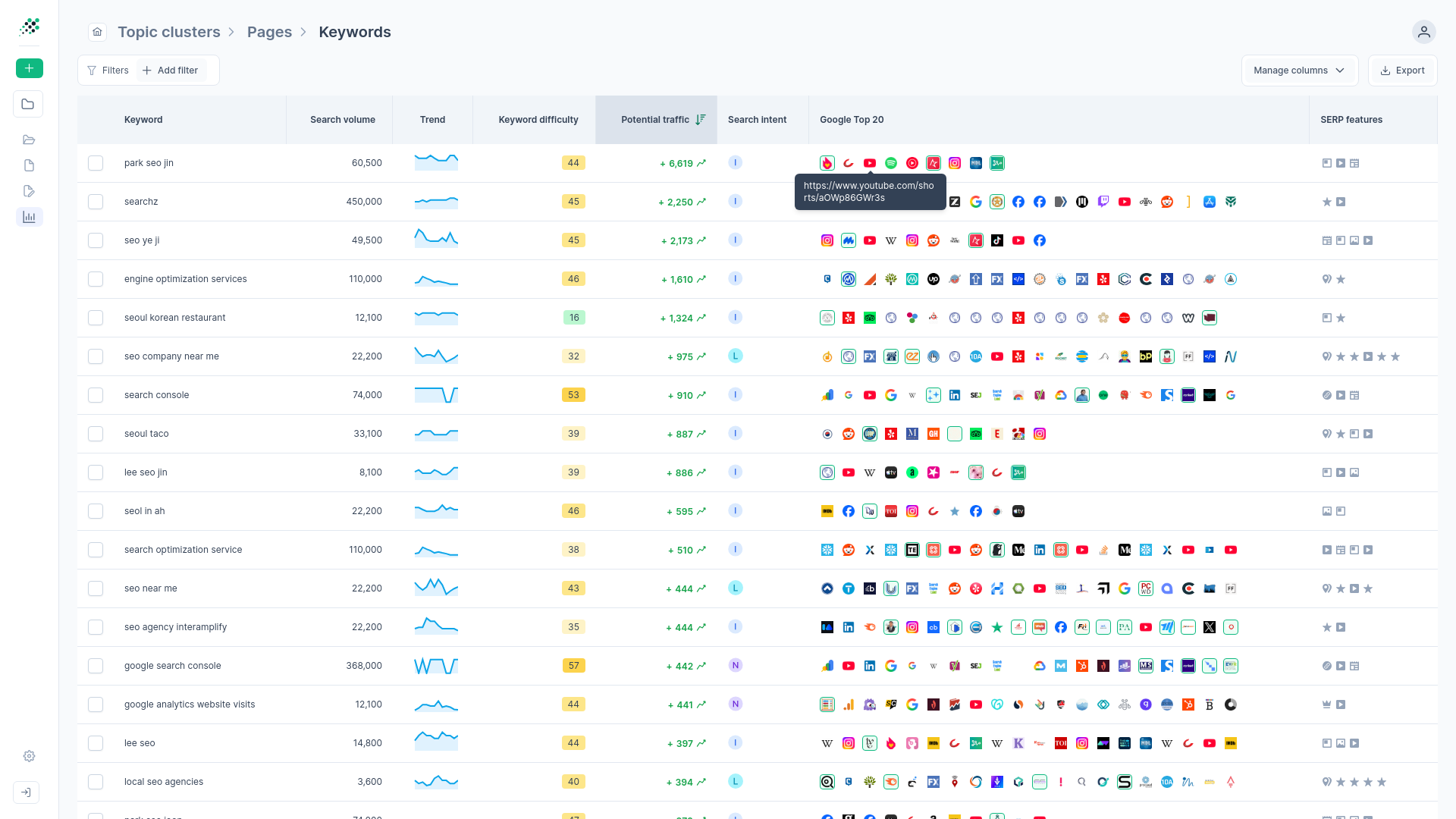
Mapping actual SERP overlap, not text similarity
RankDots builds hierarchical topic clusters based on actual Google search intent.
Every page you publish serves a distinct purpose without suppressing your own site.
It checks live search overlap. If the exact same URLs rank for multiple keywords in a cluster, the platform validates that Google views them as the same topic.
This SERP reverse-engineering process builds hierarchy directly from live ranking patterns rather than abstract text similarity. You get a map of parent topics and subtopics that translates into a safe, cannibalization-free site architecture.
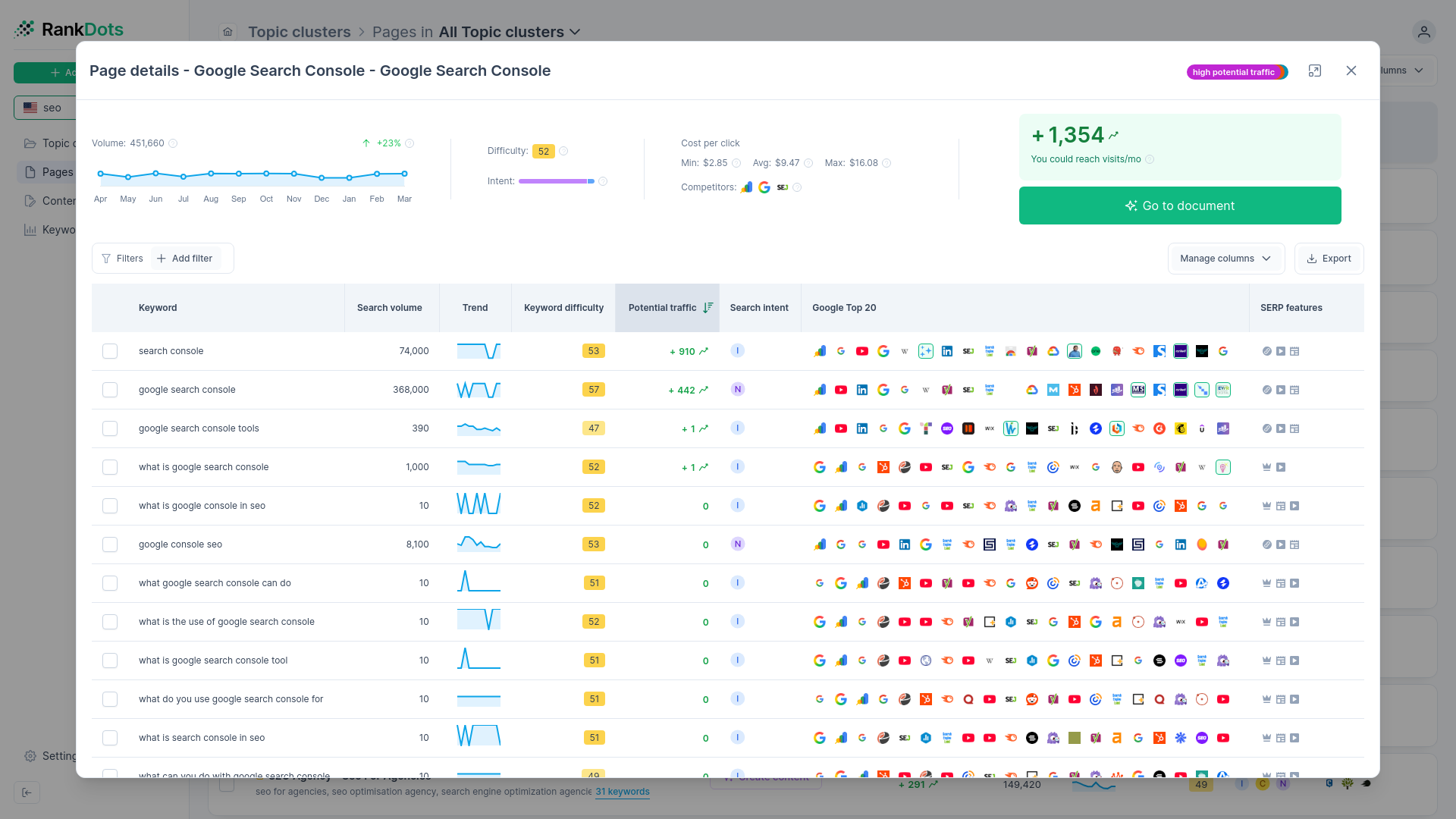
The system then evaluates these opportunities against your domain relative authority. You see which subtopics you can realistically capture right away.
Resolving multi-layered search intent
RankDots replaces single-label guesswork with percentage-based intent scores across five distinct categories. It includes Local search intent alongside Informational, Navigational, Transactional, and Commercial. A long-tail query might score as 40% Commercial, 25% Local, and 20% Informational. You know what content format to produce before you assign the brief.
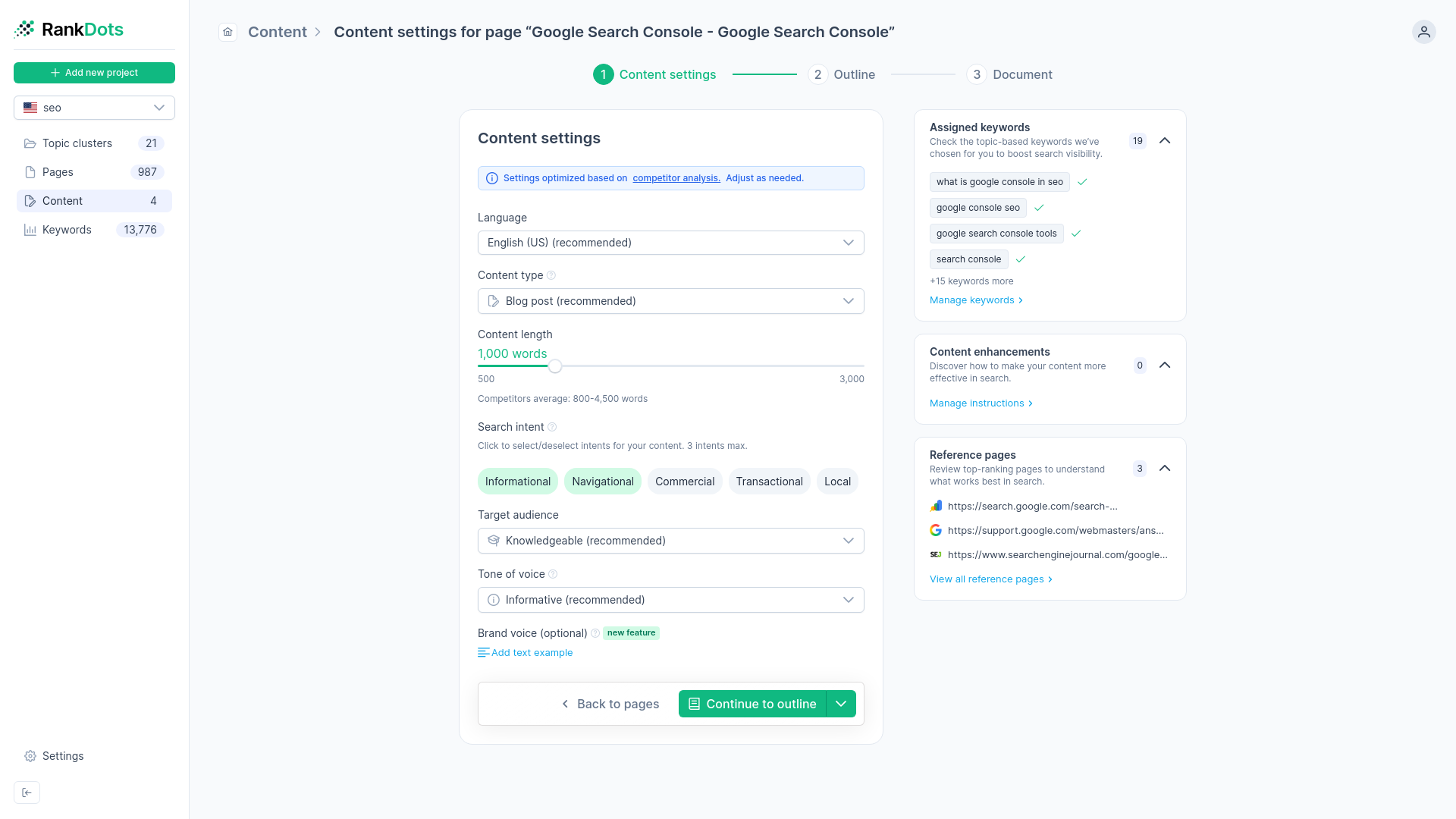
Long Tail Keyword Finder Capabilities
13-Point Quality Validation
RankDots automatically tests queries against thirteen distinct linguistic rules. You keep URL fragments out of your data while preserving legitimate edge-case searches.
Concrete Traffic Forecasting
Translate abstract search metrics into specific projected monthly visitor numbers. You can present clear ROI expectations to your team before assigning a content brief.
Site-Relative Difficulty
Generic difficulty scores mislead content strategy. The system evaluates SERP competition against your specific domain authority to isolate realistic ranking targets.
Predictive Growth Analysis
Identify which specific search queries will gain traction by analyzing historical demand patterns. You stop wasting production hours on fading topic trends.
Custom Geolocation
Broad country-level figures obscure true local intent. RankDots targets regional demand with latitude and longitude precision so you capture local intent for specific campaigns.
Zero Manual Handoffs
The system handles discovery, deduplication, and clustering automatically. You eliminate spreadsheet cleanup and push approved clusters directly into production-ready content workflows.
Frequently asked questions
What is the keyword tool and how does it work?
Which platforms and search engines does the tool support?
How does this tool compare to Google Keyword Planner?
How can I use these keywords for SEO and content marketing?
Does the tool automatically validate keyword quality?
Extract accurate search demand with RankDots' Long Tail Keyword Finder.
Manual spreadsheet deduplication wastes valuable production time. RankDots pulls from eight distinct data sources to isolate high-intent opportunities automatically. You get organized, cannibalization-free topic clusters ready for immediate content creation.