Identify lost search traffic with free SEO Analysis Tools
Traditional technical audits miss AI-generated search summaries entirely. RankDots tracks AI Overview visibility and maps a topic-first architecture to protect your rankings from zero-click shifts.
You pass every standard SEO audit, yet your organic traffic continues to drop as AI Overviews push standard links below the fold. Modern SEO analysis tools skip the generic checks and map topic clusters directly to this new search behavior.
Dedicated SEO optimization tools move past these technical basics. They give you the exact data required to adapt to AI-driven search intent.
You might notice traffic disappearing for top-of-funnel questions. Standard rank tracking only shows the ten blue links, completely missing the answers from platforms like Google, ChatGPT, and Perplexity that actually intercept your audience.
When you check SEO performance using legacy trackers, you miss these zero-click interfaces entirely.
A basic page SEO checker won't fix this. Here's a complete blueprint for auditing your site's AI readiness and building a topic-first content architecture that captures modern search intent.
LLM-ready SEO intelligence capabilities
Multi-Source Discovery
Most SEO Analysis Tools limit you to standard planners. RankDots pulls from eight distinct data streams simultaneously so you don't miss hidden search demand.
Automated Keyword Validation
Stop manually scrubbing irrelevant terms from basic spreadsheets. Automated filtering applies strict linguistic rules to instantly remove gibberish and save hours of manual cleanup.
Vulnerable SERP Detection
Standard difficulty scores often hide realistic opportunities. RankDots analyzes live search results to pinpoint weak pages and reveal immediate ranking gaps you can attack.
Granular Search Intent
Move past oversimplified search intent labels. You'll receive precise percentage scores across five distinct categories, including local, so your pages align directly with user expectations.
How our page SEO checker works
Connect your target data
Enter a seed keyword or domain into our SEO Analysis Tools. Set your exact geographic targeting to start the audit.
Review filtered metric scores
Once the audit finishes, scan the consolidated list of search terms. You'll immediately see volume and difficulty metrics to target realistic ranking opportunities.
Group your verified terms
Our AI organizes your data into a structured hierarchy. You can then examine parent topics and subtopics mapped directly to search intent.
Produce ready publication assets
Send your approved clusters directly to the production pipeline. You'll receive fully drafted pages that accelerate your publishing schedule.
Building topic-first architecture for AI Overviews
With a clean keyword list finally in hand, you stare at a flat spreadsheet, unsure of how to group those terms into actual website pages. Traditional tools provide buckets of keywords but fail to map them into a logical pillar-and-cluster site architecture based on real search behavior.
We got tired of watching teams waste days sorting keywords by hand just to guess at the right site structure. Instead of forcing you to categorize rows manually, RankDots clusters your topics automatically through an integrated workflow. RankDots tracks both AI Overview rankings and mentions simultaneously, so you see exactly which keywords trigger an AI response. Paste your keyword list, and RankDots organizes it into a two-level structure of parent topics and subtopics. This output directly maps to your future content architecture.
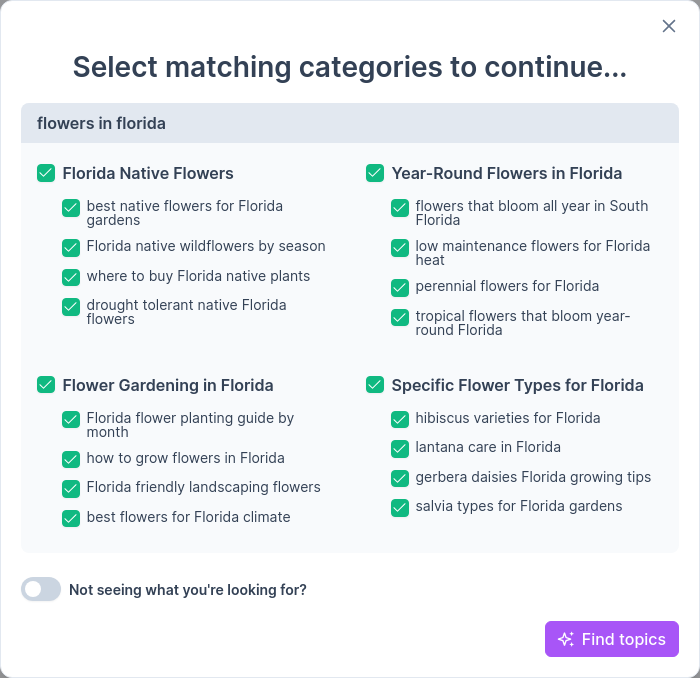
Effective website SEO optimization requires grouping these terms based on actual search behavior. RankDots handles that alignment automatically.
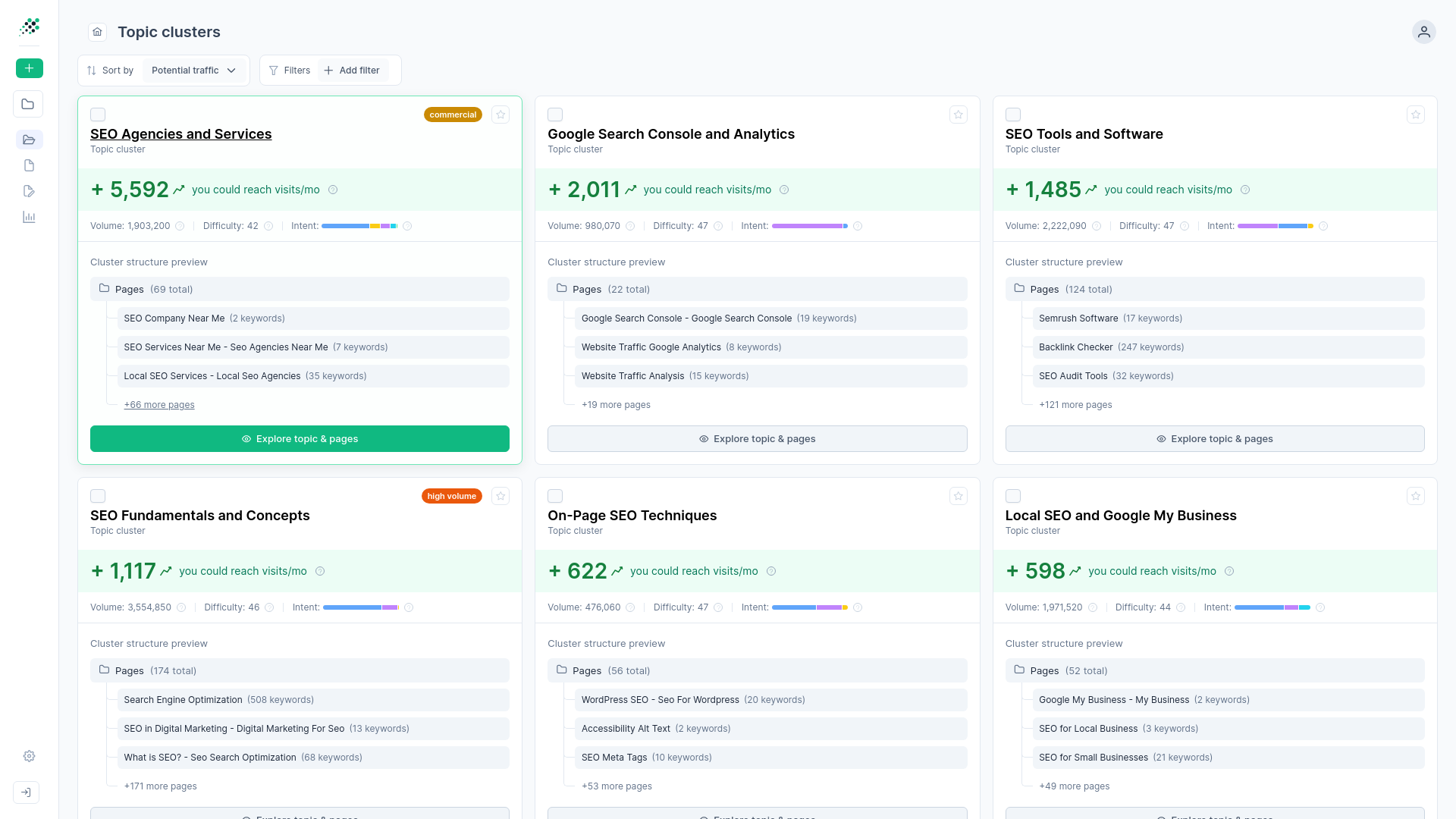
The grouping relies on URL intersection rules to confirm shared search intent. RankDots checks live Google results to see if the exact same URLs rank for multiple keywords within your cluster. If they do, the cluster is validated. If not, RankDots flags the group as too broad and separates it.
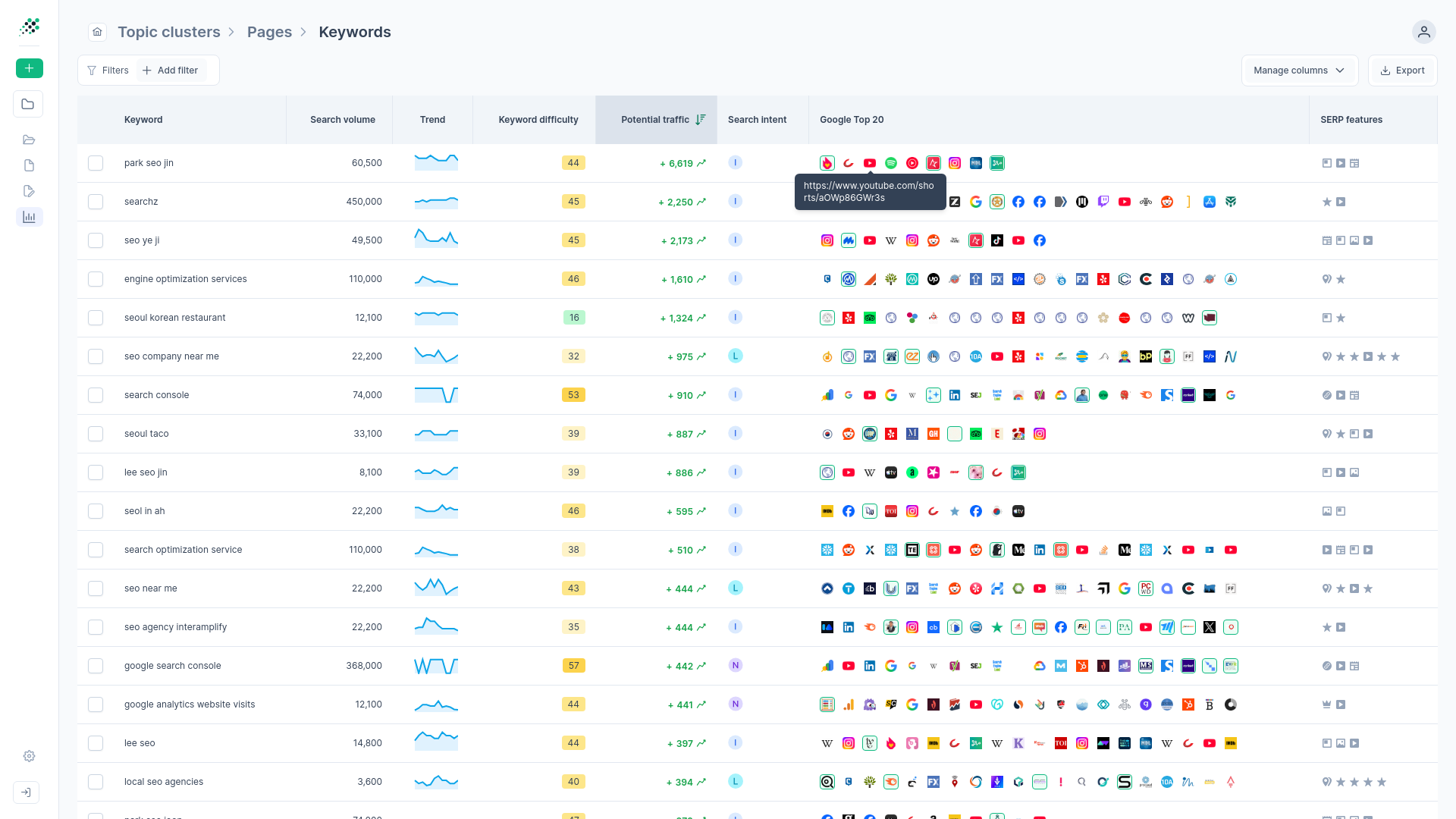
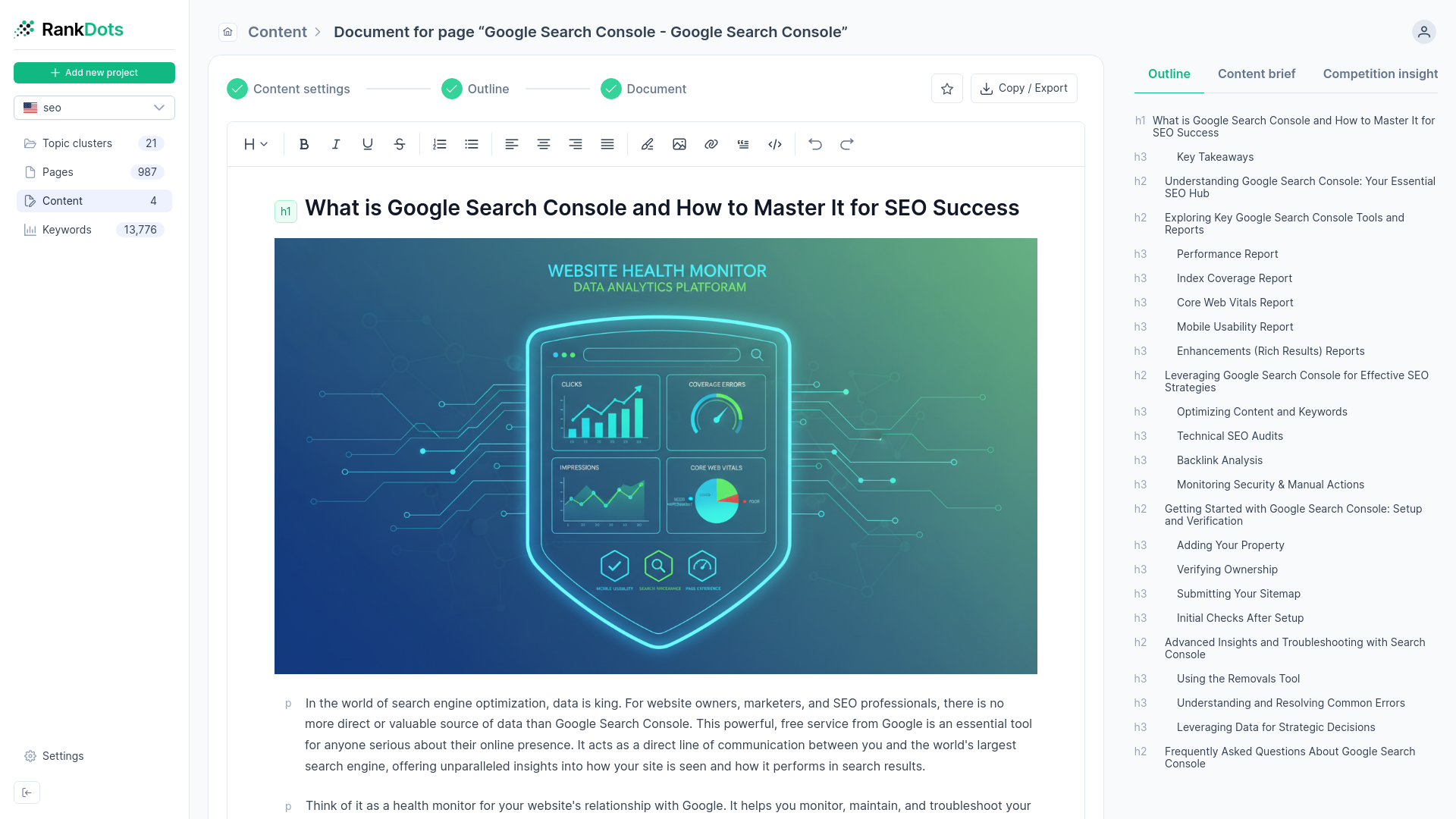
Once you have a verified topic map, the pipeline moves immediately to production. Switching between a keyword tool, an outlining app, and a separate writing assistant breaks momentum and dilutes brand voice. Instead, RankDots generates fact-verified content directly from the cluster. RankDots builds a knowledge base from current web sources and your own product documentation, and cross-references every claim to strip out hallucinations automatically. You get a brand-aligned asset ready for publication in one continuous motion.
Frequently asked questions
What is an SEO analyzer tool and how does it work?
How does the SEO score work and what does it mean?
How do I prioritize and fix the SEO issues found on my site?
Is an automated SEO analyzer better than a manual SEO audit?
Can I export or white-label the SEO audit reports as a PDF?
Explore the RankDots Analysis Dashboard
Track your AI Overview search visibility
Map out clear site architecture visually
Sort clusters using strategic priority algorithms
Review consolidated multi-source keyword metrics
Stop losing organic traffic with modern SEO Analysis Tools
Stop guessing why your rankings are dropping. Let RankDots map your topic architecture and highlight exact gaps you can attack right now. Secure your predictable content ROI before competitors adapt to the AI shift.