Generate high-converting SEO Keywords for Websites using automated validation and clustering
RankDots automates your research by analyzing real SERP overlap and domain-relative difficulty. Skip the manual data cleanup and build a prioritized topic map in minutes.
You already know how painful it is to export thousands of keyword ideas from a limited single-source tool like Google Keyword Planner, only to spend hours manually deleting gibberish in a massive spreadsheet. You burn hours scrubbing data instead of actually planning content. Finding the right SEO Keywords for Websites requires more than just looking at high search volumes or generic difficulty scores. The most effective approach analyzes search intent, specific domain authority, and topical clusters. We got tired of watching teams waste days sorting lists by hand. RankDots provides a streamlined workflow for grouping high-impact terms and uncovering new ones through Multi-Source Keyword Discovery. You skip the spreadsheet entirely. The platform uses Intelligent Limit Management to automatically trim extremely high-volume, low-value queries so you only review terms worth targeting.
Here's how you evaluate live search competition, group keywords by intent, and finalize your content map.
Capabilities that automate keyword discovery
Eight Simultaneous Sources
Most tools rely on a single index. RankDots pulls SEO keywords for websites from eight distinct channels concurrently (including Google Autocomplete and People Also Ask), capturing terms competitors miss.
Automated Linguistic Validation
Stop sifting through gibberish. RankDots evaluates every pulled term against 13+ linguistic rules, dropping unusable variations before you even review the list.
Five Strategic Sorting Models
Move beyond basic volume metrics. RankDots lets you prioritize your target lists using five distinct algorithms, allowing you to pivot toward commercial value or traffic growth potential.
A faster keyword research workflow
Input seed topics
Type your broad subject areas into RankDots. It begins pulling related terms from eight distinct search sources.
Let the system filter data
You skip the manual cleanup phase. RankDots applies linguistic rules to drop useless variations and deduplicate the results.
Build topic clusters
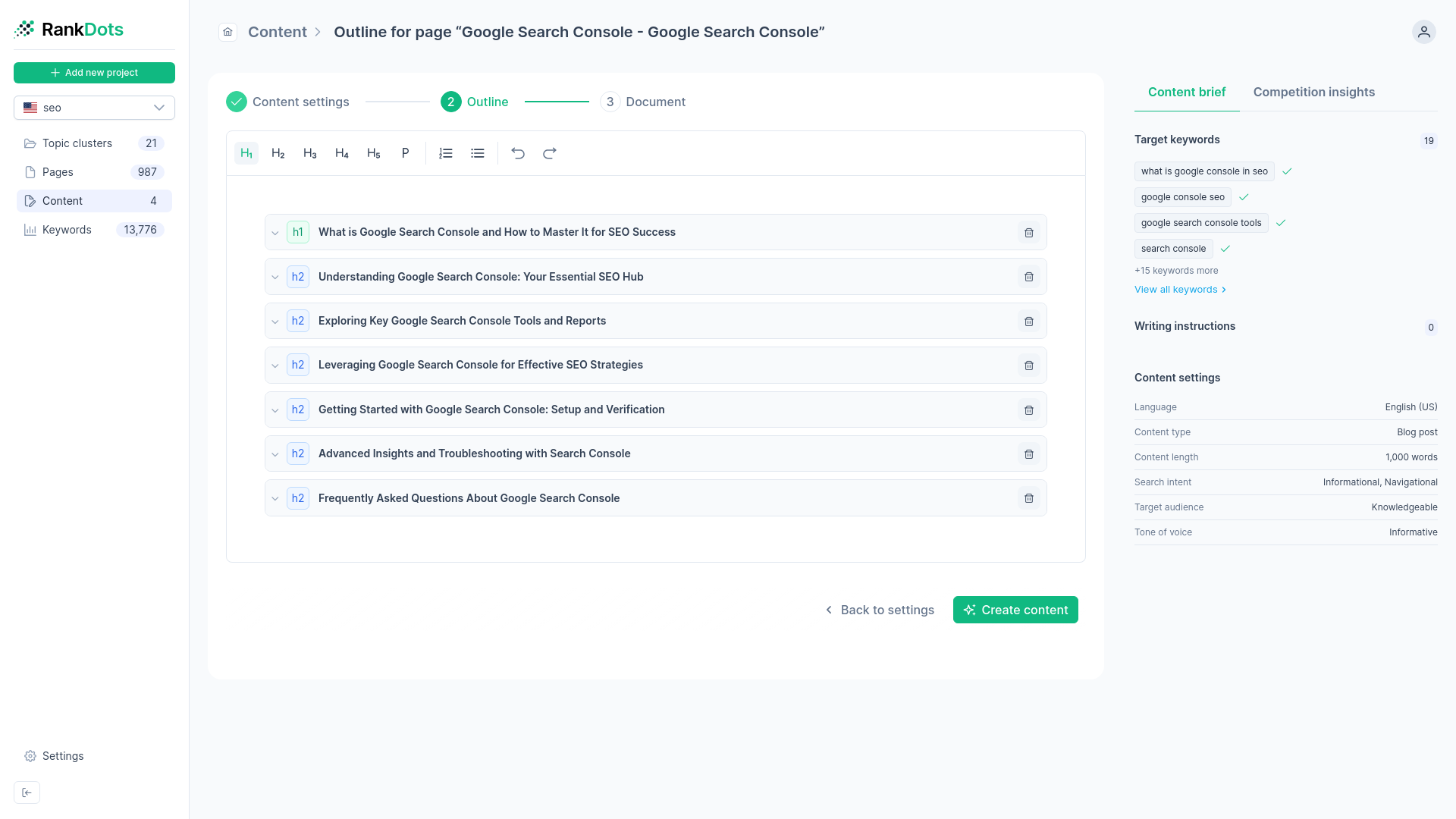
RankDots analyzes live search results to group your SEO Keywords for Websites into logical topic clusters based on actual ranking page overlap.
Map your content architecture
Review a structured hierarchy of parent topics and supporting articles. You'll leave with an actionable content plan that replaces cluttered spreadsheets.
Visualizing the automated keyword workflow
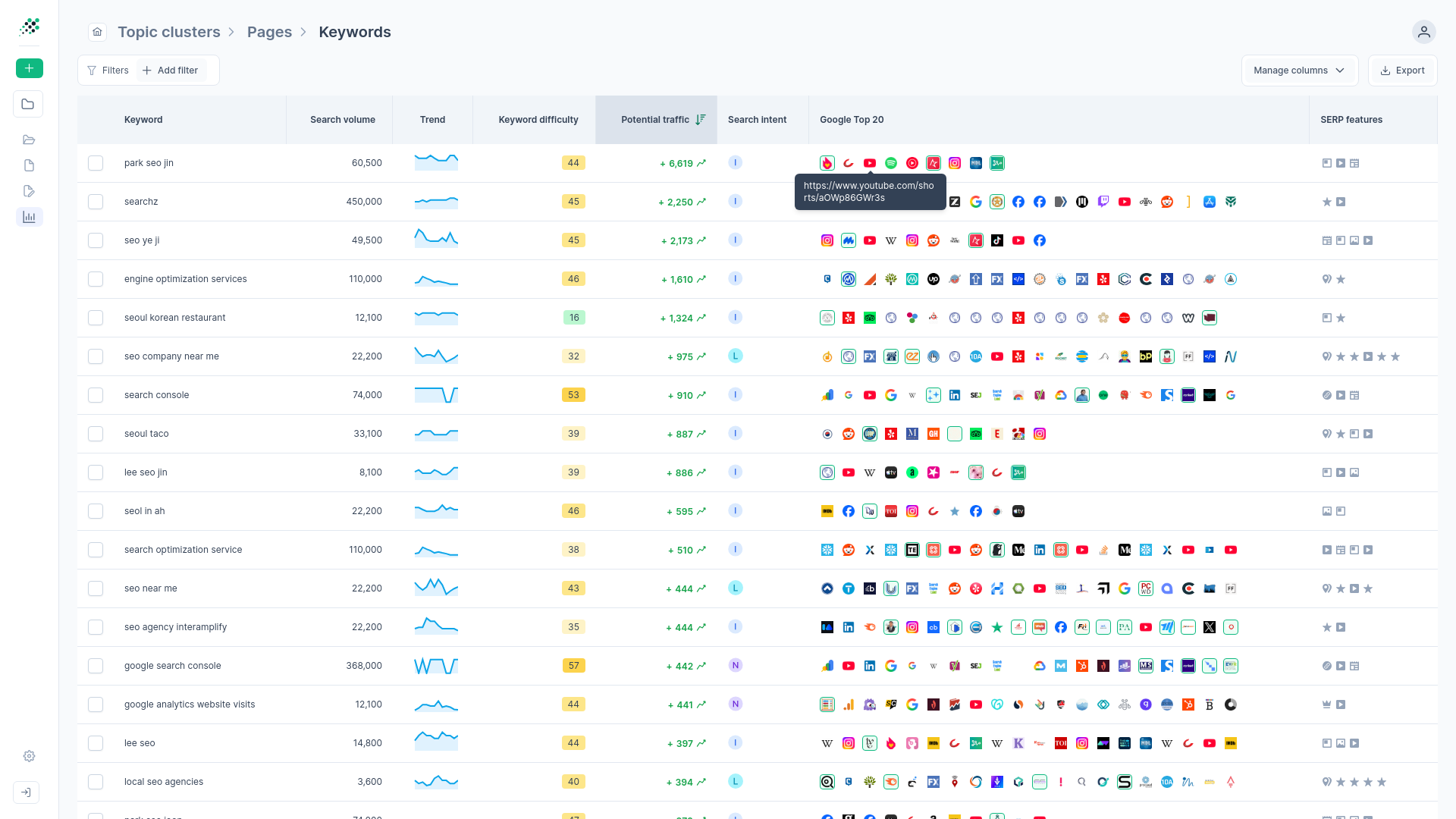
Interactive SERP clustering dashboard
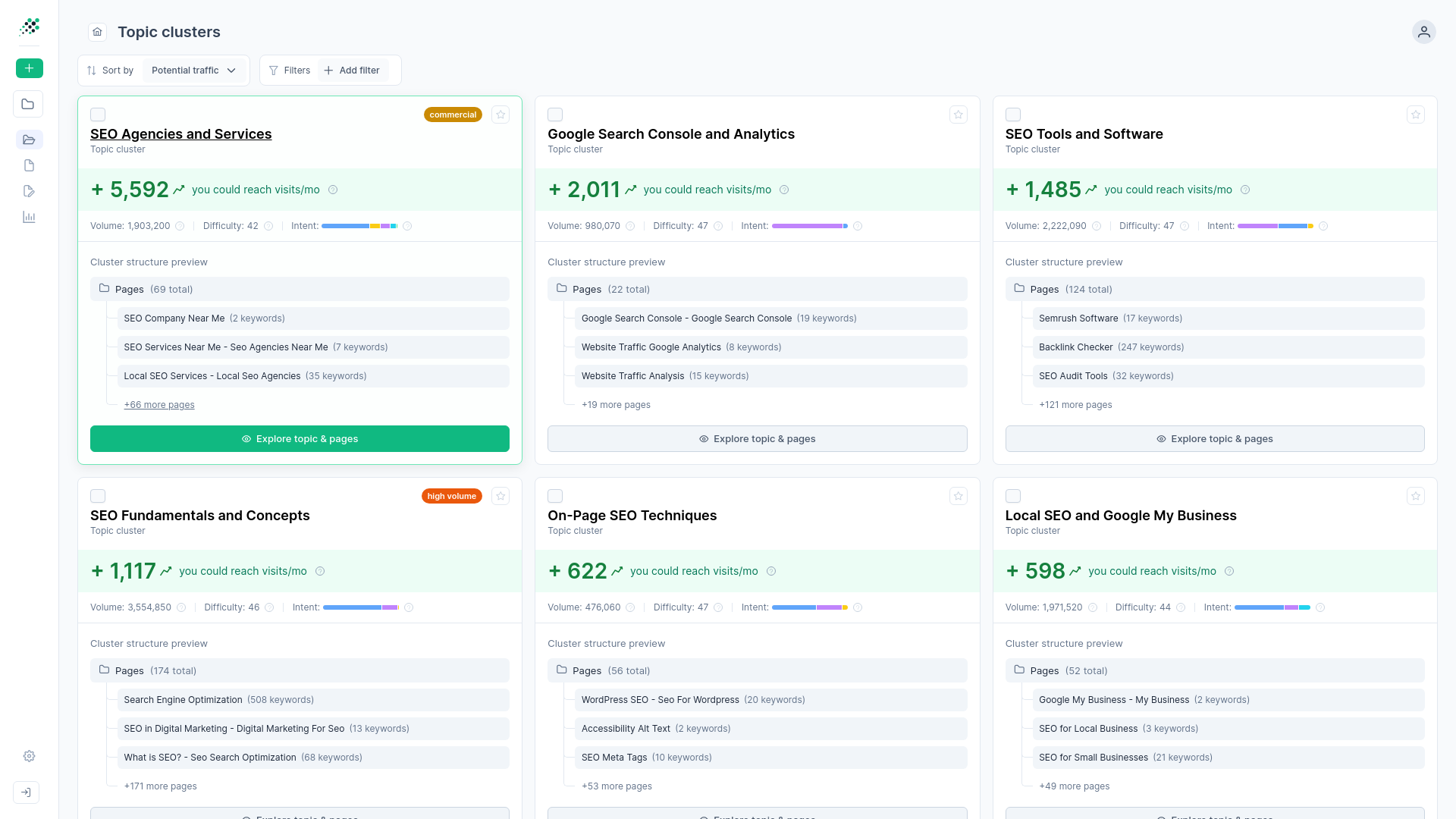
Custom keyword difficulty matrix
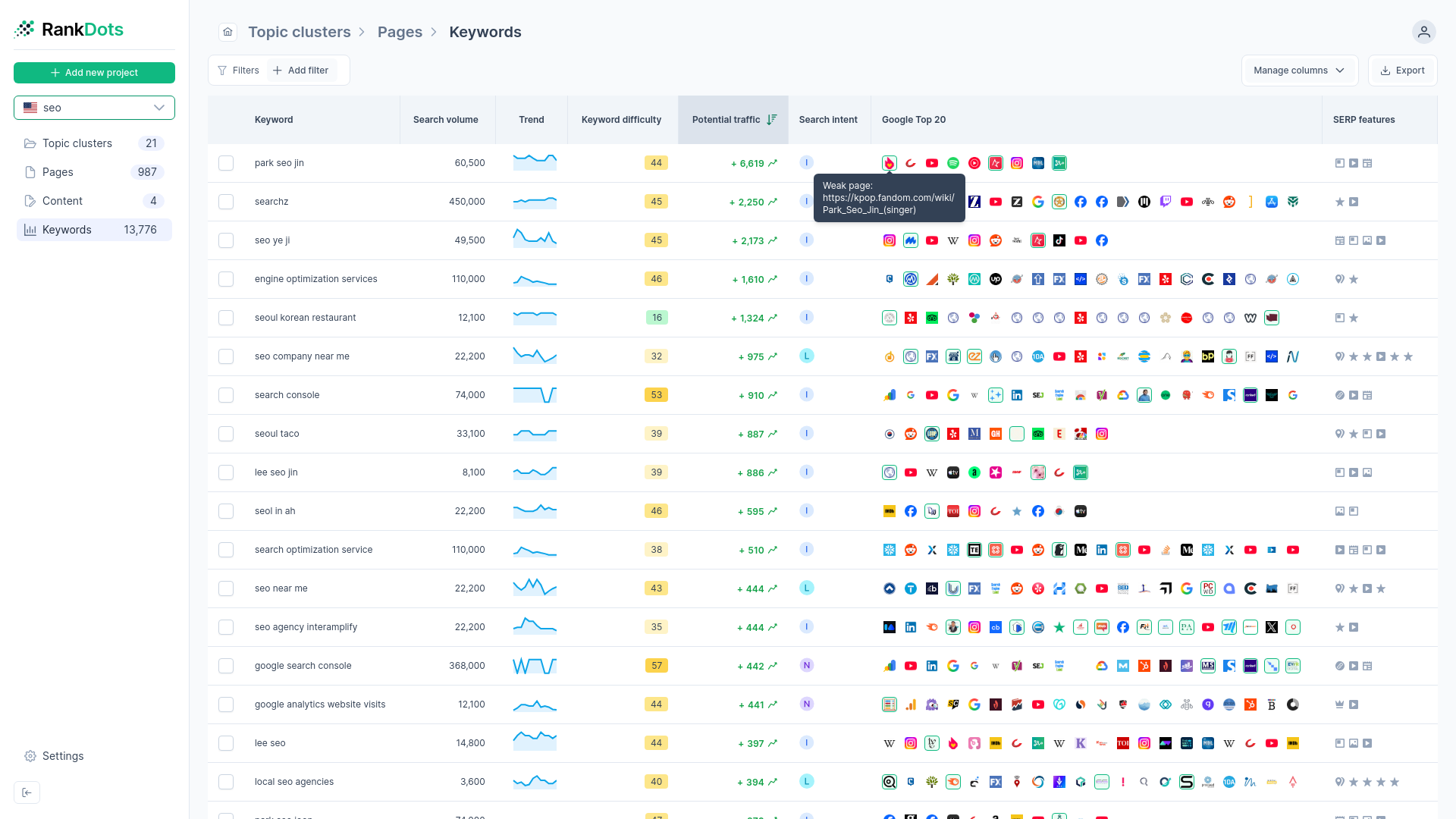
Visual topic architecture maps
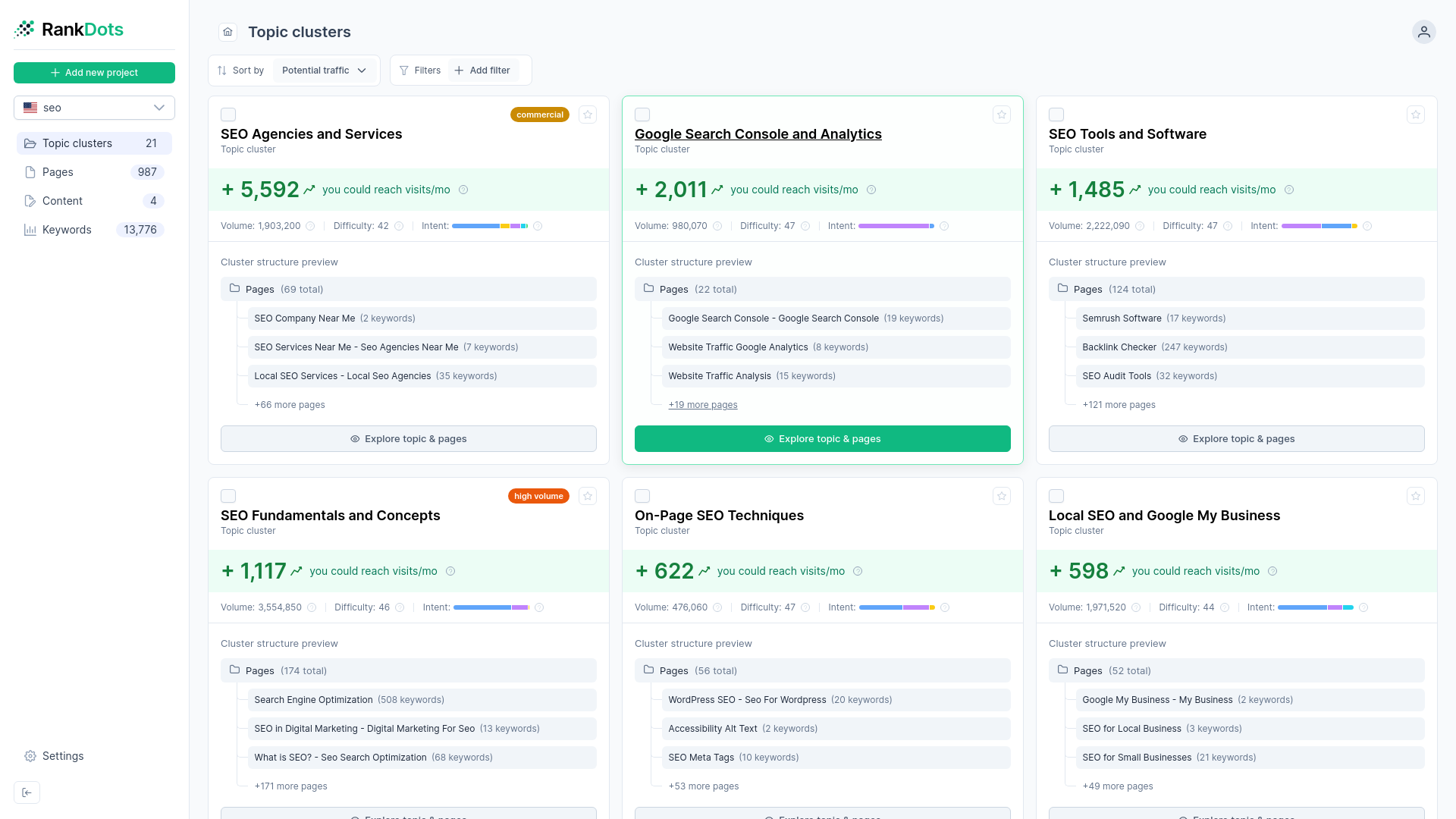
Ten-dimension scoring panel
Understanding foundational keyword metrics
Most keyword research starts and ends with search volume. Volume alone lies. High-volume informational searches inflate your spreadsheet without generating leads. Highly specific transactional keywords pull in your target audience. Your spreadsheet hides these exact queries behind mountains of broad, useless terms. Those hyper-specific variations usually drive the revenue.
Generic difficulty numbers create a different problem. You draft a comprehensive article targeting a term with a supposedly medium score, only to see it stalled on page five. Standard metrics mislead content planning efforts because they ignore your site's standing. RankDots solves this through Domain-Relative Keyword Difficulty. The platform evaluates live SERP competition against your specific domain authority. You see exactly which ranking pages you can realistically outrank. It identifies structural weak spots in the results so you know exactly where to strike.
Misjudging search intent means you target terms that don't convert. Separating informational and transactional queries takes hours in a manual spreadsheet. The platform uses a SERP-Based Clustering Algorithm to automatically organize your validated keywords by their dominant search intent. Paste your broad topic ideas into the platform. You get a prioritized topic map in minutes.
This automatic keyword clustering means you skip the manual grouping entirely. You can also run a targeted keyword gap analysis to spot the high-value queries your competitors cover but you missed.
Frequently asked questions about keyword research
How do I choose the right SEO Keywords for Websites?
Why do some high-ranking keywords generate very little traffic?
Are organic keywords still worth targeting over paid search ads?
How often should I include my target keyword in an article?
Do all keyword research tools pull from the same data sources?
Stop sorting spreadsheets and start targeting high-converting search terms
Map your next six months of content in minutes. RankDots automatically groups the best SEO keywords for websites by search intent so you know exactly what to write next. Trade your spreadsheets for an actionable strategy.