Capture breakout search demand with trend based keyword research
Analyze 12 months of historical data to calculate real-time trend velocity. Spot rising topics early, avoid inflated search volumes, and publish content before competitors notice the shift.
Trending keywords give you a first-mover advantage in search, but targeting established, high-volume keywords often leads to chasing past fads or artificially inflated metrics. Trend Based Keyword Research spots rapidly growing topics before they peak by analyzing historical and real-time search demand. It prioritizes trend velocity, seasonality, and breakout potential over static, 30-day search volume snapshots to secure a first-mover SEO advantage and capture emerging traffic.
The traditional process sets you up to fail. You present a quarterly content roadmap built entirely on high-volume queries from standard tools, only to watch those pages yield zero traffic months later. You relied on static 30-day snapshots that masked a steep decline trajectory. Worse, those numbers were artificially grouped, creating false signals that misdirected your content budget.
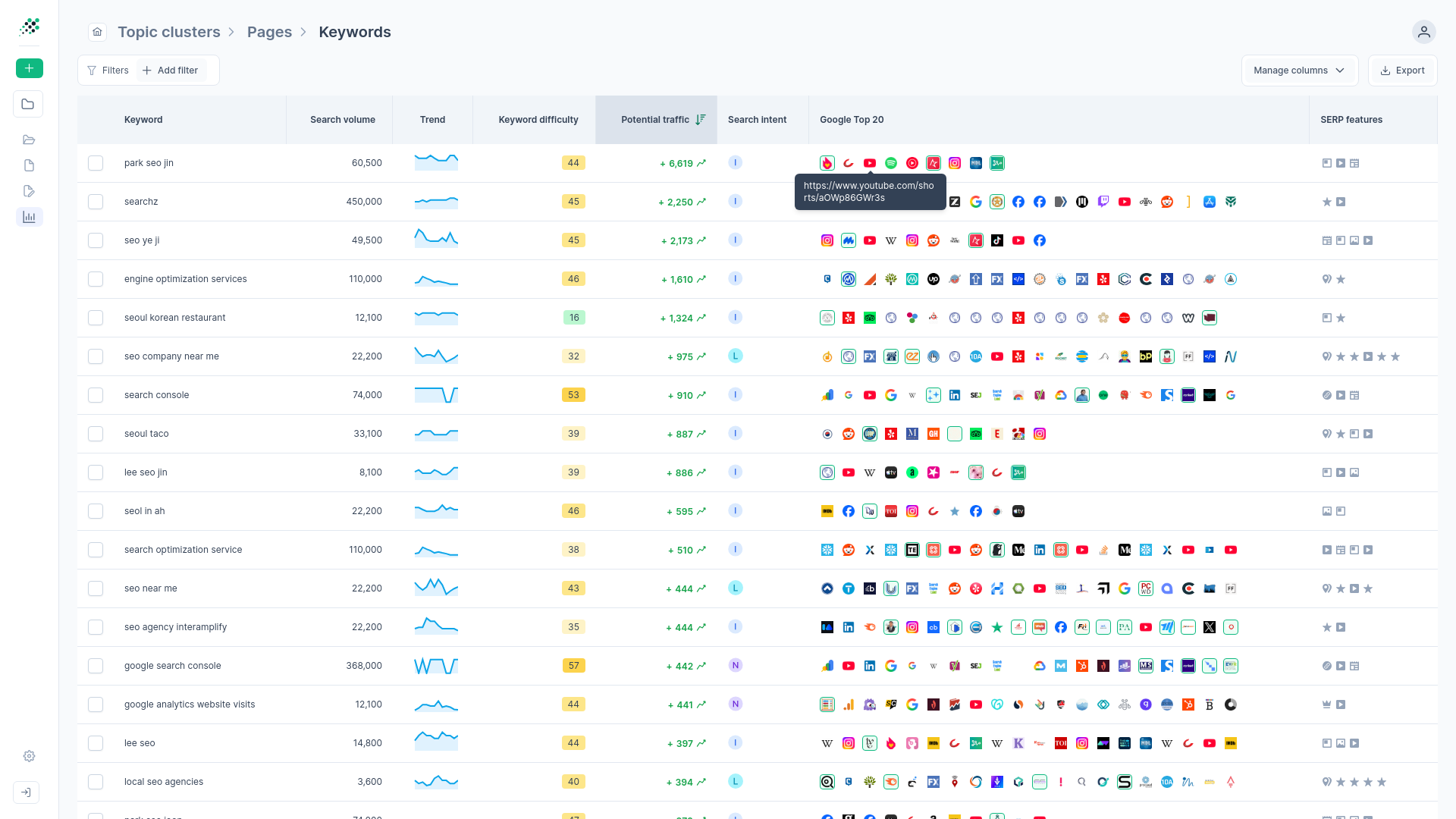
Predictive trend velocity and mathematical volume correction surface these untapped SEO opportunities before competitors notice them.
Predictive trend forecasting features
12-Month Historical Analysis
Effective trend based keyword research differentiates lasting demand from fleeting viral spikes. You can validate long-term stability before committing writing resources.
Two-Sided Volume Trimming
RankDots intelligently removes impossibly broad terms and zero-traffic dead ends. You get a refined list of mid-range queries that actually drive targeted traffic.
Trend Direction Filtering
Sort your entire topic backlog by positive trajectory. You efficiently surface exactly which emerging subjects to prioritize for the current quarter.
Concrete Traffic Forecasting
Translate abstract keyword metrics into specific monthly visitor projections per page. Present clear, mathematical ROI models to stakeholders and secure leadership buy-in.
Spot breakout trends before competitors
Enter your seed topic
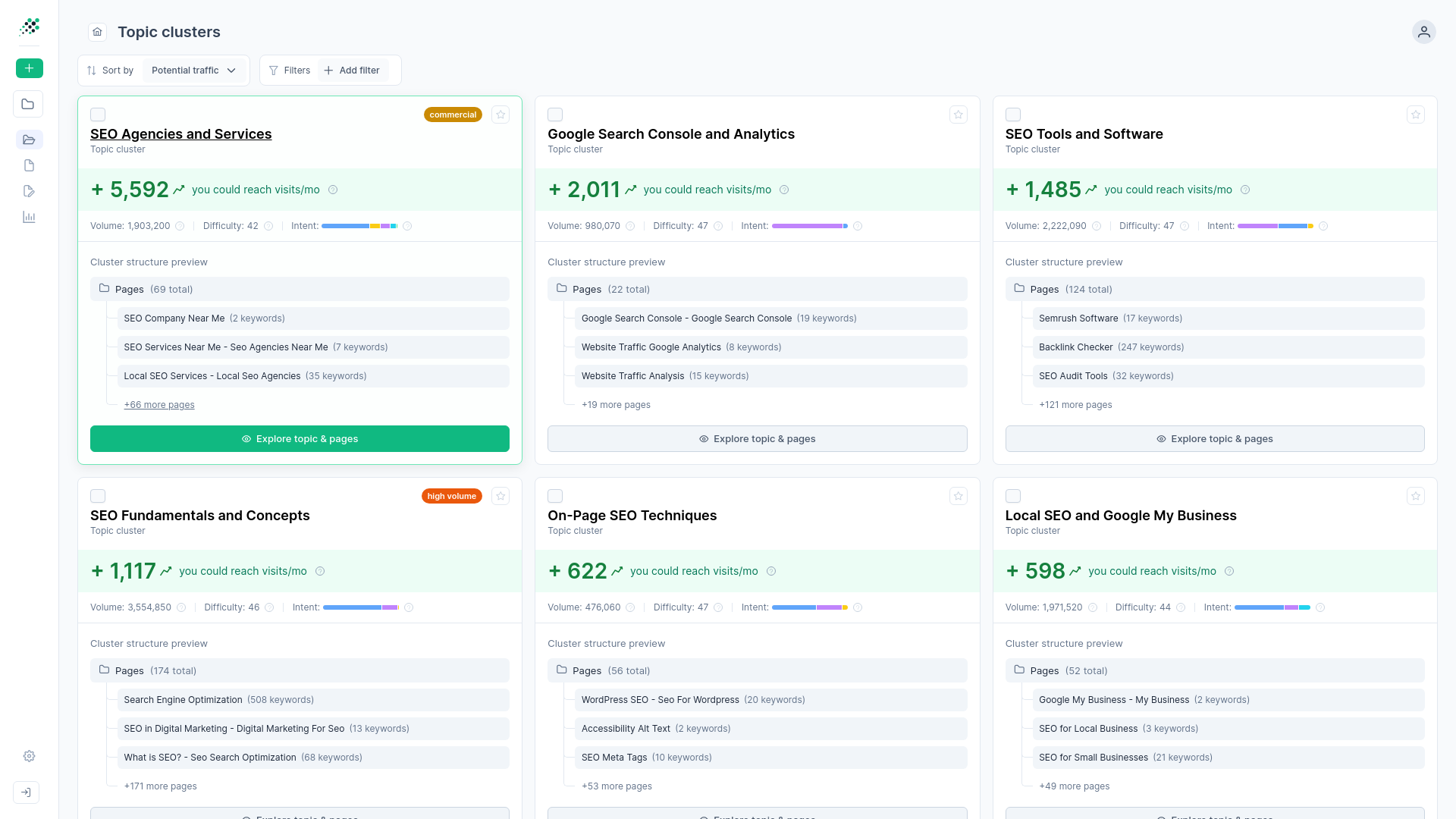
Start your trend based keyword research by entering a broad seed term. RankDots scans eight data sources to build structured topic clusters.
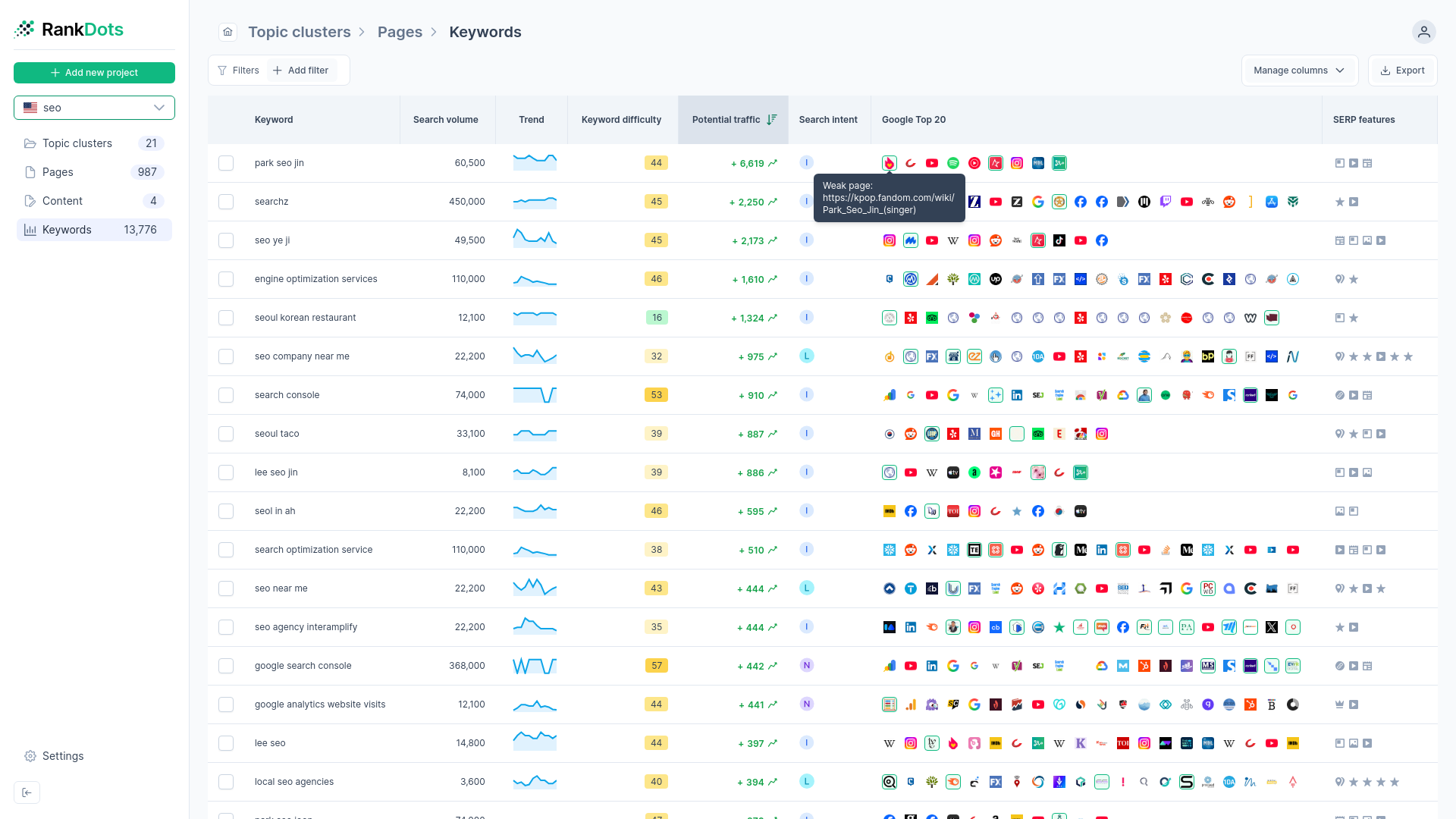
Filter by trend velocity
Sort your cluster list by positive 3-Month Trend Velocity. You isolate the fastest-growing search terms before they become saturated.
Verify corrected search volume
Review the mathematically corrected volume metrics to confirm actual traffic potential. You bypass the common trap of targeting artificially inflated, grouped search queries.
Generate optimized content
Push your validated trending topic directly into the AI writer. Create a factual, structurally optimized draft tailored to capture the emerging demand.
Comparing RankDots trend velocity against Google Trends and Google Keyword Planner
The illusion of grouped search volumes
Traditional metrics lie by omission. Google Keyword Planner aggregates closely related queries into broad match clusters, displaying the exact same inflated search volume for every keyword in the group. Data suggests Google Keyword Planner overestimates actual search volume in 91.45% of cases because of this specific aggregation behavior.
You might commit to a pillar page strategy based on what looks like high search demand. When you run that target cluster through RankDots, the Search Volume Correction capability detects identical metrics across those grouped keywords. It automatically distributes the true volume accurately across the terms, revealing that the high overall demand was just an illusion. You avoid a costly strategic mistake before assigning a single brief to your writers.
Moving past relative trend indices
Google Trends shows directional movement, but it doesn't provide absolute search volume numbers. You only see a relative popularity index scaling from zero to 100. A steep upward line looks promising, but you have no idea if that spike represents twenty actual searches or twenty thousand.
RankDots combines 12-month historical data with mathematically corrected absolute search volume. You see the actual traffic potential sitting behind the trend line. You only spend resources targeting rising topics that actually drive organic clicks.
Scoring search velocity for proactive prioritization
Competitors often dominate the SERPs for a new industry term because legacy tools claim the topic has "zero volume" until it's too late.
RankDots prevents these blind spots using a 3-Month Trend Velocity Score. Past averages hide current movement. This metric quantifies how fast and in which direction search interest changes. You filter your list for positive velocity on emerging queries. Your team spots the rising demand early, prioritizes high-growth content, and establishes rankings well before competitors realize the shift is happening.
Frequently asked questions
How is trend-based keyword research different from traditional search volume research?
What data sources are used to calculate keyword trends?
Can trend data predict future search behavior?
How does this tool compare to Google Trends?
How often should I check for new trending keywords?
Capture emerging traffic with trend based keyword research.
Stop committing editorial resources to declining search fads. RankDots mathematically corrects volume data and scores trend velocity so you know exactly which rising topics justify your content budget right now.