Electrician SEO: A Framework to Capture High-Intent Local Search Traffic

When a breaker trips at 10 PM or an outlet starts sparking right before a home inspection, homeowners don't ask the neighbors for referrals. They grab their phone and search Google. Electrician SEO is the process of optimizing an electrical contractor's online presence to rank higher in local search results and capture that kind of traffic. By targeting high-intent keywords like "emergency panel repair" and optimizing a Google Business Profile, this strategy drives predictable, high-margin booked jobs directly from search engines.
You likely know the frustration of the current market. Sticking to print ads and direct mail often means watching lesser-skilled competitors win lucrative emergency calls because they show up first on the map.
We put together this guide to provide a complete strategic framework to capture high-intent local search traffic and turn your website into a predictable lead engine. We'll break down the specific business math of local visibility, how to architect a topic-first website that targets high-margin services, and the exact steps to claim the easy-to-rank map pack spots in your local service territory.
Quick Takeaways
- Electrician SEO is the strategic optimization of an electrical contractor's online footprint to capture high-intent local search traffic, turning search engine visibility into predictable, high-margin booked jobs.
- Target commercial-intent queries rather than informational DIY questions to intercept homeowners who are actively experiencing emergencies and have the budget to hire you.
- Restructure your website from a single flat list of services into deep, specialized topic clusters to prove your specific trade authority to search algorithms.
- Secure a highly coveted spot in the local map pack by fully optimizing your business profile and automating your customer review requests to build consistent local trust signals.
- Bridge the gap between industry jargon and consumer panic by blending technical trade terms seamlessly with the exact symptoms homeowners type into the search bar.
- Digitize your real-world community relationships by turning local sports sponsorships and trade association memberships into geographically relevant backlinks.
The business impact of local search for electricians
Take a look at your quarterly marketing budget. You might realize you just spent thousands on a direct mail campaign that barely resulted in any booked jobs. Traditional outbound marketing yields a terrible return on investment for the trades, leaving many contractors anxious about wasted spend while trucks sit idle. The shift toward digital inbound channels is a structural change in how modern customers hire services.
The reality of this shift makes electrical contractor SEO the most reliable way to keep trucks on the road.
The math behind inbound emergency calls
The gap between interrupting a homeowner with a mailer and intercepting one who is actively searching for a panel upgrade is stark. SEO leads have a 14.6% close rate on average, compared to a 1.7% close rate for outbound leads like direct mail or print advertising. The person typing a query into a search bar already has a problem and a budget. They just need to decide who gets the dispatch.
When you look at the financials of home service contractors prioritizing organic visibility, the returns shift the entire business model away from expensive third-party lead brokers. When contractors focus on local SEO, we see their overall marketing ROI jump significantly compared to traditional outbound methods. The first-year returns for home service businesses optimizing their search presence frequently outpace any other channel. These are not vanity traffic metrics. These are predictable, high-margin booked jobs that build the foundation of a resilient contracting business.
The hidden cost of missing the map pack
Being visible somewhere on the first page is rarely enough for an emergency service. Approximately 44% of local searchers click on one of the top three businesses featured in the Google Map Pack, bypassing regular organic listings and ads entirely. When you fail to secure one of those three spots, you forfeit nearly half of the available emergency market in your territory.
We've noticed this financial cost compounds daily. Every time a local customer searches for a fast response and sees a competitor's profile instead of yours, that competitor secures a high-margin ticket and the lifetime value of a new household. Getting your business into that map pack is the highest-leverage marketing task you can execute. It transitions your business from hoping the phone rings to managing a predictable pipeline of high-intent local buyers.
Keyword research and target search intent
Separating DIYers from actual customers
Imagine sitting down to outline new website content. You stare at a blank screen, unsure whether to write about resetting a GFCI outlet or the process of full home rewiring. This content paralysis happens because most contractors struggle to separate commercial intent from informational curiosity, and they end up wasting hours on the wrong topics.
Approximately 230,000 people per month type the phrase "electrician near me" into Google.
The sheer volume of these queries proves that electrician near me optimization is critical for local market share. But beneath that broad query, thousands of specific, localized searches happen every day. A search for "how to wire a 3-way switch" represents a homeowner trying to avoid paying you. A search for "burnt smell from breaker box" represents an emergency waiting for a dispatch. If you optimize for the former, you get traffic. If you optimize for the latter, you get revenue.
Targeting vulnerable local search spots
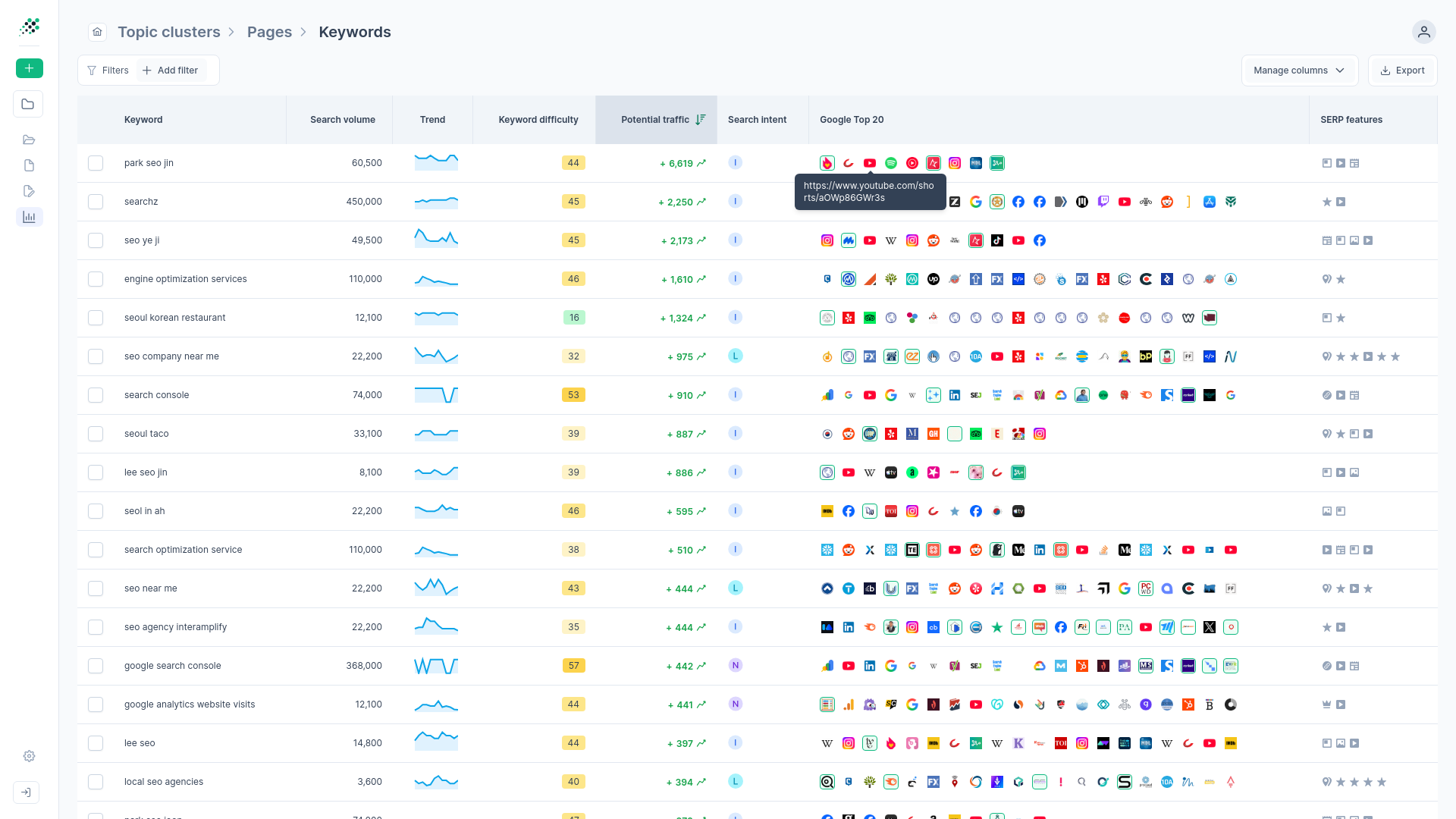
Instead of guessing what will work, let the algorithm show you the gaps. The typical approach involves guessing broad, highly competitive keywords and hoping for the best. Focus on uncovering vulnerable local search results using intent classification instead.
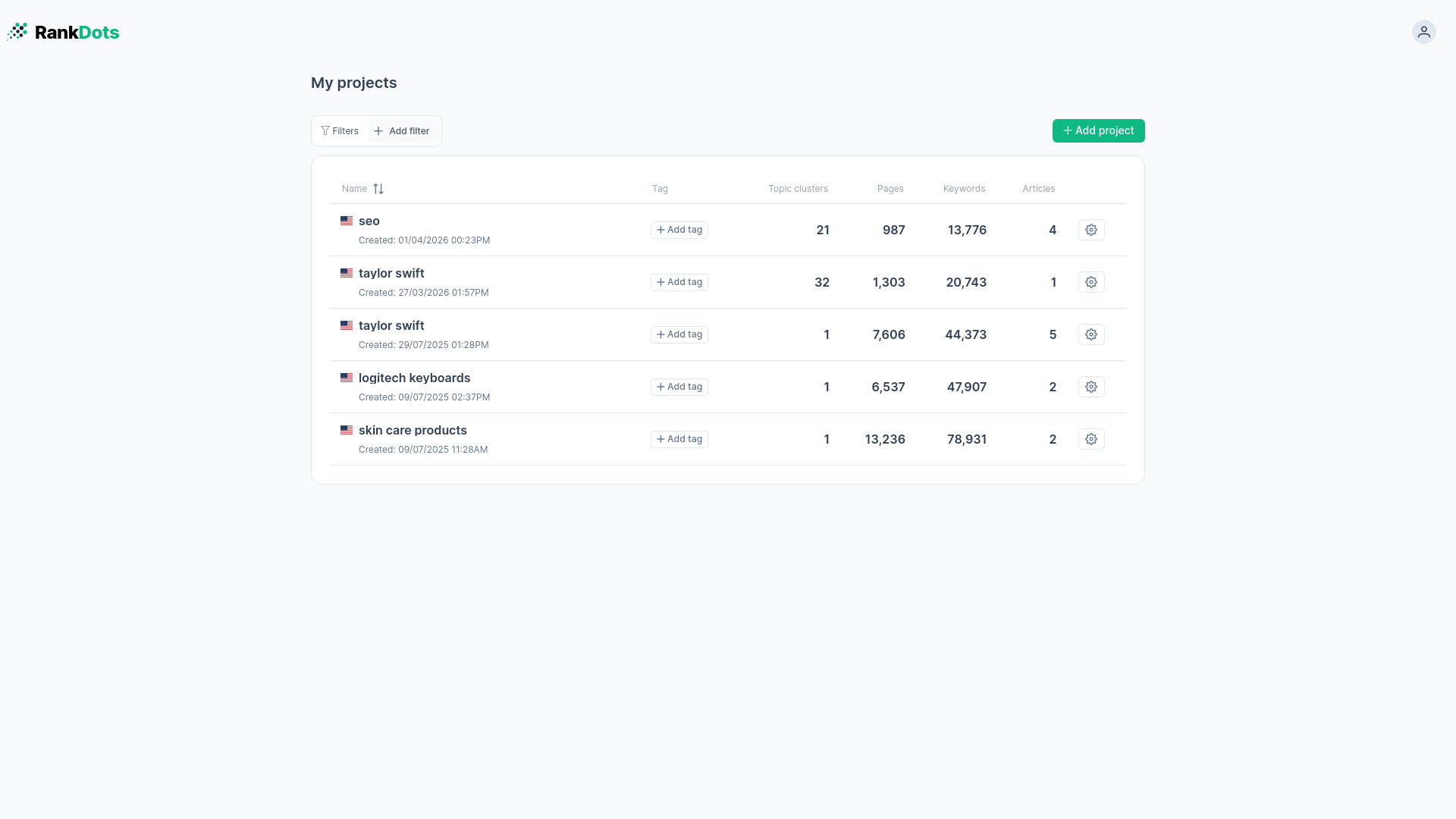
When you input your city and trade into a dedicated SEO platform, the data usually reveals immediate opportunities. For example, RankDots has an Easy-to-Rank Spots metric that analyzes the top search results to identify exactly how many positions are held by weaker domains. This tells you how many spots you can steal for high-margin jobs simply by writing better, more targeted content. AI categorizes these keywords by intent—ensuring you target the local, commercial queries where people are actively looking to hire an electrician.
These intent categories help focus specifically on emergency electrician keywords, avoiding the trap of writing for informational DIY audiences.
Building topic clusters instead of flat lists
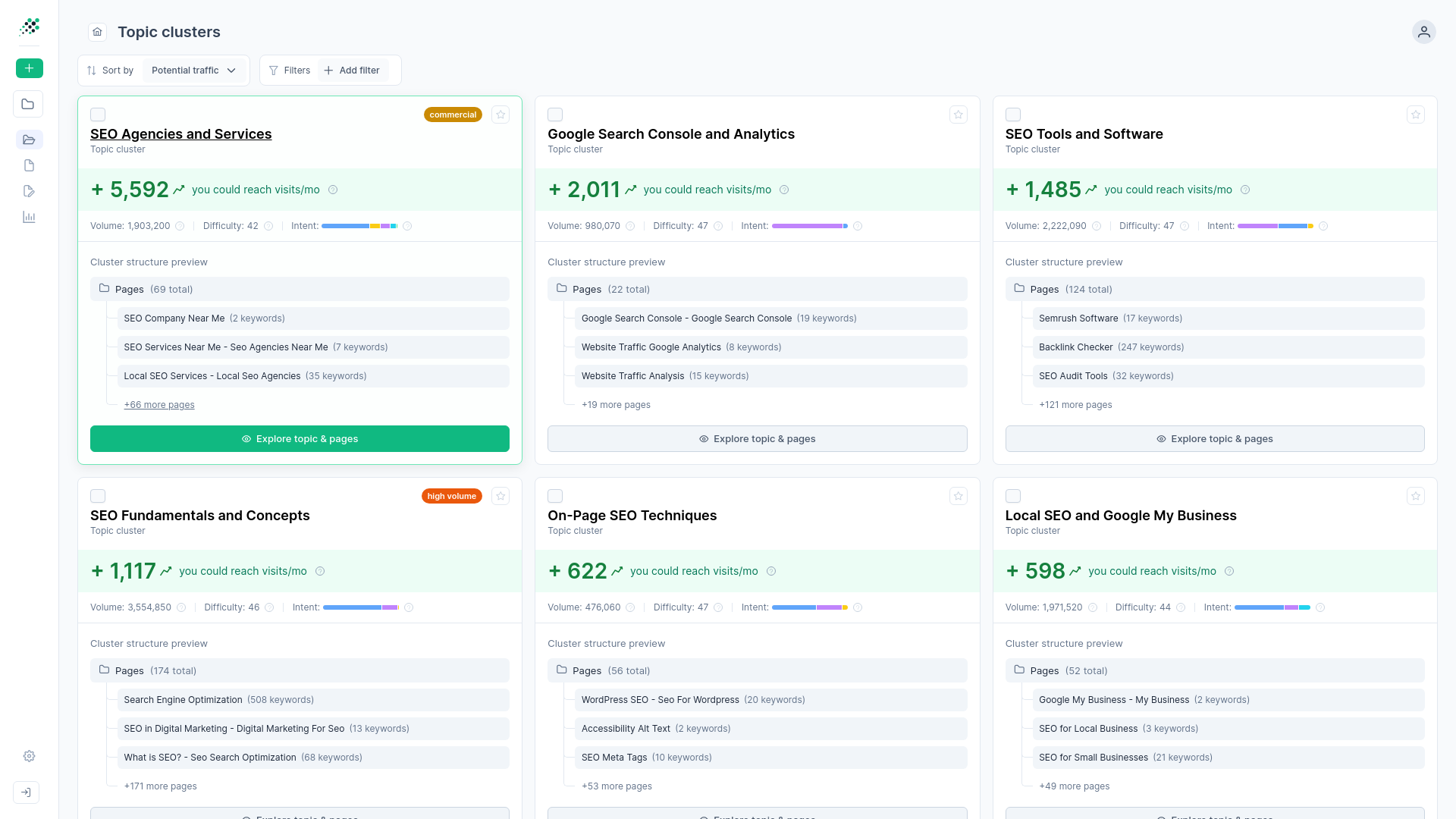
Most electrical sites have a single "Services" dropdown with a flat list of offerings. Search engines struggle to understand the depth of expertise on these sites. To dominate a specific service area, you need to prove authority through structural depth.
With RankDots, you can handle this using AI Keyword Mapping and Clustering, which reverse-engineers search algorithms to find high-impact keywords and automatically groups them into logical topic clusters. Instead of a flat list, you build a pillar-and-cluster site architecture. One cluster covers emergency repairs, another covers panel upgrades, and a third covers smart home automation. Grouping keywords by shared SERP overlap ensures each page targets a distinct intent, which reduces internal competition and signals your specific trade expertise to the search engine.
Local SEO and Google Business Profile optimization
Structuring a trade-specific business profile
Pull out your phone right now and search for an electrician in your area. You will likely find three lesser-skilled competitors dominating the Google Maps pack. They aren't there because they perform better electrical rough-ins; they're there because they structured their Google Business Profile to match what the search algorithm expects to see.
Your business profile is an extension of the topic-cluster strategy you use on your website.
It's the central hub of local SEO for electricians, linking your physical service area directly to your digital authority. You must explicitly map your specific services—like generator installation, aluminum wiring replacement, or electric vehicle charger setups—to your profile categories. Fill out every available field, consistently upload photos of your branded trucks on job sites, and clearly define your specific service areas to create the foundational trust signals required to enter the local map pack.
Turning customer reviews into ranking signals
Perfectly optimized profiles frequently fail to rank simply because they lack a consistent stream of recent customer feedback. Online reviews influence both visibility and conversions. Review signals are a primary ranking factor for local search.
The impact on the bottom line is highly measurable. Earning just 10 new reviews can increase a Google Business Profile's conversion rate by 2.8%. To secure these, you need a systematic process rather than occasional manual follow-ups. Integrate a review request step into your closeout workflow, perhaps triggering an automated text message through ServiceTitan or your CRM as the technician leaves the driveway. While directories like Yelp heavily filter reviews and the Better Business Bureau is a general trust anchor, prioritize Google reviews to directly fuel your map pack visibility.
Fixing the local citation baseline
Your business Name, Address, and Phone number (NAP) form your fundamental digital footprint. Inconsistent NAP information can severely hurt local search performance, potentially reducing local search visibility by up to 70%. When directories list an old suite number, a retired tracking phone line, or a slight variation in your company name, search engines lose confidence in your location data.
Conversely, businesses that maintain accurate and uniform contact details across directories are more likely to appear in the Google Local Pack. Run an audit of your trade directory listings, local chamber of commerce pages, and social profiles. Ensure every single entry matches your primary Google Business Profile. It's tedious administrative work, but cleaning up this baseline is a mandatory step before any advanced local optimization moves the needle.
On-page SEO and content strategies
Contractor websites often look beautiful but generate zero inbound calls. The layout is modern, the truck photos are crisp, and a single "Services" page lists everything from panel upgrades to outdoor lighting in one long bulleted list. That single-page structure is exactly why they don't rank.
Search engines evaluate your authority based on topical depth. When you collapse twenty different electrical services onto a single page, you dilute your relevance for all of them. The algorithm can't determine if you're a true expert in emergency commercial wiring or just someone who occasionally swaps out a light fixture.
Moving past the digital business card
The architectural shift required here moves your site from a flat digital brochure to a pillar-and-cluster structure. Successful residential contractors stop treating their websites like basic contact cards. They restructure them into dedicated, distinct service pages for "emergency repairs," "lighting installation," and "commercial build-outs," and almost immediately, those sites begin capturing specific, lucrative service queries. That structural shift replaces algorithm confusion with clarity.
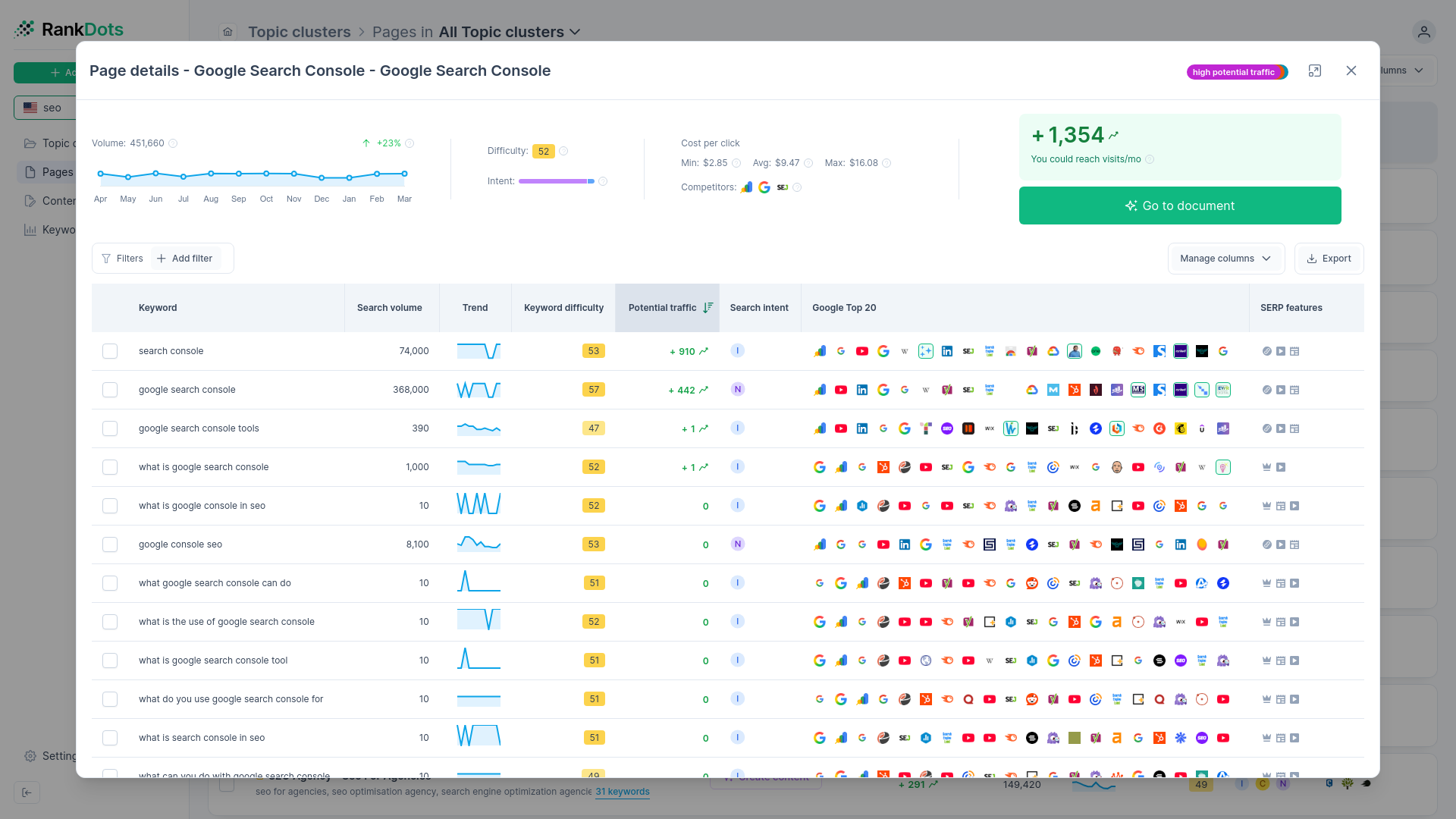
Building this architecture manually means endless tab-switching and guesswork. Our preferred approach relies on RankDots to automate the heavy lifting. The platform uses a Topic-First Architecture feature to derive the optimal page structure directly from search intent rather than a flat keyword list.
Here's the Quick Wins workflow for discovering missing service pages:
- Enter a broad seed keyword, like your city name plus "electrician," to establish your baseline.
- Let the AI reverse-engineer Google's algorithm to find high-impact local queries and automatically group them into logical topic clusters based on shared search intent.
- Run a URL Intersection Validation algorithm. If the same web pages rank for multiple keywords in a cluster, they stay together. If not, the topic is too broad and needs to be split into a separate dedicated page.
- Rank these new topic clusters using a Traffic Growth algorithm, calculating your highest potential traffic gain by factoring in search volume, keyword difficulty, and your current ranking positions.
This workflow ensures every page on your site has a specific, mathematically validated job to do.
Content requirements for high-converting pages
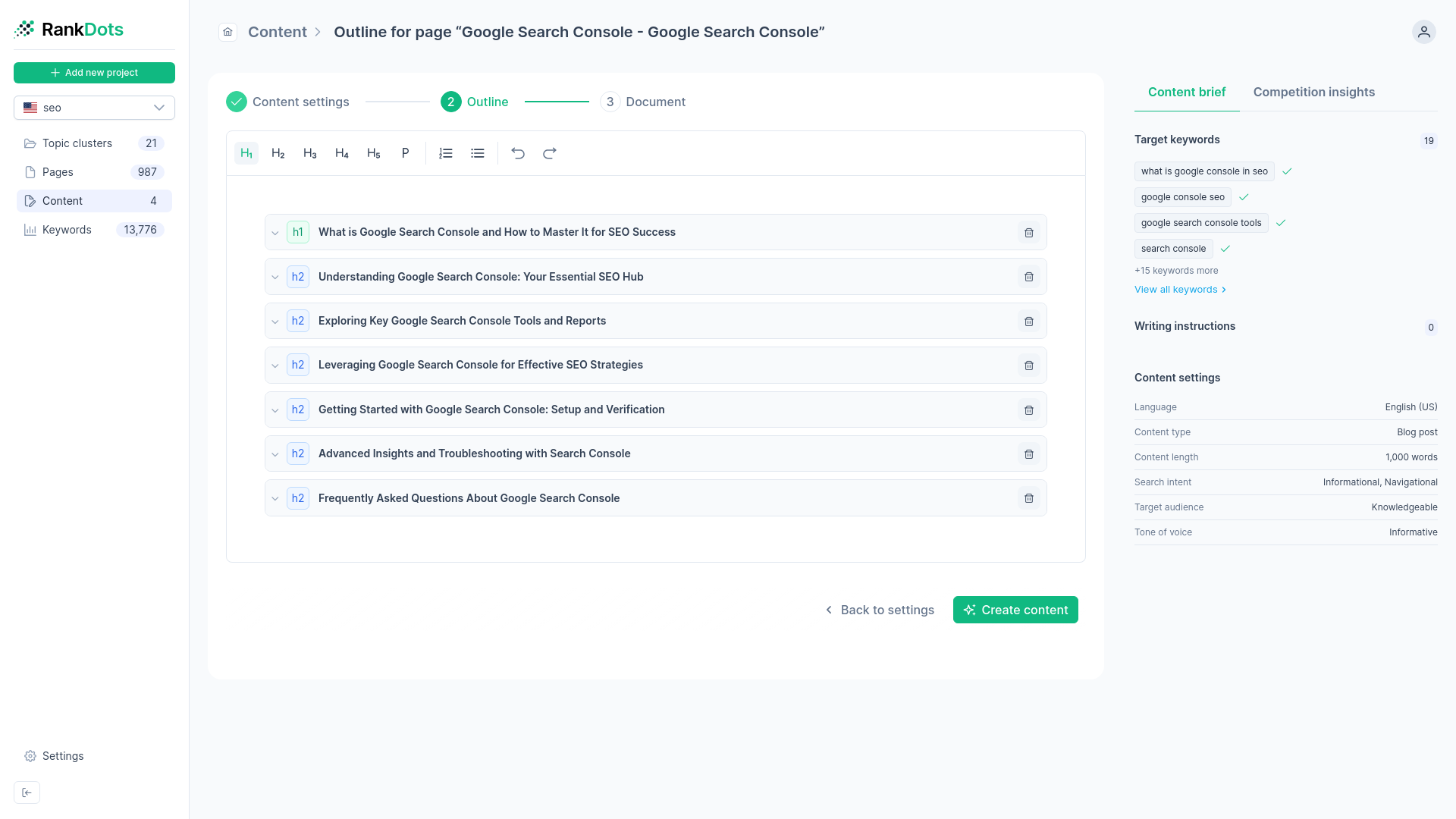
Once you have the right pages planned, you have to fill them with content that converts a panicked homeowner into a dispatched truck.
Emergency repair pages require a different approach than a standard installation guide. When someone searches for "sparking breaker box emergency," they don't want to read three paragraphs about the history of electricity. They want to know three things immediately: Are you open right now, do you service their specific neighborhood, and how fast can a truck get there?
Lead with the action. Put your 24/7 emergency phone number front and center. Follow it with specific trust signals—state licensing numbers, guarantees on response times, and badges for any local associations.
For broader installation topics, content depth matters significantly more. Electrician businesses that consistently publish content generate more leads per month than those relying on static pages. If you want to rank for "whole home rewiring," your page needs to answer the specific questions homeowners ask. Explain the permit process in your specific county, detail the typical timeline for an older home, and break down what the disruption looks like room by room.
Integrating trade terminology naturally
Contractors often struggle to balance trade language with consumer search habits. You know it's a Ground Fault Circuit Interrupter. The homeowner just knows their bathroom outlet stopped working.
Start by mapping the consumer symptom to the technical solution on the same page. You can write about "bathroom outlet repair" in the main headings, while integrating terms like "GFCI," "rough-in," or "sub-panel" within the body text. This satisfies the homeowner's simple search query while proving your technical competence to the search algorithm.
Don't overthink keyword density. Modern natural language processing understands that an article discussing "tripped breakers" and "amperage loads" is relevant to panel upgrades. Write the page as you would explain the diagnostic process to a homeowner standing in their basement. Clear, confident, and specific.
Evaluating Software for Electrician SEO
| Platform | Primary Feature | Notable Limitation | Starting Cost |
|---|---|---|---|
| RankDots | AI keyword mapping and clustering | No electrician-specific interface mode | Contact for pricing |
| Ahrefs | Backlink and technical site auditing | Restrictive reporting data limits | $29 limited starter plan |
| Semrush | Keyword and backlink intelligence | Overwhelming interface for beginners | $129 base monthly plan |
| BrightLocal | Visual local search ranking grids | Lacks comprehensive general SEO functionality | $39 basic tracking plan |
| ServiceTitan | Trade-specific CRM and accounting | Lengthy and complex implementation process | Custom per-technician pricing tiers |
Off-page SEO and local citations
Your website's structure tells search engines what you do. Your off-page signals tell them whether you can be trusted to do it. For local service businesses, digital proximity and consistency establish trust.
Contractors often obsess over getting links from massive national blogs when a link from their local Chamber of Commerce would do twice as much heavy lifting for their local map rankings. Off-page SEO for an electrician is not about going viral. It's about proving to the algorithm that your business is embedded in the specific community you claim to serve.
The reality of local citations
Every time your business name, address, and phone number appear together on a website, it creates a citation. As mentioned earlier, keeping these details uniform across the web is a mandatory baseline for map pack visibility.
Managing this manually across fifty different directories is an administrative headache. Many contractors turn to dedicated software to handle the distribution. BrightLocal is one option we see used frequently in this space. It provides a Citation Builder tool that uses both manual submissions and data aggregator networks to push your business information out to the wider web. It also includes a Local Search Grid tool for tracking your search rankings visually across specific geographic neighborhoods.
However, you should evaluate the cost structure before committing. BrightLocal lacks comprehensive general SEO functionality, and its pricing can escalate rapidly for multi-location businesses. Subscriptions start at $39 per month for a basic tracking plan covering a single location, with optional pay-per-use citation fees added on top. Whether you use software or manage it manually, the goal remains identical: absolute consistency across every digital touchpoint.
Beyond basic directories
Once your Yelp, Angi, and Better Business Bureau profiles are locked in, you need to look at trade-specific authority signals. Search algorithms look for corroborating evidence of your expertise.
A link from a regional electrical association carries weight. If you are a member of the National Electrical Contractors Association or a local builder's exchange, ensure your company is listed in their member directory with a direct link back to your website. These relevant, industry-specific links act as strong validation signals that push you past competitors who only rely on general consumer directories.
Community-based digital PR
Most contractors think digital public relations requires hiring a Manhattan agency to write press releases. For a local electrician, digital PR is just community involvement with a digital paper trail.
Consider looking at the checks you already write. Do you sponsor a local little league team? Ask the league to link to your website on their sponsor page. Did you donate materials to a local Habitat for Humanity build? Request a mention on their local chapter's blog.
These local .org and .com links are effective. A link from the local high school boosters club tells the search engine which town you operate in. It builds an impenetrable geographic relevance that national lead generation sites simply cannot fake. Stop thinking about "building backlinks" and start thinking about digitizing your existing real-world relationships.
Measuring ROI and tracking analytics
Look at your last expense report and you'll probably spot a large check written for traditional advertising. The phones barely rang, the trucks sat idle, and you have no way to prove if the few jobs you did book actually came from those mailers.
That anxiety over wasted budget is the primary reason contractors shift toward inbound digital leads.
A direct comparison between these inbound leads and traditional outbound efforts forces a critical review of your broader electrician marketing strategies. But if you transition to SEO and only track your keyword positions or website traffic, you're just trading one vanity metric for another.
Traffic does not pay the bills
An extra five hundred visitors a month to your website means absolutely nothing if they're all DIYers looking for free wiring diagrams. You have to translate raw organic traffic into meaningful business metrics: lead volume, dispatch rates, and closed revenue.
To do this, you need a baseline tracking setup. At minimum, this requires connecting Google Search Console to your website. This free integration shows you which search terms are driving actual clicks, rather than relying on estimated third-party data.
Beyond clicks, you must track the conversion. Implementing dynamic number insertion on your website allows you to see which organic pages make the phone ring. When you tie this tracking into a trade-specific CRM like ServiceTitan—which has dynamic flat-rate pricing catalogs and touchless accounting integrations—you close the loop entirely. You stop measuring clicks and start measuring the dollar value of the closed tickets generated by organic search.
Evaluating the analytics stack
When contractors decide to get serious about tracking their digital footprint, they often look at enterprise software suites. Two names dominate the conversation: Ahrefs and Semrush.
Ahrefs excels at backlink and gap analysis, alongside technical site auditing. However, it applies restrictive reporting limits and lacks comprehensive data for non-Google search engines. Its pricing starts at $29 per month for a limited starter plan, with standard functional plans jumping to $129 per month.
Semrush provides excellent SERP and AI visibility tracking, alongside deep keyword intelligence. The tradeoff is an overwhelming interface that can paralyze beginners and an expensive add-on structure where the base $129 monthly fee rarely covers everything a growing agency needs.
For a local electrical contractor, buying these enterprise tools is often like buying a commercial bucket truck to change a porch light. They provide massive amounts of data, but very little of it changes your day-to-day operational decisions.
Keep your stack lean. Use an integrated platform designed specifically for local content generation, tie it directly to your CRM's call tracking, and focus entirely on the lead close rates. When you can prove that your organic search leads are closing at higher rates than your outbound marketing, the decision on where to allocate next quarter's budget makes itself.
Frequently asked questions
What is electrician SEO and why is it important?
How long does it take to see SEO results for an electrical business?
How much does SEO cost for electricians?
Is Google Ads (PPC) better than SEO for electricians?
How do I get my electrical business to show up on Google Maps?
Turn local search visibility into high-margin booked jobs
Don't let lesser-skilled competitors win your local emergency calls. Execute a targeted electrician SEO strategy that maps exact local search intent to structured service pages. Rank in the map pack and secure a resilient lead pipeline without the manual guesswork.