How to Build an Intent-Driven Site Architecture With Keyword Funnel Mapping

Most SEO strategies don't fail because of bad content; they fail because the content has no structure behind it. If you are staring at a flat spreadsheet with thousands of exported rows, you likely have no idea which keywords build awareness versus which drive immediate purchases. Keyword funnel mapping solves this structural gap by organizing those terms into a cohesive strategy.
Aligning user intent with the top, middle, and bottom of your funnel stops cannibalization and drives organic traffic directly toward conversion. What we cover here is a complete strategic framework for structuring your search topics across the buyer's journey to stop cannibalization and maximize organic conversions. We will walk through exactly how to move away from rigid spreadsheets toward a dynamic, intent-driven architecture.
Your entire content plan improves when you map concepts to distinct buyer journey stages instead of flat spreadsheets.
Quick Takeaways
- Keyword funnel mapping is the process of organizing raw search queries into a structured, intent-driven hierarchy that aligns specific topics with distinct stages of the buyer's journey.
- Replace flat keyword spreadsheets with dynamic pillar and cluster architectures to group related topics logically and signal deep topical expertise to search algorithms.
- Abandon rigid single-intent categorization and use percentage-based intent scoring to accurately capture the mixed search behaviors driving modern search engine results.
- Assign a distinct funnel stage and purpose to every URL to eliminate keyword cannibalization and prevent your educational content from undermining high-value product pages.
- Analyze live search results to match your content format precisely to user expectations, ensuring you do not publish a blog post when a buyer actually wants a feature comparison matrix.
- Stop grouping keywords based on shared text; instead, cluster terms by analyzing actual search result overlap to accurately map queries that solve the identical user problem.
What is keyword funnel mapping?
From flat lists to hierarchical architecture
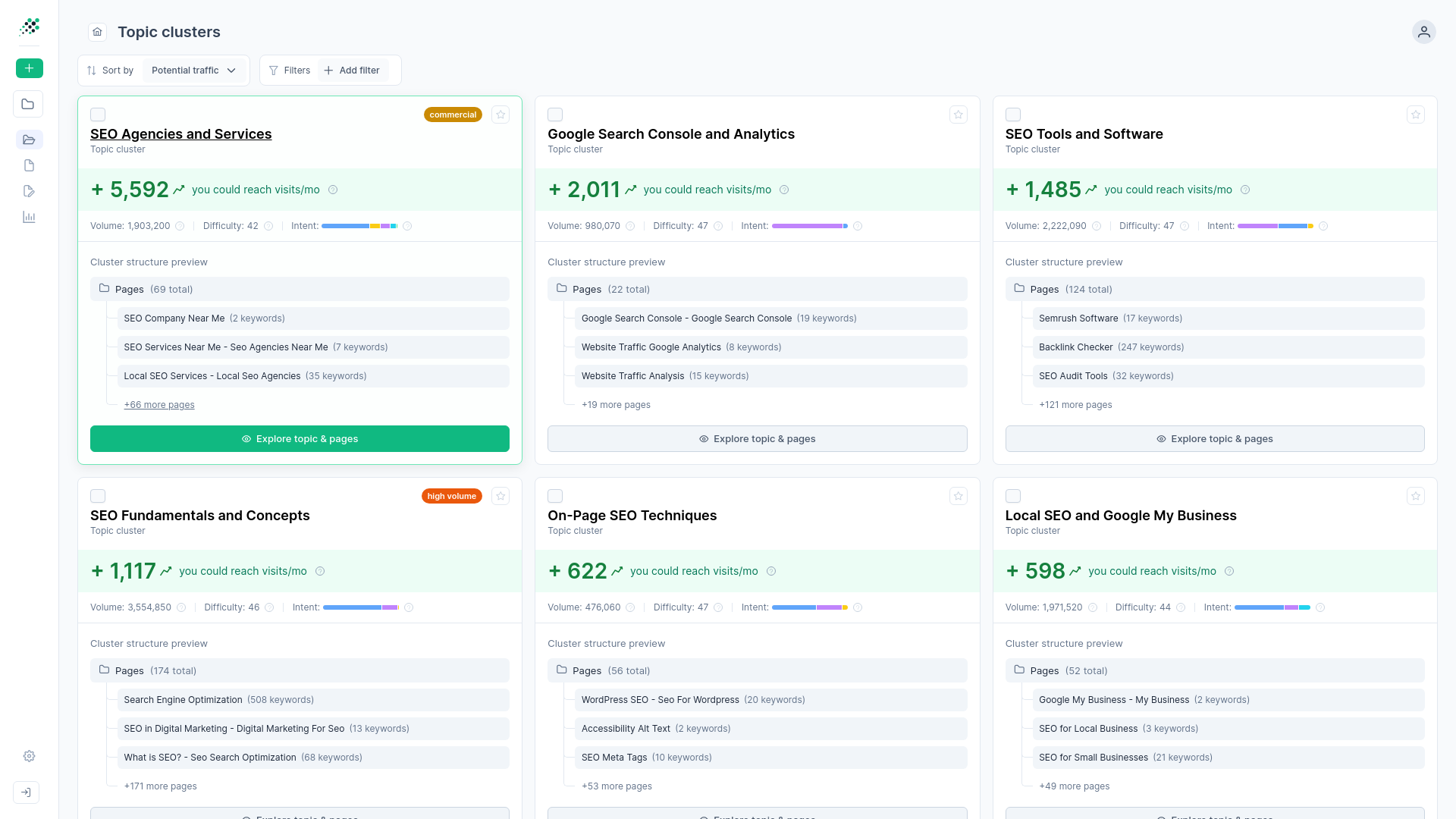
The core mapping process takes a raw list of search queries and assigns them to a defined structural hierarchy. Basic keyword research just gives you search volume, keyword difficulty, and maybe a broad categorization. That flat approach leaves you guessing how topics relate to one another and which pages should interlink. Hierarchical content planning organizes those same terms into a deliberate web of parent pillars and supporting clusters. You move away from isolated keyword targeting and start building interconnected topic ecosystems that cover an entire subject comprehensively.
A formal pillar and cluster architecture transforms random blog posts into a structured funnel that search engines reward.
Why search engines reward structure
Search engines evaluate topical authority through structured architectures, not just isolated pieces of great writing. When a site groups related topics logically, it signals depth and expertise to the algorithms. Websites using a topic cluster architecture achieve higher organic traffic compared to sites that don't. The structure makes the crawl path obvious. It groups broad concepts at the top level and drills down into narrow, specific questions at the cluster level, helping search engines understand your exact area of expertise.
Organizing by intent instead of topic
You can't just group keywords by shared words and call it a day. The real work involves classifying terms by what the user wants to accomplish. A B2B software company needs educational guides for people learning about their industry, but they also need specific feature pages for buyers comparing vendors. The mapping process ensures the educational guide doesn't try to close the sale, and the feature page doesn't waste time explaining basic definitions. Before you can map these intents effectively, you need a clear framework for how those searchers move through your specific funnel stages.
The buyer's journey and funnel stages
Defining the three core stages
Awareness keywords at the top of the funnel typically center on broad questions and high-level problem identification. The searcher knows they have an issue but doesn't necessarily know the solution yet. They are looking for education, not a sales pitch. Consideration terms in the middle of the funnel shift toward evaluation. These queries often include comparisons and specific category modifiers as the user weighs different options. Transactional triggers at the bottom of the funnel are the most lucrative. They include modifiers like "pricing" or direct brand comparisons indicating the user is ready to make a decision.
The flaw in rigid categorization
Most marketers try to shove every keyword into a single, rigid bucket. Very few search queries exhibit entirely mixed or fractured intent, which might make single-category labeling seem sufficient. We'd lean toward a more nuanced view for most teams, though. The reality is that search intent is rarely an absolute monolith. A query might lean heavily informational but still carry a distinct commercial undercurrent. When you rely solely on one label, you miss the secondary nuances that dictate how a page should actually be structured. If you treat a partially commercial query as purely informational, you leave money on the table.
Moving to percentage-based intent scoring
The most effective approach looks at the actual SERP overlap, moving away from strict "Informational" or "Transactional" labels. RankDots handles this by classifying keywords into five distinct intents—Informational, Navigational, Transactional, Commercial, and Local. The platform provides percentage-based intent scores, bypassing forced rigid assignments. A keyword might register as 40% Commercial, 25% Local, and 20% Informational, giving you a much more realistic view of the SERP.
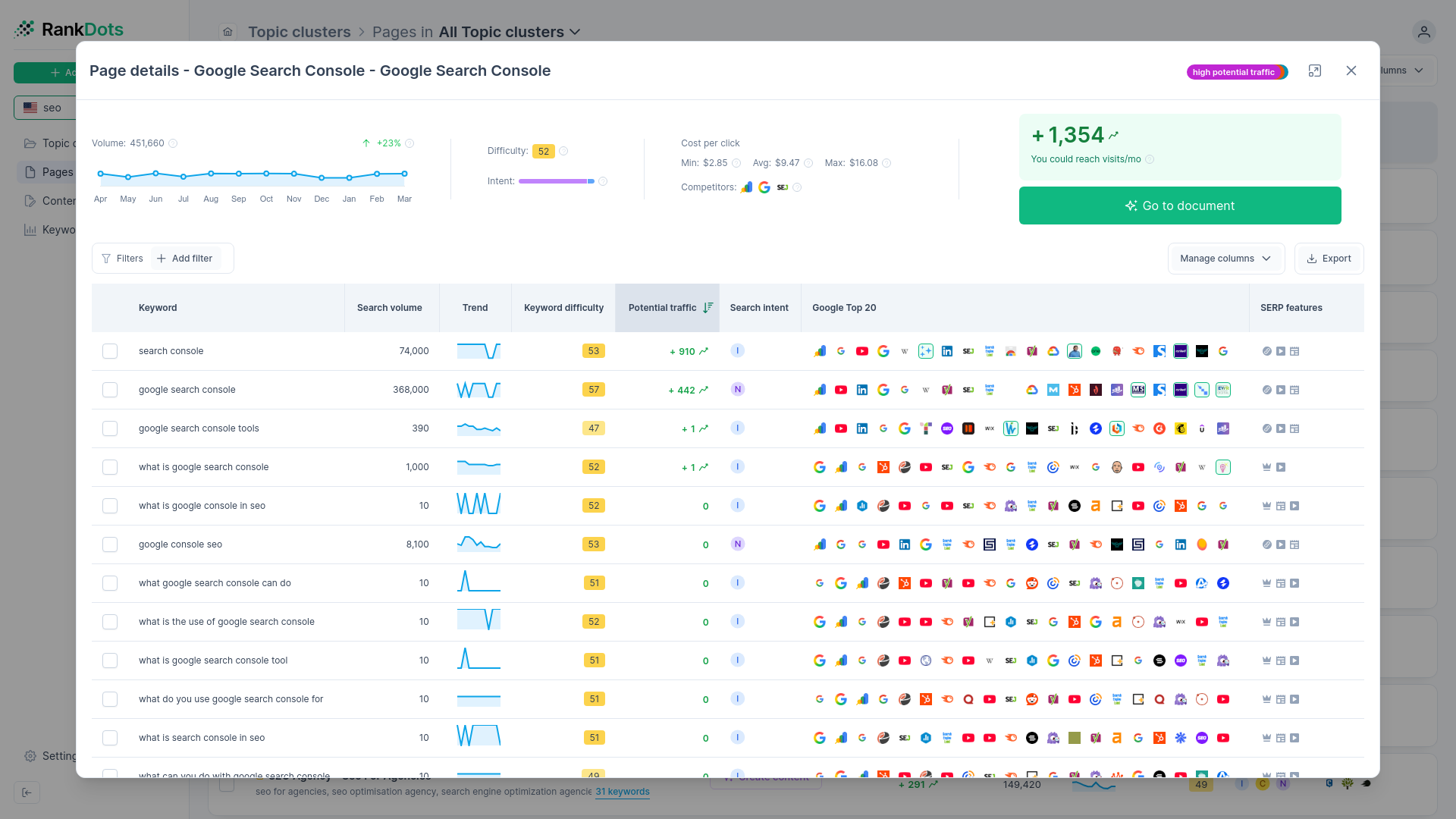
Imagine a B2B software marketer presenting a content strategy to leadership. Stakeholders often doubt the ROI of top-of-funnel content and want to target only highly competitive transactional keywords. When that marketer shows exactly how informational posts layered with minor commercial intent capture users early and funnel them directly to product pages, they change the executive conversation entirely. They bring a data-backed, logical architecture instead of a random list of terms. When you map topics using percentage-based intent data instead of rigid labels, you immediately solve the structural problems that cause keyword cannibalization.
The strategic benefits of intent-based mapping
Eliminating keyword cannibalization
Keyword cannibalization happens when multiple pages on your site target the same underlying search intent, diluting your ranking power across all of them. You might audit your blog and realize three different posts are all stuck on page three for the same variation of a target phrase. A mapped architecture ensures every page has a distinct job. The educational guide targets the broad query, while the product page handles the transactional version of that same topic. They link to one another, but they never compete. Separating these intents protects your most valuable pages from being undermined by your own supporting content.
Matching formats for higher conversions
A massive mismatch between content format and search intent severely limits conversion potential. You might write a comprehensive 3000-word informational guide for a high-volume keyword, only to realize the search results are populated entirely by e-commerce product grids. The format completely misses the underlying intent, practically guaranteeing the page will never rank. Matching a page's content format to the underlying keyword intent can significantly increase organic click-through rates. Transactional keywords also typically convert at two to five times the rate of informational ones. Getting the format right is just as important as selecting the right keyword.
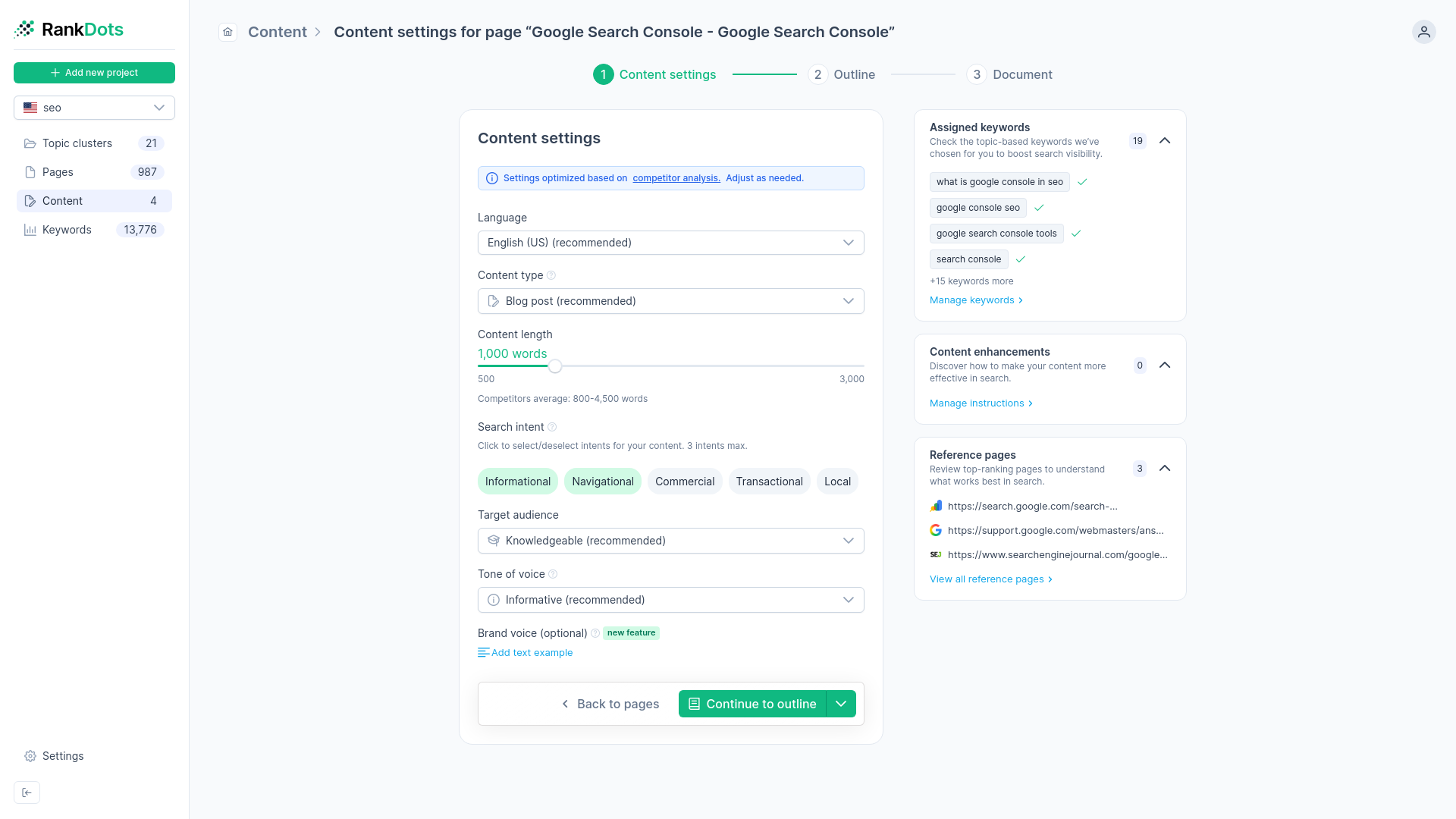
Proper search intent alignment guarantees that your target audience lands on a page built precisely for their immediate needs.
Prioritizing effort over vanity metrics
Traffic is useless if it doesn't move the business forward. Intent-based mapping shows you exactly what to prioritize. Instead of chasing raw vanity search volume, you can focus on high-value clusters that actually drive revenue. Most advertisers compete for awareness stage keywords, while far fewer compete for conversion stage keywords. Find the less competitive transactional clusters first to secure revenue before investing in expensive awareness campaigns. To capture those high-converting clusters, you need distinct targeting rules for the top, middle, and bottom of your funnel.
Keyword mapping strategies by funnel stage
Top-of-funnel strategy: Building trust
Informational content at the top of the funnel should prioritize establishing authority and building trust. Avoid pushing for immediate conversions. The goal here is capturing the user's attention while they are still defining their problem. Almost all keywords that trigger AI-generated search overviews carry an informational intent. That dynamic makes informational content critical for maintaining visibility in modern search environments. Your awareness content needs to be comprehensive and objective. It should answer the immediate question clearly and then naturally introduce your brand as a helpful guide for the next steps in their journey.
Middle-of-funnel alignment: Facilitating evaluation
Evaluation alignment focuses heavily on commercial investigations. This is where buyers narrow down their options and look for specific capabilities. Your strategy here should target terms that compare brands, explore specific features, or ask for "best" solutions within a category. A B2B software company might create dedicated comparison pages showing exactly how their platform stacks up against competitors. The key is to match the exact evaluation criteria the buyer is searching for. Clear, unbiased comparison matrices help them make an informed choice while positioning your solution as the logical winner.
Bottom-of-funnel structure: Driving the sale
Transactional targeting centers entirely on product pages and core service pages. These users have high intent and are ready to act immediately. You need to identify specific transactional modifiers and remove all friction from the destination pages. Don't hide the price or require a long lead form if the search intent is purely transactional. Looking at the top-ranking pages across various B2B niches, we consistently see that the format must match the buying readiness. When you align your product pages perfectly with transactional search intent, you capture demand at the exact moment the user is ready to buy.
Your keyword mapping strategy ensures these high-value pages rank exactly where the audience searches for purchase-ready solutions.
Clustering topics instead of isolating keywords
Manual keyword assignment wastes valuable strategy time and often misses the bigger picture. The methodology we prefer involves assigning entire topic clusters to funnel stages based on actual SERP overlap. If Google ranks the same set of URLs for five different queries, those queries belong to the same cluster. Map that single cluster to one stage of the funnel so you don't have to categorize each variation independently. That approach ensures your architecture reflects how search engines group concepts today. It also allows you to scale your mapping efforts rapidly without getting bogged down in line-by-line spreadsheet analysis.
Step-by-step keyword mapping workflow
The shift from theory to a usable architecture requires abandoning the traditional spreadsheet. When you export thousands of rows from a keyword tool and stare at a flat CSV file, you usually end up with mapping paralysis. You lose the context of the buyer's journey entirely. A structured workflow rebuilds that context from the ground up.
Establish your baseline with a content audit
You can't map a future journey if you don't know where your current assets sit. We typically start the mapping process by auditing what already exists. Pull your first-party search performance data directly from Google Search Console to see exactly which URLs capture organic impressions. Combine this with a backlink and technical audit using Ahrefs to understand the historical strength of your live pages.
Map your existing pages to the funnel stages they currently serve. In our experience reviewing B2B software architectures, marketers frequently discover that their legacy educational guides inadvertently capture mid-funnel comparison traffic. Catch these overlapping intents early so you don't build a net-new consideration page that cannibalizes your established awareness hub. You want to identify which pages serve clear, single intents and which pages suffer from an identity crisis.
Expand seed topics across multiple data sources
Once you have a documented baseline, the next phase is capturing the full universe of search demand. A single database limits you. If you rely solely on one volume-estimation tool, you miss the nuanced long-tail questions users actually type. You need to pull seed concepts through a variety of lenses, including real-time autocomplete behaviors, related searches, and advertising cost data.
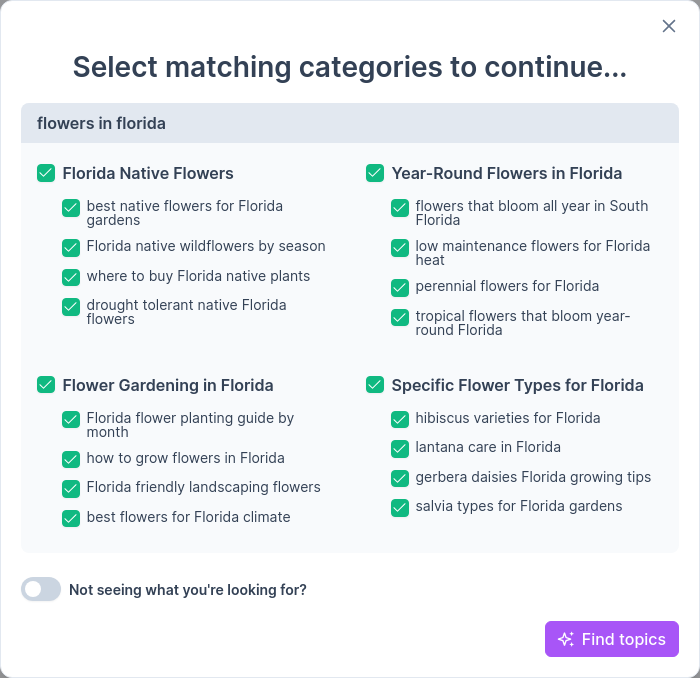
RankDots streamlines this through intelligent pipeline management. The system adapts to your workflow using three distinct research modes. You can enter a broad seed keyword, input a specific competitor URL, or scan an entire domain. The platform lets you pull data across multiple sources, deduplicate terms, and merge them into a unified list. It keeps the highest search volume and lowest difficulty metrics intact, saving you hours of manual cross-referencing.
Analyze live SERPs for intent overlap
Traditional manual mapping forces you to guess which keywords belong together. When teams guess intent based on how a phrase reads, they usually misalign their content. The most accurate way to map a funnel is to let the search engine define the boundaries.
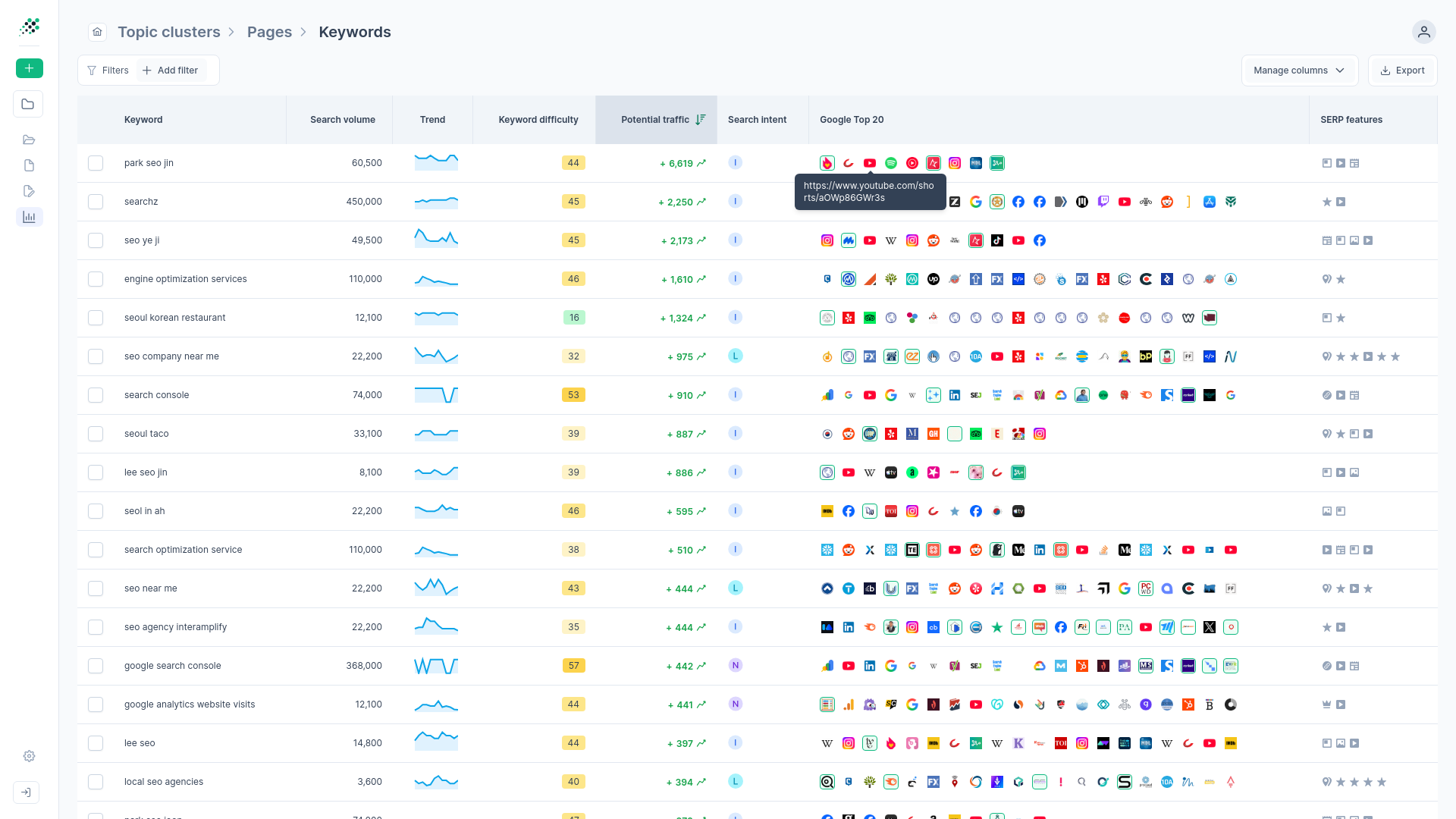
Analyze the live search engine results pages. If you look at the top ten ranking URLs for Query A, and seven of those exact URLs also rank for Query B, the search engine views those two queries as solving the exact same user problem. They share one intent. Group terms based on this URL overlap so you don't write two separate articles for a single topic.
Build pillar and cluster structures
Overlap analysis naturally forms the foundation of your site architecture. Broad parent topics with high search volume become your pillar pages. These serve as comprehensive navigational hubs at the top of your funnel. The specific, overlapping variants become your supporting clusters.
Instead of trying to stuff every variation of "inventory management software" into one massive, unreadable guide, you break it down logically. The pillar covers the broad definitions, while the clusters target specific features, pricing models, and industry use cases. That deliberate structure proves to algorithms that you possess deep topical authority.
Assign content formats based on SERP realities
Every cluster requires a specific vehicle. A recurring pattern exists where teams map the perfect cluster to the bottom of the funnel, but they execute it as a standard blog post. The search results for that specific cluster might actually demand a feature-comparison matrix or a direct product page.
Look at the live results for your clustered terms. The dominant format on page one tells you what the user expects. Using RankDots, you can analyze the SERP to find the exact content format Google prefers. When you align your content format strictly with the specific SERP recommendations for that cluster, you remove the friction between what the user wants and what your page provides.
Manual Spreadsheets vs. Automated SERP Clustering
| Feature | Manual Mapping | SERP Clustering |
|---|---|---|
| Grouping Methodology | Text similarity and shared nouns | Live search engine result overlap |
| Search Intent Scoring | Forced single-category labels | Granular percentage-based intent scores |
| Structural Output | Flat spreadsheet rows | Hierarchical topic clusters |
| Content Format Strategy | Relies on manual guesswork | Data-backed SERP format recommendations |
| Cannibalization Defense | Prone to conflicting internal pages | Deliberate URL intent separation |
Advanced topic clustering and SERP overlap
The biggest flaw in legacy keyword grouping is how it evaluates relationships. Most platforms use natural language processing to group terms based purely on text similarity. They look for shared words and assume a shared intent. This approach consistently sabotages site architectures.
The limits of text-similarity grouping
Text-based grouping assumes that keywords sharing a primary noun belong on the same page. If you sell B2B software, a text-matching tool will group "cloud CRM software" and "cloud CRM software pricing" together. A human immediately recognizes that one is an awareness-stage educational query and the other is a strict bottom-of-funnel transactional search.
When you map your funnel using basic text similarity, you inevitably try to build hybrid pages that serve multiple conflicting masters. A page trying to explain the fundamental definition of a CRM while simultaneously pushing a detailed pricing matrix usually fails at both. It annoys the researcher and distracts the buyer. We strongly recommend abandoning word-matching algorithms in favor of actual behavioral data.
Agglomerative clustering using live ranking URLs
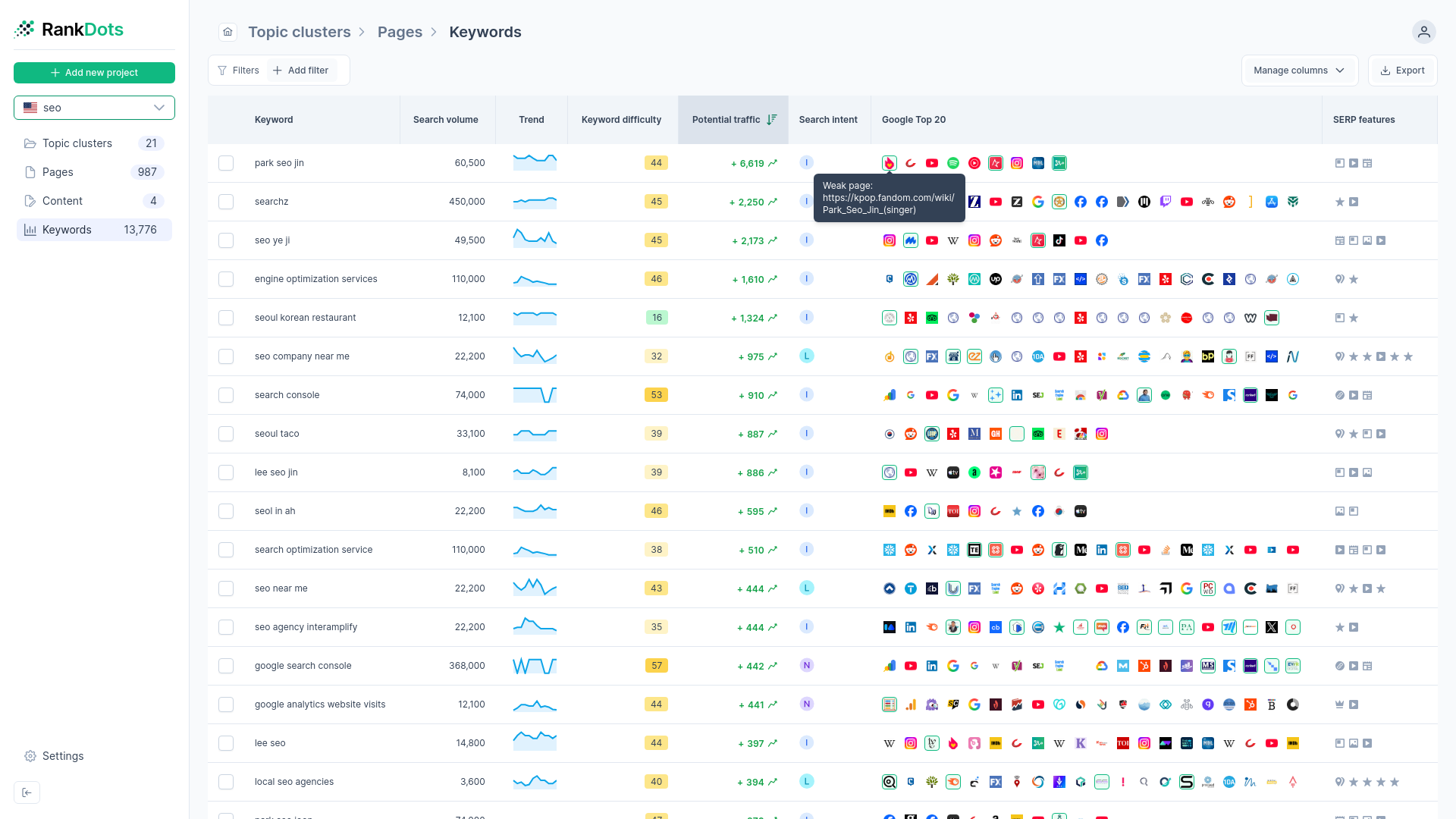
The modern standard for mapping is SERP-based agglomerative clustering. Instead of looking at the words inside the query, this mechanism looks at the destination. RankDots uses live Google data to check the actual ranking URLs for your keyword list. If two completely different phrases yield the same search results, the platform groups them into the same cluster.
Agglomerative clustering ensures your funnel mapping reflects actual search engine behavior rather than linguistic assumptions. It also aligns perfectly with a more nuanced view of the buyer's journey. Rather than forcing a rigid single label onto a term, you can evaluate percentage-based intent scores. If a cluster's SERP returns six product pages and four educational guides, the cluster is 60% transactional and 40% informational. That score dictates a specific page structure. It tells your writers to lead with commercial product features but support them with deep educational definitions further down the page.
Visualizing the topical hierarchy
A list of grouped clusters is still just a flat list until you see how the concepts connect. Advanced mapping requires visualizing the hierarchical relationships between your overarching main topics and the specific long-tail variants that support them. Spreadsheets actively hide these structural flaws.
When you visualize these connections, the gaps in your funnel become obvious. You might clearly see a dense cluster of informational topics leading to an empty void, exposing a missing middle-of-funnel consideration hub. Visualizing these parent-to-child relationships helps you build deliberate internal linking strategies. It helps you pass authority naturally down the funnel, guiding the reader from early awareness straight through to the final conversion.
Frequently asked questions
What is keyword funnel mapping?
How often should I update my keyword map?
Do I need a keyword map even if I have only a small website?
How do I know if my site is suffering from keyword cannibalization?
Can I use the same keyword on multiple pages without hurting SEO?
What should I do when multiple pages target the same keyword?
Turn flat keyword lists into a profitable site architecture.
Stop wasting hours on manual categorization and guesswork. Automatically group your search terms by actual intent so you can capture high-converting traffic much faster. Build your structural hierarchy today to secure the exact conversions your competitors miss.