Local SEO Optimization Strategy: Building Topical Authority Beyond the Map Pin

Competing in local search results feels impossible when you're a single storefront up against massive directories and global brands. Capturing geographically relevant search traffic requires a Local SEO Optimization Strategy that goes beyond basic directory listings. It means using a topic-first content architecture and multi-intent keyword mapping to build localized authority and drive offline foot traffic.
Teams hit a frustrating ceiling after checking all the foundational boxes. You claim the map pin, ensure data consistency across aggregators, and optimize the basic profile details, yet foot traffic remains entirely flat. The disconnect usually stems from treating neighborhood-level visibility as a technical checklist rather than a distinct content discipline.
We break down a 6-phase framework for building localized topical authority and driving measurable foot traffic. You'll learn how to transition away from rigid keyword spreadsheets and build an architecture that mirrors the actual geography of your customer base.
Quick Takeaways: Local SEO Optimization Strategy
- A successful Local SEO Optimization Strategy moves beyond basic directory claiming by building intent-driven, localized topical authority that accurately maps to the actual physical geography of your customer base.
- Stop relying on flat keyword spreadsheets sorted by raw volume; instead, group location-specific queries into structured topic clusters to prevent content overlap and establish neighborhood-level dominance.
- Treat local proximity as a complex search intent category, using mixed-percentage scoring to design pages that perfectly balance commercial comparison, informational needs, and geographic relevance.
- Target precise geographic entities like local landmarks, cross-streets, and colloquial neighborhood names to capture highly motivated, foot-traffic-ready searchers that broad municipal targeting completely misses.
- Turn customer reviews into powerful semantic assets by consistently weaving exact service terms and specific geographic references into your management responses.
- Shift your link-building focus away from declining bulk directory submissions and prioritize regional authority signals like neighborhood association links and local community sponsorships.
Concept definition: Moving beyond foundational local SEO
The shift from directory spam to local relevance
Foundational directory submission is no longer a competitive advantage. It's the price of admission. Campaigns for businesses like regional wellness spas plateau immediately after the basic setup is complete. They secure their initial profiles, establish consistency across a few major hubs, and wait for a surge in appointments that never materializes.
The algorithm moved away from rewarding sheer citation volume years ago. Modern local visibility requires localized topical authority. Because of this shift, search engines need to see dense, relevant content proving your business is the best answer for a specific service within a specific geographic radius. Roughly 35% of all search traffic is local. If your website relies on a single generic service page with a city name tacked onto the end of the title tag, you'll lose to competitors who treat their geographic area as a dedicated content category.
Why flat keyword lists fail local search
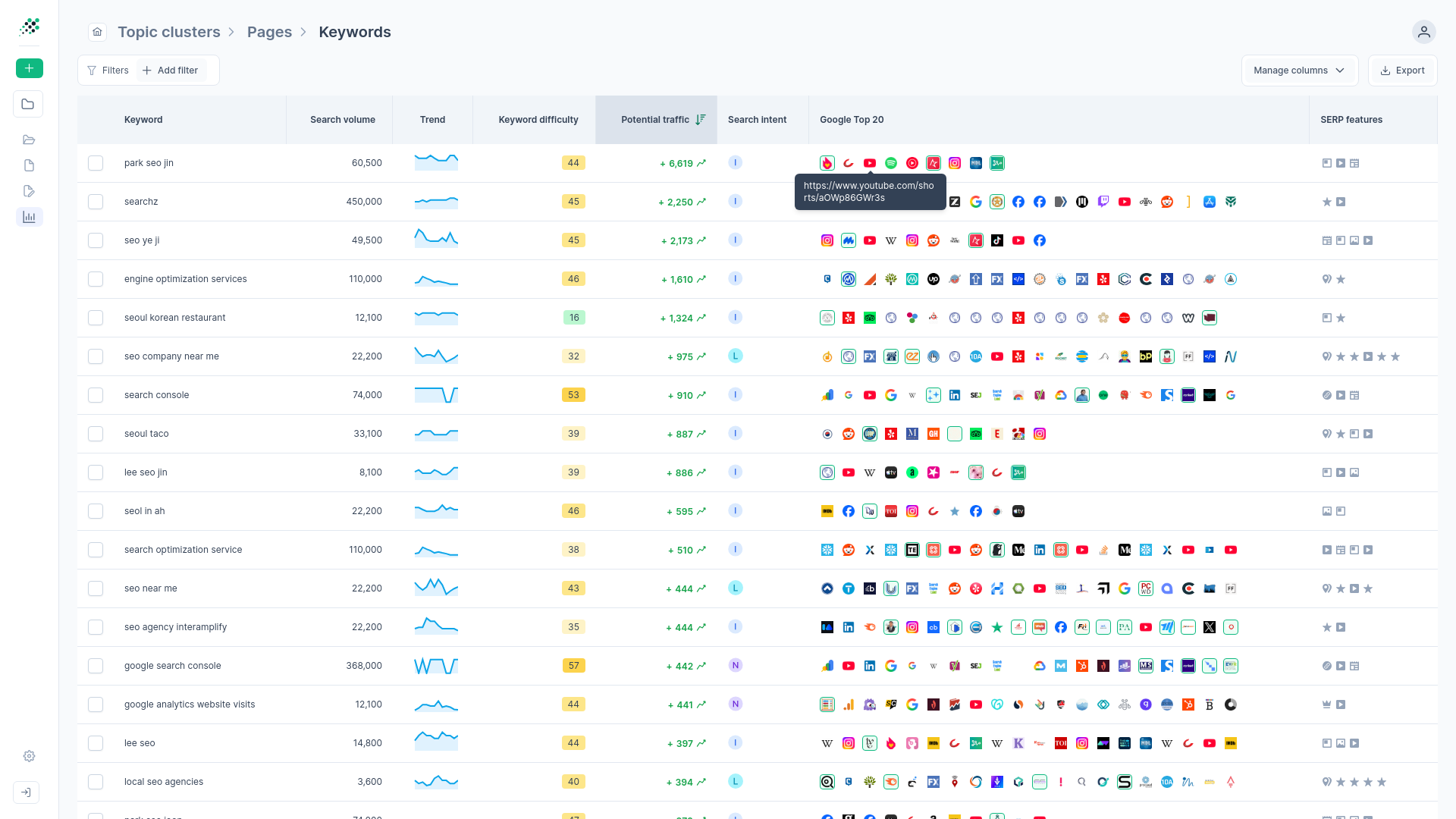
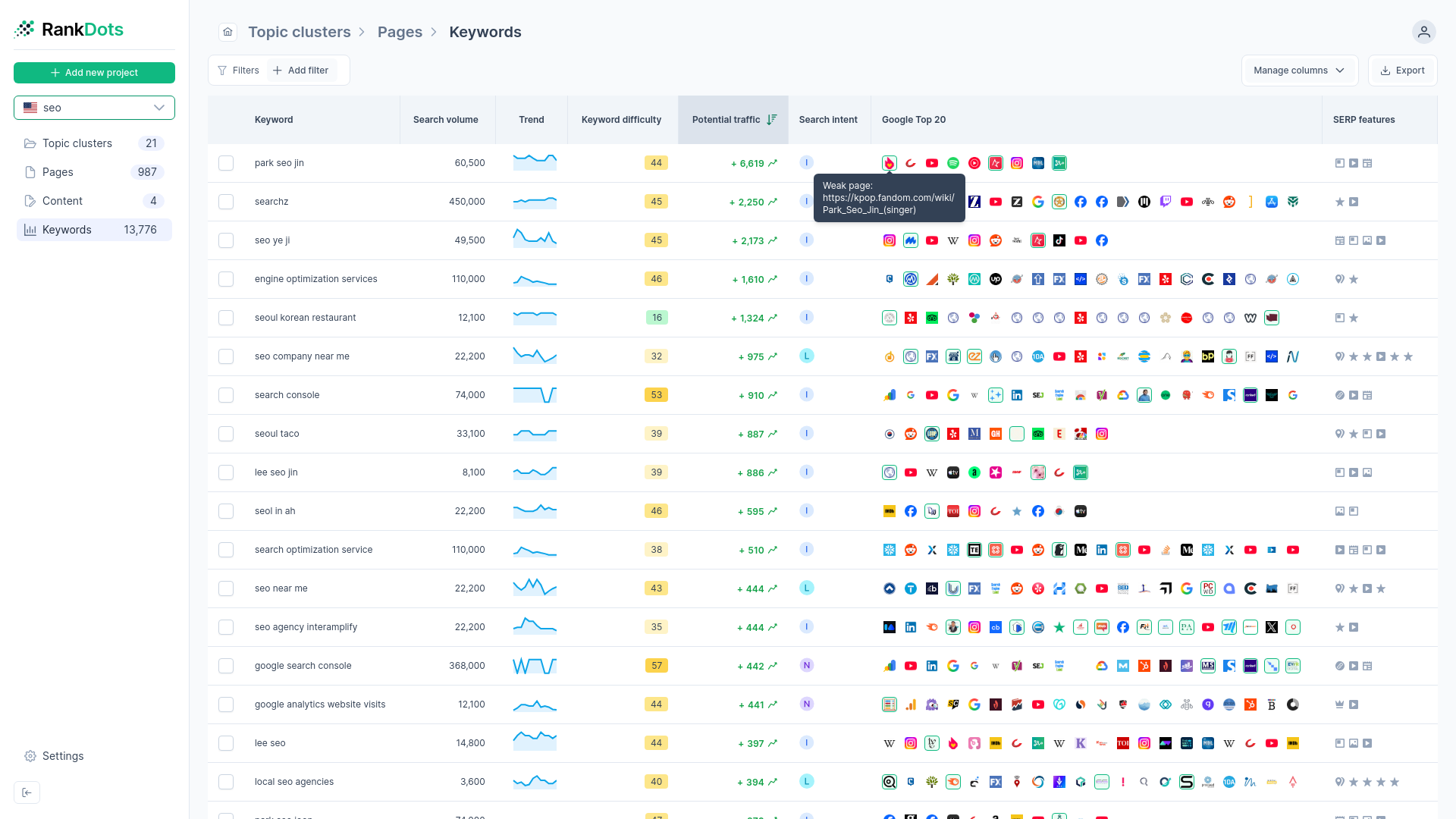
Most teams handle initial research by downloading a 10,000-row spreadsheet of terms and sorting by raw search volume. Sorting by raw volume creates immediate problems. Flat lists strip away the user's geographic reality. The agency director finds themselves staring at thousands of generic rows, trying to guess which phrases will bring physical human beings through the front door.
Nearly half of all internet searches carry local intent. When you optimize for those terms using traditional, single-intent metrics, you miss the nuance of the neighborhood. A phrase might show low volume at the national level but represent significant commercial value within a three-mile radius of your storefront.
Building localized topical authority
Treating local intent as a distinct category changes how you structure your site. Stop sprinkling city names across unrelated blog posts. Instead, build clusters of information that thoroughly cover a topic for a specific audience. Up to 98% of customers search online for information about nearby businesses. They want to know your exact service area, your pricing relative to the neighborhood, and whether you solve their specific problem. Building topical authority requires answering those localized questions directly, proving you're not just a map pin, but an active resource in the community.
Map out this local search intent to stop hoping the algorithm connects the dots, and start building pages that reflect how your neighborhood searches.
Mechanisms and ranking factors driving the local algorithm
Decoding multi-intent percentage scoring
Standard tools classify queries with a single, rigid label. Business owners analyze a term like 'best massage near me' and end up completely stuck. The search results show a chaotic mix of map packs, aggregate review sites, and individual spa booking pages. If the tool tells you the query is purely informational, you build a blog post. If it says transactional, you build a pricing page. Both approaches fail because they ignore the mixed reality of the algorithm.
With RankDots, you can treat local search differently by classifying 'Local' as a dedicated fifth search intent category. You can use multi-intent percentage scoring to reflect complex behavior. You can evaluate a single keyword and assign a percentage mix. A query might score as 40% commercial comparison, 40% local proximity, and 20% informational. A hybrid model lets you structure pages that satisfy the exact blend of needs Google expects to see.
Multi-intent percentage scoring directly informs your page layout. It ensures you include pricing tables, embedded maps, and service details in the precise ratios the searcher wants.
Proximity, prominence, and the 32% signal
The local algorithm strongly favors the user's immediate physical location. Proximity to the searcher isn't assigned an exact standalone percentage by search engines, but it's factored directly into overall profile signals. Data suggests those combined profile signals contribute roughly 32% to the total local ranking weight.
Teams over-index on prominence (trying to build authority) while neglecting relevance and proximity. You can't simply out-link a competitor who is physically closer to the searcher for a hyper-local query. Half of all smartphone users visit a business within a day of their local search, and 75% of mobile searches that exhibit local intent produce offline visits within 24 hours. The algorithm optimizes for that immediate, physical conversion. If your content doesn't strongly signal your exact location boundaries, you cede that highly motivated traffic to the shop down the street.
Extracting geographic entities from queries
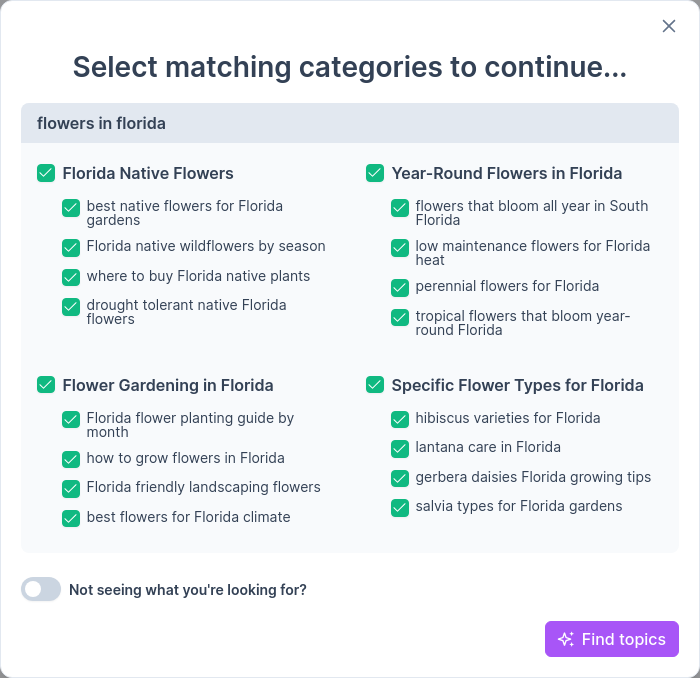
Location signals extend far beyond simple city names. Users search by neighborhood, cross-street, landmark, and colloquial regional terms. Manually identifying these variations across thousands of queries is nearly impossible. You can use RankDots to automatically identify and extract geographic entities within keywords. Isolate these specific location terms to match your content exactly to the vocabulary your local audience uses, which works far better than relying on broad municipal boundaries.
Execution strategy: Intent-driven local content architecture
Moving from scattered pages to topic clusters
Site architectures that try to capture regional traffic by publishing dozens of isolated blog posts, each targeting a different nearby town, usually backfire. The pages cannibalize each other, which confuses search engines about which URL should rank for the core service.
A structured, intent-driven local content architecture solves this problem. You can build this topic-first architecture using RankDots. Start by building topic clusters first, mapping them directly to a recommended page, and assigning terms based on shared search intent. For our running wellness spa example, this means grouping everything from 'deep tissue benefits' to 'massage therapy downtown' into a cohesive pillar. That structure keeps concepts from scattering across the domain.
A step-by-step workflow for local architecture
Here's a specific workflow for replacing manual spreadsheet mapping with a cluster-based approach. A cluster-based approach ensures your architecture supports your geographic goals.
- Set precise geolocation coordinates to define the exact service area.
- Input seed terms using street-level modifiers and colloquial neighborhood names.
- Apply local intent filtering to isolate terms that drive physical foot traffic.
- Extract geographic entities to group matching location terms automatically.
- Build the final topic cluster around the core service pillar.
A geographic clustering template helps maintain organization. A strong template includes the core service category, the primary geographic entity (like a neighborhood name), the secondary modifiers (like 'open late' or 'near transit'), and the specific URL destination for the cluster. The clustering template prevents overlap and keeps the strategy focused on conversion.
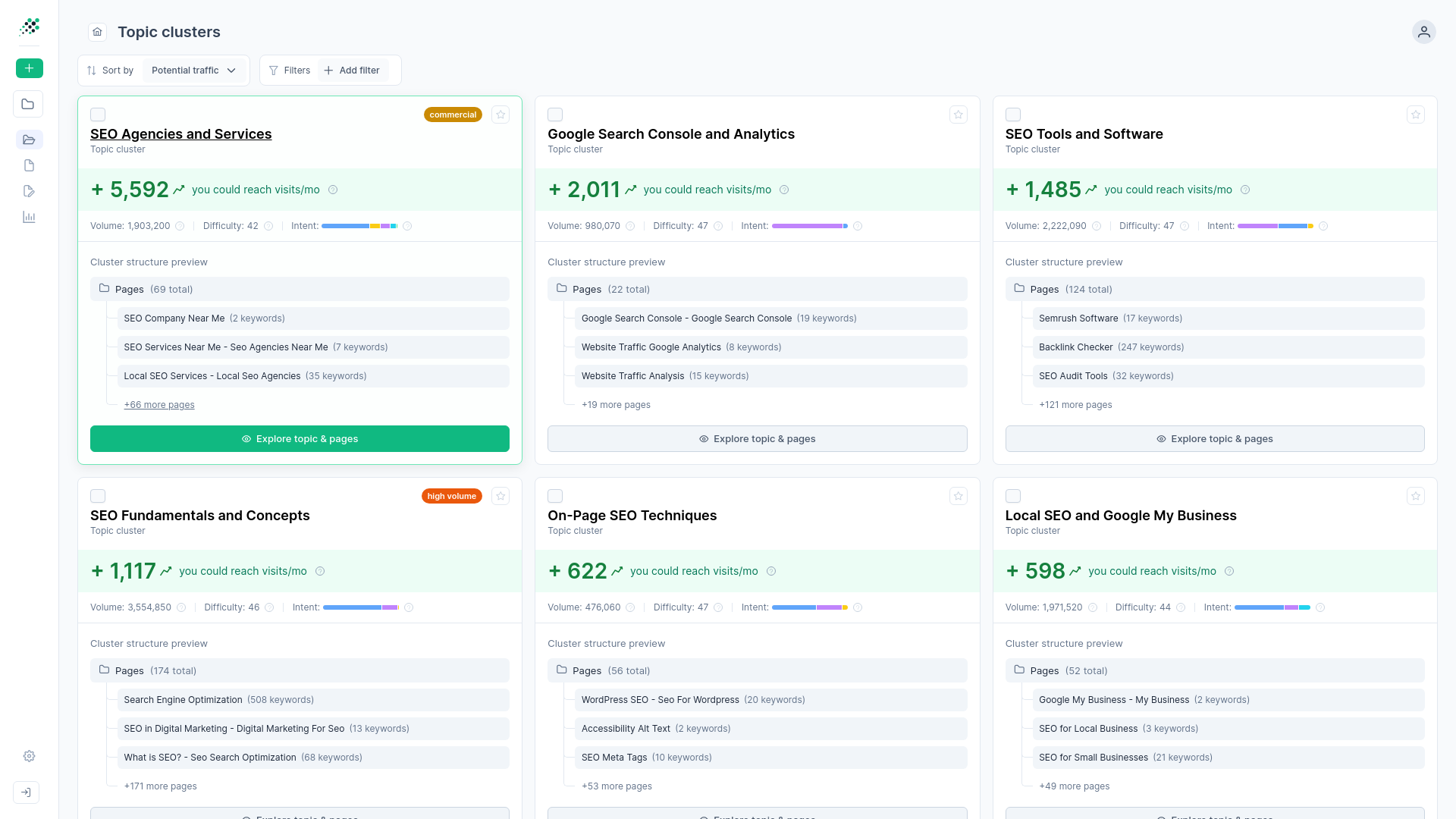
Structure your clusters around these specific geo-entities to create hyper-local relevance. It outperforms broad municipal boundaries and captures neighborhood-level results.
URL intersection validation for cannibalization
Even with careful planning, it's easy to accidentally target the same intent across multiple pages. Fixing overlapping content requires looking at actual search engine behavior, not just reading the text.
You can use URL intersection validation in RankDots to address the cannibalization risk. After grouping terms, you can check live search results to see if the same URLs currently rank for multiple phrases within your cluster. If identical competitor pages appear for different terms, the algorithm views those phrases as having the same intent. Live SERP validation confirms your cluster is accurate. If the live results show entirely different sets of URLs, the cluster is too broad and requires immediate separation into distinct pages.
Google Business Profile optimization and reputation management
Overcoming the basic setup plateau
Most teams know they need to claim a profile and verify the address. But traffic plateaus shortly after this initial phase. The SEO manager secures the listings, ensures the phone numbers match across directories, and then watches the metrics flatline.
To break past this ceiling, treat the profile as an active, semantic content channel. The algorithm evaluates the specificity of listed services and the density of relevant terms within your profile's ecosystem. Consistently populate the profile with detailed product descriptions and precise category selections that mirror your website's topic clusters.
Transforming reviews into semantic assets
The algorithm heavily weights customer feedback, but the strategic value extends beyond the raw star rating. We view reviews as user-generated semantic content. When a client mentions a specific service alongside a neighborhood name, they're feeding hyper-local entity connections directly into the search engine.
The majority of consumers read online reviews at least occasionally, and a significant portion check them regularly before making a purchase decision. Effective interaction management turns a standard review section into a competitive advantage. When responding to feedback, subtly weave in the specific geographic entities and service terms relevant to the customer's experience. If someone praises a massage at the downtown spa location, your response should acknowledge that specific service and location by name. That approach reinforces the semantic link without appearing unnatural.
Defending your profile from unauthorized edits
Profiles remain vulnerable to unauthorized edits from competitors or automated systems. Anyone can suggest an edit to your hours, website link, or primary category. We've seen legitimate businesses temporarily disappear from the map pack because a competitor successfully suggested a category change that went unnoticed for weeks.
Establish a routine for monitoring and rejecting inaccurate updates. Automated moderation systems occasionally flag legitimate profile changes as suspicious, which requires manual intervention to restore visibility. Incorporate insights gathered from customer Q&A sections directly into your monitoring workflow. If multiple users ask the same question on your profile, take that exact phrasing and build it into your website's content architecture. Proactive monitoring ensures your digital storefront remains accurate and aligned with actual customer behavior.
Local citations and targeted link building tactics
The declining weight of bulk citations
The traditional playbook dictated that acquiring hundreds of directory listings was the fastest path to visibility. Agencies still sell automated syndication packages as a primary service. Historical data shows a steady decline in the value of citation volume. Recent studies indicate these signals now account for only 6% to 7% of the local pack ranking algorithm.
Submitting listings to minor, low-traffic directories no longer moves the needle. A business might use a tool like BrightLocal to submit information to data aggregators, or Yext to maintain API connections across hundreds of publishers, but the return on investment for sheer volume has diminished significantly. The focus must shift toward quality and geographic relevance over raw quantity.
Transitioning to high-value manual curation
We recommend a transition framework focused on high-value manual curation. Stop paying recurring fees to maintain synchronized listings on obscure platforms, and ensure your data is perfectly accurate on the major hubs that actual humans use to make decisions. A large consumer audience relies heavily on Yelp for peer feedback before making purchasing decisions. Manually secure and optimize these primary profiles to ensure permanent ownership without the risk of data reverting when a subscription ends.
Some teams prefer tools like Whitespark for this exact reason. You can use it to identify new opportunities and execute manual submissions with one-time fees. Manual submissions allow a business to build a permanent layer of trust signals without renting their data presence indefinitely.
Acquiring links that actually signal local relevance
Link building for physical businesses requires a completely different mindset than traditional digital PR. The algorithm looks for connections that verify physical presence within a community. A backlink from a high-authority national blog might improve overall domain strength, but a link from a neighborhood association or nearby municipal website sends a much stronger geographic signal.
Pursue regional sponsorships and partnerships with adjacent local businesses. For the wellness spa, this might mean sponsoring a local 5K race or partnering with a nearby boutique hotel. These relationships naturally generate localized backlinks that competitors can't easily replicate through automated outreach software. Targeted link acquisition builds a moat of regional authority that bulk directory submissions can't match.
Performance tracking and analytics
Tracking visibility at the street level
City-wide averages obscure the reality of how nearby customers experience search results. Businesses located on competitive municipal borders face this exact problem. If you use standard software to check rankings for the broader city, the data might show you in the top three. But a customer searching from a smartphone just four blocks away might see a completely different set of competitors.
Standard metrics fail here. Hyper-precise, coordinate-based geolocation tracking helps you evaluate true street-level visibility. Set a custom region using exact latitude and longitude coordinates to see the map pack exactly as a pedestrian standing outside your storefront sees it. Coordinate-based tracking reveals specific neighborhood drop-offs that generic city-level reports miss.
Connecting search behavior to foot traffic
The gap between a digital click and a physical visit remains one of the hardest challenges in the industry. Teams struggle to prove that their content architecture actually drives revenue. Strict attribution models connect online clicks to offline foot traffic.
You can use Google Analytics to track how geographic campaigns translate into website engagement. However, configure the tracking to monitor specific proxy actions for foot traffic. Monitor clicks on driving directions, calls generated from mobile devices, and appointments booked through location-specific landing pages to establish a measurable baseline. Be aware that severe data retention limits on free tiers can complicate year-over-year geographic comparisons. Data retention limits require disciplined export routines.
Leveraging first-party data for traffic gaps
Third-party volume metrics are notoriously unreliable for niche neighborhood searches. You can build a beautiful plan around a term that supposedly gets thousands of lookups a month, only to find it drives almost nothing in reality.
While competitor research in platforms like Semrush works well for national-level strategy, those large databases often lack the granular resolution to see what people type while standing two blocks from your front door.
Lean heavily on Google Search Console to validate content performance. Search Console provides direct, first-party data straight from the index regarding a site's specific query performance. Cross-reference your established topic clusters against the actual queries generating impressions in the console to quickly identify missing local modifiers. If the data shows users finding the wellness spa by searching for a specific nearby cross-street that you haven't explicitly targeted, you can immediately fold that geographic entity back into your content architecture.
Frequently asked questions about local SEO optimization
What is local SEO and why is it essential?
How does local SEO differ from general SEO?
How do search engines determine local rankings?
How long does a local SEO strategy take to show results?
Can online-only businesses benefit from local SEO?
How does NAP consistency impact local rankings?
Build a local SEO optimization strategy that drives foot traffic.
Stop guessing which keywords bring customers through the door. Use precise geolocation and multi-intent scoring to group terms exactly how your community searches. Capture local traffic that translates directly into physical visits.