Multilingual keyword clustering: How to build intent-driven global site architectures

If you've ever translated a high-performing English keyword cluster into Spanish or German and watched it flatline, you already know the hardest truth of international SEO: language isn't the unit of search, intent is. Multilingual keyword clustering groups search terms across different languages based on shared local search intent rather than direct linguistic translation. This ensures international content targets the exact topics and formats rewarded by a specific region's search engine results pages.
Eighty percent of businesses fail their international expansion efforts because they rely on direct language translation instead of proper localization. The root cause is almost always an intent gap. Only about 41% of marketers adapt their search strategies to account for local cultural search intent. The rest suffer poor performance because they assume a translated keyword carries the exact same user expectation as the original. Closing this gap requires moving away from manual spreadsheet cleaning toward automated semantic mapping. What follows is a 5-step framework to collect, clean, validate, and group your international keywords into high-ranking local topic architectures.
Quick Takeaways
- Multilingual keyword clustering is the strategic process of grouping international search terms based on shared local search intent rather than direct linguistic translation to accurately match regional user expectations.
- Abandon direct language translation in favor of localized intent mapping; publishing identical translated pages across different regions ignores local nuances and often results in content failure.
- Generate your initial seed keywords natively within the target language and set strict country-and-language parameters to capture authentic regional search behaviors.
- Prevent complex verb conjugations from fracturing your content by applying correct native language stemming and localized stopword filters before you begin clustering.
- Use live SERP overlap data—specifically looking for shared ranking URLs—to mathematically validate search intent and prevent cross-border keyword cannibalization.
- Group your data into two-level semantic hierarchies that focus on what the user actually wants, bypassing the limitations and inaccuracies of manual spreadsheet string-matching.
Why intent mapping outperforms direct language translation
The mechanics of local search intent
A keyword translated directly from English into Spanish might mean the same thing in a dictionary, but Google interprets its intent based on localized user behavior. Consider the nuances between regional markets that share a language, such as Spain (es-ES) and Mexico (es-MX). A term that triggers an educational guide in one country might trigger a localized product directory in another. When we ignore these local variations and publish identical translated pages across both regions, the content inevitably fails in at least one. Search intent is market-specific. We recommend mapping the local SERP before writing the page.
The volume overestimation trap
When projecting ROI for a new international market, it's common to rely on exported data to build a business case. Basing those projections on raw totals creates a significant problem. Google Keyword Planner overestimates search volume for approximately 91% of keywords compared to actual impression data, with about 54% of these cases being severe overestimations. The platform groups similar keyword variations into buckets and reports the exact same total volume for each individual term. If you sum those numbers up without correcting the buckets, you present inflated, wildly inaccurate forecasts to stakeholders.
The scalability limits of spreadsheets
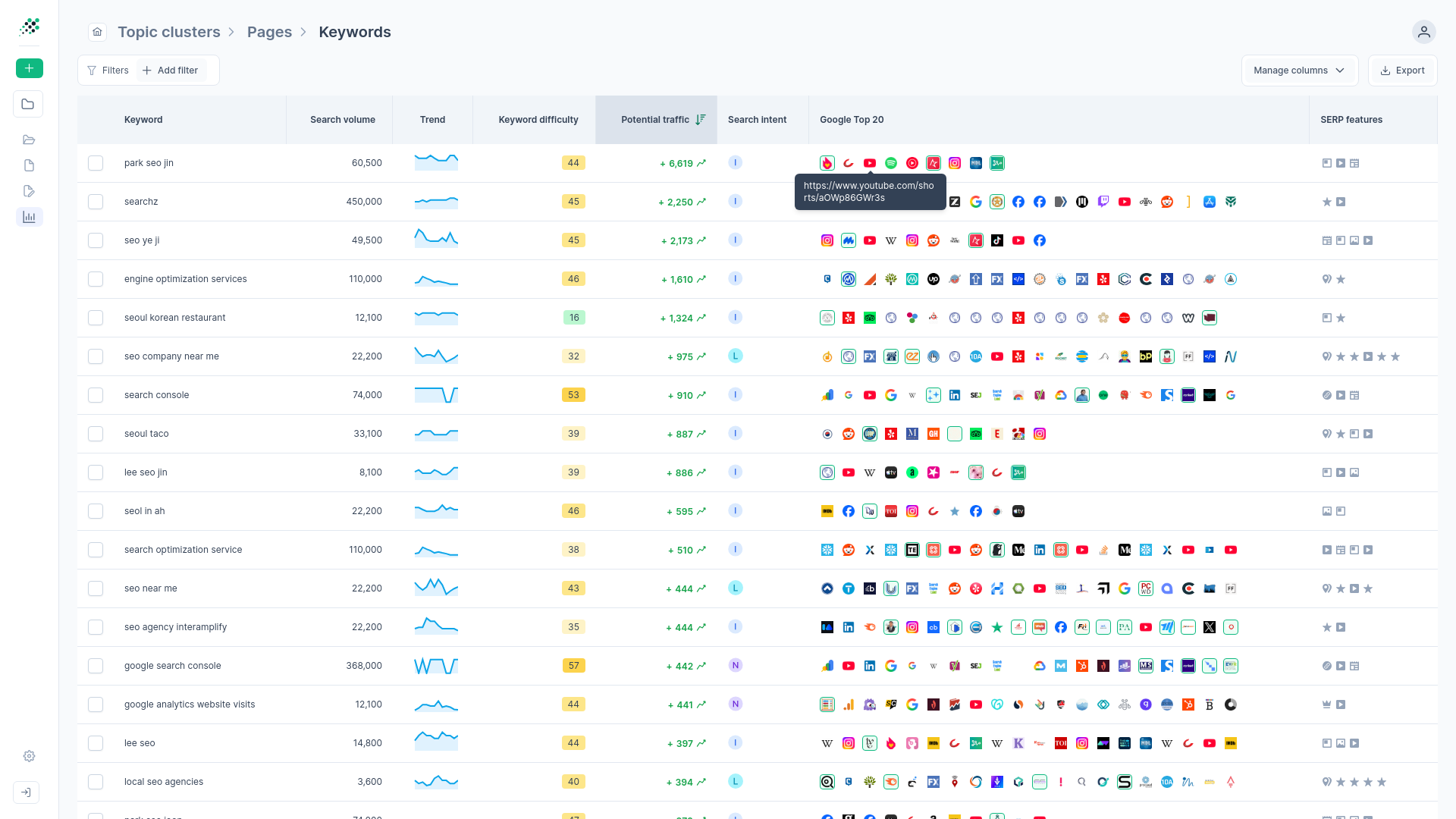
Manual organization of large keyword lists breaks down almost immediately. Organizing just 2,000 keywords usually consumes an entire afternoon. Manually clustering 10,000 keywords in a spreadsheet takes multiple days to complete. The process requires cross-referencing search intent by hand, line by line, which doesn't scale for global expansions. Semantic AI solves this by clustering terms based on the live intent rewarded by search engines, turning days of repetitive spreadsheet formatting into an automated, highly accurate baseline.
Step 1: Collect keywords and define target local markets
Generate seed variations natively
Do NOT start with your English keyword list and run it through a translation tool. That approach bakes in English-centric search patterns and ignores how native speakers actually query search engines. Instead, generate seed keywords natively in the target language. If you're entering the German project management software market, pull your initial seed terms from native German industry forums, competitor sites, and local sales conversations. Build the foundation entirely within the local lexicon.
Define strict country and language pairings
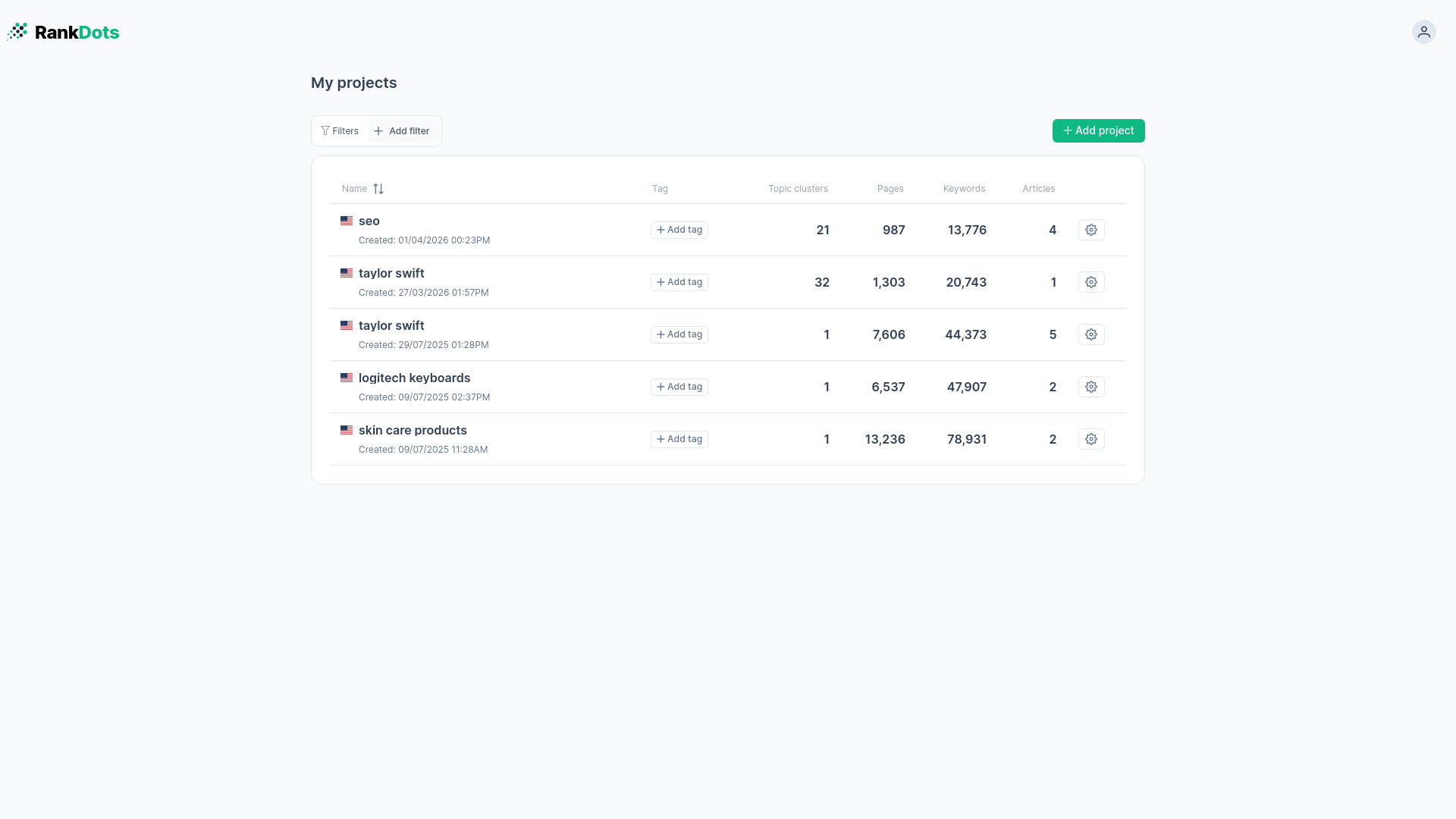
Because search behavior varies dramatically by region, defining just the language isn't enough. Defining both the target country and the language pair accounts for local nuances. The terminology a user types to find a service in Madrid often differs entirely from the phrasing used in Mexico City. Setting strict regional parameters ensures your initial data collection reflects the actual geographic market you intend to capture.
Layer first-party and third-party data
A resilient keyword list requires multiple data inputs. We typically start by pulling any existing first-party data from Google Search Console, focusing strictly on impressions and clicks from the specific region targeted. Search Console data shows you how local users already interact with your brand. Combine that with third-party metrics from backlink API providers, autocomplete suggestions, and related searches to capture the broader landscape.
Step 2: Clean keyword lists and apply native language stemming
Apply correct language stemming
Raw keyword exports are notoriously messy, especially in languages with complex conjugation rules like French or German. To get an accurate picture of search demand, you need to consolidate terms down to their linguistic roots. Correct stemming involves recognizing root words across different verb forms. You can automate this using platforms like RankDots to apply AI-driven stemming that adapts to the specific grammar of the chosen language. AI stemming identifies that local equivalents of "manage," "managing," and "managed" all reflect the exact same core concept.
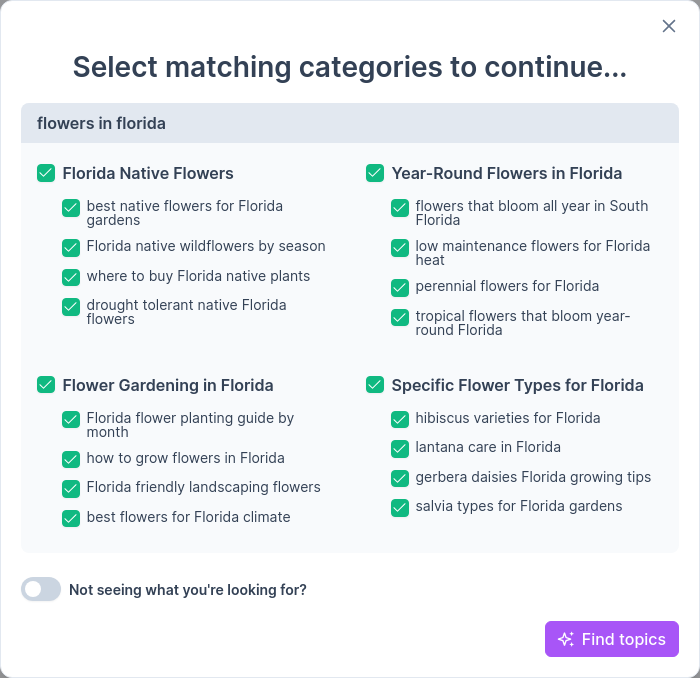
True semantic stemming prevents high-volume topics from fracturing into dozens of weak, competing clusters because the local language uses complex verb conjugations.
Filter localized stopwords
Every language has its own set of common filler words that disrupt data grouping if left unchecked. Accurately identifying and handling stopwords requires following the specific rules of the target language. You can't apply an English stopword list to a Spanish dataset. Proper normalization also requires processing special characters, diacritics, and language-specific character encodings. Unfiltered special characters and stopwords fracture your cluster data, making high-volume topics look fragmented and weak.
Deduplicate across word forms
We recommend cleaning the dataset completely before clustering begins. Cross-form keyword matching deduplicates your list across various word forms in the target language. If you export 50,000 keywords, a significant percentage will be minor variations of the same query. When implementing native clustering, you need the system to understand these connections without relying on superficial string matching. Clean data is the prerequisite for accurate intent mapping. Junk data in, junk clusters out.
Step 3: Validate search intent using local SERP overlap
Establish SERP overlap thresholds
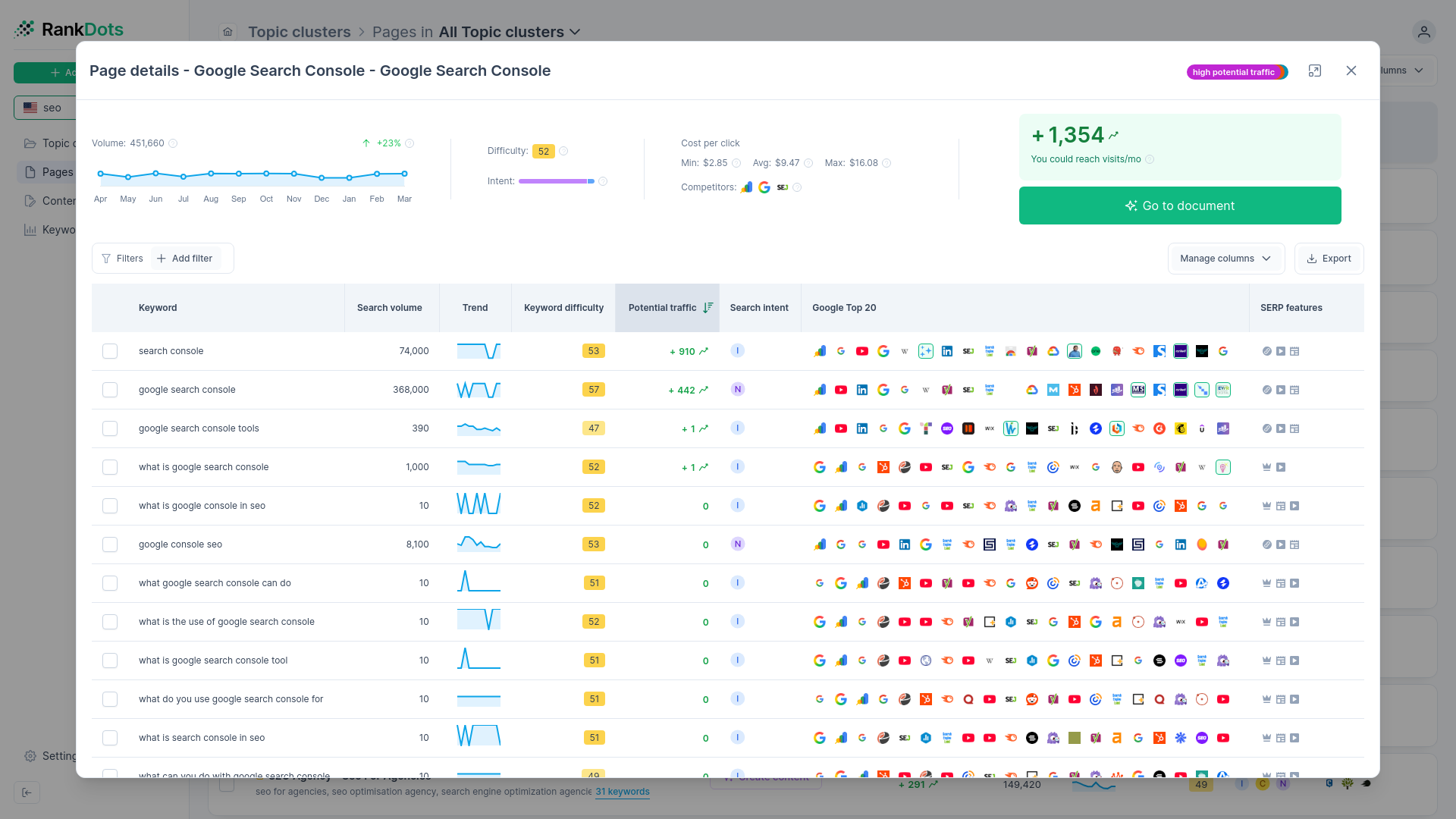
Grouping keywords by linguistic similarity is dangerous. Grouping them by overlap in live Google search results is the gold standard. SERP-based clustering relies on live data to map actual search behavior. To determine if two keywords belong on the same page, you evaluate how many URLs rank in the top 10 for both terms. A common threshold for cluster overlap is 3 to 4 shared URLs. If the overlap meets this threshold, the search engine considers the intent identical, meaning you target both terms with a single localized page.
Prevent cross-border cannibalization
When managing multiple regional sites, keyword cannibalization becomes a severe risk. You might accidentally optimize a generic Spanish page that outranks your Mexico-specific page in the Mexican market. Checking live regional SERPs prevents this cross-border confusion. You can use an algorithm called URL Intersection Validation within RankDots to handle this systematically. After clustering, you can check if the exact same URLs rank for multiple keywords within a cluster. If the validation fails, the cluster is too broad and needs separation.
Differentiate broad topics from tight clusters
Focusing on only one keyword per page can result in losing out on 90% or more of the organic traffic opportunity. However, throwing loosely related terms onto one page confuses search algorithms. Clear boundaries between broad thematic clusters (which require multiple pages) and tight intent clusters (which map to a single URL) prevent keyword cannibalization. Empirical SERP data provides the precise boundaries needed to build highly targeted pages without guesswork.
Step 4: Group keywords into market-specific topic architectures
Build two-level hierarchies
Raw data dumps from standard SEO tools generally leave you with flat lists. A flat list tells you what people search for, but it doesn't tell you how to structure your website. Transition those raw lists into logical two-level hierarchies consisting of parent topics and subtopics. The parent topic is the broad thematic pillar, while the subtopics represent specific angles and long-tail intents within that pillar.
Cluster by semantic meaning
Basic spreadsheet formulas that group terms by shared text strings fail when keywords share search intent but use completely different words. You can use RankDots to cluster keywords based on semantic intent rather than shared vocabulary. RankDots recognizes that the local variations of "affordable software" and "cheap management tool" belong in the same cluster despite sharing no actual text. Group by what the user wants, not what they typed.
Bypass manual formatting
Excel becomes an exercise in frustration when you try to group 50,000 exported keywords manually. The manual effort of categorizing that volume of data across multiple languages drains resources and introduces human error. Live SERP data automates the mathematical grouping phase, bypassing hundreds of hours of spreadsheet manipulation. The software groups the terms logically, leaving you free to focus on content production and site architecture.
Step 5: Map clustered topics to localized content workflows
Implement a topic-first architecture
Most traditional approaches start with a flat keyword list and try to force those terms onto existing translated pages. That backwards methodology almost always results in intent mismatch. Instead, build a topic-first architecture. You can build this in RankDots by starting with topic clusters and deriving the optimal page structure directly from them. Each cluster maps to a recommended page, directly supporting scalable pillar-and-cluster structures.
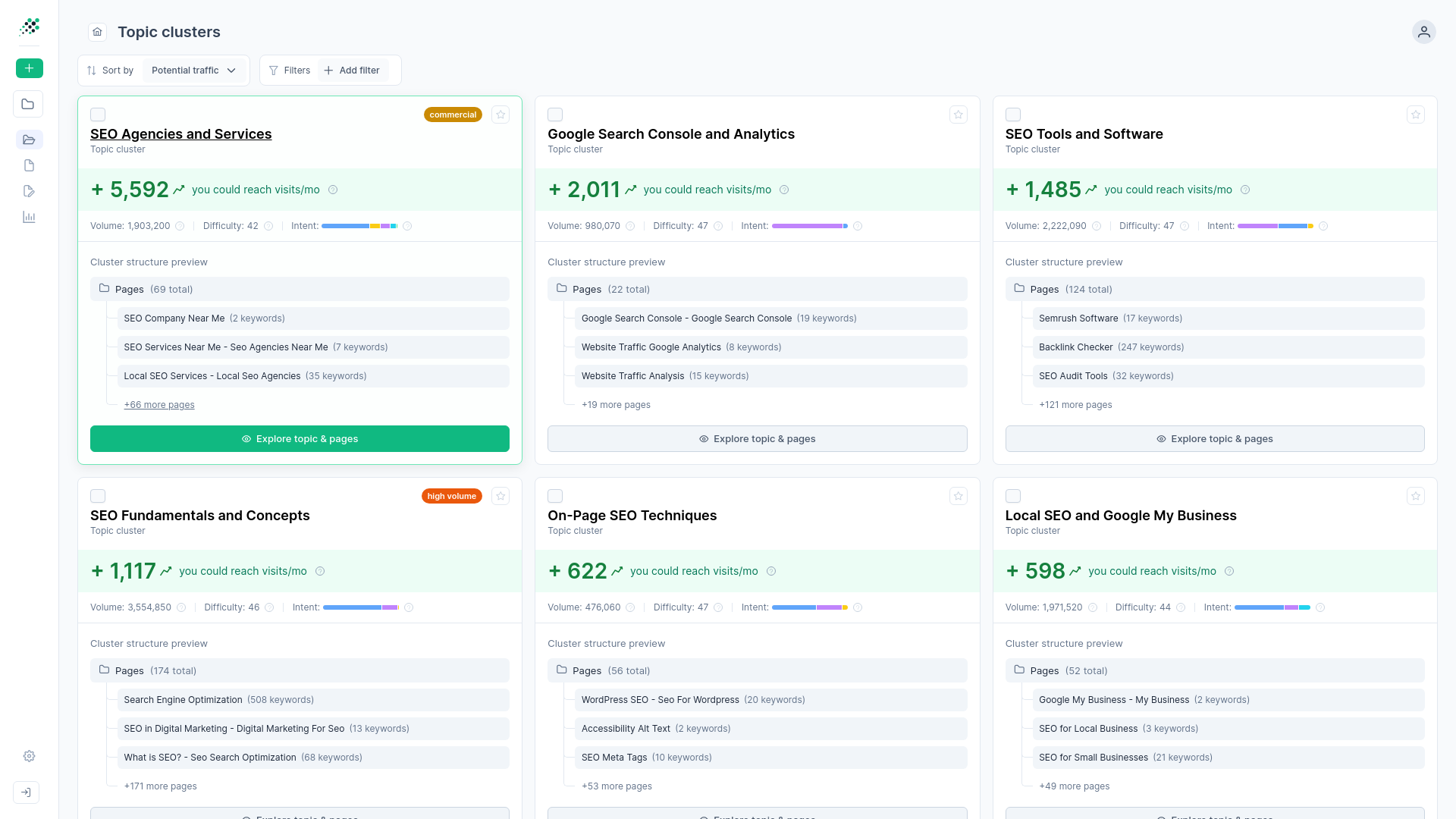
Assign clusters to target URLs
Once you have your two-level hierarchy, assign each validated cluster to a specific target URL for local production. Rather than handing a writer a list of translated keywords, you hand them a comprehensive topic cluster validated by local search data. Validated clusters ensure the localized content covers the entire semantic breadth of the topic. A systematic approach to URL assignment prevents accidental overlap and guarantees that every new page serves a distinct, validated user intent.
Calculate realistic traffic opportunities
Before finalizing your content workflow, calculate the actual return on investment by fixing the inflated volume numbers exported earlier. You can apply a correction algorithm to identify keywords that share the exact same metrics fingerprint—monthly volume, historical trend patterns, and paid competition levels—and divide the inflated volume equally among the group members. Corrected search volumes ensure your projected traffic opportunities are realistic. Reliable data lets you prioritize the highest-impact content first.
This precise volume allocation also lets you build accurate localized keyword funnels, ensuring your site guides the user from early regional research down to localized conversion.
Frequently asked questions about multilingual clustering
What exactly is multilingual keyword clustering and how does it work?
Why is keyword grouping an important step for global SEO strategies?
Why shouldn't you just translate your existing English keyword clusters into other languages?
What is the main difference between a keyword cluster and a broader topic cluster?
How do you accurately measure the performance of your multilingual keyword clustering efforts?
Next steps for auditing your multilingual clustering performance
Evaluate current pages against intent
Start by auditing the localized pages you have already published. Take your top 20 translated pages that are currently underperforming in local search and run their target keywords through a SERP overlap check. If the live regional results show a completely different format—such as directories or interactive tools instead of educational blogs—you have an intent mismatch. A targeted gap analysis is the fastest way to recover wasted localization budget.
Prioritize by traffic potential
Don't rewrite everything at once. Prioritize the content updates based on realistic traffic growth potential and current ranking positions. Focus on clusters where your brand already holds positions on page two or three in the local market. Minor structural adjustments to better match local intent can push these pages onto page one significantly faster than building new pages from scratch.
Establish a strict keyword prioritization framework to keep your team focused on these high-ROI updates before they get distracted by unproven topics.
Scale systematic production
Integrate semantic clustering directly into your standard international expansion workflow. Validate the local SERP intent before translating and publishing content. A strict validation rule shifts you from a reactive model of fixing dead translated pages to a proactive system of building native-language, intent-validated architectures from day one.
How to execute multilingual keyword clustering
-
Set your local market parameters
Select your target country and language pairing in your clustering tool before generating native seed terms. These parameters ensure you capture regional terminology correctly. Your initial dataset will populate with region-specific search queries, not direct English translations.
-
Clean data with native language stemming
Apply language-specific stemming and localized stopword filters to consolidate different verb conjugations. You'll remove irrelevant filler words from your raw dataset immediately. The tool deduplicates minor variations, leaving only core semantic search terms ready for intent grouping.
-
Configure the SERP overlap threshold
Set your minimum overlap requirement to three or four shared ranking URLs within the local top ten search results. A strict threshold prevents grouping terms that require different page formats. The engine will match keywords strictly based on live local search intent.
-
Run the semantic grouping algorithm
Initiate the URL intersection validation process to structure the cleaned terms into a two-level hierarchy. The clustering engine then creates parent topics and specific subtopics. You'll receive a verified cluster map confirming exactly which keywords belong on a single localized page.
-
Distribute corrected search volume data
Run the search volume correction algorithm to fix inflated metric estimates. The algorithm logically divides identical volume footprints across the grouped keyword variations. Each target URL will display a realistic traffic projection for accurate content prioritization.
Follow this workflow to group local search terms by intent and accurately map regional search markets.
Execute multilingual keyword clustering using live regional search data instead of dictionaries. RankDots groups terms by actual SERP overlap so you can build localized content hierarchies faster and prevent cross-border cannibalization.