Turn People Also Search For Keywords into structured content clusters
Stop hitting the back button to find related intents. RankDots queries eight sources simultaneously, cleaning raw Google data into prioritized topic architectures ready for your writing team.
If you've ever wasted hours clicking Google organic search results and hitting the browser 'back' button just to trigger dynamic query boxes, you know how tedious intent research can be. People Also Search For Keywords are the exact related queries Google dynamically suggests when a user clicks a result but quickly bounces back to the search page. These extracted terms reveal alternative search intents. You build comprehensive content clusters and capture hidden organic traffic opportunities.
We need to distinguish this data from standard question boxes. People Also Ask (PAA) features embed directly in the main results regardless of clicks. PASF triggers strictly based on bounce behavior. It heavily indexes what alternative queries searchers pursue next when a page fails them.
Manual keyword gathering proves tedious. You waste days running repetitive clicking loops.
RankDots solves this friction directly. Our Multi-Source Keyword Discovery pipeline simultaneously queries eight distinct sources for every project. It automatically extracts both PASF and PAA data alongside traditional metrics without a single manual click. You get complete vocabulary coverage mapped straight to your workflow. You don't need fragmented spreadsheets.
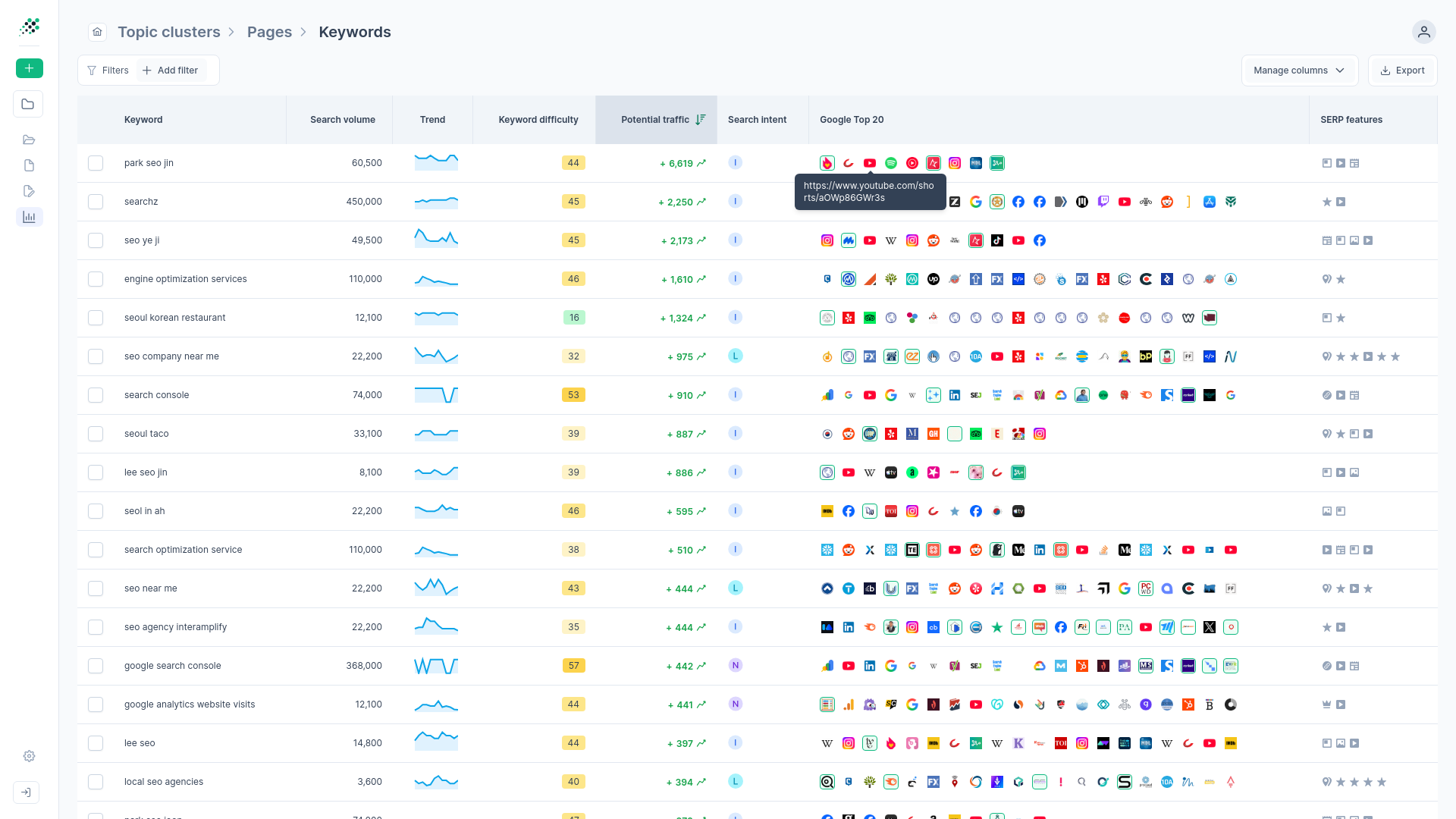
Manual keyword extraction forces you to guess which related queries matter most. The platform pulls the entire vocabulary footprint instantly. You get a comprehensive baseline before you assign a single brief.
This guide provides a complete breakdown of how to automate PASF extraction and turn raw search data into a prioritized topic architecture.
Automate intent extraction and clustering
Complete search vocabulary coverage
Stop relying on single-source indexes. RankDots queries eight distinct data streams to capture the exact search variations standard tools miss.
Automatic dataset deduplication
Multiple dynamic query boxes create overlapping data. RankDots automatically merges identical terms across sources and keeps the most accurate metrics.
Live SERP intersection checks
Verify groupings with real ranking data. RankDots analyzes current search results to confirm Google treats your clustered People Also Search For Keywords as semantically related.
Map specific SERP features
Know exactly what content format to build. Detect whether a query triggers a featured snippet or dynamic question box to structure your answers correctly.
Accurate volume distribution
Keyword Planner frequently groups similar queries, inflating estimates. RankDots mathematically distributes identical volume metrics across groups to give you realistic traffic projections.
Intelligent query expansion
If your initial discovery phase leaves gaps, RankDots automatically triggers related extractions to dig deeper until it hits your target keyword limits.
How to automate keyword discovery
Enter your seed topic
Input a broad concept or competitor URL. RankDots immediately pulls queries from multiple search data streams.
Review the validated intents
Watch RankDots filter out junk terms and merge duplicate People Also Search For Keywords into a clean dataset.
Choose your growth strategy
Select a prioritization model to sort your newly generated topic hierarchy based on traffic potential and competitor weakness.
Brief your writing team
Hand off a structured map of parent topics and subtopics directly to your writers for immediate execution.
Structuring content with PASF keyword clusters
A flat list of PASF queries isn't enough. Isolated search strings give you words, but they don't give you a content plan.
You need a structured content architecture to capture that traffic. The system maps these semantic relationships automatically. It turns disorganized search data into a clear hierarchy without spreadsheet formatting.
Cleaning the noise with AI validation
Raw keyword exports usually arrive filled with gibberish, URL fragments, and overlapping search intents. An unorganized list of nonsense keyword fragments wastes your writing team's time. RankDots prevents this by running every collected query through an AI Quality Validation process. Before you see the data, the system applies over 13 distinct linguistic rules to eliminate junk. You get a clean, normalized dataset. The system preserves valuable edge cases and strips out the noise.
Moving to a topic-first architecture
Once the data is clean, RankDots builds a topic-first architecture. While manual methods map individual keywords to pages, the tool creates a two-level hierarchy. You get parent topics that map broad themes for pillar pages, and subtopics that outline specific angles for supporting blog posts. The tool assigns keywords based on shared search intent to organize your site architecture instantly.
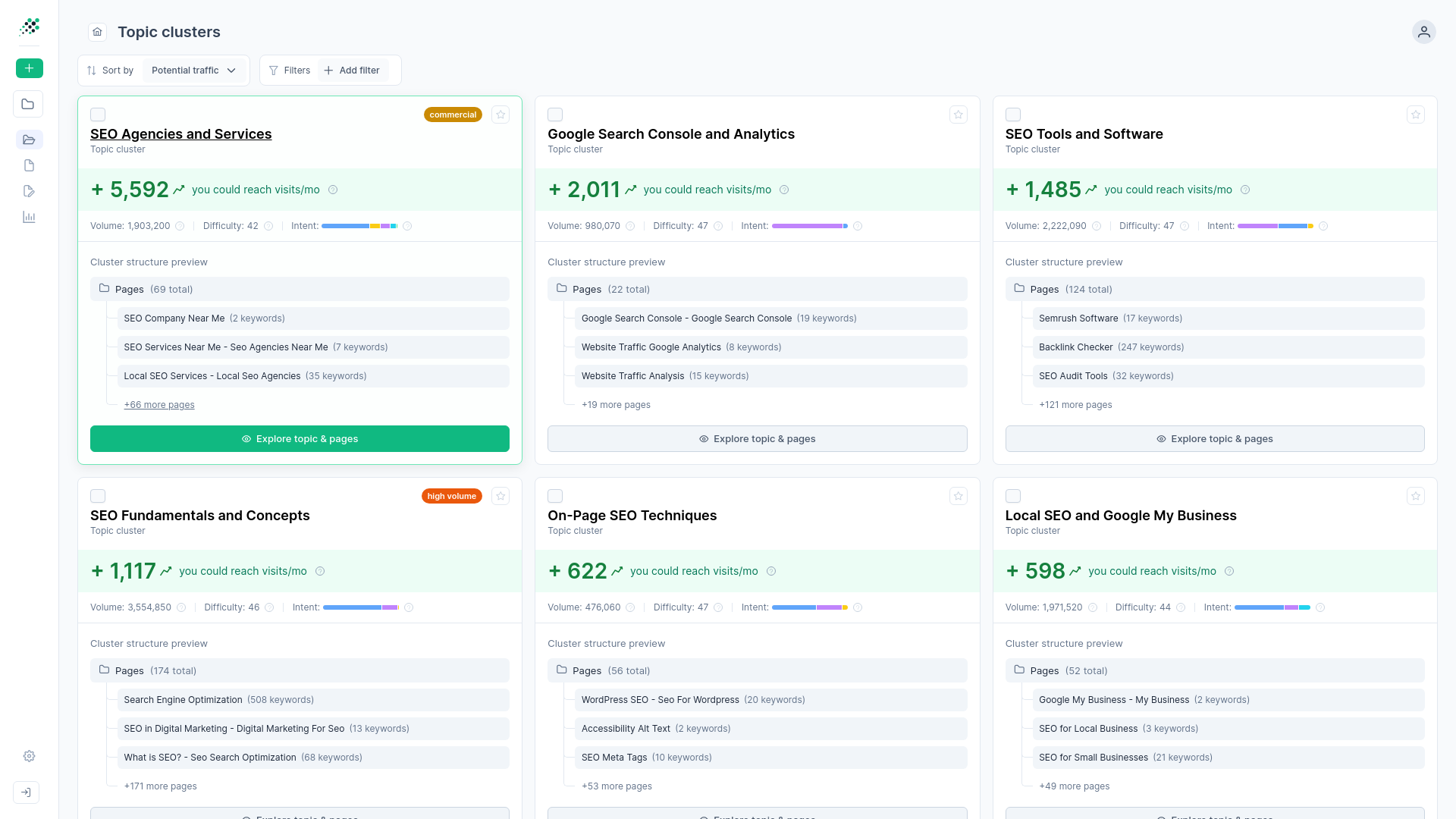
Prioritizing gaps with the Traffic Growth algorithm
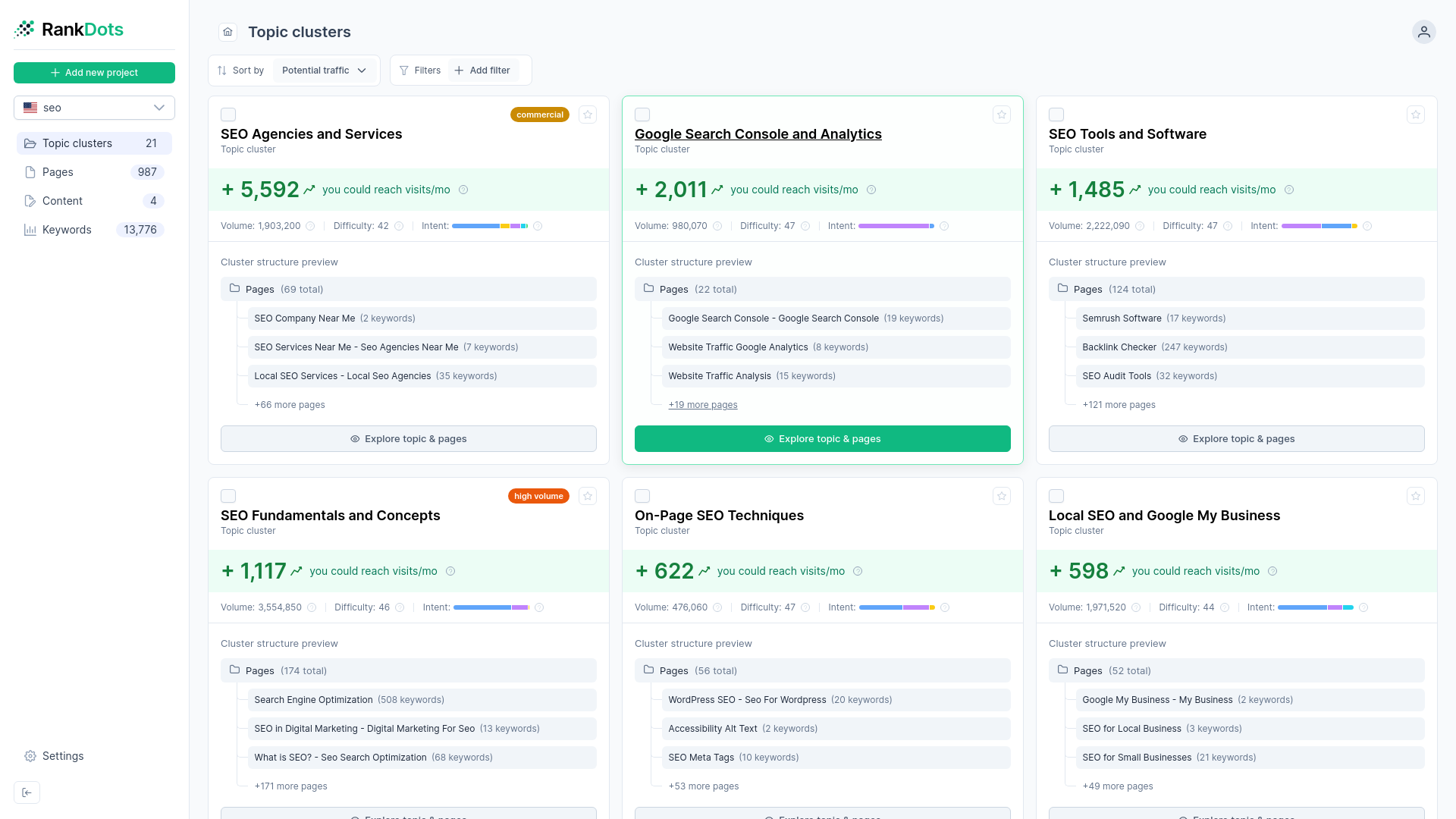
A clean hierarchy provides just the start. You need to know what to build first. RankDots ranks clustered topics using five different strategic recommendation algorithms. When you select the Traffic Growth algorithm, the platform instantly prioritizes your content gaps based on search volume, keyword difficulty, and your connected search console positions.
It factors in site-relative SERP competition to identify weak spots where competitor pages lack authority and you can realistically displace them. You transform a flat list of related search strings into an actionable, validated roadmap. You're ready to brief the writing team.
See why RankDots is #1




Frequently asked questions
What is the difference between People Also Search For and People Also Ask?
How can I find and extract People Also Search For keywords in bulk?
How does RankDots clean and validate extracted PASF data?
Are People Also Search For keywords considered low competition?
Does RankDots correct search volume for similar PASF queries?
Map related search intents into complete topic architectures.
Stop manually compiling People Also Search For Keywords. RankDots handles the extraction and data cleaning so you can focus on production, giving your writers a validated roadmap today.