SEO Trends 2026: Navigating AI Overviews and Agentic Search

Every time a new AI search feature rolls out, the industry declares search engine optimization dead. But a look at the data shows the same core pages still dominate. They are being selected differently. The conversation around SEO trends 2026 moves fast. That rapid pace triggers panic over zero-click results and evaporating traffic metrics. We've seen this cycle before. The sky isn't falling.
Zero-click searches change how we measure success, but they also create opportunities to capture brand awareness directly on the results page.
The definitive SEO trends center on Generative Engine Optimization (GEO), AI Overviews, and agentic web retrieval. Search engines increasingly reward deep topical authority and verifiable entity signals over traditional keyword matching. Adapting requires a shift toward structured data, human-centered E-E-A-T indicators, and reverse-engineering complex AI search patterns. We've watched teams lose organic lead pipelines by treating generative search like traditional blue links. The underlying retrieval mechanism has fundamentally changed.
Mastering agentic search optimization requires structuring your data so autonomous agents can easily extract and compile your answers.
We need to stop chasing algorithm ghosts and adapt to how large language models parse and cite information. We built this framework to help you master these major search shifts and identify the specific tools required to execute them.
Quick Takeaways
- The defining SEO trends for 2026 revolve around Generative Engine Optimization (GEO) and agentic web retrieval, shifting the focus from traditional keyword matching to zero-click citation visibility.
- Adapt your content for Retrieval-Augmented Generation (RAG) systems by stating core definitions bluntly and using explicit formatting to ensure language models select your data for generative summaries.
- Abandon flat, historical keyword spreadsheets in favor of predictive, interconnected pillar-and-cluster architectures that prove your brand's deep topical authority.
- Combat the flood of generic, machine-generated text by injecting first-party data, verified expert insights, and deeply structured credibility signals that algorithms actively seek.
- Capitalize on the massive surge in visual and video discovery by bridging high-resolution media with precise metadata, semantic schema, and timestamp indexing for easy feature extraction.
- Capture shifting search intent by building authentic presence on community-driven platforms, generating the off-page entity sentiment that AI models scrape to determine trust.
AI Overviews and Generative Engine Optimization (GEO)
SEO managers often spot a steady decline in top-of-funnel organic traffic, only to check their rank tracker and find their core pages still sitting at position one. The traffic is being absorbed by zero-click AI summaries. Traditional volume metrics are becoming actively misleading.
A late 2024 study tracking Google's Search Generative Experience found that AI Overviews appeared in 18.76% of United States search queries by November 2024. The occurrence rate fluctuated throughout the year, peaking higher during mid-year beta testing, but continues to represent a substantial portion of the search results real estate. When searchers get their answers directly on the results page, they don't click through. The result is a clear mandate. Optimize for the summary itself.
The mechanics of retrieval-augmented generation
Generative Engine Optimization (GEO) isn't about stuffing keywords for a crawler. It's about feeding structured information to a Retrieval-Augmented Generation (RAG) system. Search engines and conversational AI platforms extract entities, weigh relationships, and assemble answers from multiple trusted sources. They don't just read your text.
If your page answers a question indirectly or buries the core fact in conversational fluff, the language model simply moves to a clearer source. Typically, the pages consistently selected for AI Overviews state their definitions bluntly. They use explicit formatting like lists or tables, leaving the narrative elaboration for later paragraphs.
Transitioning from clicks to citation visibility
For years, the only metric that mattered was the blue link click. Now, citation visibility is the new baseline. When an AI agent compiles an answer, being one of the three hyperlinked sources embedded in that summary creates a critical brand touchpoint.
The problem is figuring out which queries trigger these generative summaries. If you optimize a high-volume transactional page for a generative snippet that never appears, you waste your effort. Reverse-engineering the results page is mandatory.
Identifying AI triggers with targeted analysis
Not all searches get the AI treatment. Complex informational queries and comparison questions pull summaries heavily. Localized or highly transactional terms often skip them.
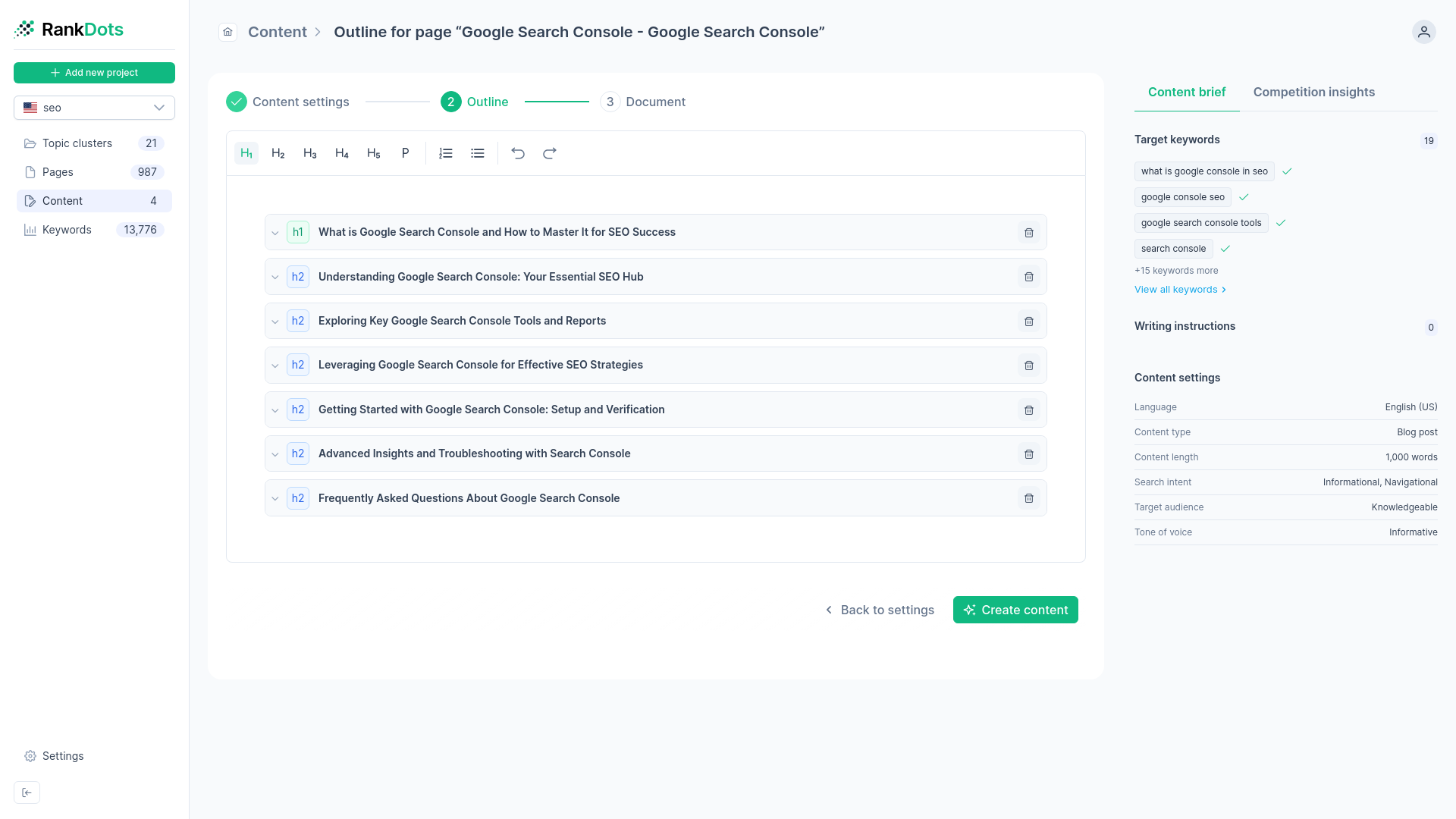
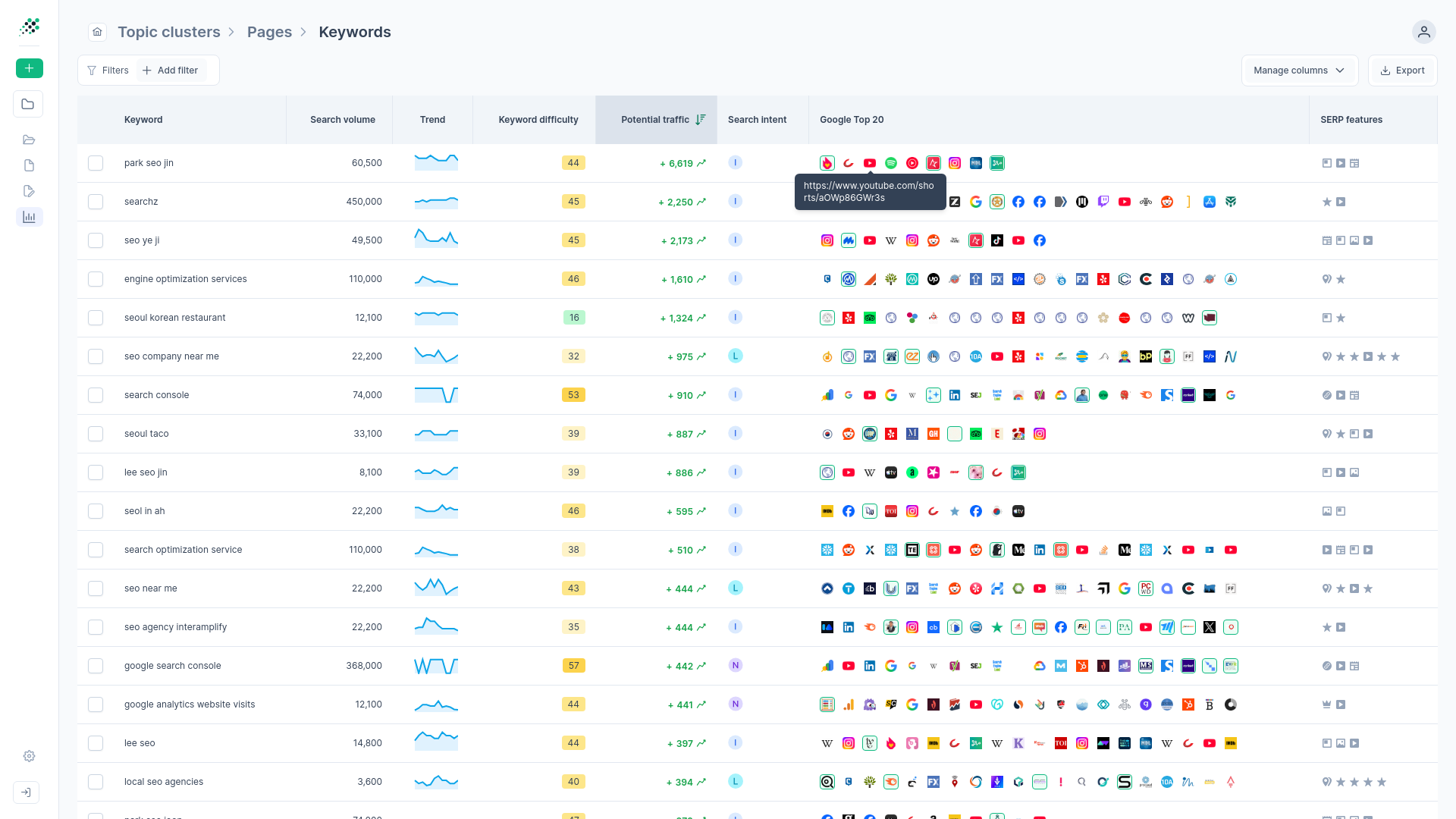
A common starting point is running target terms through an analysis platform to see what the live results actually look like. RankDots includes an AI Overview & SERP Analysis feature specifically for this. It tells you which keywords trigger AI Overviews, allowing you to prioritize citation visibility where it matters. You can stick to traditional conversion optimization where standard links still dominate. When you know what the search engine rewards, you stop guessing.
Evolution of keyword and entity strategy
Imagine a digital marketing director tasked with launching a new product category. They pull a massive list of high-volume keywords, assign them one by one to individual landing pages, and launch. Six months later, the campaign has zero traction.
This happens constantly. Search engines now reward deep topical authority over isolated keyword targeting. A flat spreadsheet of search volumes usually proves useless for competitive niches today.
A 2024 search behavior study using clickstream data demonstrated that 58.5% of Google searches in the US (and 59.7% in the EU) result in zero clicks to external websites. That 58.5% figure means only 360 out of every 1,000 U.S. searches actually lead to a click on the open web. When the pie shrinks that drastically, you can't rely on scattered exact-match phrases. Winning requires owning the entire entity space.
Explicit entity clarity helps the algorithms recognize your brand as the definitive source for a specific topic, rather than just another domain matching a text string.
Building intent-driven pillar and cluster architectures
Modern retrieval systems map semantic relationships. They want to know you understand the entire topic, not just the specific phrase the user typed. Transitioning from single-page keyword targeting to a pillar-and-cluster architecture is recommended.
You drop the flat list and group related terms around shared search intent. The broad parent topics form your pillar pages, while the specific subtopics become supporting content. This interconnected web of relevance proves to the algorithm that your domain is the definitive entity on the subject.
The manual way involves days of exporting CSVs and guessing relationships. That is not the recommended practice. The better workflow relies on RankDots and its Topical Authority Building capability. The platform uses a clustering algorithm to group related keywords into logical topic clusters instantly. You feed it a seed term. It builds the two-level hierarchy of parent and subtopics based on what actually ranks together.
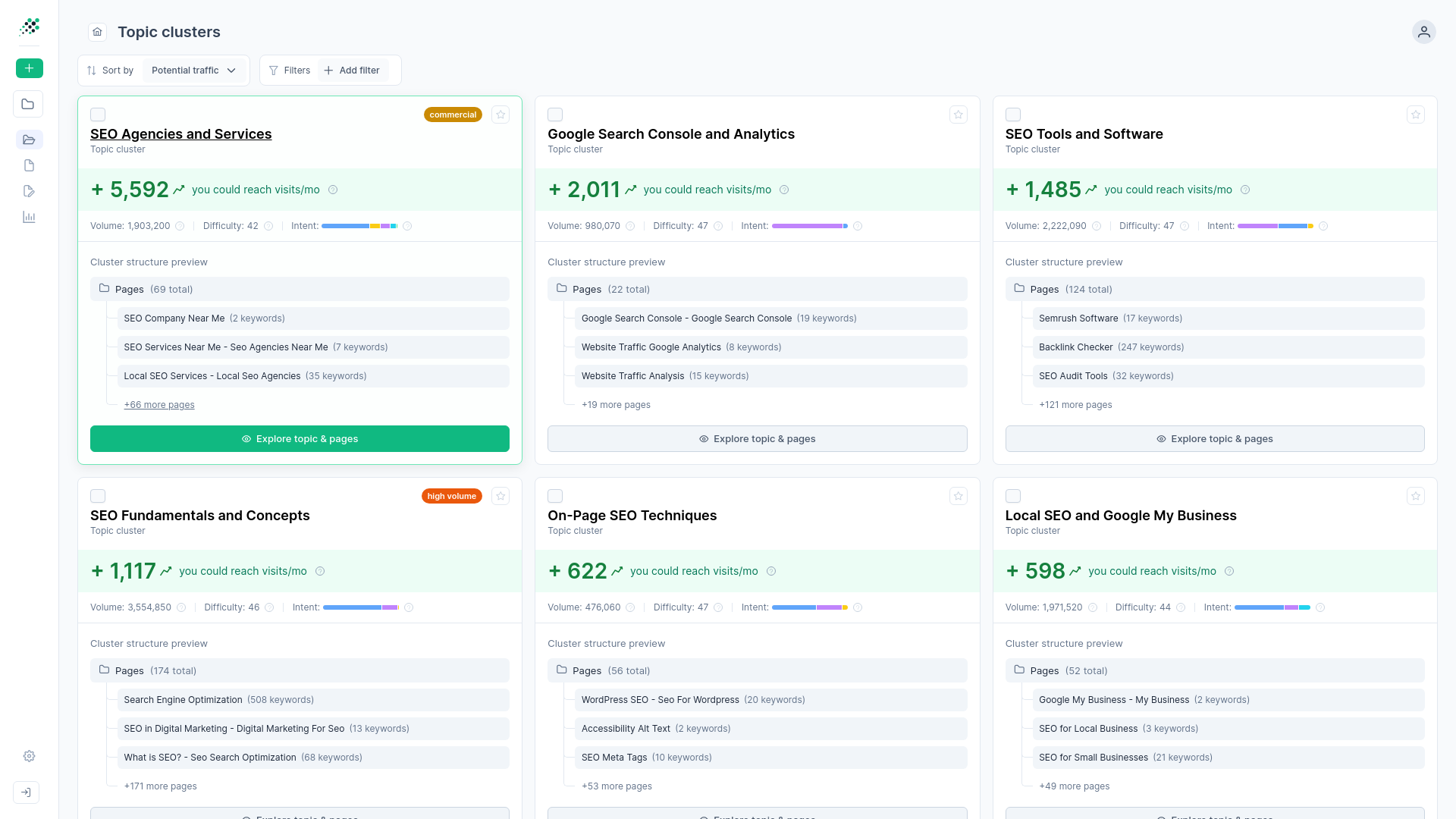
These structured topical authority clusters map your site's architecture directly to the way search engines process semantic relationships.
Forecasting shifts rather than chasing history
Most keyword metrics are historical. They tell you what was popular three months ago. A strategy built entirely on lagging indicators is a great way to arrive late.
Predictive trend forecasting is heavily emphasized. Search demand trajectories show you which semantic clusters are gaining momentum before they peak.
When an SEO manager pitches their quarterly content roadmap, backing that presentation with predictive analytics changes the conversation entirely. They stop justifying budget based on what happened last year. They start securing resources based on verifiable intent shifts. Target the clusters where demand is heading.
E-E-A-T and brand authority signals
Marketing teams often try to scale content production by letting basic generative AI chatbots write dozens of posts a week. A few months later, the site gets hit by a core update. The panic sets in. The content read fine, but it lacked the verified knowledge and nuance required for modern ranking.
Unverified, hallucinated content fails E-E-A-T (Experience, Expertise, Authoritativeness, Trustworthiness) standards completely. As search engines flood with average, machine-generated text, they rely on specific credibility signals to determine what deserves visibility.
Structuring first-party credibility
The antidote to generic AI content is first-party data. If you run original surveys, publish proprietary benchmarks, or interview subject matter experts, you create information that a language model can't invent.
Structuring these credibility signals deliberately is recommended. That means clear author bios linked to active social profiles, transparent methodology sections for any data you publish, and embedded video clips of the experts speaking. These elements create a paper trail of human expertise that algorithmic evaluators specifically look for.
Tracking off-page brand sentiment
Domain authority used to be a simple calculation of inbound links. While links still matter, the concept of authority has expanded to include unlinked brand mentions and overall entity sentiment.
If people consistently talk about your brand favorably on industry forums or social platforms, search engines take note. The algorithms map your brand as a recognized entity within its specific topical cluster. When evaluating two technically identical pages, the tiebreaker often goes to the brand with the stronger off-page footprint. Monitor where your brand gets mentioned. Correct the narrative when necessary. Recognize that brand marketing and technical SEO are now fundamentally the same discipline.
Visual and video search prominence
Text is no longer the default starting point for a vast segment of user queries. Visual search handles billions of inputs a month, and that volume changes how physical products and complex visual concepts get discovered.
Google officially shared that Google Lens processes 12 billion visual searches every month. Subsequent industry tracking indicates this volume has continued to climb rapidly, with newer estimates in 2025 and 2026 pointing to roughly 20 billion monthly image-based searches. When someone points their camera at a pair of shoes or a broken engine part, traditional keyword density does nothing to help you surface.
Optimizing for visual product discovery
Multimodal search inputs require immaculate image metadata. We've noticed that domains dominating visual search don't just rely on standard alt text. They embed high-resolution, unique photography supported by explicit structural context.
Search engines confidently serve your media in rich snippets when you bridge image metadata with broader topical clusters. That means ensuring the image filename, the surrounding page text, and the structured product schema all tell the exact same story. When the machine vision algorithm parses your image, it cross-references its findings with your on-page data.
Structuring video for feature extraction
Video content faces a similar extraction challenge. Search engines don't just want to link to a ten-minute video. They want to drop the user precisely at the ten-second clip that answers their specific question.
Video content is structured for precise timestamp indexing. Highly descriptive chapter markers and accurate, human-edited closed captions give the parser the text it needs. If the algorithm can easily extract the features and spoken entities from your media, you win the featured video snippet. If it has to guess, it moves on to a creator who provided the map.
Omnichannel and alternative search engines
A regional service brand with high domain authority suddenly notices neighborhood competitors draining their micro-market leads. Standard city-level rank trackers show them holding steady, but the phone stops ringing. The reality is that search intent has migrated. Standard tools failed to capture the shift.
Recent survey data reveals that 53% of Generation Z individuals use alternative platforms like TikTok, Reddit, or YouTube as their first stop for search before turning to Google. Internal Google data previously shared by a senior executive acknowledged that nearly 40% of younger users rely on TikTok or Instagram over Google Maps or Search when looking for local businesses like restaurants.
Adapting content for community discovery
Content needs to be adapted for community-driven discovery. If you try to run traditional search playbooks on these platforms, the effort fails instantly. Reddit, for example, maintains strict enforcement against overt self-promotion. You can't drop a landing page link in a local subreddit and expect traffic.
Outbound links also fail to pass direct SEO equity on these sites. A highly viewed viral post linking back to your domain provides almost zero traditional link value in the eyes of a standard crawler.
Capturing granular local visibility
That lack of direct link equity misses the broader point. The real value is entity association and brand awareness. When you participate authentically using platform-native business and audience insight tools, you capture granular, hyper-local visibility where traditional algorithms fall short.
You build the off-page sentiment that feeds back into core search engines. AI models scrape these community aggregators heavily to determine brand trustworthiness. Recommendations from real users in an un-optimized forum thread often do more for your agentic search visibility than ten perfectly optimized local landing pages.
Technical SEO for agentic web
Technical optimization used to mean fixing broken links and keeping the XML sitemap clean. That baseline is no longer enough to maintain visibility. The shift toward an agentic web forces a pivot in technical strategy from simple crawler appeasement to facilitating machine-to-machine data exchanges. When an AI agent performs a task, it doesn't browse via a graphical interface. It reads your code directly.
Structural requirements for agent retrieval
Language models abandon poorly structured sites long before rendering the text. If an AI agent needs to compile flight prices or product specifications, it searches for clean schema markup and direct API accessibility. The shift is from formatting for human readability to structuring data for autonomous agents.
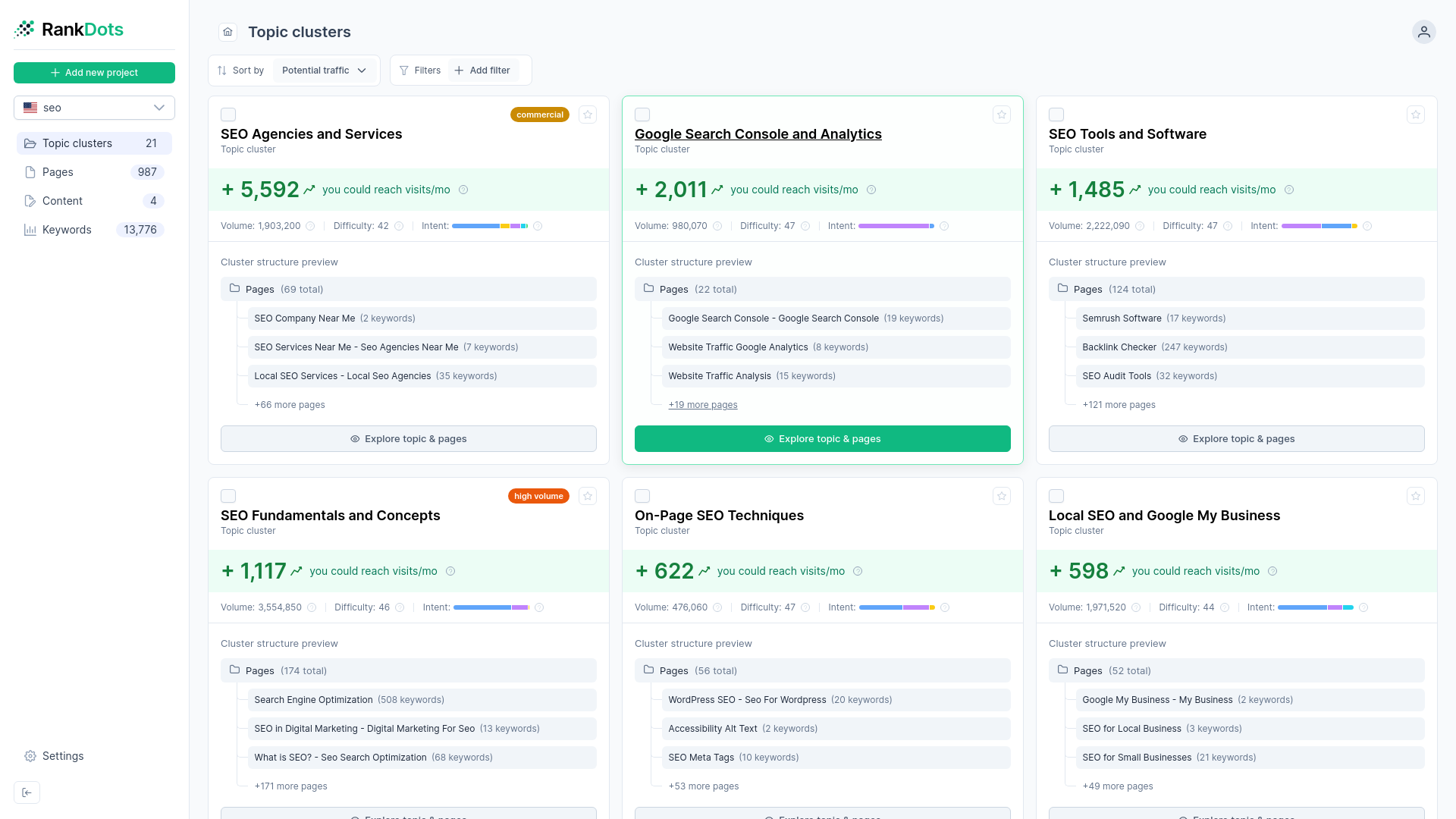
Every product, service, and core concept on your site needs explicit semantic definition. If the machine can't immediately extract the entity relationships through your code, it moves to a competitor whose architecture is easier to parse. We typically use the topical clustering capabilities in RankDots to map out these entity relationships before building them into our site architecture.
Architectural adjustments for complex query fan-outs
Agentic search rarely asks one question at a time. A single user prompt often triggers a complex query fan-out. The primary model dispatches dozens of simultaneous micro-queries across the web to gather context. These parallel requests require serious architectural stability.
Heavily bloated sites can buckle under the sheer volume of bot requests during peak extraction periods. Servers must handle erratic, concurrent data calls without timing out. Audit your server logs specifically for machine-agent user strings, identify bottlenecks in database querying, and cache dynamic content aggressively so parallel agentic requests get instant responses.
Prioritizing framework efficiency for parsing speeds
Speed dictates AI extraction rates just as much as human conversion rates. Most language models allocate rigid compute budgets for external retrieval. If your mobile framework relies on heavy client-side scripting to render critical text, the agent hits its timeout threshold and leaves empty-handed.
We strongly lean toward prioritizing dynamic rendering that serves flat HTML to recognized AI user agents. A stripped-down presentation layer ensures the parser grabs your core entities instantly. An optimized raw data payload for machine ingestion protects your visibility in zero-click summaries. It ensures the agent retrieves your facts and avoids hallucinating its own.
Semrush
It happens frequently. A content director notices a newer, smaller competitor suddenly dominating featured snippets and emerging AI citations. They lack visibility into the specific structures rewarding the competitor's content. That blind spot triggers an urgent need to reverse-engineer the results. Semrush enters the workflow here.
The platform provides AI visibility and prompt tracking alongside traditional search tracking. It shows exactly where competitors secure placement in generative summaries.
These visibility reports show you exactly which structures and formats the language models prefer for specific queries. It is typically used to track localized keyword positions and SERP features. The platform also analyzes backlink profiles and competitor link strategies, which helps identify the specific off-page citations fueling a smaller brand's sudden rise.
Teams evaluating the tool should note that standard subscriptions restrict account access to a single user. Single-user limits create bottlenecks for larger departments. Its tracking also focuses heavily on Google search data. You might need supplementary platforms to monitor the alternative engines discussed earlier.
Surfer SEO
Entity selection is only half the battle. The other half is getting them onto the page naturally. Surfer SEO focuses intensely on algorithmic on-page optimization. It offers an integrated NLP content editor that evaluates your text against the top-ranking results and highlights semantic gaps in real time.
The platform is particularly useful because it integrates directly with Google Search Console and monitors brand visibility in AI-generated answers. That overlap bridges the gap between traditional ranking data and generative optimization tracking.
However, it lacks comprehensive technical site auditing functionality. You have to pair it with a dedicated web crawler to catch architectural errors. The platform also doesn't offer a free trial tier. That pricing model requires an upfront commitment from teams wanting to test its natural language processing capabilities.
Screaming Frog
For the structural side of the agentic web transition, you need clarity on how a machine reads your code. Screaming Frog is a highly customizable web crawler. It crawls websites to identify technical architecture errors across large domains.
Beyond checking status codes, it is used to extract custom data via XPath and Regex. If you want to know exactly which pages are missing critical schema markup or have misconfigured author bios, you can scrape those specific on-page variables instantly. The tool also calculates semantic similarity to detect duplicate content issues that might dilute your topical authority.
The primary trade-off is hardware capability. Because it runs locally, it consumes intensive local computing resources during deep crawls. The software also restricts free version users to 500 URLs. A paid license is necessary for deep enterprise diagnostic work.
Frequently asked questions
What is Generative Engine Optimization (GEO)?
Does traditional SEO still matter in 2026?
How can I improve E-E-A-T on my website?
How does topical authority differ from standard keyword targeting?
Why is mobile design and technical optimization important for AI search?
Future-proofing your visibility
Teams often struggle with the pivot from targeting single phrases to mapping broad concepts. Let's look back at that B2B service company trying to protect its organic pipeline from earlier. The legacy move was downloading a lagging keyword report and asking the executive team to fund fifty disconnected blog posts. That playbook is done.
Securing the entity advantage
When you pitch your upcoming quarterly content roadmap, anchor the strategy in predictive intent shifts, not historical volume. You aren't defending a list of individual search terms anymore. You're securing the resources to own a specific entity space. The language models need to recognize your domain as the definitive source for a cluster of interconnected concepts.
The human-machine mandate
The shift to agentic search requires a dual mandate. The content itself must be aggressively human. It needs first-party data, verified experience, and strong perspectives. A generative engine can't hallucinate those elements. But the delivery mechanism must be strictly technical. If you publish brilliant insights but bury them in bloated client-side code without semantic mapping, the autonomous agent moves on. Write for human trust, but structure for machine extraction.
Immediate audit steps
What does this mean for your workflow tomorrow? Start by auditing your core conversion pages against modern retrieval standards. Run your primary targets through a SERP analyzer to identify which ones trigger generative summaries.
For the pages caught in that net, evaluate their extraction potential directly. Ask three simple questions. Are the core definitions stated bluntly at the top of the page? Is the underlying schema explicit? Are the internal links reinforcing the broader topic cluster?
Stop treating generative platforms as traffic thieves. They're a new interface you can reverse-engineer.
Secure your entity advantage and protect your organic pipeline.
You can't adapt to SEO trends 2026 by chasing historical volume—you need to predict intent shifts. Use our proprietary clustering algorithms to map your topical authority and secure citation visibility before competitors adapt. Don't guess what autonomous agents extract.