Architect Cannibalization-Free Sites With the RankDots Keyword Mapping Tool
Ditch manual VLOOKUPs and flat spreadsheets. RankDots groups queries using live SERP overlap data to organize your site structure and map exact intents to specific pages automatically.
You export thousands of raw keywords, open up a spreadsheet, and realize you're about to lose the next three days to VLOOKUPs and manual intent grouping just to figure out your site structure. Internal data shows agencies handling ten or more clients waste between 30 and 50 hours each month strictly on these manual keyword research tasks. A Keyword Mapping Tool bypasses this manual labor by assigning search queries to specific pages on your website automatically. The tool builds a logical site architecture by organizing keywords into topic clusters based on search intent and live SERP overlap.
A blind approach to mapping overlapping intents based on search volume alone reduces your potential organic visibility. Internal case studies show that after merging two older articles competing for the same search intent, consolidated pages can see a 466% year-over-year increase in search clicks. Improper mapping limits your search traffic potential.
You need a dedicated keyword clustering tool to bypass this risk entirely. The platform is your site architecture planner, running complete topic mapping through deep SERP overlap analysis. The result is a site structure built to help prevent keyword cannibalization from the start.
We got tired of watching teams burn days sorting queries by hand. RankDots introduces a topic-first methodology that reverses the traditional workflow. Wrestling a flat keyword list into columns wastes hours. The platform groups terms by shared search intent automatically instead. You get a proven framework for architecting a cannibalization-free site structure using automated live SERP overlap data. The overlap data derives the optimal page structure from logical clusters.
A topic-first content strategy ensures every keyword maps to a specific URL based on actual search behavior. You move from a flat data set to a structured hierarchy instantly.
Core keyword mapping tool capabilities
Multi-Source Keyword Discovery
RankDots queries eight distinct data sources simultaneously. You'll capture advertiser terms, long-tail variations, and existing rankings without switching tabs.
Automated Quality Validation
The system runs every query through 13+ linguistic rules to filter out gibberish automatically. Clean data ensures your topic clusters remain strictly relevant.
Relative Opportunity Scoring
Identify exactly which ranking pages you can realistically displace. The algorithm evaluates SERP competition directly against your specific domain authority and backlink profile.
Keyword Mapping Tool workflow
Generate initial categories
Enter a seed term or URL. The system instantly generates top-level content categories, letting you preview the broader topic structure before pulling thousands of rows.
Automate keyword discovery
Set your target limits and launch the pipeline. RankDots pulls from eight data sources simultaneously. It automatically filters out junk and deduplicates terms into one clean list.
Group by SERP overlap
Run the clustering engine. The tool analyzes live Google search results. It groups queries together only if they share ranking URLs to guarantee accurate intent alignment.
Prioritize traffic growth
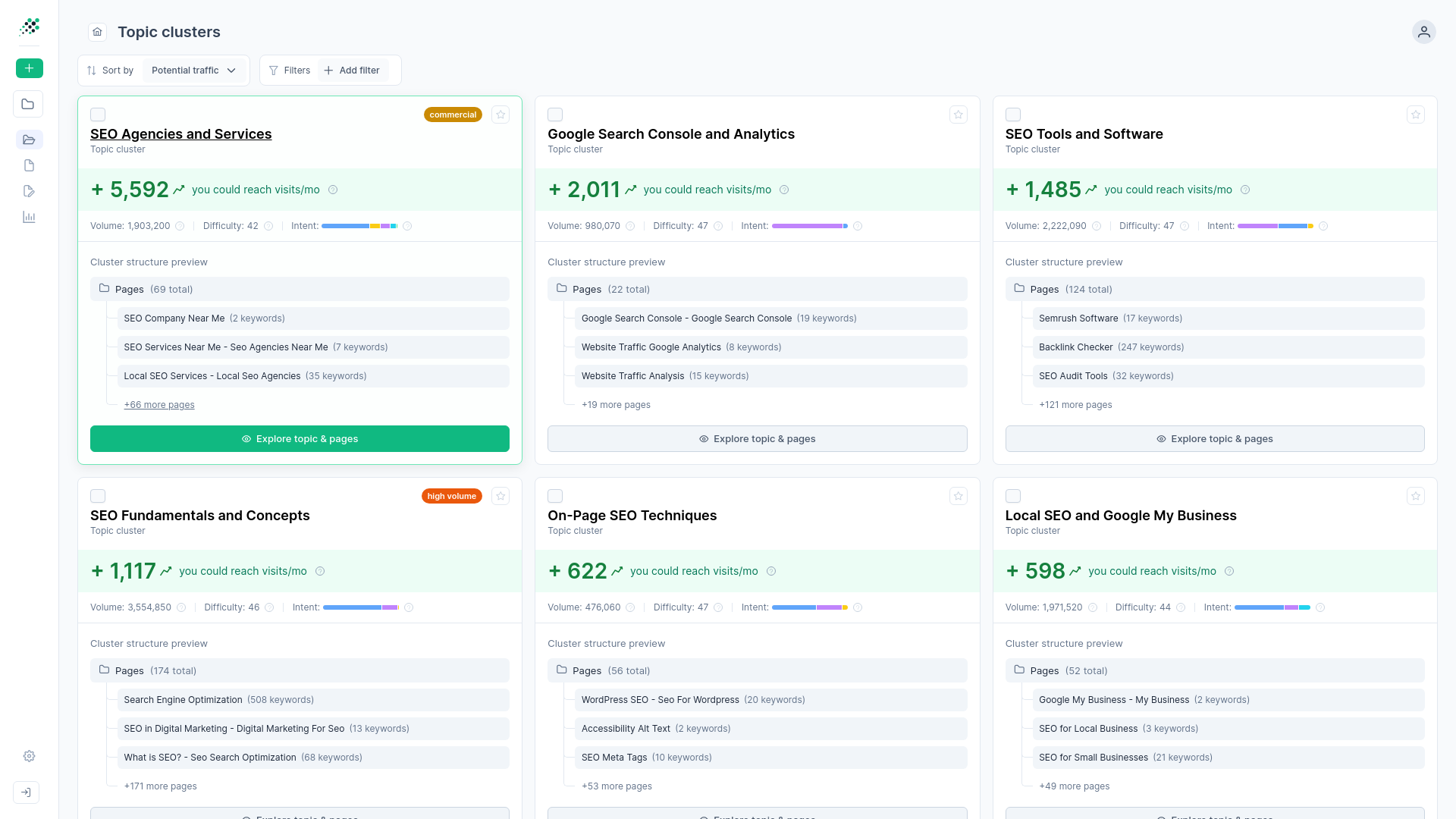
Apply one of five recommendation algorithms to your map. The Traffic Growth model calculates potential gains to highlight exactly which topic clusters yield the highest immediate returns.
Architecting silos with live SERP overlap data
The flaw in text-based clustering
You use a standard clustering tool that groups keywords together because they share the same words. Text-based grouping fails to recognize that search engines treat the intents completely differently. That blind spot leads to flawed page mapping and cannibalization. We consistently see natural language processing (NLP) models look at semantic similarity and assume "best crm software" and "crm software definition" belong together. Actual search behavior tells a different story.
RankDots uses a SERP-based clustering algorithm instead of relying on basic NLP. If keywords share the same ranking pages, they are mapped together. Live Google search results reveal what the algorithm actually rewards for specific queries. You architect your silos based on reality, not a linguistic guess.
Validating clusters before building
Before you commit development resources to build an extensive pillar page, you need data confirming that Google views two related keywords as having the exact same intent. The URL Intersection Validation feature automates this quality check. After clustering, the system checks if the same URLs rank in Google for multiple keywords within a cluster.
If the URLs match, it validates the relationship. If they don't, it signals that the cluster might be too broad and requires separation into highly targeted pages. You move forward confidently because objective data directly from the search engine backs your site architecture.
Mapping dominant search intent
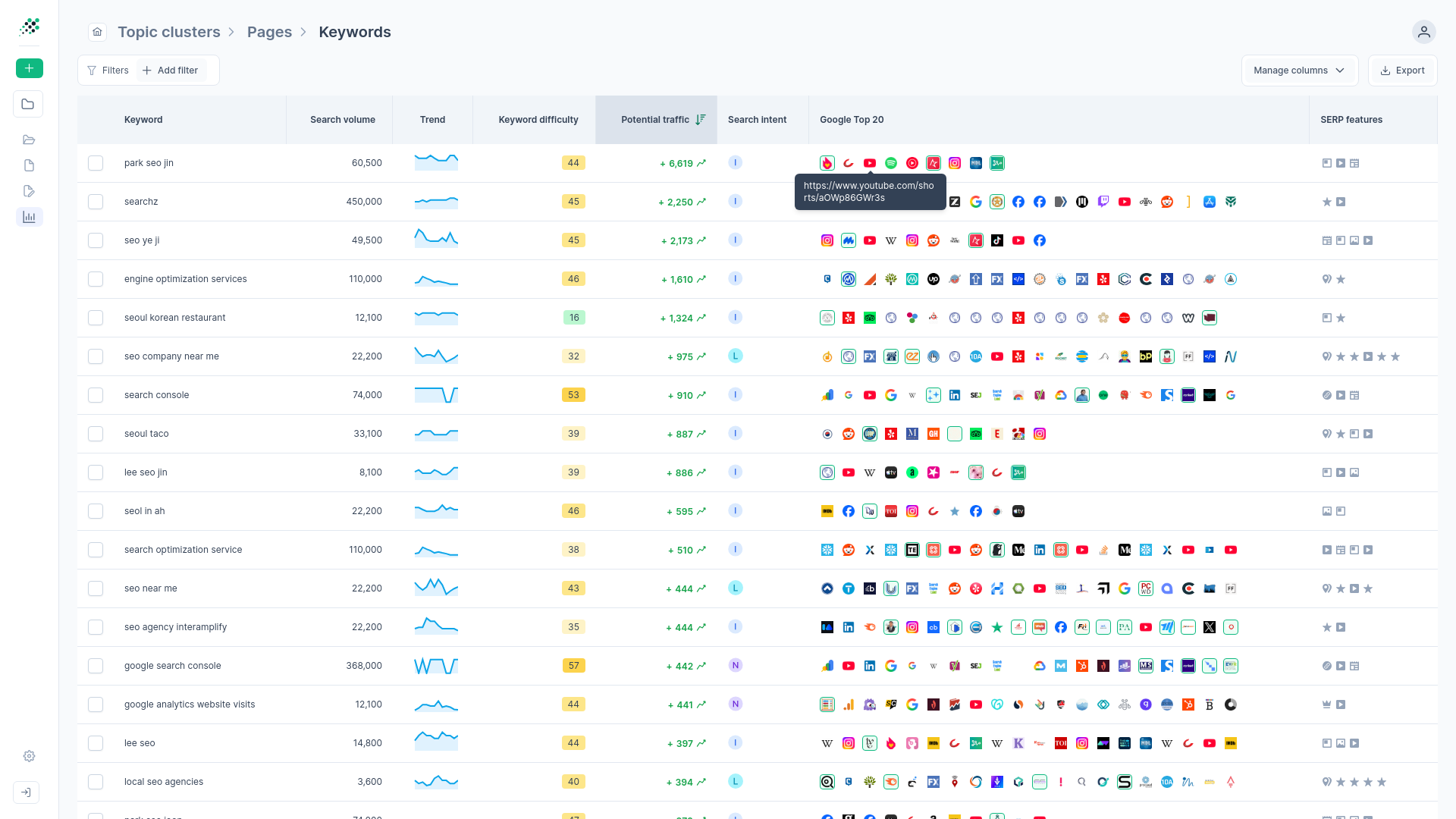
Flat spreadsheets fail because they treat every query equally. Within each cluster, you must organize keywords by their dominant search intent. You map pages accurately by assigning an informational or transactional tag at the cluster level.
RankDots categorizes these intents automatically within your topic clusters. If the SERP shows long-form guides, the cluster maps to an informational pillar. If it displays product carousels and pricing pages, it maps to a transactional page. You stop guessing what type of content to produce and start building what currently ranks.
Frequently asked questions
What is a keyword map and why is keyword mapping important for SEO?
How do you group keywords into topics effectively?
How does this tool compare to Google Keyword Planner?
Can you use the tool to analyze competitor keyword strategies?
RankDots Keyword Mapping Interface
Map Dominant Search Intent
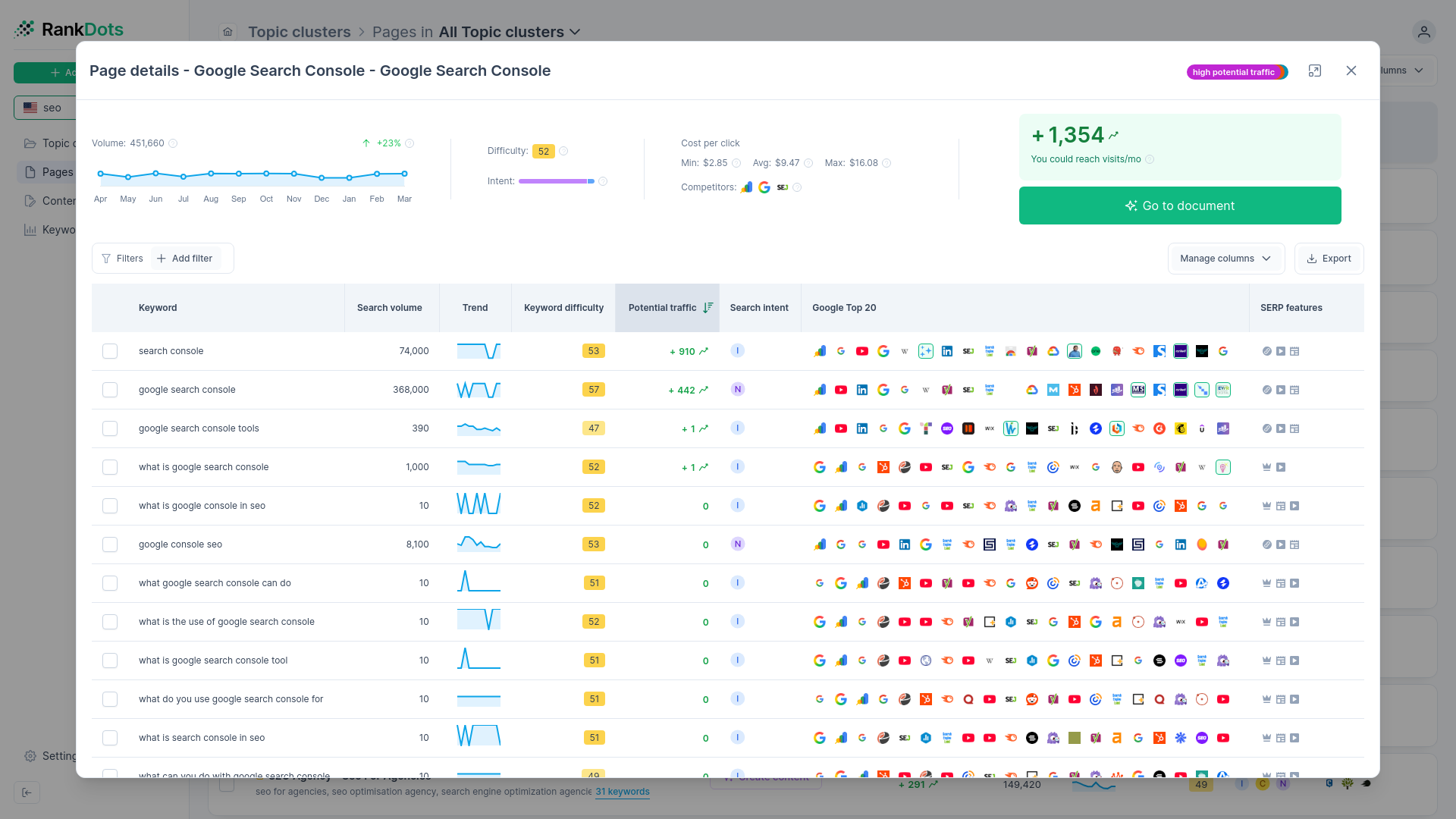
Validate Clusters With SERP Data
Prioritize High-Return Topic Silos
Build a cannibalization-free site architecture with RankDots
Import your existing flat list of queries or start a fresh domain mapping project. RankDots analyzes live SERP overlap to align your search intents with specific pages. This prevents internal competition and cuts hours of manual spreadsheet work.