How to Do Keyword Clustering & Why It Helps SEO: A Strategic Guide

If you're still writing one separate article for every single keyword variation you find, you're cannibalizing your own rankings. Understanding how to do keyword clustering & why it helps SEO solves this by grouping related search queries by search intent rather than just text match. It allows you to rank a single comprehensive page for dozens of related long-tail variations, preventing internal competition while building deep topical authority.
A defined keyword clustering process shifts the focus from chasing individual search terms to building comprehensive resources. It establishes a baseline standard for how teams plan and assign new content.
We've watched teams waste days manually sorting flat lists of isolated keywords in spreadsheets. That tedious process usually ends with subjective judgment calls and fragmented site architectures. Handing a cleanly mapped topical hub directly to the writing team works much better. This guide outlines a 4-step framework for transforming a raw list of search queries into a structured, intent-driven content architecture.
Quick Takeaways
- Keyword clustering is the process of grouping search queries by underlying user intent and live search result overlap rather than simple text matching; this helps SEO by preventing keyword cannibalization, building topical authority, and allowing a single comprehensive page to rank for thousands of long-tail variations.
- Relying on raw data dumps leads to flawed editorial strategies; aggregate search terms from multiple sources and normalize misleading, bundled volume metrics to project realistic content ROI.
- Stop guessing whether to combine or split topics by validating your proposed clusters through live search results to see if the exact same URLs already rank for those multiple queries.
- Transform fragmented blogs by mapping your validated clusters into a strict two-level hierarchy of broad parent pillar pages and specific supporting subtopics.
- Align your content formatting directly with search engine preferences; if a specific cluster triggers quick-answer FAQs, publishing a massive narrative guide will prevent you from ranking.
- Shift your performance tracking from stressing over daily individual keyword fluctuations to measuring the aggregate visibility, overall click share, and emergent cannibalization of entire topic hubs.
The strategic value of keyword clustering
We regularly see a specific, frustrating pattern play out across content audits. Organic traffic for a key topic starts dropping steadily. The initial reaction is usually to update the page, but a deeper look at the SERPs reveals the real issue. Two of the site's own blog posts are competing against each other for the exact same set of overlapping queries.
Multiple pages targeting overlapping intents dilute your ranking power. Data suggests grouping keywords by intent resolves keyword cannibalization before it happens. Merge separate posts for "best CRM software," "top CRM platforms," and "CRM tools comparison" into a single strategic target.
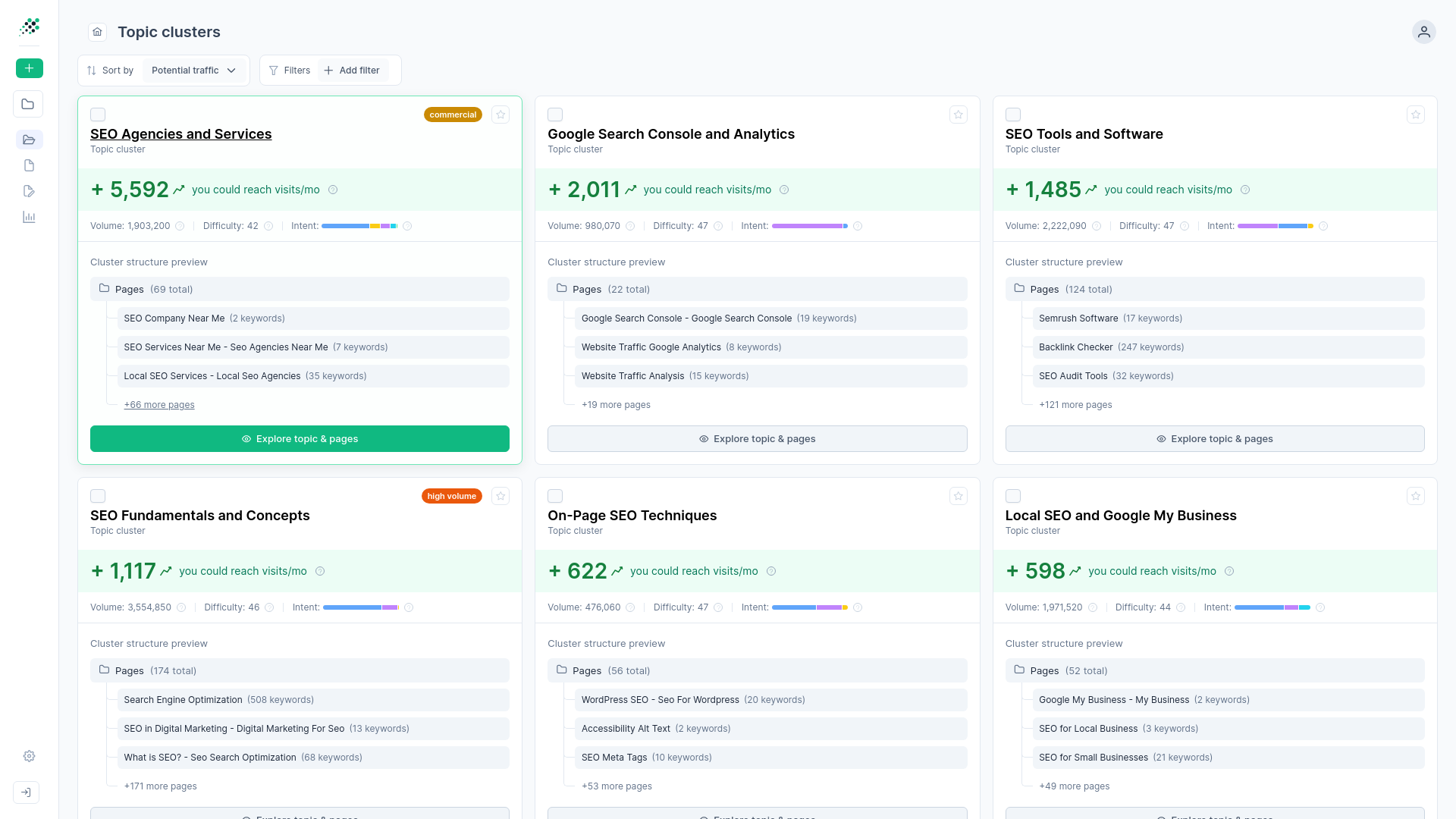
Correct search intent grouping ensures your site architecture mirrors what searchers actually want. When you align page structures with the practical goals of the user, the content performs better organically.
A single comprehensive page ranks for dozens of semantic variations. The number one ranking page for a primary query natively ranks in the top 10 search results for approximately 1,000 additional relevant long-tail keywords. That level of visibility requires a cohesive structure. Sites with structured topic clusters systematically outperform sites with unstructured content.
The intent-based approach mirrors how search engines evaluate authority. You establish topical relevance through clear hierarchical relationships—mapping broad parent topics to specific subtopics. The result is a connected content ecosystem, not a disconnected pile of blog posts.
Step 1: Prepare and collect your keyword data
Aggregate from multiple search data sources
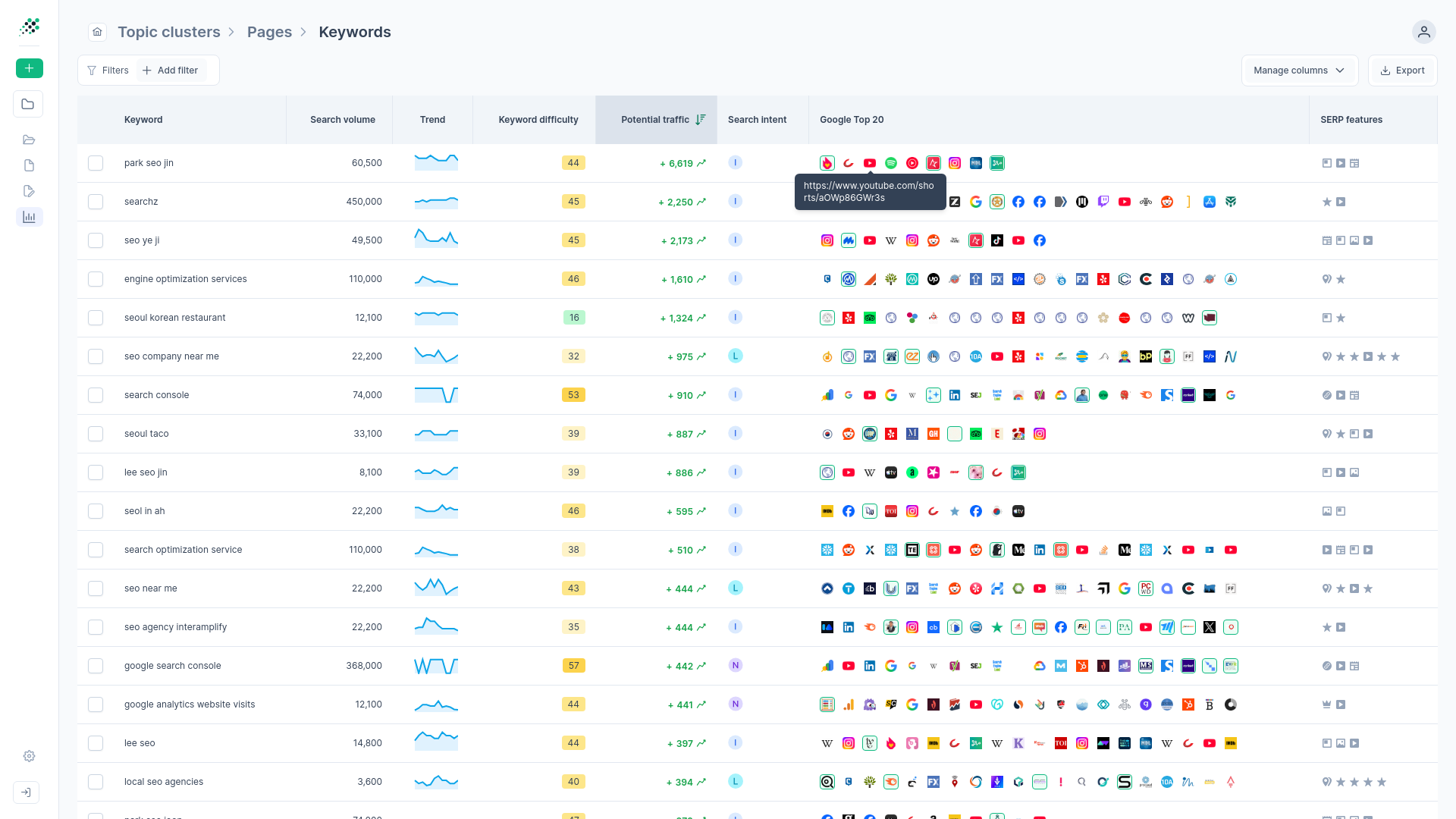
Most research starts with a massive export from a single tool. Pull seed terms from multiple sources to build a complete landscape. Combine first-party data from Google Search Console with third-party metrics from Google Keyword Planner and live autocomplete suggestions from Google.
The first-party data shows you how users currently find your domain, while third-party tools reveal the net-new opportunities you haven't targeted yet. A multi-source approach captures both the high-volume head terms and the conversational queries users type.
Deduplicate and normalize the raw inputs
A raw data dump is full of junk terms, misspellings, and exact duplicates. Clean your list before attempting to analyze it. Remove brand terms unless you're running a specific branded campaign against a competitor. Filter out navigational queries that don't match your conversion goals.
The cleanup phase shifts your focus from raw keyword volume to a refined, usable dataset. If you skip this normalization step, your subsequent grouping efforts will be skewed by anomalies.
Correct misleading search volume metrics
A content calendar based purely on native volume metrics often leads to disappointment. We frequently talk to strategists who struggle to estimate traffic potential because the baseline data is flawed. Google Keyword Planner notoriously lumps similar variations together and reports the identical combined volume for every single term in the group.
The planner drastically overestimates search volume compared to actual impressions, especially for top-ranking terms.
When building out your strategy in RankDots, you don't have to manually untangle these numbers. You can use the platform's Search Volume Correction Algorithm to detect keywords with identical metric fingerprints—like exact search volume and competition levels. It distributes the volume fairly among the group members. The adjusted numbers provide realistic data for accurate ROI projections.
Step 2: Group keywords by search intent and SERP similarity
Move beyond linguistic text overlap
Early grouping methods relied entirely on linguistic matching. If two phrases shared the word "software," they went into the same bucket. That approach fails modern search standards. Semantic meaning matters far more than text overlap. Phrases like "affordable auto insurance" and "cheap car coverage" share zero words, but a human reader knows they mean the exact same thing. Search engines evaluate that context perfectly. Relying on simple n-gram matches will leave your keyword list fragmented.
Semantic keyword mapping solves this. It groups terms based on the underlying problem the searcher needs to solve. It connects conceptually related queries even when they share no common vocabulary.
Validate clusters through URL intersection
The most reliable way to prove two queries share an intent is to look at the actual search results. If the same pages rank for both terms, the intent is identical. Prioritize live SERP validation because the algorithm has already categorized the user's desire.
When marketing teams debate whether to combine two topics into one mega-guide or split them into separate posts, they often rely on gut feeling. They stall because they don't want to commit writing resources to the wrong page structure. Guessing instead of checking live SERPs often results in poor content formatting and ranking failure.
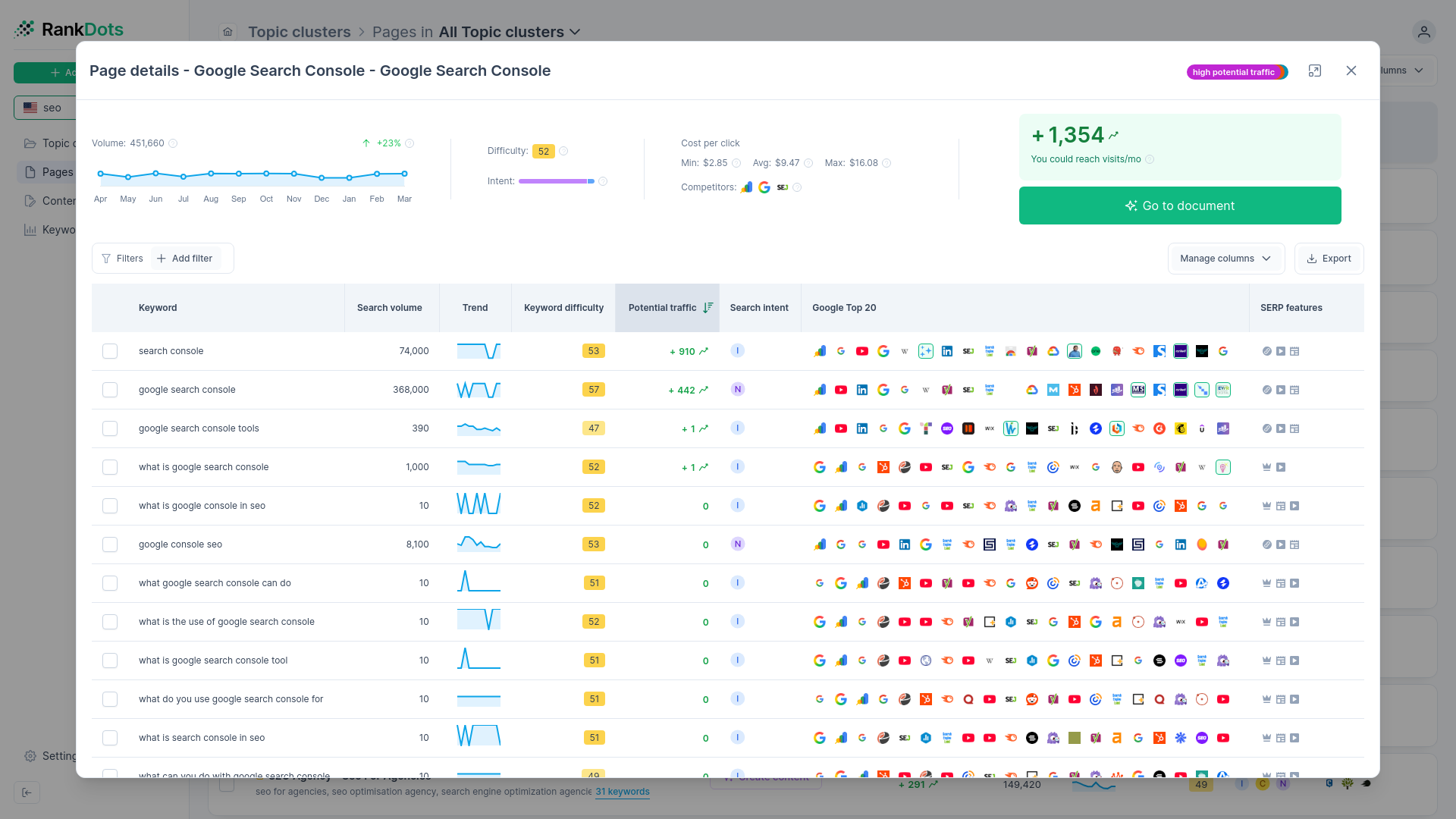
To automate this verification, you can use the URL Intersection Validation feature in RankDots. After the initial AI grouping, you can run a live quality check against search results. It verifies if the same URLs rank for multiple keywords within your proposed cluster. If the overlap is strong, the cluster is validated. If the overlap is weak, the system flags the cluster as too broad, indicating you need separate pages. The automated check eliminates the structural guesswork.
Organize by dominant search intent
Once your groups are validated, categorize them into an intent matrix. Keywords typically fall into informational, commercial, transactional, or navigational phases.
Assign a dominant intent to each validated cluster. A cluster dominated by "how to" and "what is" queries requires an educational guide. A cluster full of "best" and "vs" modifiers needs a commercial comparison page designed to help a buyer choose. Intent-based grouping ensures the brief you eventually hand to a writer matches what the user expects to find.
Step 3: Map clusters to your content strategy
Establish parent topics and subtopics
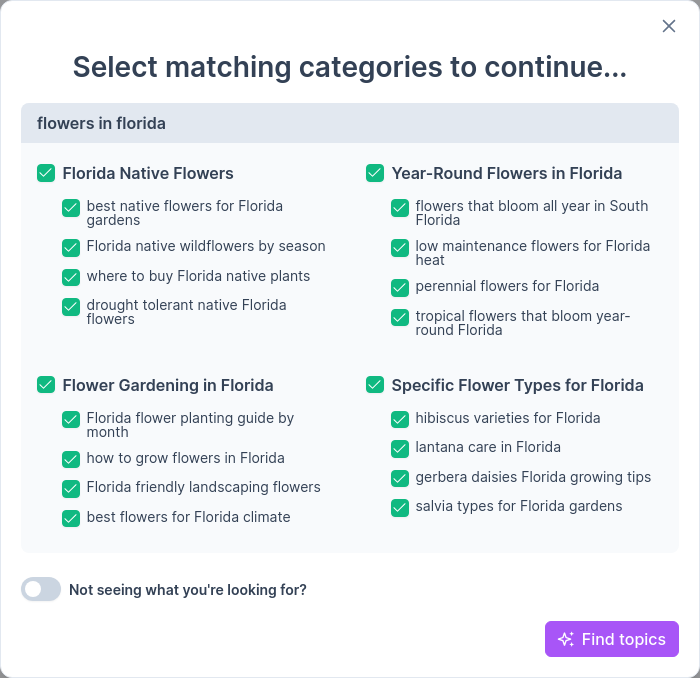
When you overhaul a fragmented blog architecture, it's easy to get stuck trying to force a flat list of keywords into pre-existing silos. The solution is to adopt a topic-first architecture. Let your data-validated clusters dictate the hierarchy of your website.
Organize your groups into a strict two-level structure. Broad thematic areas become your parent topics. These map directly to comprehensive pillar pages or main category hubs designed to cover a subject at a high level. The more specific, highly targeted clusters become subtopics, which you map to supporting blog posts. The hierarchical framework naturally builds a cohesive internal linking structure, where every deep subtopic links back up to its relevant parent pillar.
Match formats to SERP preferences
Different clusters require different content formats. You can't apply a single editorial template to every topic in your backlog.
Look at the current search results to identify the preferred format for each specific query group. Does the cluster trigger listicles, long-form guides, or technical product comparisons? If the dominant format for a cluster is a quick-answer FAQ page, writing a 3,000-word narrative guide won't help you rank. Map the cluster directly to the format search engines are rewarding right now.
Direct the editorial calendar with clustered gaps
Don't guess your next blog topic or rely on random brainstorming sessions. Use your clustered data to direct your editorial calendar systematically.
Once your architecture is mapped out, visual gaps become obvious. You might have a comprehensive pillar page for "email marketing automation" but realize you lack the supporting subtopic clusters for "trigger sequences" and "abandoned cart flows." These clustered gaps represent immediate production priorities. Targeted additions build out the topical authority of the entire hub. That works far better than randomly publishing isolated posts with no structural support.
Step 4: Track performance and audit rankings
Measure aggregate cluster visibility
Daily tracking of individual keyword positions is a recipe for anxiety. Search engines rank pages, not isolated terms. Measure aggregate cluster visibility. Stop fixating on single keyword fluctuations. If the primary head term drops two spots, but the page suddenly ranks for forty new long-tail variations, the overall cluster health is improving. Look at the total click and impression share for the entire group.
Run diagnostic workflows on content silos
Topic clusters give you an easy way to see which silos of your website are performing well and which ones are declining. A sharp drop in a specific subtopic often signals outdated information or a shift in search intent. You can align that diagnostic data with what matters most to your business and focus on the 80/20 that will drive revenue. Prioritize targeted refreshes for the hubs that directly impact your bottom line.
Detect emergent keyword cannibalization
Even with a perfect initial architecture, scope creep happens. As you publish more supporting posts, they sometimes bleed into established intents.
Often, content leads analyze a competitor's clustered strategy, reverse-engineer their approach, and rapidly publish missing subtopics. If you don't monitor these clusters, those new pages might start stealing traffic from the original pillar page. Monitor your clusters monthly to detect this emergent keyword cannibalization early. Prompt merges or redirects prevent permanent ranking damage.
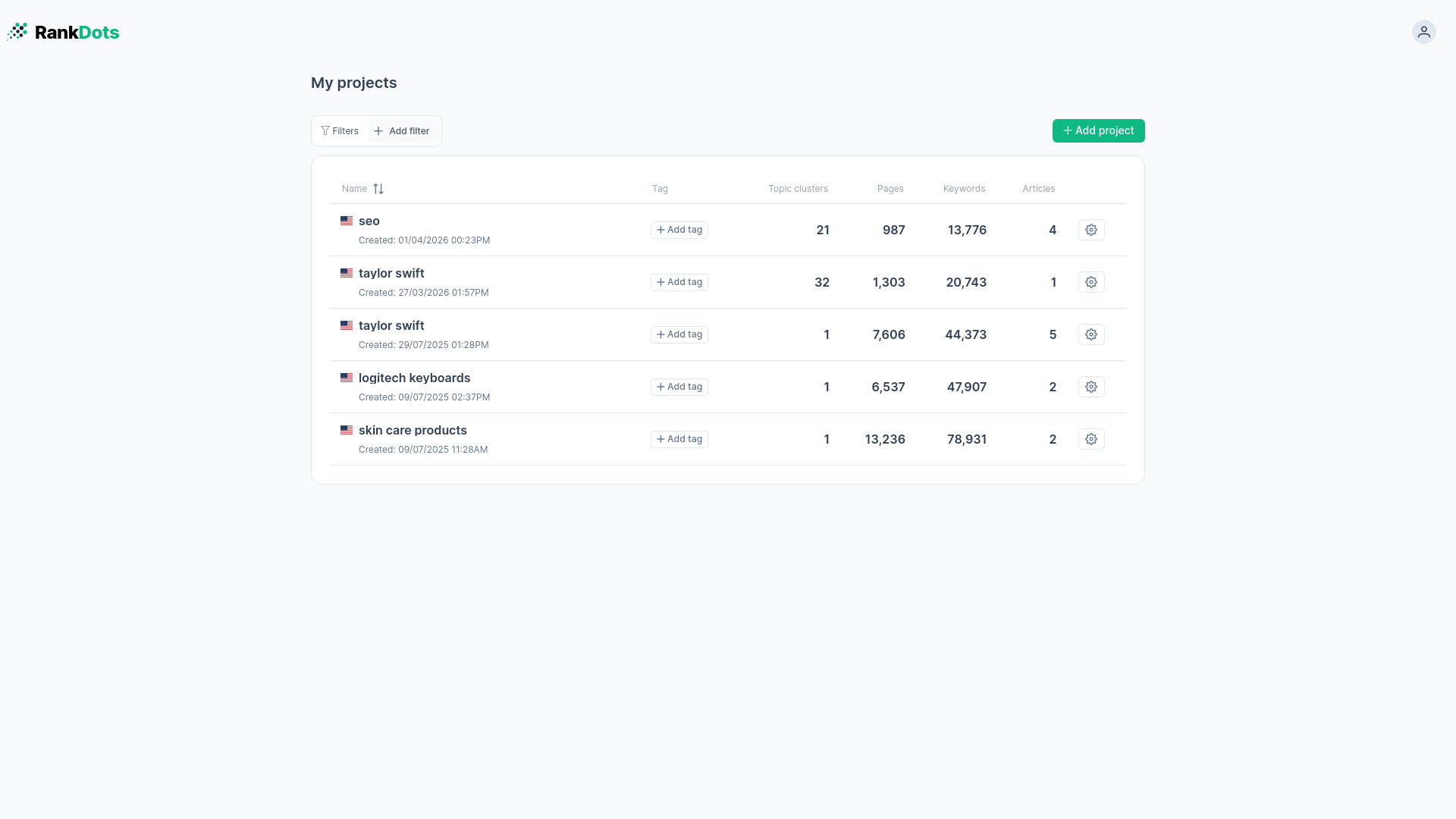
Routine maintenance is the only reliable way to prevent keyword cannibalization as your content library expands. Monthly checks ensure your architecture remains clean and competitive.
Frequently asked questions
What is the difference between a keyword cluster and a topic cluster?
Can keyword clustering fix existing keyword cannibalization on a website?
How does URL intersection validate a keyword cluster?
Why does Google Keyword Planner show grouped search volumes for similar keywords?
How many keywords should ideally be assigned to a single cluster?
Conclusion and next steps
A strategically validated pillar architecture consistently outperforms a raw keyword list. It stops self-inflicted cannibalization and gives your writing team a clear, intent-driven roadmap. You move from writing isolated articles to constructing authoritative, interconnected hubs that search engines naturally prefer.
Don't try to reorganize your entire website in a single afternoon. Start small to prove the methodology internally. Select one high-priority parent topic where you already have some existing content but lack comprehensive coverage. Build a complete pilot cluster around that single topic. Map the intents, validate the SERP overlap, and publish the missing supporting pieces. Monitor the aggregate lift. That focused execution will secure the buy-in needed to scale the process across your whole domain.
How to Do Keyword Clustering & Why It Helps SEO: A 4-Step Process
-
Import and normalize seed queries
Connect your Google Search Console account and combine those exports with your third-party keyword data. Filter out navigational brand terms and apply a volume correction algorithm to fix inflated native metrics. You'll see a clean, deduplicated dataset ready for intent grouping.
-
Run SERP overlap validation
Group your cleaned list by shared semantic meaning, not exact text matches. Verify these groups by checking live search results to see if the same URLs rank for multiple terms. This confirms your exact cluster aligns with a single, verifiable user intent.
-
Map clusters to a topical hierarchy
Assign broad thematic groups as parent pillars and highly specific clusters as supporting subtopics. Review current search results to determine the exact content format search engines currently reward. You'll have a clear, intent-driven content brief ready for production.
-
Monitor aggregate cluster visibility
Track the total impression and click share for the entire keyword group, not just single terms. Watch your monthly analytics for overlapping metrics as you publish new subtopics. This helps you detect and resolve keyword cannibalization before rankings drop.
Turn flat keyword lists into a structured content hierarchy.
Stop wasting hours manually sorting spreadsheets. Group search queries by real intent and fix keyword cannibalization before you assign your next brief. RankDots automates your cluster validation so you can publish with confidence.